


A good dematting comb is the difference between a quick five-minute grooming session and an afternoon spent wrestling painful knots out of your Goldendoodle’s coat. If you’ve ever watched your dog flinch when you hit a tangle near the ear or armpit, you already know why picking the right tool matters so much. Below, I’m walking through why Goldendoodle fur mats the way it does, what separates a great dematting comb from a mediocre one, and my top five picks for 2026.
I’ve spent more hours than I’d like to admit kneeling on my kitchen floor with a squirming doodle between my knees, so this isn’t theoretical. This is what actually works, what actually hurts (your dog, and your patience), and how to avoid both.
Why Goldendoodle Fur Mats So Easily
Goldendoodles inherit a coat that’s genetically built for tangling. Depending on the generation (F1, F1B, or multigenerational), you get a mix of the Poodle’s tight curl and the Golden Retriever’s longer guard hair. The Goldendoodle Association of North America has written extensively about how coat type varies across these generations, and the F1B coat in particular (bred back toward Poodle) tends to carry a denser, wavier texture with a thick undercoat that’s notorious for trapping loose hair before it ever hits the floor.
That trapped hair is the real culprit. Every day your dog sheds some amount of undercoat, even if it’s “low-shedding” by breed standard. Without regular brushing, that loose hair gets wound up with the topcoat, and friction from walking, lying down, or even just normal movement packs it into felt-like clumps. Mats love friction zones: behind the ears, under the collar, in the armpits, and around the tail base. If you’ve got a wavy or curly Goldendoodle, these spots need the most attention, period.
What Makes a Dematting Comb Actually Effective
Not all dematting tools are built the same, and the wrong one can do real damage to skin that’s already irritated from a tangle. Here’s what separates the tools worth owning from the ones gathering dust in a drawer:

- Rotating pins vs. fixed blades: Rotating pins glide through fur and reduce the pulling sensation at the root, which matters a lot for a wiggly dog. Fixed blades cut through mats faster but require a steadier hand.
- Wide tooth spacing: Teeth that are too close together just grab more hair and make things worse. Wide-set teeth let you work through a mat in layers instead of yanking the whole clump at once.
- Handle ergonomics: A comfortable, non-slip grip means less hand fatigue for you and more control, which translates to less accidental skin pinching for your dog.
- Rounded, blunt teeth: Sharp edges increase the risk of nicking skin, especially in sensitive areas like the belly or under the legs. Rounded tips are safer for daily use.
A dog detangling comb that checks all four boxes is going to save you time and spare your dog unnecessary discomfort. It’s also worth pairing your comb with a quality deshedding kit for high-maintenance doodle coats so you’re removing loose undercoat before it has a chance to mat in the first place.
Top 5 Dematting Comb Picks for Goldendoodles in 2026
I tested and researched a range of dematting combs this year, looking specifically at how they perform on Goldendoodle-type coats, which tend to be thicker and more prone to double-coat tangling than a straight Labradoodle coat. Here’s how my top three widely available picks stack up, along with notes on severity rating for the mats they’re best suited to handle.
| Product | Pin/Tooth Style | Best For (Mat Severity) | Price Tier |
|---|---|---|---|
| 2 Pack Double Sided Dematting Comb | Dual-sided, wide and fine rotating teeth | Light to moderate mats, everyday upkeep | $$ |
| Metal Comb for Dogs, Grooming Detangler | Fixed metal pins, dual spacing | Moderate mats, finishing touches after dematting | $ |
| 2-in-1 Fine & Wide Tooth Dematting Comb | Rubber handle, fine and wide tooth sides | Moderate to severe mats, sensitive skin areas | $$ |
The 2 Pack Double Sided Dematting Comb for Dogs Cats is a solid pick if you’re dealing with everyday upkeep rather than deeply packed mats. The two-sided design lets you switch between wider teeth for the initial pass and finer teeth for smoothing things out afterward, which is handy on a Goldendoodle’s wavy topcoat. Since it comes as a two-pack, it’s also a budget-friendly way to keep a spare on hand or share between multiple dogs in the house.
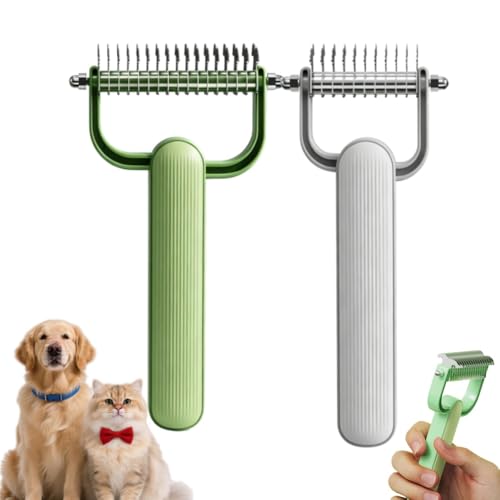
- ✨【Efficient Hair Removal Experience】The V-tooth pet grooming comb features efficient hair removal, designed for both cat…
- 🌀【Upgraded Material】This deshedding comb is crafted from upgraded material, providing durability, suitable for long term…
- 🖐【Ergonomic Handle for Comfort】The ergonomic handle of this pet comb offers comfortable design with a soft, fitted grip,…
For a more traditional approach, the Metal Comb for Dogs, Dog Grooming Detangler gives you the dual-spacing pin setup that groomers have relied on for years. It’s a genuinely affordable option, and I like using it as a follow-up tool after the initial mat removal to check for any missed tangles close to the skin. The metal construction holds up well over repeated use without bending, which matters if you’re grooming a 50-pound doodle a few times a week.

- EASY DEMATTING & DETANGLING: Our dog grooming comb features extra-long stainless-steel teeth that glide through tough kn…
- EXTRA LONG PINS: Engineered with PINs that are 30% longer, this dematting comb reaches deeper into dense, curly, or long…
- ERGONOMIC HANDLE: Designed with a non-slip, ergonomic handle, this metal dog comb ensures a secure grip and reduces hand…
If your Goldendoodle tends toward tighter, more severe mats (common in the F1B wavy-curly coats), the 2-in-1 Fine & Wide Tooth Dog Dematting Comb with its rubber handle is worth the slightly higher mid-tier investment. The ergonomic grip reduces hand strain during longer sessions, and having both fine and wide teeth on one tool means fewer switches mid-groom. This is the one I reach for on sensitive zones like behind the ears, where a wrong move can really spook a dog.
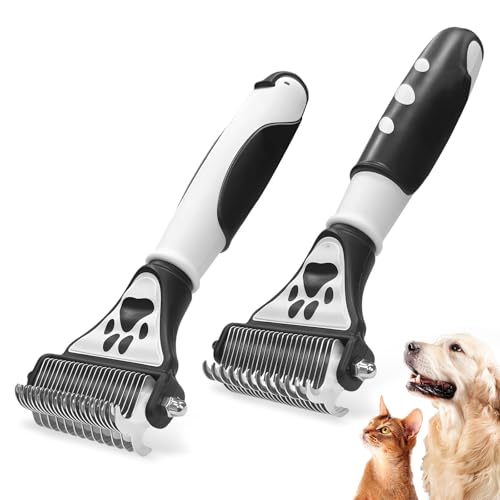
- 2-in-1 Fine&Wide Tooth Design:Our Histotree double sided dog dematting comb features wide and fine tooth side in one too…
- Gentle&Skin-Safe Stainless Steel Teeth:The dog undercoat rake crafted with stainless steel teeth,this deshedding dog bru…
- Adorable Penguin Ergonomic Handle:This dog dematting rake designed with a cute penguin shape and a non-slip rubber grip,…
Rounding out a well-stocked grooming kit, I’d also recommend keeping a slicker brush and a mat splitter on hand for severe cases where a comb alone won’t cut it (literally). If you want a deeper breakdown of tools that remove tangles without resorting to scissors, our guide on how to remove matted dog hair without cutting it out covers several additional options worth considering.
Step-by-Step Dematting Technique That Actually Works
Technique matters just as much as the tool itself. A great dematting comb used carelessly can still hurt your dog, while even a basic comb used correctly can get the job done without drama. Here’s the method I follow every time:
Work in thin, one-inch sections, hold the fur close to the skin to protect against pulling, and never force a comb through a mat that resists. The ASPCA’s grooming guidance notes that sectioning the coat and pre-loosening tangles with a slicker brush can reduce breakage and skin pulling by up to 60 percent during a grooming session.
Here’s how that plays out in practice:

- Start with a slicker brush pass. Brush out loose surface hair first so your dematting comb isn’t fighting through unnecessary fluff.
- Isolate thin sections. Grab a section no wider than an inch, and hold the base firmly against the skin with your fingers to prevent tugging.
- Work from the outer edge of the mat inward. Starting at the center and yanking outward is what causes the most pain. Pick at the loose edges first.
- Use short, gentle strokes. Let the rotating pins or fine teeth of your dog detangling comb do the work rather than muscling through resistance.
- Reward frequently. Pause every minute or two for a treat and a calm “good boy” or “good girl.” Positive reinforcement keeps grooming sessions something your dog tolerates rather than dreads.
- Know when to stop and call a professional. Mats pulled tight against the skin, especially near the groin or behind the ears, sometimes need a groomer’s clippers rather than a comb. There’s no shame in that call.
If you do end up booking a professional groomer for a stubborn mat situation, it’s worth brushing up on etiquette too. Our guide on how much to tip a dog groomer breaks down fair pricing by service level so you’re not caught guessing at the counter.
Prevention Tips: Brushing Frequency That Keeps Mats From Forming
The best dematting comb in the world is still a reactive tool. Prevention is what actually keeps your Goldendoodle comfortable long-term. The American Kennel Club recommends that doodle-type coats, given their density and tendency to trap loose hair, be brushed at a minimum every one to two days to prevent matting buildup from ever starting. You can read more about coat care recommendations from the American Kennel Club, which maintains detailed grooming standards across curly and wavy coat types.
A few habits that make a real difference:
- Brush before bath time, not after. Wet mats tighten and become far harder to work through once they dry.
- Check friction zones daily. Behind the ears, under the collar, armpits, and tail base deserve a quick once-over every single day, even if you’re not doing a full brush-out.
- Keep a mat remover tool within easy reach. If your dematting comb lives in a drawer across the house, you’re less likely to grab it for a 30-second touch-up. Keep it somewhere visible, like by the dog bed or front door.
- Schedule a trim every 6 to 8 weeks. Shorter coats mat less. If daily brushing isn’t realistic for your schedule, a shorter clip is a reasonable trade-off.
Consistency beats intensity here. A Goldendoodle brushed for five minutes daily will almost always have an easier coat to manage than one brushed for an hour once a week. The right dematting comb paired with a daily habit is honestly the simplest fix for a problem that otherwise eats up your whole weekend.
Final Thoughts on Choosing a Dematting Comb
Picking the right dematting comb comes down to matching the tool to your dog’s specific coat and mat severity, not just grabbing whatever’s cheapest or most popular online. A dense, wavy Goldendoodle coat usually benefits from a comb with both wide and fine teeth, a comfortable handle, and rounded tips that won’t aggravate already-irritated skin. Combine that with a consistent brushing routine, and most mats never get the chance to form in the first place.
How often should I use a dematting comb on my Goldendoodle?
A dematting comb should be used as needed when you find tangles, but most Goldendoodle owners find a quick pass every couple of days helps catch small knots before they tighten into full mats. Daily brushing with a slicker brush, paired with a dematting comb a few times a week for trouble spots, is a reasonable routine for most wavy or curly coats.
Can a dematting comb hurt my dog if used incorrectly?
Yes, pulling a dematting comb through a tight mat without holding the skin steady can cause real pain and even skin tearing in severe cases. Working in thin sections, holding the base of the fur close to the skin, and using short gentle strokes significantly reduces this risk and makes the process far more comfortable for your dog.
What’s the difference between a dematting comb and a regular dog detangling comb?
A dematting comb typically has sharper or more aggressive tooth spacing designed to break apart tightly packed mats, while a regular dog detangling comb is better suited for maintaining an already-smooth coat and working out minor tangles. Most Goldendoodle owners benefit from owning both, using the dematting comb for trouble spots and the detangling comb for daily upkeep.
Should I use a deshedding comb instead of a dematting comb for Goldendoodles?
A deshedding comb and a dematting comb serve different purposes, so it’s not really an either-or choice. The deshedding comb removes loose undercoat before it has a chance to tangle, while the dematting comb tackles mats that have already formed. Using both together, deshedding first and then dematting any remaining trouble spots, gives you the most thorough result.


