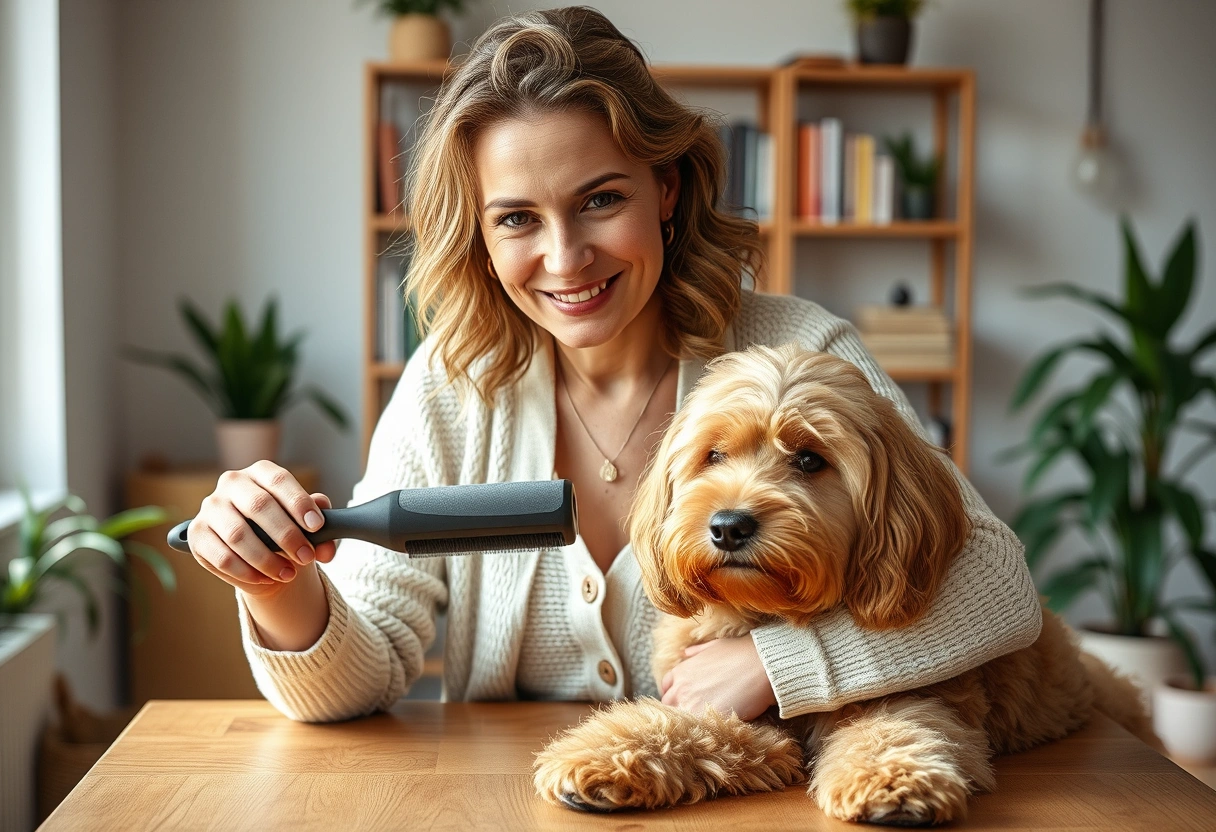
Deshedding tools become a genuine lifeline when your Doodle hasn’t seen a brush in weeks and their coat has turned into a mess of tangles and hidden mats. If you’re staring at your pup right now wondering how things got this bad, take a breath. This happens to a lot of loving pet parents, especially during busy seasons or after a long vacation. The good news is that with the right tools and a patient approach, you can usually rescue that coat without a trip to the emergency vet or a traumatic all-over shave.
I’ve worked with dozens of Doodle owners over the years who came to me in a small panic after finding a mat the size of a golf ball behind their pup’s ear. It’s rarely anyone’s fault. Doodle coats, especially the curly and wavy varieties common in Goldendoodles, Labradoodles, and Bernedoodles, are simply built to trap loose hair against the skin rather than shed it onto your floor. That’s part of why so many people choose these breeds in the first place. But it also means neglect catches up fast.
Why Doodle Coats Mat So Quickly When Grooming Is Skipped
A Doodle’s curly or wavy coat works almost like a net. Instead of falling out and landing on the carpet the way a Labrador’s coat does, loose undercoat hair gets caught in the curls of the topcoat. Over time, that trapped hair binds together with natural oils, moisture, and everyday debris until it forms a mat. According to grooming studies on F1b Doodle coats, this trapping process can produce noticeable matting within just four to six weeks of skipped brushing, which honestly surprises a lot of new Doodle parents.
Once mats form near the skin, they pull on the hair follicles with every movement your dog makes. That constant tension is uncomfortable at best and painful at worst. Severely matted coats can also trap moisture against the skin, creating a warm, damp environment where bacteria and yeast thrive. I’ve seen hot spots and skin infections develop under mats that owners didn’t even know were there because the surface fur looked fine. Mats can also restrict circulation in extreme cases and make it nearly impossible to spot fleas, ticks, or skin issues during a normal check.
This is exactly where good deshedding tools earn their keep. Catching the problem early, or working through it carefully once it’s already happened, keeps your Doodle comfortable and helps you avoid a stressful emergency grooming appointment.
Best Deshedding Tools for Doodles With Curly and Wavy Coats
Not every brush works well on every coat type, and this is where a lot of DIY detangling attempts go wrong. Tight, curly coats (think Poodle-heavy Bernedoodles) need different handling than looser, wavy coats (common in F1 Goldendoodles). Below is a quick breakdown of the tool categories that actually make a difference when you’re dealing with weeks of neglected fur.

Slicker brushes have fine, slightly bent wire bristles that work through the topcoat and catch loose hair without digging painfully into the skin. They’re great for daily maintenance and for the early stages of loosening small tangles, but they struggle once a mat has fully packed down.
Undercoat rakes have longer, widely spaced teeth designed to reach past the topcoat into the dense undercoat where a lot of the trapped hair lives. These are particularly useful for wavy and looser-curled Doodles who tend to blow their undercoat seasonally.
Dematting combs are the heavy hitters. They typically have sharp, curved blades set into a comb that slice through mats in small sections rather than yanking on them. For a coat that hasn’t been touched in months, this is often the first tool you’ll reach for.
One tool worth having in your grooming kit is a Self-Cleaning Deshedding Dog Cat Brush. It’s built for thick double coats and the retractable pins make it easier to pull loose undercoat without constantly stopping to clean hair out of the bristles by hand. For Doodles with looser waves who mat mostly from trapped undercoat rather than tight curls, this style of deshedding tools tends to work faster than a standard slicker brush.
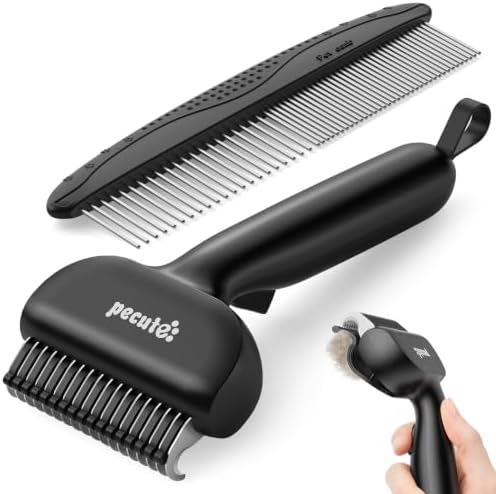
- 1-CLICK SELF-CLEANING — NO MORE MANUAL HAIR PULLING: This undercoat rake solves the grooming frustration. Just press the…
- REMOVES UP TO 95% OF LOOSE FUR — DESIGNED FOR THICK DOUBLE COATS: Engineered specifically for dense undercoats and heavy…
- GENTLE DEMATTING — ROUNDED TEETH GLIDE WITHOUT IRRITATING SKIN: Unlike sharp dematting rakes for dogs, our fine-polished…
Here’s a quick side-by-side look at how these tool categories compare, so you can figure out what your Doodle’s coat actually needs before you start.
| Tool Type | Best For | Coat Type | Skin Safety Level | Price Tier |
|---|---|---|---|---|
| Slicker Brush | Daily upkeep, light tangles | Wavy to loosely curly | High | $ |
| Undercoat Rake | Removing trapped loose undercoat | Wavy, F1 and F1b coats | Moderate to High | $$ |
| Dematting Comb | Cutting through set-in mats | Tight curls, pelted fur | Moderate (needs care) | $$ |
| Deshedding Glove | Gentle handling, anxious dogs | All coat types | Very High | $ |
Step-by-Step Detangling Method for Matted Doodle Fur
Working through a neglected coat is not a one-brush job. There’s a technique to it, and rushing is exactly how skin gets nicked or a dog ends up dreading grooming sessions for months. The method groomers rely on most is called line-brushing.
Line-brushing means you part the coat in small sections, roughly one inch wide, and brush out only that section from the skin outward before moving to the next line. It sounds tedious, and honestly it is, but it’s the safest way to make sure you’re not just smoothing over the top of a mat while leaving the packed fur underneath untouched.

Before you start on a stubborn mat, work in a little cornstarch or a leave-in detangler spray. This helps separate the hair strands and reduces friction, which makes the mat easier to tease apart instead of just tugging at knotted skin-level hair. Never try to cut a mat out with scissors unless you can clearly see daylight between the mat and the skin. Too many well-meaning owners have accidentally cut their dog because a mat was sitting flatter against the body than it looked.
Mats pulled too quickly can tear a dog’s skin, which is thinner and more delicate than most owners realize, especially in the armpits, behind the ears, and around the collar area.
For dogs who get anxious about brushing, or for working through smaller tangles around sensitive areas like the face and paws, a True Touch Five Finger Deshedding Glove can make the whole experience feel less clinical. It mimics petting, which keeps a nervous Doodle calmer, and it’s a nice bridge tool between the more intense dematting combs and everyday maintenance.

- MIMICS REAL HUMAN TOUCH Your pet will enjoy a relaxing massage while the over 180 soft silicone grooming tips reach deep…
- 5 FINGER DESIGN Easily contours to reach all the places hair hides like behind their legs, under their chest, in their t…
- PET THE HAIR AWAY Guaranteed to minimize shedding, keeping you and your house clean. Just think how much happier and hea…
Once you’ve loosened the outer edges of a mat with a slicker brush or glove, switch to a proper dematting comb for the core of it. A reliable pick here is a 2 Pack Double Sided Dematting Comb for Dogs Cats, which gives you two different blade spacings so you can start with the wider teeth for loose tangles and move to the tighter set for stubborn, set-in mats. Having both options in one purchase saves you from buying separate tools for different stages of the job.
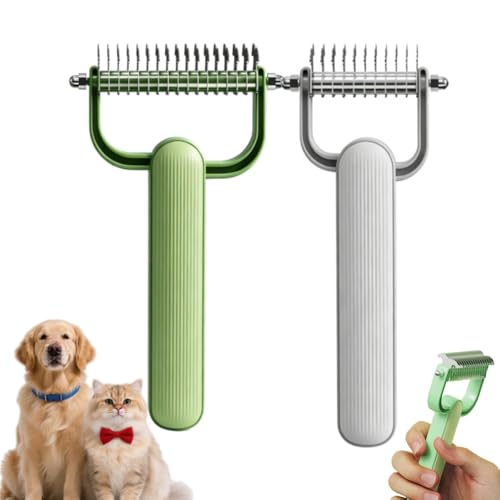
- ✨【Efficient Hair Removal Experience】The V-tooth pet grooming comb features efficient hair removal, designed for both cat…
- 🌀【Upgraded Material】This deshedding comb is crafted from upgraded material, providing durability, suitable for long term…
- 🖐【Ergonomic Handle for Comfort】The ergonomic handle of this pet comb offers comfortable design with a soft, fitted grip,…
When to Stop DIY and Call a Professional Groomer
There’s no shame in reaching this point, and honestly, recognizing it is what separates a good pet parent from one who accidentally causes harm trying to fix things alone. If mats are covering large sections of the body, sitting directly against the skin in tight pelted sheets, or your dog yelps, flinches, or tries to bite when you touch certain areas, it’s time to call a professional.
The American Kennel Club notes that severely matted coats often require a full shave-down for humane removal, since trying to comb out pelted fur at that stage causes more pain and skin trauma than it’s worth. A groomer has clipper guards and experience working close to the skin safely, something that’s genuinely hard to replicate at home with standard deshedding tools. If your Doodle’s coat has reached the point where you can’t see skin anywhere through the fur, or the mats feel like a solid mat of felt rather than individual tangles, save everyone the stress and book a groomer visit.
Preventing Matting: A Realistic Brushing Schedule for Doodles
Once your Doodle’s coat is back to a manageable state, the real work is keeping it that way. This is honestly the part most owners skip, and it’s exactly how coats end up neglected again within a couple of months.
The Ohio State University Veterinary Medical Center recommends daily to every-other-day brushing for curly and wavy breed mixes like Doodles, since their coat type simply doesn’t shed the way a straight-coated dog’s does. That might sound like a lot, but a quick five to ten minute session with the right deshedding tools is usually enough once you’re not fighting existing mats.
- Daily: Quick pass with a slicker brush or glove, focusing on friction zones like behind the ears, armpits, and under the collar.
- Every 2 to 3 days: A full line-brushing session with an undercoat rake to catch loose hair before it packs down.
- Weekly: Check paws, tail, and belly for early tangle formation, since these spots mat fastest.
- Every 4 to 6 weeks: Professional grooming appointment to trim, deep clean, and catch anything you might have missed at home.
Sticking to a routine like this is really the only long-term fix. Deshedding tools work best as a prevention habit rather than a rescue mission, and your Doodle will be a lot happier for it. For more general information on canine coat health and skin conditions, the ASPCA offers solid background reading on coat and skin maintenance basics.
Key Takeaways
- Doodle coats can mat within four to six weeks without regular brushing due to their curl structure trapping loose hair.
- Different deshedding tools suit different coat types: slicker brushes for maintenance, undercoat rakes for loose hair, dematting combs for set mats.
- Line-brushing with detangler spray or cornstarch is the safest method for working through neglected fur.
- Severely pelted coats often need a professional shave-down rather than DIY dematting.
- Daily to every-other-day brushing prevents matting from returning once the coat is rescued.
What are the best deshedding tools for a Doodle that hasn’t been brushed in months?
The best combination usually includes a dematting comb for cutting through set mats, an undercoat rake for pulling loose trapped hair, and a slicker brush or deshedding glove for finishing touches. Starting with the comb on the toughest areas and working outward with gentler deshedding tools tends to produce the safest, most comfortable results.
Can I cut mats out of my Doodle’s coat with scissors?
It’s risky and generally not recommended unless you can clearly see space between the mat and the skin. Doodle skin is thin and mats often sit closer to the body than they appear, so scissors can easily cause an accidental cut. A dematting comb or professional groomer’s clippers are much safer choices.
How do I know if my Doodle’s mats are too severe to fix at home?
If the mats form solid sheets that feel like felt, cover large areas of the body, or your dog reacts with pain when you touch them, it’s time to call a professional groomer. At that stage, a full shave-down is often the safest and most humane option rather than continued at-home dematting.
How often should I brush my Doodle to prevent matting in the future?
Curly and wavy coated Doodles generally need brushing daily to every other day. A short session focused on friction areas like the armpits, ears, and collar zone, combined with a deeper line-brushing session a couple of times a week, keeps most Doodle coats mat-free between grooming appointments.