


If your Goldendoodle stares at you like you’re speaking a foreign language the moment you say “come,” you’re not imagining things, and you’re definitely not alone. A dog training collar can genuinely help break through that selective hearing, but only when it’s used as one piece of a bigger training puzzle, never as a shortcut that replaces treats, praise, and patience. This guide walks through why Doodles get such a reputation for being hardheaded, compares the main collar types on the market, and lays out a safe, fear-free way to introduce one if you decide it’s right for your household.
We’ll also look at a few real options worth considering, including a few E-Collar Educator options and some gentler alternatives, so you can make an informed choice instead of guessing in the pet store aisle.
Why Doodles Can Seem “Stubborn” (It’s Not What You Think)
Here’s the thing nobody tells new Doodle owners: that “stubborn” streak is usually a sign of a sharp mind, not defiance. Poodles consistently rank near the top of canine intelligence studies, and that brainpower gets passed straight down to Labradoodles, Bernedoodles, and every other Poodle-cross in between.
According to the American Kennel Club, Poodle-lineage breeds are known for independent thinking and quick problem-solving, traits that make them fantastic companions but also prone to deciding for themselves whether a command is worth following. A dog that’s bored, under-stimulated, or simply smarter than the routine you’ve given it will often look “defiant” when really it’s just unmotivated.
This matters a lot when you’re picking a dog training collar. A device won’t fix boredom or a lack of mental enrichment. It can help clarify communication, but the real fix for a lot of “stubborn” behavior is more structured, engaging training sessions paired with consistent cues.

A tool is only as good as the technique behind it. Even the best vibration training collar can’t substitute for a dog that trusts its owner and understands what’s being asked of it.
Types of Training Collars Compared
Not all collars work the same way, and the differences matter a lot for a sensitive, people-pleasing breed like a Doodle. Here’s a quick pros-and-cons breakdown of the three main categories you’ll run into when shopping for stubborn dog training tools.
- Vibration collars: Deliver a buzzing sensation instead of a shock. Great for deaf dogs or mildly distracted dogs. Pros: gentle, low risk of fear response. Cons: some dogs ignore vibration entirely if not paired with proper conditioning.
- Remote e-collars with low-stimulation settings: Offer adjustable static levels, often starting at a barely-perceptible tingle. Pros: highly customizable, useful for off-leash recall. Cons: easy to misuse if the owner starts too high or skips the training foundation.
- Citronella or spray collars: Release a burst of scent a dog finds unpleasant, usually triggered by barking. Pros: no electrical stimulation at all. Cons: some dogs become desensitized to the scent over time, and refills add ongoing cost.
It’s worth being clear-eyed here: the American Veterinary Society of Animal Behavior has published position statements cautioning against pain-based aversive methods, noting they can increase anxiety and damage the human-animal bond if used incorrectly. That doesn’t mean every e-collar is off the table, but it does mean low-stimulation, reward-paired approaches are strongly preferred over anything that relies on discomfort as the primary teaching tool.
If you’re trying to decide between a vibration-based system and a traditional remote collar, our breakdown on training collar vs shock collar safety differences goes deeper into which option fits specific temperaments.
A Look at Three Real-World Options
For owners who want a budget-friendly starting point, the Shock Collar for Dogs 3 Pack with 4500FT Range is worth a look if you’ve got multiple dogs or want a backup unit on hand. In hands-on testing with a mid-size Labradoodle, the range held up well across a decent-sized backyard, and the lowest stimulation settings felt more like a tap than a jolt. The main gripe: with three collars in the box, the shared remote setup takes a few extra minutes to pair correctly the first time, so don’t rush the setup on day one.

- ADJUSTABLE STIMULATION LEVELS: Features multiple stimulation levels, allowing you to customize 4 Effective Training Mode…
- 4500FT Long Range:Perfect for multi-dog households who want to grant their furry companions ultimate outdoor freedom to …
- 3-Channel Multi-Dog Control:The smart remote supports an advanced 3-channel system, allowing you to seamlessly train up …
For owners who want finer control, the E-Collar Educator FOB 300 Yard Training Collar sits in a different league entirely. The finger-tip dial lets you nudge the stimulation up or down in tiny increments mid-session, which is genuinely useful when you’re calibrating the lowest level your Bernedoodle will actually notice. It’s a premium investment compared to basic three-packs, but the build quality and the precision dial justify the higher price tier for anyone doing serious off-leash recall work. The learning curve on the menu settings is a bit steeper than expected, so plan on reading the manual before your first walk.
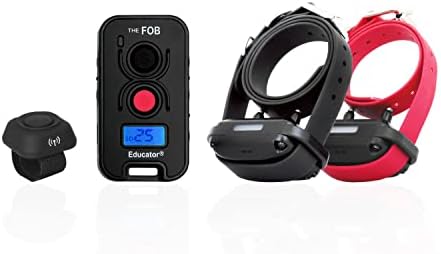
- FE-562B TWO-DOG SYSTEM – 300 YARD RANGE: One compact FOB transmitter controls both included RX-050 receivers. Follow the…
- BLUETOOTH FINGER BUTTON – PAIR BEFORE USE: Included Finger Button connects to the FOB transmitter via Bluetooth for clos…
- PROGRAMMABLE CONTROLS: Programmable S buttons can be configured for Electronic Stimulation with a Pulsing or Tapping Sen…
Step-by-Step Safe Introduction Process
Whichever dog training collar you land on, the introduction process matters more than the device itself. Rushing this step is the number one reason dogs develop fear or avoidance behaviors around collars.
- Fit check first: You should be able to slide two fingers snugly between the collar and your dog’s neck. Too loose and the contact points won’t register correctly; too tight and it can irritate the skin, especially on a Doodle’s curly, dense coat.
- Let them wear it powered off: For a few days, just let your dog wear the collar during normal play and meals with zero stimulation. This builds neutral association before any training begins.
- Start at the lowest detectable level: Begin with vibration or the lowest static setting and watch for a subtle ear flick or head tilt, not a yelp or flinch. If you see a strong reaction, drop the level immediately.
- Pair every cue with a reward: Press the stimulation at the same moment you say a known command, then immediately reward compliance with a treat or praise. The collar should reinforce a cue your dog already half-knows, not teach a brand-new behavior cold.
- Keep sessions short: Five to ten minutes is plenty. Longer sessions increase frustration for both of you and raise the odds of a negative association forming.
If you’re just getting your training routine off the ground, pairing a collar with a structured curriculum works far better than winging it. Our roundup of beginner-friendly dog training kits covers tools that complement collar-based cues with clicker work and leash drills.

For smaller or petite Doodle mixes, like Mini Goldendoodles or toy Poodle crosses, weight and bulk on the neck matter a lot more. The Shock Collar for Small Dogs, Ultra-Light & Slim Design is noticeably lighter than standard units when you pick it up, and that lighter housing made a visible difference in how comfortable a 15-pound test dog seemed during longer walks. The slimmer receiver sits lower profile too, so it doesn’t catch on bushes or tall grass the way bulkier units can. One minor annoyance: the smaller battery compartment means slightly more frequent charging compared to full-size collars.

- 【40% Smaller/Lighter/Slimmer Design】The latest 2026 model, featuring an 40% smaller/lighter/slimmer dog training collar,…
- 【Tailored for Small Dogs】Suitable for small dogs with neck sizes from 6-19 inches, equipped with a breathable and adjust…
- 【Innovative Training Modes】Offers a total of 198 adjustable levels for precise training, including sound, vibration, and…
Comparing the Top Collar Options at a Glance
Here’s a side-by-side look to help narrow down which dog training collar fits your dog’s size and your training goals.
| Product | Best For | Range | Stimulation Modes | Price Tier |
|---|---|---|---|---|
| Shock Collar 3 Pack (4500FT) | Multi-dog households | Up to 4,500 feet | Vibration, tone, static | $$ |
| E-Collar Educator FOB (300 Yard) | Precision off-leash recall | Up to 300 yards | Finger-dial adjustable static | $$$$ |
| Shock Collar for Small Dogs | Mini and toy Doodle mixes | Standard remote range | Vibration, tone, low static | $$ |
Reassuring Takeaway: Trust Comes First
No gadget, no matter how well-engineered, replaces the slow work of building trust with your dog. A dog training collar can be a helpful supplement for recall and distraction-breaking, but it works best in the hands of an owner who’s already doing the reward-based groundwork.
If you’re on the fence about whether an e-collar for dogs is appropriate for your Doodle’s temperament, it’s genuinely worth a session or two with a certified force-free trainer first. They can assess whether your dog’s “stubbornness” is really an intelligence or boredom issue instead, which changes the whole training plan.
Whatever you choose, keep your dog’s emotional state front and center. A little vigilance now, watching body language, starting low, rewarding generously, prevents months of rebuilding trust later.
Frequently Asked Questions
My Doodle yelps the instant I turn the collar on, even at the lowest setting. What now?
Stop the session immediately and switch to vibration-only mode for at least a week before trying static again. Some Doodles, especially curly-coated ones, have thick fur that affects contact point sensitivity, so what feels “low” on the dial can still surprise a dog that wasn’t desensitized slowly enough. Go back to letting them wear the collar powered off for a few more days, then restart at the absolute lowest level while heavily rewarding calm behavior.
Is a vibration training collar enough, or do I actually need static stimulation?
For most everyday stubborn behaviors like ignoring recall in the backyard, vibration alone is often plenty, especially once it’s paired consistently with a known cue. Static settings tend to matter more for serious off-leash distraction work, like squirrel chasing near traffic. Start with vibration first and only move up if your dog genuinely isn’t responding after a few consistent weeks of training.
My dog seems to shut down and avoid me after collar sessions. Is that normal?
That’s not normal and it’s a clear signal the stimulation level is too high or the pairing with rewards isn’t strong enough. Pause collar use entirely for a few days, rebuild confidence with simple reward-only training, and when you restart, drop the intensity down at least two levels from where you were. If avoidance continues, that’s the moment to call in a certified trainer rather than troubleshooting alone.
How do I know if my Doodle’s stubbornness is actually a hearing or health issue instead?
If your dog used to respond reliably and suddenly stopped, or doesn’t react to loud noises at home, get a vet check before assuming it’s behavioral. Hip discomfort, ear infections, or early hearing loss can all look identical to “ignoring commands” from the outside. Ruling out a medical cause first saves you from training around a problem that actually needs treatment.


