

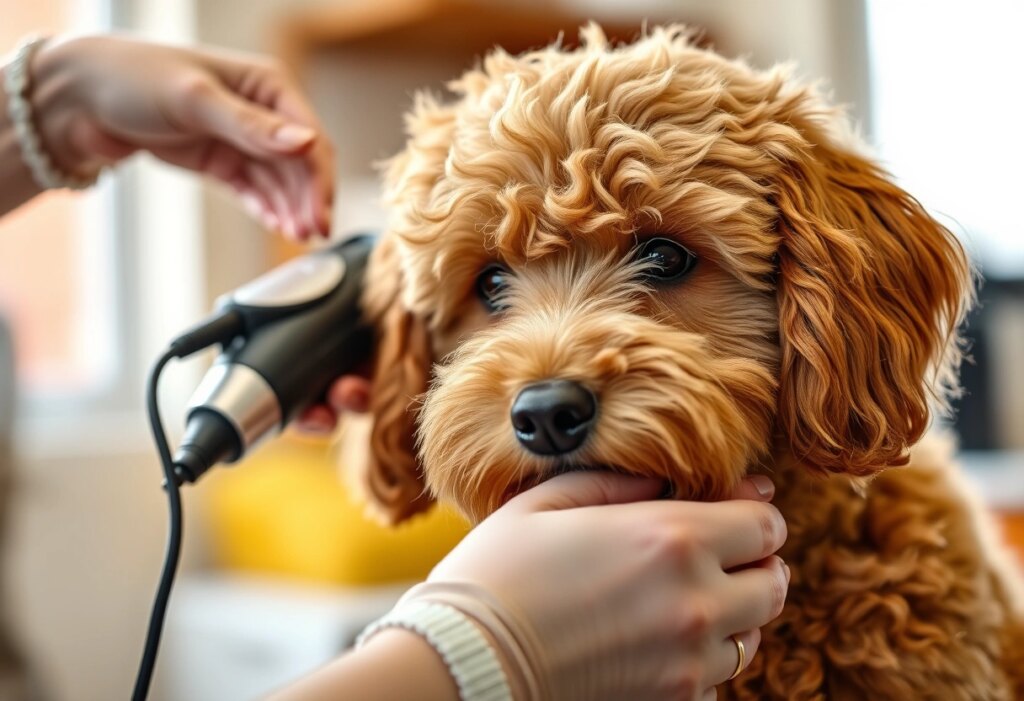
Goldendoodle clippers built for the teddy bear cut need to do something most trimmers aren’t designed for: leave length behind instead of stripping it away. If you’ve ever tried running a standard grooming clipper through a fluffy double coat and ended up with a patchy, uneven mess, you already know the struggle is real. Getting that round, plush teddy bear face and body shape takes the right blade guard, the right motor, and a little patience.
The short answer is this: you want a clipper with adjustable guard combs in the 1 to 2 inch range, a motor strong enough to push through dense or slightly matted fur without bogging down, and a noise level low enough that your dog isn’t trembling through the whole session. Below, I’ll walk through exactly what separates a good set of goldendoodle clippers from one that’ll leave you frustrated, plus a side-by-side comparison of blade types, power sources, and sound levels so you can pick with confidence.
Why the Teddy Bear Cut Needs a Different Clipper Approach
Most people picture clippers as the tool you use for a close, tidy shave. That’s not what’s happening with a teddy bear cut. This style leaves the coat at a fluffy 1 to 2 inch length all over, rounded at the face and legs to mimic that plush, stuffed-animal look Goldendoodles are famous for.
That means your teddy bear cut clippers need long guard combs, not the short 3mm or 5mm blades made for a summer buzz cut. A clipper kit that only goes down to a quarter inch won’t get you anywhere near the fluffy result you’re after. Look for kits with adjustable combs that snap on in half-inch increments, ideally topping out around 2 inches for the body and a shorter guard for detail work around the eyes and paws.
Blade guard sizing also affects how evenly the coat blends. A skilled home groomer works in the direction of hair growth, using a slightly longer guard on the body and a shorter one for shaping the rounded face, so there’s no harsh line where one length meets another. This is the same blending technique professional groomers use, just scaled down for home use.
Motor Power and Heat: Why Underpowered Clippers Fail on Doodle Coats
Here’s where a lot of budget clippers fall apart. Goldendoodles carry a dense, curly or wavy double coat that mats easily, especially behind the ears, under the collar, and in the armpits. The American Kennel Club notes that Doodle-type coats are particularly prone to matting if not brushed regularly, and that matted fur puts extra strain on grooming tools.
A clipper with a weak motor will bog down, snag, and heat up fast when it hits a mat or a thick patch of undercoat. That’s not just annoying, it’s a safety issue. Overheated blades can burn or irritate skin, and a clipper that keeps stalling means more passes over the same spot, which irritates your dog and dulls the blades faster.

This is where a heavier duty motor earns its keep. The Hansprou Dog Clippers for Grooming, 12V Professional option runs on a stronger motor built for thick or double coats, which matters a lot if your Goldendoodle is overdue for a trim and carrying some extra density. A more powerful motor also means fewer repeated passes, which keeps the whole session shorter and less stressful.

- 12V High -Speed Strong Power Motor: Hansprou professional dog grooming clippers have strong power, no hair sticking, plu…
- High Quality Titanium Alloy Blade + Ceramic Moving Blade: provide excellent cutting performance.Detachable blades are ea…
- Low Vibration + Ultra Quiet Design:The noise when dog trimming working is only about 50 db, Hansprou dog clippers to hel…
Before you even pick up a clipper, it helps to know what a proper setup looks like from the start. Our guide on what to look for before you shave a Doodle breaks down the blade sizes, guard combs, and coat-prep steps that make the whole process go smoother, regardless of which clipper brand you land on.
Never run clippers over a coat that hasn’t been brushed out first. Mats trap moisture and pull tight against the skin, and clippers dragged through a mat can cause skin irritation or small nicks before you even realize what happened.
Cordless vs Corded, Ceramic vs Steel Blades, and Noise Levels Compared
Picking the right pair of dog grooming clippers isn’t just about power. Three other factors matter just as much for a nervous or noise-sensitive Doodle: how it’s powered, what the blades are made of, and how loud the motor actually runs.
Cordless clippers give you freedom to move around your dog without a cord getting tangled or yanked, which matters when you’re trying to shape a round face while your dog keeps shifting position. Corded models tend to run longer without needing a recharge and often have slightly more consistent power, but they’re less forgiving if your dog moves suddenly, since the cord can catch.
Blade material affects both sharpness retention and heat. Ceramic blades stay cooler longer and hold an edge well, which is a real plus for thick Doodle coats, though they can be more brittle if dropped. Steel blades are tougher and easier to find replacement parts for, but they heat up faster during longer sessions and need more frequent oiling.
Noise is the factor most owners underestimate. The ASPCA points out that many dogs are sound-sensitive, and a whining or buzzing motor can turn grooming into a stressful ordeal. Clippers that run under roughly 60 decibels, closer to the hum of a quiet conversation, tend to keep anxious dogs calmer throughout the trim.
| Clipper | Power Type | Blade Material | Noise Level | Best For | Price Tier |
|---|---|---|---|---|---|
| Hansprou 12V Professional Clippers | Corded/Rechargeable | Steel | Moderate | Thick, matted, or double coats | $$ |
| Laube Dirty Dog Cordless 2-Speed Clippers | Cordless | Steel | Low to Moderate | Precision shaping, mobility | $$$$ |
| PAWCHIE Grooming Hammock Harness | N/A (Restraint Tool) | N/A | N/A | Keeping wriggly dogs still and safe | $$ |
If mobility and quick blend work around the rounded face and ears is your priority, the Laube Dirty Dog Cordless 2-Speed Pet Grooming Clippers gives you two speed settings, so you can slow things down for detail areas and speed up for the body. Being cordless also means you’re not fighting a cable while trying to angle around a squirmy dog’s chin.

- COMFORTABLE CONTROL: The Dirty Dog by Laube clippers are ergonomically designed for grooming professionals, veterinarian…
- UNMATCHED CLIPPER PERFORMANCE: Experience the Laube difference with the Dirty Dog’s all-new power, torque, and speed at …
- CORDLESS CONVENIENCE: Embrace the freedom of cordless grooming! Its lithium-ion battery TWIST N LOCK powerpack provides …

Whichever clipper you choose, pairing it with the right supporting gear matters too. If you’re building out a full setup from scratch, our roundup of the 5 best dog grooming kits for Goldendoodle coats covers brushes, combs, and shears that work alongside your clippers for a complete teddy bear finish.
Step-by-Step At-Home Trimming Checklist for the Teddy Bear Look
Getting a clean, rounded teddy bear cut at home is absolutely doable, but it goes smoother with a plan. Here’s the order most experienced home groomers follow:
- Brush and de-mat first. Never clip over tangled fur. Use a slicker brush and comb all the way to the skin.
- Bathe and fully dry the coat. Damp fur clogs blades and clips unevenly, so use a high-velocity dryer or let the coat air dry completely.
- Attach the longest guard comb first. Start around 1.5 to 2 inches on the body, then work down if needed.
- Clip with the coat’s growth direction. Going against the grain on curly coats creates choppy, uneven patches.
- Shape the face last, in small sections. Round out the cheeks and top of the head gradually rather than taking off too much at once.
- Trim paws and tail separately with a shorter guard. These areas need tighter, cleaner lines than the body.
- Check blade temperature every few minutes. If the blade feels warm to the back of your hand, pause and let it cool.
Keeping your dog still and comfortable is half the battle. A grooming hammock style harness, like the PAWCHIE Dog Grooming Hammock Harness for Dogs & Cats, gently supports your dog’s weight so they can’t twist or bolt mid-trim, which lowers the odds of an accidental nick during those tighter face and paw passes.
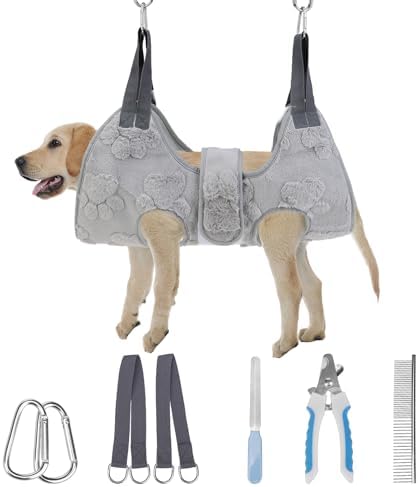
- PROFESSIONAL DOG GROOMING KIT: Dog nail trimming sling hammock is equipped with solid, thicker and super strong carabine…
- POWERFUL FUNCTIONS: This dog nail clipping hammock can be used on both sides. One side is made of crystal velvet and the…
- SAFE DOG HAMMOCK FOR NAIL TRIM: Just place pet legs in holes, then connect the D-ring strap to the dog grooming hammock …
Safety First: Skin Nicks, Blade Heat, and Knowing When to Call a Groomer
Even with great goldendoodle clippers, safety habits make the biggest difference in how the session goes. A few simple checks prevent most at-home grooming injuries.
- Always check blade temperature against your wrist before starting and every few minutes after.
- Keep a lubricating spray or clipper oil nearby to reduce friction and heat buildup.
- Go slowly around bony areas like the ankles, hips, and jawline where skin is thinner.
- Stop immediately if your dog flinches, yelps, or tries to pull away repeatedly in one spot.
If your dog has severe matting close to the skin, a skin condition, or gets so anxious that restraint alone isn’t calming them down, it’s genuinely okay to call in a professional groomer for that session. There’s no shame in it, and it keeps both you and your dog safer. Many owners do a hybrid approach: professional trims every couple of months, with light at-home touch-ups using their own goldendoodle clippers in between to maintain the shape.
Regular ear checks matter here too, since dense facial and ear fur on Doodles traps moisture. If you notice odor or redness while grooming, it’s worth reading through our picks for the 5 best ear cleaners for Goldendoodles with ear infections to catch problems early.
The teddy bear cut is one of the most rewarding styles to master at home because it forgives small imperfections better than a close shave would. With the right clipper, a steady hand, and a calm dog, most owners get genuinely good results within a few sessions.
Frequently Asked Questions About Teddy Bear Cut Clippers
What blade guard size is best for a teddy bear cut on a Goldendoodle?
Most home groomers use a guard comb between 1 and 2 inches for the body to achieve the fluffy, rounded teddy bear look. A shorter guard, around half an inch to three quarters of an inch, works better for detailed shaping around the face, paws, and tail.
Are cordless goldendoodle clippers powerful enough for thick coats?
Many cordless models now include multi-speed motors strong enough for dense double coats, though they may need recharging during longer sessions. Corded clippers generally offer more sustained power for very thick or matted fur, so consider your dog’s coat density before choosing.
How often should I use clippers on my Goldendoodle to maintain the teddy bear cut?
Most Goldendoodles need a full trim every 6 to 8 weeks to maintain the teddy bear shape, with light touch-ups and brushing in between. Regular brushing between trims also reduces matting, which makes each clipper session faster and safer.
Why do my clippers keep snagging on my Goldendoodle’s fur?
Snagging usually means the coat wasn’t fully brushed out before clipping, the blades are dull, or the motor lacks the power to move through dense fur smoothly. Try brushing thoroughly, applying blade oil, and confirming your clipper is rated for thick or double coats before your next session.


