

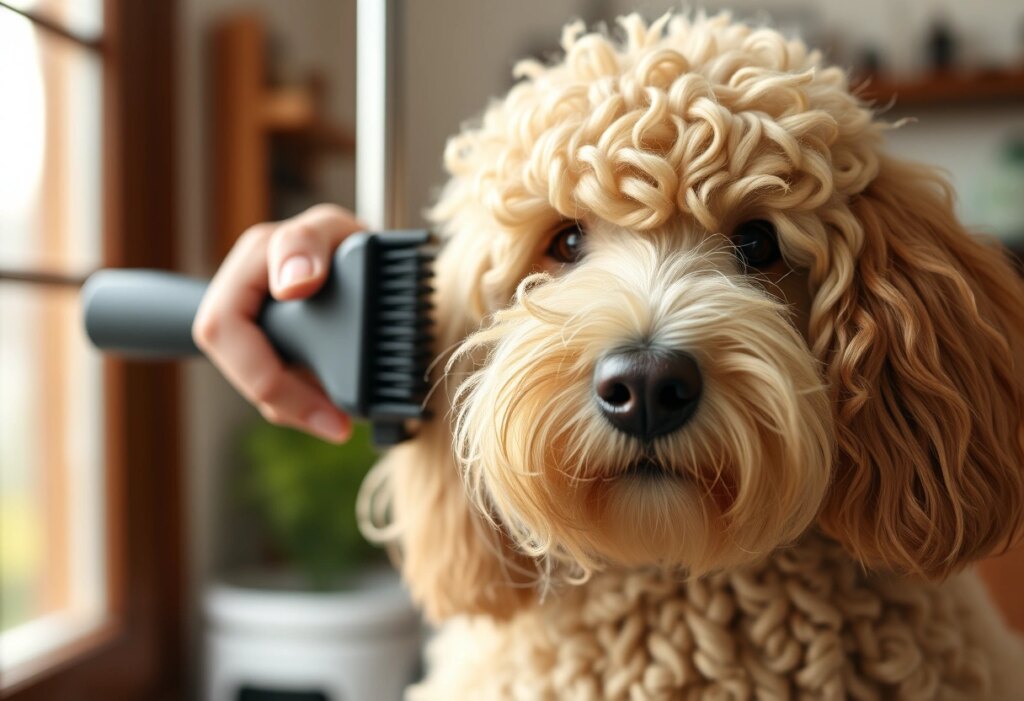
If brushing your Goldendoodle feels like a daily wrestling match against tangles behind the ears and fuzz balls under the collar, you’re not doing anything wrong. Curly and wavy coats mat fast, and the frustration you feel is completely normal for owners of this breed. The right goldendoodle grooming tools can turn that daily struggle into a five-minute routine instead of a fight.
The short answer: your Goldendoodle needs three core tool types in rotation. A quality slicker brush for surface detangling, an undercoat rake for the dense layer close to the skin, and a stainless steel comb for finishing touches and mat-checking. Add a detangling spray for pre-bath prep, and you’ve got the foundation of a coat care system that actually works. Below, we’ll walk through exactly which goldendoodle grooming tools to buy, how to use them by coat stage, and the science behind why skipping this routine causes real health problems, not just bad hair days.
Why Curly Coats Mat So Easily (And Why It Matters More Than Looks)
Goldendoodles, especially F1B generations bred back toward the Poodle side, tend to inherit a wavy-to-curly coat that behaves more like human curly hair than a typical shedding dog’s fur. According to the American Kennel Club, these curlier coat types shed less but require brushing three to four times a week to prevent the loose undercoat from tangling into the topcoat.
That mat isn’t just cosmetic. A 2021 Banfield Pet Hospital state of pet health analysis linked neglected coat maintenance in long-haired breeds to a measurable rise in skin infection cases, largely because trapped moisture and debris under mats create a breeding ground for bacteria and yeast. A mat pulls at the skin with every movement, and over time that constant tension can cause painful sores you won’t notice until the damage is already done.
A mat isn’t just tangled fur. It’s a tight knot pulling at your dog’s skin around the clock, trapping moisture and bacteria underneath where you can’t see it.
The Best Goldendoodle Grooming Tools by Coat Stage
Not every brush works for every coat. A puppy’s soft, cottony fur behaves nothing like a matted rescue coat, so matching your tool to your dog’s current stage matters more than buying the priciest option on the shelf.

- Puppy coat (under 1 year): Use a soft slicker brush and a wide-tooth comb. Puppy fur is fine and prone to static, so gentle detangling tools prevent breakage without pulling.
- Adult curly or wavy coat: Rotate between a slicker brush for the topcoat and an undercoat rake for the dense layer underneath. This combination catches loose hair before it felts into mats.
- Matted or rescue coat: Start with a detangling spray, work in small sections, and finish with a sturdy metal comb to check for remaining knots close to the skin.
A reliable Metal Comb for Dogs, Dog Grooming Detangler earns a permanent spot in this lineup because it gets close to the skin without the scraping sensation cheaper plastic combs cause. It’s especially useful for checking behind the ears and around the collar, two spots where mats form fastest.

- EASY DEMATTING & DETANGLING: Our dog grooming comb features extra-long stainless-steel teeth that glide through tough kn…
- EXTRA LONG PINS: Engineered with PINs that are 30% longer, this dematting comb reaches deeper into dense, curly, or long…
- ERGONOMIC HANDLE: Designed with a non-slip, ergonomic handle, this metal dog comb ensures a secure grip and reduces hand…
Step-by-Step Mat Prevention Routine
Good goldendoodle grooming tools only work if you use them the right way. Line brushing, which means brushing in thin sections all the way down to the skin rather than just skimming the surface, is the single biggest factor separating a mat-free coat from a matted one.
- Before every bath: Apply a light detangling spray and brush through fully. Bathing over existing tangles tightens them into permanent mats.
- Line-brush technique: Part the fur in one-inch sections and brush from root to tip. Skipping this step means you’re only grooming the top layer, not the undercoat where mats begin.
- Drying method: Use a high-velocity dryer or towel-dry thoroughly, then brush again while damp. Air-drying curly coats without brushing locks in tangles as the fur curls tighter.
- Frequency schedule: Brush three to four times weekly for adult coats, daily for puppies transitioning into adult fur, and daily for any dog recovering from a recent mat removal.
If your dog’s coat has gotten away from you between grooming appointments, a Paddle Detangling Hair Brush can help work through larger sections of loosely tangled fur before you switch to a finer comb for the tight spots. The wider bristle spacing is gentler on sensitive skin than a tightly packed slicker brush when you’re dealing with bigger knots.

- Wide Comb Surface for Efficient Detangling :This detangler brush is designed specifically for women, the large comb surf…
- Scientifically Designed Teeth , Minimizing Pulling: The carefully designed teeth gently penetrate hair strands, effectiv…
- Comfortable Cushion & Warm Handle for a Scalp-Soothing Experience: A unique built-in cushion layer absorbs pressure duri…
Slicker Brush vs Undercoat Rake vs Comb: Pros and Cons
Choosing between these three goldendoodle grooming tools comes down to what job you need done. Here’s how they stack up against each other.
Slicker Brush
- Pros: Removes loose surface hair fast, works well for weekly maintenance, gentle on puppy coats
- Cons: Can miss dense undercoat tangles if not used with line-brushing technique
Undercoat Rake
- Pros: Reaches deep into thick fur, excellent for reducing shedding and preventing felting
- Cons: Too aggressive for puppy coats or already-irritated skin
Metal Grooming Comb

- Pros: Best for checking finished work, gentle around ears and paws, catches small knots brushes miss
- Cons: Slower for full-body grooming sessions, not ideal as a standalone tool
A curly coat brush marketed for human hair can actually double as a helpful backup tool in a pinch. The Frida Detangling Hairbrush for Kids, Thick or Curly Hair has flexible bristles designed for sensitive scalps, which translates surprisingly well to a Goldendoodle’s tender skin around the face and legs.

- WIDE-TOOTH COMB: Features a unique combination of wide-tooth combs and flexible bristles, making it perfect for thick or…
- NO PAIN DETANGLING: Designed to gently glide through stubborn tangles and knots without hurting the scalp, reducing brea…
- BREAKAGE PREVENTION: The brush’s special design helps minimize pulling and breakage, protecting delicate hair strands wh…
Comparison Table: Top Goldendoodle Grooming Tools
| Tool | Best For | Coat Stage | Price Tier |
|---|---|---|---|
| Metal Grooming Comb | Mat-checking, sensitive areas | All stages | $ |
| Slicker Brush | Weekly surface maintenance | Puppy to adult | $$ |
| Undercoat Rake | Deep undercoat, shedding control | Adult, thick coats | $$ |
| Paddle Detangling Brush | Loosening larger tangles | Matted or neglected coats | $$ |
| Curly-Hair Detangling Brush | Sensitive skin, face and legs | Puppy, adult | $ |
| Detangling Spray | Pre-bath prep | All stages | $ |
| High-Velocity Dryer | Drying and finishing brush-out | Adult, thick coats | $$$$ |
Grooming Kit vs Professional Groomer: What’s Worth It
Building your own kit of goldendoodle grooming tools is a mid-range investment upfront, but it pays off fast compared to biweekly grooming appointments. If you’re weighing the math yourself, our breakdown on Doodle Grooming Kit vs Groomer: Which Saves You Money? walks through the real cost comparison over a full year.
That said, even the best home setup benefits from a professional trim every couple of months to keep the coat length manageable between sessions. If you’re still deciding between a Goldendoodle and a Labradoodle based on coat upkeep alone, it’s worth reading about the Goldendoodle vs Labradoodle: The Downsides to Know First before committing to either grooming routine long-term.
When to Call a Professional Groomer Instead
Sometimes a mat is too far gone for home tools, and that’s okay. If you can’t get two fingers between the mat and the skin, or if your dog yelps or flinches when you touch a specific area, stop and call a groomer or your veterinarian.
Forcing a comb through a severe mat risks tearing skin that’s already stressed underneath. Professional groomers have clippers designed to shave mats out safely without that risk, and there’s no shame in using that option when things get out of hand.
Frequently Asked Questions
What are the best goldendoodle grooming tools for a first-time owner?
Start with a slicker brush, a metal grooming comb, and a detangling spray. These three goldendoodle grooming tools cover the basics of weekly maintenance and let you catch small tangles before they turn into full mats.
How often should I brush my Goldendoodle’s curly coat?
Adult Goldendoodles with wavy to curly coats need brushing three to four times a week, according to AKC guidance on curly-coated breeds. Puppies transitioning into their adult coat, usually between five and twelve months old, often need daily attention since the coat change period is when matting happens fastest.
Is a curly coat brush for humans safe to use on dogs?
Yes, in most cases a flexible detangling brush designed for thick or curly human hair works well on sensitive areas like a Goldendoodle’s face and legs. It shouldn’t replace a proper slicker brush or undercoat rake for full-body grooming, but it’s a gentle backup tool many owners already have at home.
Can matting actually cause health problems, not just tangled fur?
Yes. Banfield Pet Hospital data from 2021 showed a measurable rise in skin infections among long-haired breeds with neglected coats, largely tied to trapped moisture and bacteria under mats. Using the right goldendoodle grooming tools consistently is a health measure, not just a cosmetic one.
Whatever combination of goldendoodle grooming tools ends up in your basket, the real win is consistency. A few minutes of brushing several times a week protects your dog’s skin, saves you money on grooming visits, and keeps that signature curly coat looking the way you fell in love with in the first place.


