
A matted doodle coat is not just a cosmetic problem. It traps moisture and heat against your dog’s skin, creating a warm, damp environment where bacteria and yeast thrive, and once mats pull tight enough, they can restrict blood flow and hide skin damage you won’t see until the fur is gone. Research published in the Journal of Small Animal Practice has documented that severe matting can cause pressure sores, skin lesions, and can mask underlying dermatitis that owners had no idea was there. If you’re staring at a tangled Goldendoodle or Bernedoodle right now and wondering whether to grab the clippers yourself or book a professional, this is the decision that matters most for your dog’s skin health this week.
Why a Matted Doodle Coat Is More Than a Bad Hair Day
Doodle coats are genetically built to mat. That soft, wavy or curly texture from the Poodle side of the family traps loose undercoat instead of shedding it out, and within a couple weeks of skipped brushing, those loose hairs weave themselves into tight knots close to the skin. A mild tangle behind the ears is annoying. A pelted coat across the back and hindquarters is a different animal entirely. When mats form dense mats close to the skin, they act like a cast, cutting off airflow and pinching the skin underneath. That’s when you start seeing hot spots, redness, and sometimes open sores that the fur was hiding the whole time. Vets frequently discover these issues only after the coat comes off, which is part of why a matted doodle coat should be treated as a health issue, not just a grooming inconvenience.
The severity of the mat matters enormously here. A few tangles you can work through with your fingers are nothing like a solid sheet of felted fur that no comb will penetrate. Knowing where your dog falls on that spectrum is the first step in deciding whether this is a DIY job or one for a professional.
The Real Risks of DIY Clipping on a Matted Doodle Coat
Grabbing clippers and going to work on a mat yourself feels efficient, but it’s one of the easiest ways to injure your dog without meaning to. Doodle skin is loose and thin, especially around the belly, armpits, and hind legs, and when it’s pulled taut by a mat, that skin tents up into the clipper blade. Groomers call this “skin tenting,” and it’s the number one cause of clipper cuts on matted dogs. The ASPCA’s grooming safety guidance specifically warns against shaving over matted fur with standard clippers because the blade can’t distinguish between hair and the skin fold trapped inside the mat.
Clipper burn is the other major risk. Running a blade repeatedly over the same tight patch of tangled fur generates friction heat, and dogs with sensitive skin (which describes a lot of doodles) can end up with red, irritated strips that take days to heal. Then there’s the less obvious danger: mats often hide the true state of the skin underneath. You might clip through a mat and discover a raw, infected patch you had no idea existed, and now you’re dealing with an open wound at home instead of in a controlled setting with someone trained to handle it. If your dog has more than a couple dense mats, or if the matting covers a large area rather than a small localized patch, DIY clipping raises the risk profile substantially.
When a Professional Groomer Is the Safer Call
Professional groomers have tools and techniques specifically built for this problem. Dematting rakes, curved dematting blades, and specialized comb attachments let them work through tangles in sections without dragging a standard clipper blade straight into tented skin. Many groomers also use low-stress handling techniques, including breaks, treats, and repositioning, so a dog doesn’t need sedation for what would otherwise be a stressful shave-down. That combination of the right tools and calm handling is exactly why professional dematting sessions exist as their own service category.

Cost is the part most owners want to know upfront. According to industry survey data compiled by Groomer to Groomer, a professional deshedding or dematting session typically runs in the seventy-five to one hundred fifty dollar range, depending on your dog’s size and how severe the matting is. That’s a real expense, but weigh it against the risk of a clipper injury or an infected mat that turns into a vet visit. If you’re trying to map out the full cost picture before committing either way, this breakdown of mobile groomer, salon, and DIY grooming costs lays out where the money actually goes for each option. For Goldendoodle owners specifically, there’s also a dedicated comparison of DIY versus professional grooming costs that breaks down the math by coat type and mat severity.
Once a mat is tight enough that you can’t slide two fingers underneath it, it has usually moved past what a home dematting kit can safely fix, and that’s the point where a professional’s tools and training start to matter more than saving money.
Safe At-Home Alternatives for Mild Tangles
Not every tangle needs a professional. If you catch matting early, before it’s felted solid against the skin, you have real options at home. A quality slicker brush paired with a detangling spray can work through loose knots in a few short sessions rather than one painful marathon. For denser tangles that resist a slicker brush, a dedicated dematting comb designed to cut through knots without pulling skin is a safer middle step before reaching for clippers at all. The 2 Pack Double Sided Dematting Comb for Dogs Cats is built exactly for this stage, with rounded blade tips that separate hair strands instead of scraping against skin, which makes it a reasonable budget-friendly pick for owners managing moderate tangles between grooming appointments.
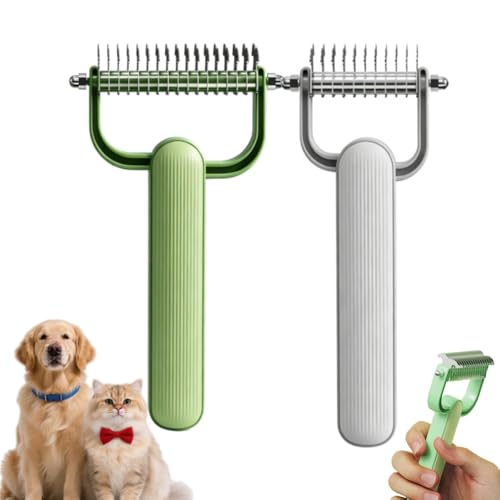
- ✨【Efficient Hair Removal Experience】The V-tooth pet grooming comb features efficient hair removal, designed for both cat…
- 🌀【Upgraded Material】This deshedding comb is crafted from upgraded material, providing durability, suitable for long term…
- 🖐【Ergonomic Handle for Comfort】The ergonomic handle of this pet comb offers comfortable design with a soft, fitted grip,…
Bathing before you brush also makes a measurable difference, since dry, brittle fur mats faster and resists detangling tools more than clean, conditioned fur does. A shampoo formulated specifically to loosen tangles as part of the wash cycle, like the Dog Shampoo Half Gallon, Cleans, Conditions & Detangles, gives you a head start before you even pick up a comb, which matters a lot on a wavy or curly doodle coat that dries into knots overnight if left unbrushed. It’s a mid-tier option that pulls double duty as regular bath product and pre-brushing prep.

- LARGE VALUE SIZE (64 OZ): Save time and money with our extra-large half gallon 64oz bottle of premium dog shampoo, suita…
- 4-IN-1 DOG SHAMPOO: Effectively cleans, conditions, detangles, and moisturizes your dog’s skin. Keep your dog’s fur soft…
- PROUDLY MADE IN THE USA: Our shampoo for dogs is a quality American-made product formulated and tested in the best facil…
For daily maintenance once the coat is untangled, a sturdy metal comb helps you catch new tangles before they set in, which is honestly the best long-term defense against ever facing a fully matted doodle coat again. The Metal Comb for Dogs, Dog Grooming Detangler works well as a quick daily check tool, sliding through clean fur to flag problem spots while they’re still small enough to fix with your fingers.

- EASY DEMATTING & DETANGLING: Our dog grooming comb features extra-long stainless-steel teeth that glide through tough kn…
- EXTRA LONG PINS: Engineered with PINs that are 30% longer, this dematting comb reaches deeper into dense, curly, or long…
- ERGONOMIC HANDLE: Designed with a non-slip, ergonomic handle, this metal dog comb ensures a secure grip and reduces hand…
Comparing DIY Tools vs Professional Dematting Services
Here’s a quick side-by-side look at where each option lands on safety, skill required, and typical investment. This is useful whether you’re managing a matted doodle coat right now or just building your grooming toolkit for the future.

| Option | Best For | Skin Safety Level | Skill Needed | Price Tier |
|---|---|---|---|---|
| Metal Grooming Comb | Daily maintenance, spotting early tangles | High | Low | $ |
| Detangling Dog Shampoo | Pre-brushing prep, loosening dry knots | High | Low | $$ |
| Dematting Comb (dual-sided) | Moderate tangles, in-between grooming visits | Medium-High | Medium | $$ |
| DIY Home Clippers | Full-body trims on unmatted, clean coats only | Low on matted fur | High | $$$ |
| Professional Dematting Session | Dense mats, pelted coats, sensitive skin cases | High | N/A (done for you) | $$$$ |
A Simple Decision Checklist for Your Doodle’s Matted Coat
When you’re standing there trying to decide what to do next, run through this short checklist before touching a clipper or a comb.
- Mat severity: Can you slide two fingers underneath the mat easily? If yes, a dematting comb and patience at home is probably fine. If the mat feels like a solid board against the skin, it’s time for a professional.
- Coverage area: A few isolated mats behind the ears or on the legs is manageable at home. Matting that covers the back, chest, or hindquarters in large sheets is a job for a groomer with the right tools.
- Your dog’s temperament: A wiggly, anxious, or bite-sensitive doodle raises the risk of a DIY clipper injury significantly. Calm, cooperative dogs give you more margin for error, but even then, dense mats warrant caution.
- Skin condition: If you notice odor, redness, or your dog flinching when you touch a matted area, stop and see a vet or groomer before doing anything else. That could mean infection or a wound hiding under the fur.
- Your own comfort level: If your hands are shaking or you’re not confident with clippers, that’s a sign to call it quits and book an appointment rather than risk a cut.
If you go through that list and you’re still unsure, the safer default is almost always to book a groomer, especially for a first-time severe matting situation. You’ll learn a lot by watching a professional work through it, and that knowledge makes future at-home maintenance easier and safer. For a deeper cost breakdown of what professional dematting versus DIY actually costs over a year of ownership, this guide comparing professional groomer and DIY doodle grooming costs is worth a look before you commit to either path long term.
Building a Routine That Prevents Doodle Coat Matting
The best way to avoid this whole dilemma is consistent brushing, ideally every one to two days for most doodle coat types, using a slicker brush or metal comb that reaches down to the skin rather than just skimming the surface. Bathing on a regular schedule with a detangling shampoo, followed by thorough drying (a doodle coat that air dries slowly is a doodle coat that mats while drying), keeps the undercoat from felting in the first place. Owners who fall behind on brushing for even a couple weeks often find themselves right back in matted doodle coat territory, so building a short daily habit, even five minutes with a comb while your dog relaxes on the couch, pays off far more than an occasional deep grooming session.
According to the American Kennel Club’s grooming resources, regular brushing also gives owners a chance to catch skin issues, parasites, or lumps early, which is another reason it’s worth treating as routine rather than optional. You can read more from the American Kennel Club’s grooming guidance on building a coat care routine suited to curly and wavy coat types like most doodles have.
Final Thoughts on DIY Clippers vs Professional Groomer Safety
There’s no universal right answer here, but there is a clear pattern: mild tangles are fair game for careful at-home work with the right comb and a little patience, while a genuinely matted doodle coat, especially one that’s dense, widespread, or hiding skin problems, is safer in a professional’s hands. Weigh the mat severity, your dog’s temperament, and your own comfort with clippers honestly, and when in doubt, spend the money on a groomer rather than risk a clipper injury or missed infection. Your dog’s skin will thank you either way.
Frequently Asked Questions
Is it safe to shave off a matted doodle coat myself at home?
It depends heavily on how severe the matting is. Light, scattered tangles can often be worked through safely with a dematting comb, but dense mats close to the skin put your dog at real risk of clipper cuts and skin tenting if you try to shave them off yourself. When mats are thick or widespread, a professional groomer with proper dematting tools is the safer route.
How much does professional dematting typically cost for a doodle?
Based on industry survey data from Groomer to Groomer, a professional deshedding or dematting session generally falls in the seventy-five to one hundred fifty dollar range, depending on your dog’s size, coat length, and how severe the matting has become. Larger doodles with dense, full-body matting tend to land at the higher end of that range.
What are the warning signs that a matted doodle coat needs a vet, not just a groomer?
Watch for odor coming from the matted area, redness or discharge once the mat is parted, your dog flinching or yelping when the area is touched, or visible sores under the fur. Any of these signs point to possible infection or skin damage that should be checked by a vet before or alongside any grooming work.
How often should I brush my doodle to prevent a matted doodle coat?
Most doodle coat types do best with brushing every one to two days, using a slicker brush or metal comb that reaches down to the skin rather than just the surface layer. Regular short sessions prevent the loose undercoat from weaving into tight knots, which is how a matted doodle coat forms in the first place.