

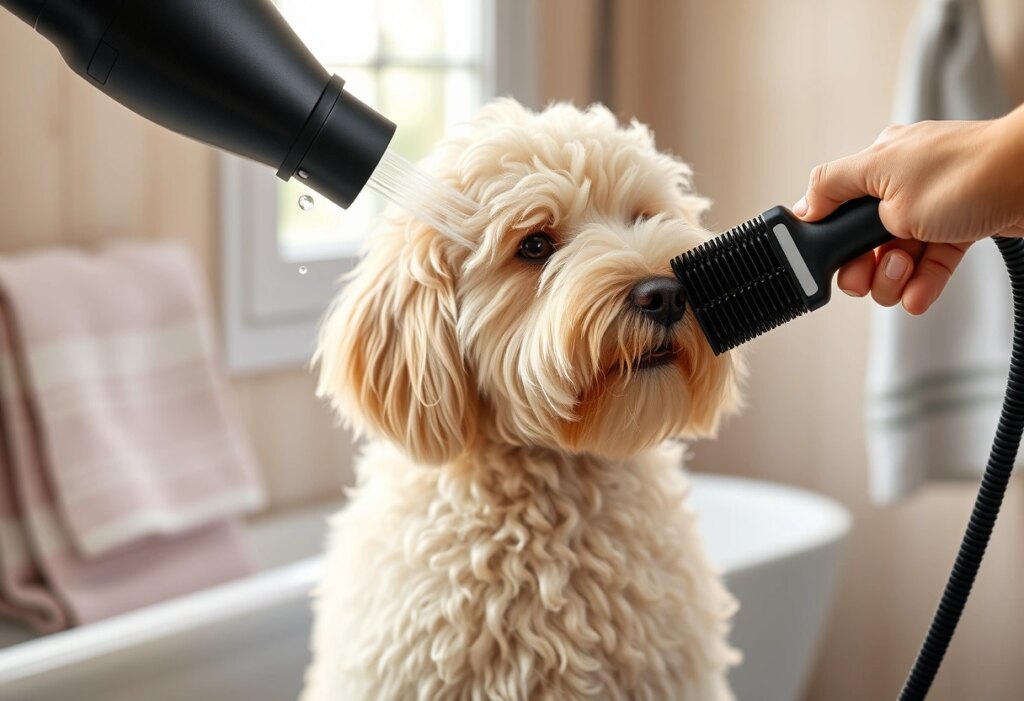
A pet dryer turns bath time from a matting disaster into a manageable routine, and if you’ve ever watched your Goldendoodle’s coat air-dry into a frizzy, tangled mess, you already know why this matters. That damp, wavy fur holds moisture close to the skin for hours, and every minute it stays wet is another minute those loose undercoat hairs have to wind themselves into a knot. It’s exhausting, honestly, standing there with a towel wondering if there’s a better way.
There is. High-velocity (HV) force dryers are the answer most professional groomers reach for, and for good reason. According to American Kennel Club grooming guidelines, a proper pet dryer can cut drying time by roughly 70 percent compared to a towel-and-air method, while simultaneously blasting loose undercoat hair out of the fur before it has a chance to felt into a mat. That combination, speed plus mechanical separation of the fur, is exactly what a dense doodle coat needs.
This guide walks through the differences between stand dryers, handheld HV dryers, and cage dryers, how to brush while you dry so mats never get a foothold, and the safety checkpoints every doodle parent should know before turning on any pet dryer near sensitive skin.
Why a Regular Hair Dryer Fails a Doodle Coat
Human hair dryers are built for straight, single-coated hair. A Goldendoodle’s coat is a different animal entirely: it’s often wavy or curly, dense, and prone to trapping moisture near the skin where mats start. A standard dryer relies mostly on heat, and heat alone doesn’t separate hair strands the way a doodle coat needs.
A pet dryer, by contrast, uses high air velocity rather than high heat to push water off the hair shaft and skin. Less heat means less risk of drying out skin or triggering hot spots, and the forceful air actually fluffs and separates the undercoat as it dries. That’s the mechanical action that keeps mats from forming at the root in the first place.
Matting rarely starts on the surface of the coat. It begins at the skin, in the dense undercoat, where trapped moisture and friction from normal movement wind hair into tight knots long before you ever see a problem on the outside.
Stand Dryers vs. Handheld HV Dryers vs. Cage Dryers
Picking the right pet dryer really comes down to your dog’s temperament, your grooming setup, and how much hands-on control you want during the process. Here’s how the three main categories stack up.

| Dryer Type | Best For | Noise Level | Hands-Free? | Price Tier |
|---|---|---|---|---|
| Handheld HV Dryer | Owners who want full control over airflow direction and speed | Moderate to High | No | $$$ |
| Stand Dryer | Solo groomers who need both hands free for brushing | Moderate | Yes | $$$$ |
| Cage/Box Dryer | Calm dogs, multi-pet households, unattended drying in short bursts | Low to Moderate | Yes | $$$$$ |
Handheld high velocity dog dryer units give you the most precision. You point the nozzle exactly where the mat risk is highest (armpits, ears, the collar area) and adjust on the fly. The tradeoff is that you need one hand on the dryer and one on the brush, which takes some practice to coordinate.
Stand dryers solve that problem by mounting the nozzle on an adjustable arm, freeing both your hands for brushing. They’re a solid mid-to-premium investment for anyone who baths and dries their doodle regularly at home.
Cage or box-style dryers work differently. The dog sits inside a ventilated enclosure while filtered warm air circulates around them, which is gentler on noise-sensitive dogs since there’s no direct nozzle blast. The Petsuper 75L Automatic Cat Dryer Box and 1.8L Wireless Pet Dryer is a good example of this style, offering a controlled, low-stress drying chamber that also doubles as a portable wireless dryer for touch-ups outside the box.
Noise sensitivity is worth taking seriously here. ASPCA behavioral data suggests a large majority of dogs, close to 65 percent by some estimates, show a visible stress response to loud grooming equipment the first few times they encounter it. If your Goldendoodle flinches, tucks their tail, or tries to bolt when the dryer turns on, a lower-noise cage dryer or a gradual desensitization approach with a handheld unit on its lowest setting is the safer starting point.
Choosing the Best Pet Dryer for Your Doodle’s Coat Density
Not every doodle coat is the same, and the best pet dryer for a loosely waved Goldendoodle puppy coat isn’t necessarily the right pick once that coat matures into a dense, curly adult texture. Denser coats generally need more airflow volume and a nozzle with a wider spread to reach the undercoat without concentrating heat in one spot.
Wrap-style drying suits have become a popular budget-friendly complement to any pet dryer setup. The MANON ROSA Dog Drying Bag Quick Dry Pet Hair Drying Suit absorbs a good portion of surface moisture before you even switch on the dryer, which shortens total drying time and reduces how long your dog needs to tolerate the noise and airflow.

- Efficient and Time-Saving: With a quick drying time of 8-30 minutes, our dryer bag evenly circulates air, guaranteeing t…
- 360-Degree Drying, No Dead Angles: The 360-degree design of this bag leaves no area untouched. It accommodates your pet’…
- Durable: Compatible with various blow dryers and water machines, this dryer bag is made from high-quality materials for …
If you’re still building out your grooming station and comparing tools, it helps to also look at what you’ll be using on the dry coat afterward. A quality dog clipper built for tackling matted fur can rescue a coat that got away from you before you had the right drying setup in place.
The Brush-While-You-Dry Method
This is the technique that actually prevents mats, not just the dryer itself. Drying without brushing just blows hot or cool air over tangles that are already forming. Here’s the step-by-step approach groomers use:

- Start at the skin, not the tips. Section the coat and aim the pet dryer nozzle directly at the roots, working in small sections rather than blasting the whole dog at once.
- Brush in the direction of airflow. Use a slicker brush right behind the nozzle, following the same line the air is pushing the fur, so hair separates as it dries instead of tangling.
- Work in layers, bottom to top. Legs and belly first, then sides, then back and tail. This “line drying” order keeps gravity working with you instead of trapping moisture under already-dry layers.
- Check high-friction zones twice. Behind the ears, under the collar, and in the armpits mat faster than anywhere else because of constant movement and moisture retention.
- Finish with a comb pass. Once fully dry, run a metal comb through each section to catch any missed tangles before they get a chance to set.
Pairing this method with the right shampoo also makes a measurable difference. A slippery, well-conditioned coat separates more easily under the brush, which is why picking the best detangling shampoo for a Goldendoodle’s coat is worth the extra thought before you even reach for the dryer.
Setting Up a Calm Drying Station
Where your dog sits or stands during drying matters more than most owners realize. A wobbly grooming table or a slick bathroom floor adds stress on top of an already unfamiliar noise. Some owners have started using enclosed, visibility-friendly setups like the Acrylic Dog House Clear Pet House Small Animal Habitat as a calm-down or containment zone between drying sections, since the clear paneling lets the dog see you the whole time rather than feeling shut away.

- Built for Longevity: Constructed from high-clarity acrylic, this product is both sturdy and pet-safe for long-term use. …
- Full Visual Access: The clear design offers pets a full panoramic view of their surroundings, reducing anxiety by keepin…
- Modern Aesthetic: With a sleek, minimalist profile, this product blends well into modern interiors. It discreetly comple…
A stable, predictable environment paired with a consistent pet dryer routine builds tolerance over time. Most doodles who start out anxious around drying equipment settle into it within a handful of sessions, especially if each one ends with a treat and some calm praise.
Safety Checkpoints: Heat, Distance, and Stress Signals
A pet dryer is safe when used correctly, but there are a few rules that shouldn’t be skipped, especially with a curly, dense doodle coat that can hide skin issues underneath it.
- Keep the nozzle moving. Never hold a dryer in one spot for more than a couple of seconds. Constant motion prevents localized overheating.
- Maintain distance. Keep the nozzle at least 4 to 6 inches from the skin at all times, closer only reduces control and raises burn risk.
- Use the lowest effective heat setting. Cool or warm settings are almost always sufficient; high heat settings are unnecessary for most home grooming sessions.
- Watch for overheating signs. Excessive panting, reddened skin, or a dog pulling away repeatedly from one area means stop and check the skin immediately.
- Watch for stress signals. Flattened ears, whale eye (whites of the eyes showing), trembling, or attempts to flee mean it’s time for a break, not a push-through.
If your Goldendoodle’s coat has already matted before you got a chance to try any of this, don’t reach for scissors on your own. A trained groomer or vet tech can safely remove pelted mats without risking cuts to the skin underneath, which is thinner and more delicate than it looks under all that curl.
A Reassuring Takeaway for Doodle Parents
Getting the drying step right isn’t about buying the fanciest equipment on the market. It’s about matching the right pet dryer to your dog’s temperament and coat density, then pairing it with a consistent brush-while-you-dry habit that stops mats before they start.
Give your dog frequent breaks, keep the heat low, and trust their body language over the clock. A calm, well-dried Goldendoodle today is a much easier grooming session next time, and that compounding trust is worth more than any single tool in your bathroom cabinet.
Frequently Asked Questions
Is a high velocity dog dryer safe for a Goldendoodle puppy?
Yes, as long as you use the lowest speed and heat setting and introduce the noise gradually. Puppies have thinner skin and less coat volume, so keep the nozzle further away and limit sessions to short bursts with plenty of breaks and praise.
How long should I use a pet dryer on a Goldendoodle’s coat?
Most full-body sessions take between 20 and 40 minutes depending on coat length and density, though a proper force dryer for dogs can shorten this considerably compared to towel drying alone. Working in sections with brushing built in tends to be faster overall than drying the whole coat first and brushing after.
Can I use a dog grooming dryer if my Goldendoodle is scared of loud noises?
Absolutely, but start with the quietest setting available and let your dog sniff and investigate the dryer while it’s off first. Cage-style dryers tend to be a gentler entry point for noise-sensitive dogs since the sound is more muffled than a direct handheld nozzle.
Does a pet dryer really prevent matting better than air drying?
Yes. Air drying leaves the coat damp for hours, giving loose undercoat hair plenty of time to wind into knots near the skin. A pet dryer combined with brushing separates those hairs while they’re still wet and drying, which is the single biggest factor in preventing mats from forming in the first place.


