


A good slicker brush is the difference between a Goldendoodle who looks freshly groomed and one who’s sporting a mat behind each ear by Wednesday. If you’ve ever run a comb through your pup’s coat and hit a wall of tangled fluff, you already know why the right tool matters so much. This guide walks through five slicker brush and deshedding tool options worth your money in 2026, plus the technique and schedule that actually keeps a wavy or curly coat looking its best.
Why Goldendoodle Coats Need a Specialized Slicker Brush
Goldendoodles inherit their coat texture from both parent breeds, and depending on the generation (F1, F1B, or multigenerational), you’ll get anything from loose waves to tight, poodle-like curls. What all of these coats have in common is a tendency to trap loose, dead hair close to the skin instead of shedding it onto your floor. That’s great news for allergy sufferers, but it means the undercoat needs mechanical help getting out, or it felts into mats. A quality slicker brush uses fine, slightly bent wire pins to reach past the topcoat and pull loose fur and debris out without yanking on the skin. According to the Goldendoodle Association of North America’s coat-type guidelines, wavy and curly F1B coats are especially prone to matting around the ears, armpits, and collar area, which is exactly why regular use of the right brush matters more for Doodles than for straight-coated breeds.
A basic pin brush or plastic comb just skims the surface. A proper slicker brush gets down into the undercoat where mats actually start. If your dog’s coat has gone longer than a week without a full brush-out, that’s usually where the trouble begins.
What Makes a Slicker Brush Actually Good
Not all slicker brushes are built the same, and the cheap ones can do real damage if you’re not careful. Here’s what separates a tool worth buying from one that’ll sit in a drawer after two uses:
- Pin flexibility: Pins that bend slightly under pressure protect the skin from scratches, especially important since Doodle skin can be more sensitive than you’d expect under all that fur.
- Ergonomic handle: A grip that doesn’t cramp your hand matters when you’re brushing a full-grown Standard Goldendoodle for fifteen or twenty minutes at a time.
- Self-cleaning button: A retractable pin mechanism lets you clear out trapped hair with one click instead of picking it out by hand.
- Safety for sensitive skin: Rounded pin tips and consistent spacing prevent the “brush burn” that happens when pins drag repeatedly over the same patch of skin.
Keep these four criteria in mind as you shop, because a lot of budget brushes skip at least one of them.
5 Best Slicker Brushes and Deshedding Tools for Goldendoodles in 2026
Here’s a rundown of tools that hold up well across different Goldendoodle coat types, from loose wavy F1 coats to dense curly F1B coats.
1. Steam-Assisted Grooming Brush for Deep Detangling
For owners dealing with a particularly dense or curly coat, a steam function can be a genuine time-saver. The Pecait 3-in-1 Steam Brush with Release Button and Tank combines a fine pin head with a light mist of steam that helps loosen dried mats and static before you brush through them. This is particularly handy after a bath when the coat has dried into stubborn clumps, or during dry winter months when static makes curly coats frizz and tangle more easily. The built-in release button pops trapped fur out of the pins in seconds, which cuts down on cleanup time significantly.
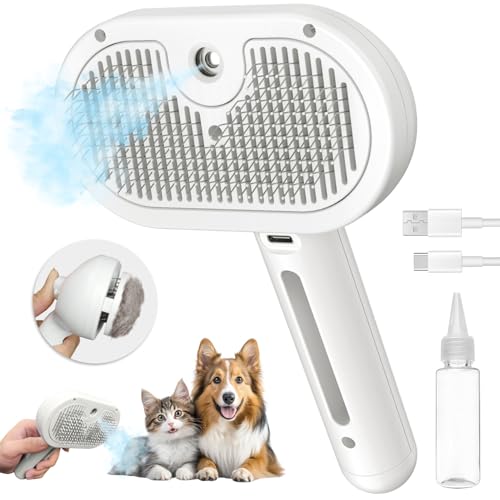
- 【Cat Steam Brush for Shedding – A Gentle Grooming Experience】 Indulge your feline friend in a luxurious grooming session…
- 【Effortless Self-Cleaning Cat Brush for Indoor Cats – No Hassle, No Mess】 Tired of tangled hair clinging to your brush? …
- 【3-in-1 Cat Hair Brush – The Ultimate Grooming Tool】 Meet your all-in-one grooming solution! Our cat steam brush seamles…
Best for: Curly F1B coats prone to dryness and static. Price Tier: $$$ (mid-range investment for the steam function).

2. Firm-Bristle Body Brush for Surface Polish
Not every brushing session needs to go deep into the undercoat. Sometimes you just need to smooth the topcoat and distribute natural oils after a deep deshedding tool session. The Histotree Orange Black Horse Brush for Grooming, originally designed for horse grooming, works surprisingly well as a finishing brush on wavy Goldendoodle coats. The stiff, solid-wood bristles buff the topcoat to a nice shine and help knock loose surface dust and dirt free between full grooming sessions.
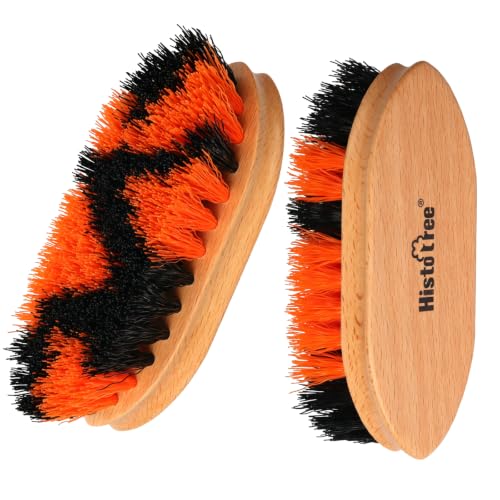
- Dual-Color Crimped Bristles for Deep&Gentle Grooming:Our Histotree horse brush features crimped bristles in contrasting …
- Sturdy&Durable Beech Wood Brush Back:This horse grooming brush is made of beech wood with smooth edges and an ergonomic …
- Multi-Purpose Equine Grooming Tool:This 30mm long crimped bristles horse brush works great for dry brushing to remove su…
Best for: Wavy F1 coats needing a quick polish between deep brushing days. Price Tier: $ (budget-friendly).
3. Solid Wood Dandy Brush for Everyday Maintenance
If you want something sturdy that’ll last years of daily use, the Histotree Black White Stiff Dandy Brush Solid Wood Horse Body Brush is a solid, no-frills option. The stiff bristles set in a solid wood body give it real durability, and the firm bristle pattern is good for whisking away surface debris on shorter, less curly Doodle coats. It won’t replace a true slicker brush for deep mat prevention, but it earns a spot in the grooming caddy as a quick-touch tool for days when you’re short on time.
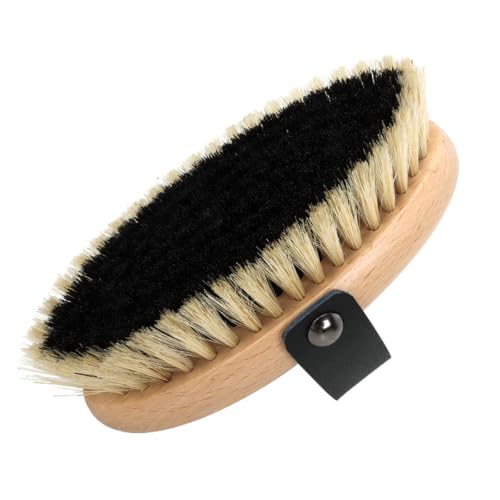
- Dual-Color Dense Bristles for Deep&Gentle Grooming:Our Histotree horse brush features black&white PET bristles to easily…
- Sturdy&Durable Beech Wood Brush Back:This horse grooming brush is made of beech wood with smooth edges and an ergonomic …
- Suitable for all livestock hair:This horse body brush is suitable for removing surface dirt and loose undercoat,leaving …
Best for: Shorter, low-maintenance coats or quick daily touch-ups. Price Tier: $ (budget-friendly).
4. Classic Fine-Pin Slicker Brush
A traditional fine-pin slicker brush with a curved head remains the workhorse of Goldendoodle grooming. Look for one with a large brushing surface if you have a Standard-sized dog, since a smaller head means more strokes to cover the same area. The fine pins reach into dense curls without pulling too hard, making this a good everyday choice for owners managing an F1B coat that mats quickly around the legs and tail.
Best for: Dense curly coats needing regular mat prevention. Price Tier: $$ (affordable, great value).
5. Undercoat Rake with Rotating Pins
An undercoat rake looks similar to a slicker brush but has longer, widely spaced teeth designed to reach deeper into thick fur. Models with rotating pins reduce the pulling sensation, which matters for dogs with sensitive skin. This tool shines during seasonal shed-outs when the undercoat gets noticeably thicker, even in a “low-shed” Doodle.
Best for: Heavy undercoat removal, especially during seasonal coat changes. Price Tier: $$$ (mid-range).

Slicker Brush vs Deshedding Tool vs Undercoat Rake: Which One Do You Need?
These three tools often get lumped together, but they solve slightly different problems. A slicker brush is your everyday tool for surface tangles and light mat prevention. A deshedding tool is built to pull loose undercoat hair out in volume, which matters even for Doodles since “low-shed” doesn’t mean “no dead hair.” An undercoat rake goes deepest of the three and works best on thick, dense coats that build up a lot of trapped fur close to the skin. The American Kennel Club’s grooming guidance notes that Doodles benefit from weekly brushing at minimum to prevent matting, and most groomers recommend using a slicker brush for general maintenance while reserving a rake or deshedding tool for deeper sessions once or twice a month.
| Tool | Best Coat Type | Key Feature | Price Tier |
|---|---|---|---|
| Pecait 3-in-1 Steam Brush | Curly, dry, or static-prone | Steam-assisted detangling with release button | $$$ |
| Histotree Orange Black Horse Brush | Wavy, needs surface polish | Stiff bristles for shine and dust removal | $ |
| Histotree Dandy Brush (Solid Wood) | Short or low-maintenance coats | Durable solid wood body, stiff bristles | $ |
| Classic Fine-Pin Slicker Brush | Dense curly F1B coats | Fine bent pins for daily mat prevention | $$ |
| Rotating-Pin Undercoat Rake | Heavy shedders, seasonal coat blow | Deep-reaching teeth with reduced pulling | $$$ |
Brushing Technique: How to Avoid Brush Burn
Brush burn happens when the same section of skin gets repeated friction from pins moving in one direction over and over. It’s uncomfortable for your dog and can leave raw, irritated patches under the coat where you won’t notice until it’s already sore. Here’s a technique that keeps sessions safe and effective:
- Start with a line-brushing approach. Part the coat in small sections, working from the skin outward rather than skimming the top layer.
- Use light, short strokes. Let the slicker brush’s flexible pins do the work instead of pressing hard.
- Check problem areas first. Behind the ears, under the collar, in the armpits, and around the tail base are the most common mat zones.
- Move to a new section every few strokes. This spreads the friction out instead of concentrating it on one spot.
- Finish with a comb check. Run a metal comb through to confirm no hidden mats remain near the skin.
Veterinary dermatologists consistently point out that most matting problems trace back to inconsistent brushing schedules rather than bad luck with coat type. A dog brushed three times a week rarely develops the kind of pelted mats that require a full shave-down.
If your dog’s coat has gotten away from you and mats have already set in close to the skin, it’s usually safer to have a professional groomer handle removal rather than risk cutting the skin yourself with scissors.
Maintenance Schedule: How Often Should You Brush?
For most Goldendoodles, two to three brushing sessions a week strikes the right balance between prevention and practicality. Curlier F1B coats often need closer to the three-session end, while looser wavy F1 coats can sometimes get by on two. During seasonal transitions in spring and fall, when undercoat shedding ramps up even in low-shed dogs, adding an extra session with a deshedding tool or undercoat rake helps keep loose fur from building up into mats. Puppies benefit from starting this routine early too, since getting them comfortable with a slicker brush at a young age makes adult grooming sessions far less stressful for everyone involved.
Between full grooming sessions, many owners also keep their dog’s haircut shorter to reduce how often heavy brushing is needed. If you’re weighing whether to invest in your own clippers or keep paying a groomer, this breakdown of DIY Grooming Kit vs Groomer: Goldendoodle Haircut Cost lays out the real numbers. And if you decide home clipping is worth trying, our review of the 9 Best Dog Clippers for Thick Goldendoodle Coats covers models built specifically for dense, curly fur.
Putting It All Together
The right combination of tools makes Goldendoodle grooming feel far less like a chore. A dependable slicker brush handles the bulk of your routine, a deshedding tool or undercoat rake steps in during heavier shedding periods, and a stiff finishing brush adds polish once the mats are handled. Pair any of these tools with a consistent two to three times weekly schedule, and matting becomes a rare problem instead of a constant battle. For more background on general coat health and skin care standards in dogs, the ASPCA’s grooming guidance is a solid reference point that lines up well with what most professional groomers recommend for Doodles specifically.
What’s the difference between a slicker brush and a deshedding tool?
A slicker brush uses fine, flexible pins for everyday detangling and light mat prevention, while a deshedding tool is designed to pull larger volumes of loose undercoat hair out during heavier shedding periods. Most Goldendoodle owners use a slicker brush a few times a week and bring out a deshedding tool once or twice a month, or more often during seasonal coat changes.
How often should I use a slicker brush on my Goldendoodle?
Two to three times a week is the general recommendation for most Goldendoodle coat types. Curlier F1B coats tend to need brushing closer to the higher end of that range since they mat more easily, while looser wavy coats can sometimes go with slightly less frequent sessions.
Can an undercoat rake hurt my dog’s skin?
An undercoat rake can irritate the skin if used too aggressively or on the same spot repeatedly. Choosing a model with rotating pins and using light, short strokes reduces this risk significantly. If your dog shows signs of discomfort, switch to a gentler slicker brush and check for hidden mats before continuing.
Why does my Goldendoodle still shed if the breed is considered low-shedding?
Low-shedding doesn’t mean no shedding. Dead hair still gets trapped in the curly or wavy coat instead of falling to the floor, which is exactly why regular brushing with the right deshedding tool matters. Without it, that trapped hair builds up and turns into mats close to the skin.


