

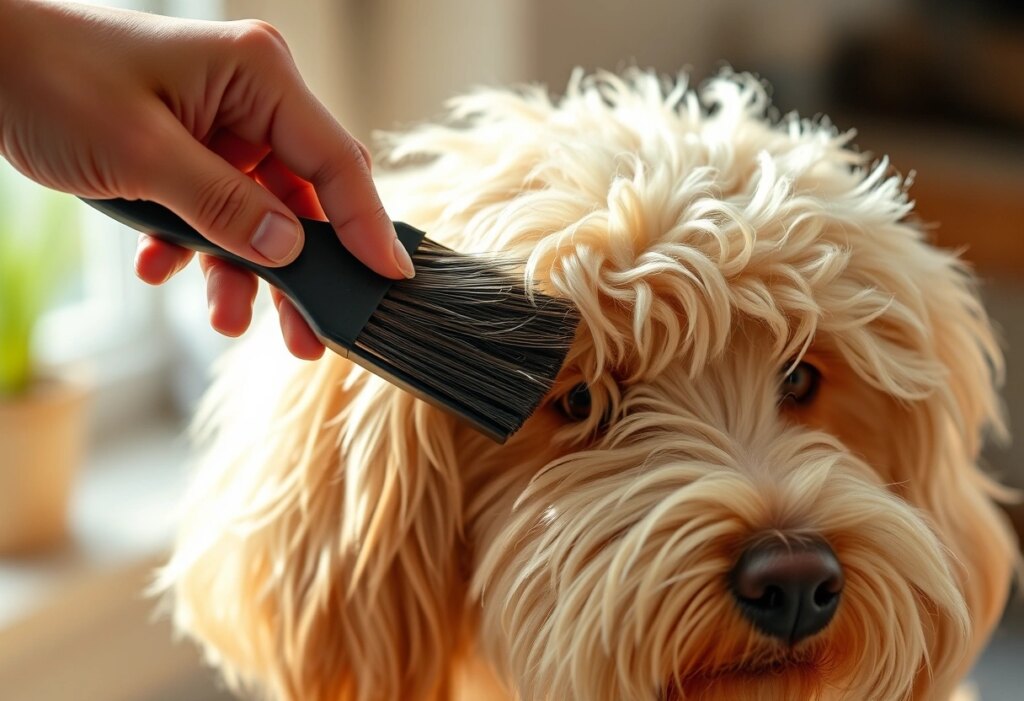
If you feel like you’re bathing your Goldendoodle every other week just to keep the mats and the “wet dog” smell under control, you’re not imagining it. The right slicker brush for goldendoodles pulls loose undercoat out before it tangles into the topcoat, which means less oil buildup, less trapped dander, and fewer trips to the tub. Grab the right tool and a consistent routine, and you can often stretch bath time out by weeks, not days.
That’s the direct answer. Now let’s get into why this happens, which brushes actually do the job, and how to build a brushing habit your dog will tolerate (maybe even enjoy).
Why Coat Type Makes Goldendoodles Prone to Frequent Baths
Goldendoodles inherit a wavy-to-curly Poodle-type coat, and that coat structure is part of the problem. Curly and wavy hair traps loose fur, dead skin cells, and natural oils close to the body instead of letting them fall away like a straight-coated breed would.
That trapped debris is exactly what causes the musty odor pet parents notice between baths. It also sets the stage for mats, which pull on the skin, hide moisture, and create a breeding ground for irritation.
The American Kennel Club notes that Poodle-mix coats generally need brushing three to four times a week to prevent mats from forming in the first place. Skip that, and the coat mats faster, traps more oil, and forces you back into the bathtub sooner than you’d like.
A properly used slicker brush for goldendoodles interrupts that whole cycle. It lifts loose undercoat out before it has a chance to felt together, which is really the root cause of most “my dog smells again already” moments.
Slicker Brush Comparison: Long-Pin vs Short-Pin, Self-Cleaning vs Standard
Not every slicker brush works the same way on a Doodle coat, and picking the wrong pin length or stiffness can leave mats behind or irritate sensitive skin. Here’s how the main categories stack up.

| Brush Type | Best For | Pros | Cons | Price Tier |
|---|---|---|---|---|
| Long-Pin Slicker | Thick, curly, or dense double coats | Reaches deep into the undercoat, removes more loose hair per stroke | Can feel harsh on thin-coated or senior dogs if pressure isn’t controlled | $$ |
| Short-Pin Slicker | Puppies, wavy coats, sensitive skin | Gentler on skin, good for finishing work and face/ear areas | Doesn’t pull deep undercoat as effectively on curly coats | $ |
| Self-Cleaning Slicker | Owners who brush daily or have multiple Doodles | Retracts pins for quick fur removal, saves time between sessions | Mechanism adds bulk, higher cost than basic models | $$$ |
| Flexible-Pin Slicker | Dogs with skin conditions or hot spots | Pins bend on contact, reduces risk of scratching skin | Less effective on severe matting | $$ |
For most Goldendoodle coats, a firmer, longer-pin design paired with a self-cleaning feature hits the sweet spot between effectiveness and convenience. Something like the Self-Cleaning Deshedding Dog Cat Brush, Thick Double Coat is built for exactly this kind of dense, double-layered coat, and the retractable pins mean you’re not spending five minutes picking fur out by hand after every session.
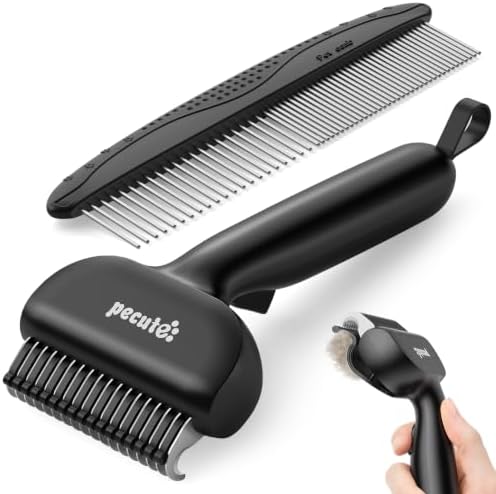
- 1-CLICK SELF-CLEANING — NO MORE MANUAL HAIR PULLING: This undercoat rake solves the grooming frustration. Just press the…
- REMOVES UP TO 95% OF LOOSE FUR — DESIGNED FOR THICK DOUBLE COATS: Engineered specifically for dense undercoats and heavy…
- GENTLE DEMATTING — ROUNDED TEETH GLIDE WITHOUT IRRITATING SKIN: Unlike sharp dematting rakes for dogs, our fine-polished…
If your Doodle has more sensitive skin, or you’re working with a puppy coat that hasn’t fully transitioned yet, a flexible or short-pin option is the safer starting point. You can always size up to a firmer slicker brush for goldendoodles once you know how your dog’s skin reacts to regular brushing pressure.
Step-by-Step Brushing Routine to Prevent Mats
A slicker brush only works if you use it correctly. Random surface brushing looks productive but leaves the undercoat, and the mats, completely untouched.
Here’s the line-brushing technique groomers actually rely on:
- Section the coat. Part the fur in small horizontal sections, starting at the legs or belly where mats form fastest.
- Brush from skin outward. Angle the slicker brush so the pins reach the base of the coat, not just the surface layer.
- Work in short strokes. Long dragging strokes miss tangles close to the skin. Short, repeated strokes cover the same spot more thoroughly.
- Move up the body. Once one section is fully brushed through, drop the line down and repeat until you’ve covered the whole dog.
- Finish with a comb. A Metal Comb for Dogs, Dog Grooming Detangler catches anything the slicker brush missed, especially behind the ears and around the collar area where mats love to hide.

- EASY DEMATTING & DETANGLING: Our dog grooming comb features extra-long stainless-steel teeth that glide through tough kn…
- EXTRA LONG PINS: Engineered with PINs that are 30% longer, this dematting comb reaches deeper into dense, curly, or long…
- ERGONOMIC HANDLE: Designed with a non-slip, ergonomic handle, this metal dog comb ensures a secure grip and reduces hand…
Mats don’t form overnight. They start as small tangles behind the ears, under the collar, or in the armpits, and a slicker brush for goldendoodles used consistently is what catches those tangles before they turn into a shaved-down emergency at the groomer.
Frequency depends on coat texture. Curlier coats mat faster and generally need brushing four to five times a week. Wavier coats can often get by with three sessions a week, though puppies going through their coat change need extra attention no matter the texture.
Watch for these early warning signs that a mat is forming: a small knot that doesn’t pull apart easily with fingers, a section of coat that feels tighter to the skin than the surrounding fur, or a spot your dog seems sensitive to when touched. Catching these early with a slicker brush saves you a much rougher de-matting session later.
If you’re trying to keep grooming sessions shorter overall, pairing your brushing routine with a lower-maintenance style can help. Our guide on low-maintenance haircuts for Mini Goldendoodles covers cuts that naturally resist matting between grooming appointments.
Safety-First Bathing Checklist: How Less Matting Means Fewer Baths
Once your slicker brush routine is doing its job, bathing frequency naturally drops. Less trapped oil and dander means less odor buildup, which means you’re not bathing out of desperation every week.

The ASPCA recommends bathing most dogs roughly every four to six weeks, unless a skin condition says otherwise. That’s a big shift for Doodle owners used to weekly baths just to manage smell and tangles.
Before you cut back on bath frequency, run through this quick safety checklist:
- Coat is fully brushed through, no hidden mats near the skin trapping moisture or bacteria.
- Skin looks normal, no redness, flaking, or hot spots that would need more frequent cleansing.
- Ears are clean and dry, since Doodle ears are prone to moisture buildup regardless of bath schedule.
- No strong odor between brushing sessions, which is usually the clearest sign your current routine is working.
When you do bathe, using a gentle, detangling formula supports the work your slicker brush already started. A Dog Shampoo Half Gallon, Cleans, Conditions & Detangles helps loosen any remaining tangles in the tub instead of fighting them dry, which reduces breakage and keeps the coat easier to brush through afterward.

- LARGE VALUE SIZE (64 OZ): Save time and money with our extra-large half gallon 64oz bottle of premium dog shampoo, suita…
- 4-IN-1 DOG SHAMPOO: Effectively cleans, conditions, detangles, and moisturizes your dog’s skin. Keep your dog’s fur soft…
- PROUDLY MADE IN THE USA: Our shampoo for dogs is a quality American-made product formulated and tested in the best facil…
Choosing the right cut also plays a role in how much upkeep you’re signing up for. If you’re weighing style against maintenance time, our comparison of the teddy bear cut vs puppy cut breaks down which style needs less brushing and bathing overall.
Building a Grooming Tool Kit That Actually Reduces Bath Frequency
A slicker brush for goldendoodles is the core tool, but it works best as part of a small, purposeful kit rather than on its own. Pair it with a metal comb for finishing work and a gentle, detangling shampoo for the baths you do need, and you’ve covered the full cycle from daily maintenance to occasional deep cleaning.
Think of it less as buying more stuff and more as reducing the total time you spend fighting your dog’s coat. A five-minute brushing session most days is a lot easier than an hour-long de-matting appointment or an emergency bath because the odor got out of hand.
As a dog deshedding brush, a good slicker also pulls double duty during seasonal shedding periods, when loose undercoat builds up fastest and mats form almost overnight if ignored. Keeping a slicker brush for goldendoodles within reach, on the counter or in a drawer near where you groom, makes it far more likely you’ll actually use it consistently instead of letting three days turn into three weeks.
FAQ: Slicker Brushes and Bathing Frequency for Goldendoodles
How often should I use a slicker brush for goldendoodles to prevent mats?
Most Goldendoodles need brushing three to five times a week depending on coat texture. Curlier coats mat faster and benefit from daily brushing, while wavier coats can often manage with three sessions a week.
Can a slicker brush replace regular baths entirely?
No, brushing reduces how often you need to bathe your dog but doesn’t replace bathing altogether. Regular brushing removes loose undercoat and reduces odor buildup, which lets you stretch bath intervals closer to every four to six weeks instead of weekly.
What’s the difference between a poodle mix grooming tool and a standard dog brush?
A poodle mix grooming tool, like a long-pin slicker brush, is designed to reach through dense, curly undercoat that standard bristle brushes only skim across. This deeper reach is what actually prevents mats rather than just smoothing the surface.
Is a detangling dog brush safe for a Goldendoodle puppy’s coat?
Yes, but choose a shorter-pin or flexible-pin detangling dog brush for puppies since their skin is more sensitive than an adult coat. As the coat matures and thickens, you can transition to a firmer slicker brush for goldendoodles for more effective undercoat removal.
Getting matting under control with the right slicker brush for goldendoodles isn’t about adding more to your plate. It’s about trading a handful of stressful bath days for a few short, calm brushing sessions each week, which is better for your dog’s skin, your schedule, and honestly, your nose too.


