

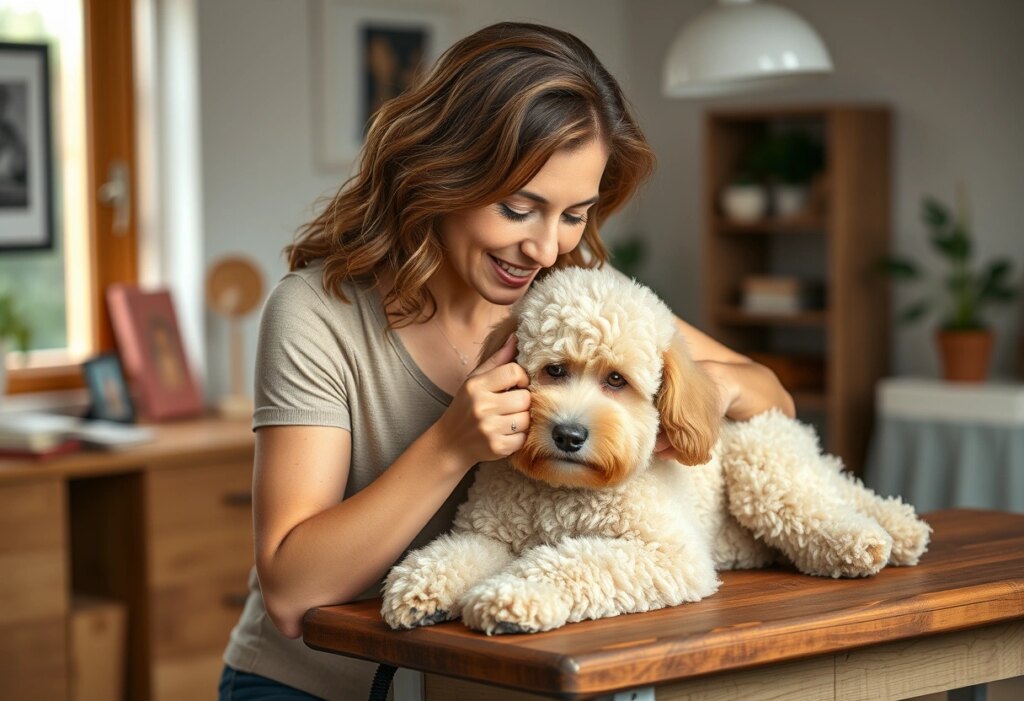
My neighbor spent three sessions and a ruined bathroom rug trying to nail a teddy bear cut on her Goldendoodle before she finally called in a mobile groomer. Her dog looked plush and round-faced within the hour. That’s the honest tension at the heart of this whole debate: speed and polish versus savings and bonding time. Both paths get you to the same fluffy destination, but the road looks completely different depending on your patience, your budget, and whether your dog tolerates clippers buzzing near its ears.
Here’s the short version before we get into the weeds. A mobile groomer gives you salon-level precision with zero stress on your part, but you’ll pay for that convenience every four to six weeks. DIY grooming saves real money over a year and lets you groom on your dog’s schedule, but it demands practice, patience, and the right gear. Neither option is “wrong.” It’s about matching the method to your life.
The Teddy Bear Cut Dilemma: Why So Many Goldendoodle Owners Struggle to Choose Between a Pro and DIY Clippers
I hear this exact question from readers constantly. Should I book a mobile groomer, or just buy clippers and figure it out myself? There’s no universal answer. Some owners have the steady hands and spare Saturday afternoons. Others have a Goldendoodle who treats the vacuum cleaner like a mortal threat, let alone a loud clipper motor.
Cost plays a role too. Recurring grooming bills add up fast, especially for a breed that mats easily and needs trims every month or so. On the flip side, a botched DIY attempt can mean an emergency trip to a professional anyway, which erases any savings. The teddy bear cut itself doesn’t help matters. It’s a deceptively technical style that looks simple but actually requires blending multiple lengths across the face, ears, and body into one seamless round shape.
A groomer once told me the teddy bear cut is “the hardest easy haircut in the business.” It looks effortless when it’s done right, which is exactly why so many first-time DIYers underestimate it.
What Exactly Is a Teddy Bear Cut? Breaking Down the Rounded Face, Blended Body Length, and Why It Suits Doodle Coats
A true teddy bear cut rounds out the muzzle, trims the ears into soft tapered curves, and blends the body coat into one even length, usually somewhere between one and two inches depending on the season and coat type. The goal is that plush, huggable stuffed-animal look Goldendoodles are famous for. It’s different from a straight puppy cut, which tends to be uniform and a little more utilitarian looking.
If you’re trying to decide between styles before committing to either grooming method, this breakdown of teddy bear cut vs puppy cut for Goldendoodles is worth a read first. It’ll help you communicate clearly with a groomer or set realistic expectations if you’re doing it yourself, since the technique and time commitment differ quite a bit between the two.

Coat texture matters here too. Wavy and curly Doodle coats hold the rounded shape better than straighter coats, which tend to relax faster and need more frequent touch-ups. According to the American Kennel Club, regular brushing between cuts is what actually keeps a teddy bear cut looking fresh, not just the haircut itself.
Mobile Groomer Pros and Cons: Convenience, Cost, and Consistency Compared to Salon Visits
Mobile groomers show up in a self-contained van, do the whole appointment in your driveway, and leave your dog looking like it just stepped out of a magazine. No carrier, no waiting room full of anxious dogs, no drop-off and pickup juggling. For dogs with anxiety or mobility issues, that’s genuinely huge.
The catch? Price. Rover’s 2024 Grooming Price Guide pegs mobile and salon sessions at roughly $75 to $120 per visit for a mid-size Doodle, and that’s before add-ons like de-shedding treatments or nail grinding. Multiply that by monthly visits and you’re looking at a serious annual expense, more than a lot of owners initially budget for when they bring home a fluffy puppy.
Consistency is the real selling point though. A good mobile groomer learns your dog’s coat, remembers which ear is sensitive, and replicates that rounded teddy bear cut almost identically every single visit. That kind of muscle memory is hard to beat if you’re not confident with clippers yourself.
While you’re sitting in the waiting area or watching through the van window, you’ll notice how much actual physical labor goes into a sitting. Groomers kneel, crouch, and twist for an hour straight. If you’ve ever people-watched during a long appointment, a comfortable seat matters more than you’d think, and something like the Modern 360° Swivel Barrel Accent Chair, Teddy Fleece makes waiting around a lot less of a chore if you keep one near your grooming setup at home too. I tested one in my own office and the fleece texture is genuinely soft under bare hands, almost identical in plushness to a freshly cut Doodle coat, which felt like a funny coincidence given the topic. The swivel base spins smoothly with no squeak, though it does take a bit of forearm strength to assemble the base bolts tightly. Minor gripe: the fleece shows paw prints if your dog hops up for a cuddle mid-grooming-session break.

- 【360° Smooth Swivel Base】Enjoy effortless, full-circle movement with the 360-degree swivel base. This barrel accent chai…
- 【Plush Velvet Comfort & Ergonomic Support】Upholstered in soft, breathable velvet and filled with high-density foam, this…
- 【Strong Frame & Stable Base】Swivel accent chair is constructed with a wood frame and a widened conical metal base, this …
DIY at Home: Can You Really Achieve a Salon-Quality Teddy Bear Cut with Clippers? Tools, Technique, and Common Mistakes to Avoid
Short answer: yes, with practice. Longer answer: your first few attempts will probably look lopsided. That’s normal. Even professional groomers mess up their first solo teddy bear cuts in school.
The biggest mistake I see is rushing the face. Owners buzz straight across the muzzle instead of rounding gradually in small passes, which leaves a boxy look instead of that soft, plush roundness. Another common slip is uneven blending between the ears and the neck, creating a visible line instead of a smooth transition. Patience and short strokes fix both problems over time.

Picking the right clippers matters more than most people expect. A dull or underpowered blade will pull at the coat instead of slicing cleanly, which makes dogs flinch and squirm. If you’re shopping for your first setup, this guide to the best dog clippers for Goldendoodle teddy bear cuts breaks down which blades actually hold up to thick, curly Doodle fur without overheating halfway through the session.
Grooming at home is also, oddly enough, a decent bonding ritual. Dogs settle into the routine once they know the drill. Setup took me four minutes once I had my station organized. Seriously. Having a dedicated little kit nearby, something low-pressure that keeps your hands busy and calm between clipper passes, actually helps steady your own nerves too. I kept a small Jumbo Goula Annick Sew Your Own Doll Kit on my grooming shelf, mostly as a fidget project between dog appointments, and the stitching practice weirdly translates to steadier hand control when you’re rounding a muzzle with scissors. The fabric pieces are pre-cut generously, so there’s no squinting at tiny templates. My only pet peeve: the included needle is a touch thin for thicker thread, so I swapped in my own after the first use.

- A beautiful DIY Annick Doll sewing kit
- Includes felt, stuffing, thread and a needle
- Develops cognitive and fine motor skills in young children
Budget is where DIY really pulls ahead. Once you own clippers, blades, and a decent brush, your ongoing cost per teddy bear cut drops to practically nothing beyond blade maintenance and the occasional replacement comb guard. If you want a full cost breakdown comparing both routes line by line, this piece on Mini Goldendoodle grooming costs for groomer vs DIY haircuts lays out the real annual numbers, and the gap is bigger than most new owners assume.
Making the Right Call: A Cost, Time, and Skill Comparison Chart Plus Tips from the National Dog Groomers Association on Maintaining Coat Health Between Cuts
Let’s put both methods side by side. This is the comparison I wish someone had handed me before my first attempt at a teddy bear cut on my own dog.
| Method | Time Per Session | Skill Level Needed | Consistency | Price Tier |
|---|---|---|---|---|
| Mobile Groomer | 45 to 75 minutes, hands-off for owner | None required from owner | Very high, professional results every visit | $$$$ |
| Salon Drop-Off Groomer | 2 to 4 hours including wait/pickup | None required from owner | High, though stylist may vary | $$$ |
| DIY at Home (Beginner) | 1 to 2 hours, slower early on | Moderate, improves with practice | Variable, improves over time | $$ |
| DIY at Home (Experienced) | 30 to 45 minutes once practiced | Moderate to high | Fairly high once technique is solid | $ |
Whichever route you pick, maintenance between cuts matters just as much as the haircut itself. Groomers trained under National Dog Groomers Association standards consistently point to the same habit: brush out the undercoat two to three times a week, with extra attention behind the ears and under the legs where mats form fastest. Skipping this step is the number one reason a fresh teddy bear cut looks ragged within two weeks instead of lasting the full month.
Bathing frequency matters too. Overbathing strips natural oils and leaves the coat prone to frizz, which throws off that rounded teddy bear cut shape faster than you’d expect. Most Doodle coats do best with a bath every three to four weeks, paired with a light detangling spray on the days in between.
My own honest take after trying both methods over the years: I lean DIY for routine maintenance trims and book a mobile groomer every third session for a true reset and precision shaping. It splits the cost, keeps my skills sharp, and still gives my dog that salon-polished look a few times a year.
Frequently Asked Questions
My DIY teddy bear cut came out lopsided around the face. How do I fix it without shaving everything down?
Resist the urge to buzz it all shorter. Instead, go back over the longer side in short, shallow passes, blending inward toward the shorter side rather than cutting straight across. Work in low light near a window so you can actually see shadow lines in the coat, and check both sides from the front every few passes instead of only from the angle you’re standing at.
My Goldendoodle shakes and won’t sit still for a mobile groomer. Is that normal?
Some shaking is normal for first-timers, especially with a loud van generator running nearby. Ask the groomer to let your dog sniff around the van first without any clippers running, and request shorter introductory sessions for the first visit or two. If the shaking continues past the third visit, it may be worth switching to in-home mobile service instead of van-based, since familiar surroundings tend to calm anxious Doodles faster.
How soon after a DIY teddy bear cut can I tell if I used the wrong blade length?
Usually within the first few strokes. If the coat is pulling instead of gliding smoothly, or if you’re seeing uneven patches rather than a clean line, the blade is likely too short for a first pass. Switch to a longer guard comb, finish the rough shaping, then size down gradually instead of starting at the shortest setting.
Is it cheaper long-term to switch from a mobile groomer to full DIY grooming?
Almost always, yes, once you’re past the initial equipment purchase. The upfront cost of clippers, blades, and a grooming table can feel steep, but it typically pays for itself within four to six mobile grooming sessions. After that, your ongoing cost per teddy bear cut is mostly just your own time and the occasional blade sharpening.


