


The 5F vs 7F blade debate comes down to one simple question: do you want your Goldendoodle’s coat left at a shaggy quarter inch, or shaved close to an eighth inch? That single choice affects everything from clipper burn risk to how often you’ll be back at the grooming table. The Animal Humane Society and several groomer associations have noted that matted coats are among the top reasons owners end up shaving their dogs down completely, and picking the wrong blade length from the start is often what gets them there. Get the blade right, and home grooming becomes a manageable Sunday afternoon task instead of a wrestling match with a squirmy, overheated dog.
This guide breaks down what these two blades actually do to your Goldendoodle’s coat, when each one makes sense, and how to avoid the skin irritation that scares so many owners away from clipping at home in the first place.
What #5F and #7F Actually Cut
Clipper blade numbers aren’t arbitrary. They correspond directly to how much hair length remains after a pass, and understanding this is the first step in any dog grooming clipper guide. A #5F blade leaves hair at roughly 1/4 inch, and it’s built as a skip-tooth design, meaning the teeth are spaced slightly wider apart. That spacing lets the blade glide over the coat rather than dig straight to the skin, which is why it’s often the safer pick for dogs with sensitive skin or lots of loose skin folds.
A #7F blade, on the other hand, leaves hair at closer to 1/8 inch. It’s a finer, closer cut that gives you that smooth, tidy look groomers often use for summer trims or sanitary areas. The tradeoff is that the closer the blade sits to the skin, the higher the risk of clipper burn, especially if the clipper heats up mid-session or you go over the same patch of skin more than once. When you’re comparing the 5F vs 7F blade for a home groom, that heat and closeness factor should weigh just as heavily as the look you’re going for.
If you’re working through mats or uneven patches before you even get to blade length, it helps to understand blade sizing more broadly. Our Goldendoodle clipper blade length chart and buyer’s guide breaks down the full range from #3 to #10, so you can see where 5F and 7F fit relative to everything else on the market.

A reliable clipper matters just as much as the blade itself. The Laube Dirty Dog Cordless 2-Speed Pet Grooming Clippers gives you the flexibility to switch speeds depending on coat thickness, which is useful when you’re testing how your dog’s skin reacts to a closer #7F pass versus the gentler #5F setting.

- COMFORTABLE CONTROL: The Dirty Dog by Laube clippers are ergonomically designed for grooming professionals, veterinarian…
- UNMATCHED CLIPPER PERFORMANCE: Experience the Laube difference with the Dirty Dog’s all-new power, torque, and speed at …
- CORDLESS CONVENIENCE: Embrace the freedom of cordless grooming! Its lithium-ion battery TWIST N LOCK powerpack provides …
Coat Type and Season: How They Change the 5F vs 7F Blade Decision
Not every Goldendoodle coat behaves the same way under a clipper, and that’s a big part of why the 5F vs 7F blade choice isn’t one-size-fits-all. Curly coats, closer to the poodle side of the family tree, tend to mat faster and hold more moisture near the skin. Wavy coats, closer to the golden retriever side, are usually more forgiving and less prone to tight matting. The American Kennel Club’s grooming guidance on double-processed and curly coats points out that these differences in texture directly affect how a coat should be maintained between full grooms, and blade length is a big piece of that maintenance.
For a curly-coated Doodle heading into summer, a #7F blade can help keep the coat shorter for longer, cutting down on how often you need to break out the clippers again. But for a wavy-coated dog, or one with sensitive skin that reddens easily, the #5F often strikes a better balance between neatness and comfort. Season matters too. In colder months, leaving more length with a #5F blade gives your dog a bit of natural insulation, while a #7F cut in peak summer heat can help with airflow and reduce overheating during walks.
Mat severity is the other major factor. If your Doodle already has mats forming close to the skin, going in with a #7F blade might be tempting because it cuts closer and removes the problem faster. But that closeness increases the odds of nicking already-irritated skin under the mat. In those cases, many groomers actually recommend starting with a slightly longer blade and working the mats out in stages rather than shaving everything down to the shortest option available.
Choosing between a #5F and #7F blade isn’t really about which one is “better.” It’s about matching the blade to the coat you actually have that day, not the coat you wish you had.
Home Grooming Safety Tips to Avoid Clipper Burn
Clipper burn is the number one reason owners abandon home grooming after a bad first experience. It shows up as redness, irritation, or small raised bumps, and it’s almost always tied to heat buildup or repeated passes over the same spot. Veterinary dermatology recommendations on hot spots and over-grooming consistently point to blade heat and pressure as major contributing factors, which is exactly why blade choice and clipper maintenance go hand in hand.
A few habits make a real difference here. Keep your clipper blade cool by checking it every few minutes, especially with a #7F blade since it makes more contact with the skin. Use clipper lubricant regularly, and don’t force the blade through thick or matted sections, since that friction is what generates the most heat. Working in the direction of hair growth rather than against it also reduces skin pulling and irritation, particularly around the belly, armpits, and ears where the skin is thinner.

Good airflow and dust control also matter more than most owners realize. Loose hair building up around the blade and motor housing traps heat and clogs the clipper’s cooling vents. A grooming vacuum setup like the Ozumek Dog Grooming Vacuum, Dog Grooming Kit, 3 Suction pulls loose fur away from the clipper as you work, which keeps the blade running cooler and makes cleanup dramatically easier, especially with a Doodle’s dense undercoat.
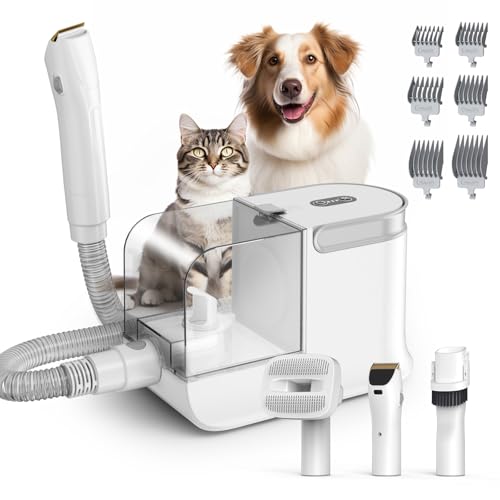
- 🐕Grooming & Vacuum All at Once: Our dog grooming kit with a vacuum function captures 99% of pet hair with 10,000 Pa suct…
- 🐈5-in-1 Pro Pet Grooming Kit: Complete with perfect accessories for comprehensive pet grooming.Suction and grooming all …
- 🐕6 Adjustable Guard Combs: With combs ranging from (3mm/6mm/9mm/12mm/15mm/18mm), you can easily trim pet hair of differe…
After any close trim with a #7F blade, keep an eye on the ears too. Trimmed hair and skin irritation near the ear canal can sometimes contribute to buildup and moisture issues. If you notice redness, odor, or your dog scratching at their ears more than usual after a groom, our roundup of the best ear cleaners for Goldendoodles with ear infections is a good next stop.
Final Recommendation: A Simple 5F vs 7F Blade Checklist
If you’re still on the fence, run through this quick checklist before your next home groom. It’s not complicated, but it covers the variables that actually matter.
- Sensitive or thin skin? Choose the #5F blade to reduce clipper burn risk.
- Heavy matting close to the skin? Start with #5F and work in stages rather than jumping to #7F.
- Hot summer months, thick curly coat? A #7F blade can help with cooling and reduce grooming frequency.
- First time using clippers at home? Practice with #5F first since it’s more forgiving of uneven technique.
- Want a longer stretch between grooms? #7F cuts closer and holds its shape longer.
Here’s a side-by-side look at how the two blades stack up, along with clipper options that work well for either length.
| Feature | #5F Blade | #7F Blade | Price Tier |
|---|---|---|---|
| Cut Length | ~1/4 inch | ~1/8 inch | N/A |
| Best For | Sensitive skin, beginners, cold months | Close trims, summer coats, longer intervals between grooms | N/A |
| Clipper Burn Risk | Lower (skip-tooth design) | Higher (closer contact with skin) | N/A |
| Laube Dirty Dog Cordless 2-Speed Clippers | Compatible | Compatible | $$$$ |
| Hansprou 12V Professional Clippers | Compatible | Compatible | $$ |
| Ozumek Grooming Vacuum Kit | Reduces heat buildup during use | Reduces heat buildup during use | $$$ |
For owners just starting to build a home grooming kit, a budget-friendly option like the Hansprou Dog Clippers for Grooming, 12V Professional is worth considering, since it pairs well with either a #5F or #7F blade attachment without requiring a major upfront investment.

- 12V High -Speed Strong Power Motor: Hansprou professional dog grooming clippers have strong power, no hair sticking, plu…
- High Quality Titanium Alloy Blade + Ceramic Moving Blade: provide excellent cutting performance.Detachable blades are ea…
- Low Vibration + Ultra Quiet Design:The noise when dog trimming working is only about 50 db, Hansprou dog clippers to hel…
One more thing worth mentioning while you’ve got the grooming kit out: nail care often gets overlooked during a coat trim, but overgrown nails can affect posture and gait. If you’re deciding between tools for that part of the routine, our comparison of nail clippers versus grinders for Goldendoodles covers which option tends to be safer for home use.
Whichever blade you land on, the goal is the same: a comfortable dog and a coat that’s easy to maintain between full grooming sessions. According to the American Kennel Club, matching your tools to your dog’s specific coat type is one of the most reliable ways to avoid common grooming mistakes at home. That advice applies directly to the 5F vs 7F blade decision, since neither blade is universally correct. It’s about reading your dog’s coat and skin condition each time you sit down to groom.
Frequently Asked Questions
Is a #5F or #7F blade better for a Goldendoodle puppy’s first trim?
For a puppy’s first trim, most groomers recommend the #5F blade. It leaves more length on the coat and is far more forgiving of an inexperienced hand or a wiggly puppy, which lowers the chance of accidental nicks or clipper burn on young, sensitive skin.
Can I use a #7F blade on my Goldendoodle’s face and paws?
A #7F blade is generally too close for the face and paw pads, where skin is thinner and more prone to irritation. Many owners use a #5F or an even shorter blade in these areas, or a dedicated facial trimmer, to reduce the risk of clipper burn near the eyes, muzzle, and paw pads.
How often should I switch between the 5F vs 7F blade depending on the season?
A common approach is using the #7F blade for a closer trim heading into summer for better airflow, then switching to the #5F blade in fall and winter to leave extra length for natural insulation. Most Doodle owners find this seasonal swap works well for their dog’s comfort year-round.
Will a #7F blade cause more clipper burn than a #5F blade?
Yes, generally speaking. Because the #7F blade cuts closer to the skin, there’s less of a buffer between the blade and skin surface, which raises the risk of irritation if the clipper overheats or passes over the same area repeatedly. Using clipper lubricant and taking breaks to let the blade cool helps reduce this risk with either blade.


