

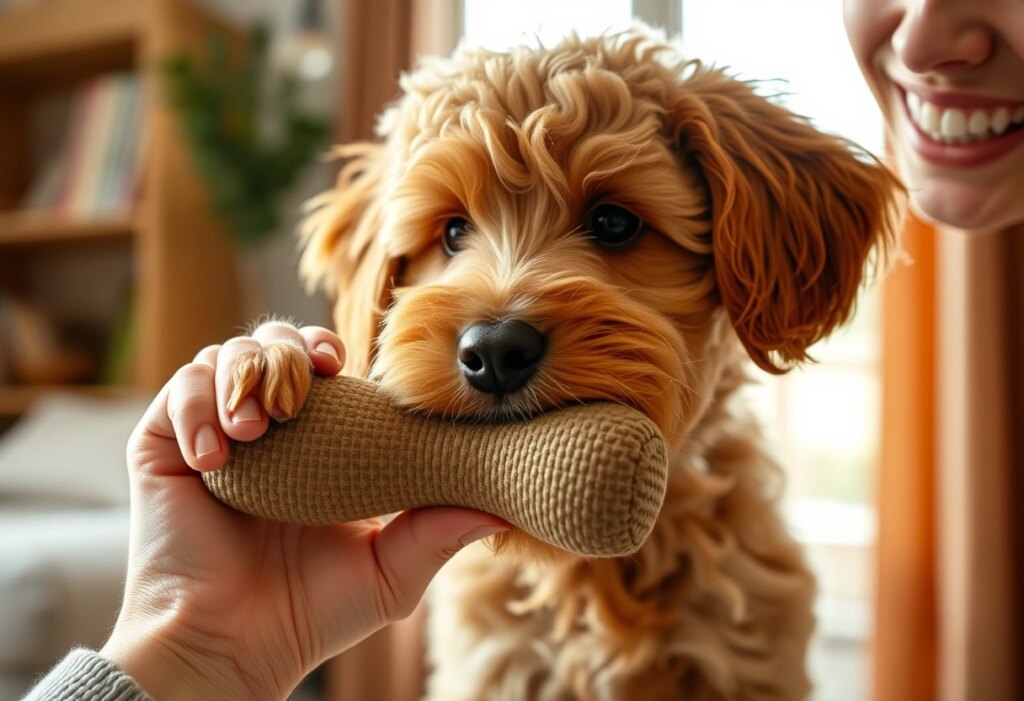
Bite-training tools can turn those sharp little puppy teeth from a daily battle into a manageable phase, and if you’re reading this with a scratched-up hand, take a breath. Your Doodle puppy isn’t broken, and they definitely aren’t being aggressive. What you’re dealing with is a completely normal, if painful, stage of canine development that almost every Goldendoodle, Labradoodle, and Bernedoodle owner has weathered before you.
Here’s the direct answer: the fastest way to stop puppy biting is a combination of the right bite-training tools (frozen chew toys, taste-deterrent sprays, tug-safe ropes, and puzzle feeders) paired with consistent redirection techniques taught during the critical bite inhibition window before 18 weeks of age. Miss that window, and the habit gets harder to unwind. Catch it early with the right approach, and most puppies grow into dogs with genuinely soft mouths.
This guide walks through why your puppy is doing this in the first place, what to rule out before you assume it’s “just teething,” which tools actually earn their spot in your training kit, and exactly how to redirect the behavior step by step. By the end, you’ll have a clear plan instead of a pile of guesswork.
Why Puppies Bite: The Science Behind the Sharp Teeth
Puppy mouthing is not a discipline problem. It’s a biological one. Puppies explore the world with their mouths the way toddlers explore with their hands, and on top of that, they’re often in real physical discomfort.
Teething discomfort tends to peak between 3 and 6 months of age, which lines up almost exactly with when new Doodle owners start posting frantic questions in Facebook groups. During this window, the gums are sore, new teeth are pushing through, and chewing on literally anything (your fingers, the couch leg, your kid’s shoelace) provides real relief.
According to the ASPCA, bite inhibition training, teaching a puppy to control the force of their mouth, is most effective when started before 18 weeks of age. That’s a fairly short window, biologically speaking, and it’s why the tools and habits you build in these early months matter so much more than people expect.
A puppy that never learns to control their bite pressure as a youngster carries a much higher risk of a hard, damaging bite as an adult. The lesson isn’t “don’t ever put your mouth on things.” It’s “know exactly how gentle you need to be.”
The good news is that Doodles, as a group, tend to be food-motivated and eager to please, which makes this whole process a bit easier than it is with more independent breeds. That temperament works in your favor once you give it structure.
Behavioral and Dietary Triggers to Rule Out First
Before you reach for any bite-training tools, it helps to do a quick audit. Biting spikes are rarely random, and most owners can trace a flare-up back to one of these:

- Teething discomfort: Look for red or swollen gums, drooling, or chewing on hard surfaces like table legs.
- Overstimulation: The classic “zoomies into biting” combo usually means your puppy is overtired or overexcited, not misbehaving.
- Lack of chew outlets: If there’s nothing appropriate nearby, your hand becomes the default toy.
- Poor sleep: Puppies need 18 to 20 hours of sleep a day. An under-slept puppy bites more, just like an overtired toddler.
- Hunger or blood sugar dips: Small breeds and lean puppies can get bitey and irritable between meals.
- Boredom: A puppy without mental work will invent their own, and it’s usually your ankles.
Once you’ve ruled these out, or at least identified which ones apply, the actual tools and techniques below will work faster because you’re not fighting an unmet need underneath the behavior.
The Best Bite-Training Tools, Compared
Not every chew toy or tug rope is built the same, and Doodle coats and temperaments have their own quirks worth factoring in. Curly and wavy coats snag easily on rope fibers, and food-motivated Doodles do best with tools that double as a reward system rather than a punishment.
Here’s how the major categories of bite-training tools stack up against each other.
| Tool Type | Best For | Pros | Cons | Price Tier |
|---|---|---|---|---|
| Frozen chew toys | Teething relief, 3-6 months | Numbs sore gums, mess-free, long-lasting | Needs freezer prep time | $$ |
| Taste-deterrent sprays | Furniture and hand-biting habits | Easy to apply, works on multiple surfaces | Inconsistent with stubborn chewers | $ |
| Tug-safe ropes/tugs | Redirecting mouthy play energy | Teaches bite inhibition through structured play | Can encourage tugging if rules aren’t set | $$$ |
| Treat-dispensing puzzle toys | Boredom-driven biting | Mental stimulation, slows down high-energy pups | Some Doodles solve them too fast | $$$ |
The Ray Allen RAM Reinforced Fire Hose Tug is a solid pick if your Doodle is a persistent tugger. The double-walled construction holds up to repeated bite pressure far better than a standard rope toy, which matters because a tug that frays or shreds within a week just teaches your puppy that destroying things gets a reaction. Use it with clear “take it” and “drop it” cues so tugging stays a controlled game rather than a free-for-all.

- Constructed from brand new double-walled fire hose for ultra durablilty and safety
- Improved handle design with double the nylon compared to other fire hose tugs
- No metal or squeakers for added safety
The American Veterinary Society of Animal Behavior guidelines are clear that positive reinforcement, not punishment, produces the most reliable long-term behavior change in puppies. That’s the entire logic behind these bite-training tools. You’re not trying to scare the biting away. You’re giving your puppy a better, more rewarding option and reinforcing the choice every time they take it.
Using Treats as a Redirection Reward
Treats play a bigger role in bite training than most people expect. The moment your puppy releases your hand or a piece of furniture in favor of an approved chew, that instant matters, and a small, soft training treat delivers the fastest, cleanest feedback.
Pupford Soft & Chewy Training Treats work well here because they’re small enough to deliver rapid-fire rewards without derailing a training session, and the soft texture is gentle on developing puppy teeth. Keep a pouch clipped to your belt loop during high-mouthing periods (right after naps, during play sessions) so you can reward calm mouth behavior the instant it happens.

- High Value, Irresistible Flavor: Pups love the taste and aroma, making training sessions more effective and enjoyable
- High-Quality Ingredients: Made in the USA with clean, simple ingredients, starting with pork – nothing artificial and no…
- Low-Calorie: Less than 2 kcal per treat and high in protein, perfect for frequent rewarding without worry
Timing is everything with this kind of reward-based bite-training tool. Deliver the treat within one to two seconds of the desired behavior, or the puppy won’t connect the dots. A slightly delayed treat teaches nothing except that treats appear sometimes, randomly, which isn’t helpful.
Long-Lasting Chews for Independent Gnawing Sessions
Not every biting outlet needs to be interactive. Puppies also benefit from solo chewing sessions that tire out their jaw muscles and satisfy that gnawing instinct without you standing over them the whole time.

PCI Pet Center Chicken Nibbles Raw Dehydrated Treats are a good option for this kind of low-supervision chewing, offering a single-ingredient, easily digestible option that keeps a puppy occupied during crate time or while you’re cooking dinner. Rotate a few different textures and flavors so your puppy doesn’t lose interest in the same old toy by week two.

- PCI Chicken Nibble dog & puppy treats are made of 100% natural, raw, dehydrated chicken breasts
- Delicious, healthy dog treats are delicately roasted to perfection for premium quality & flavor
- Our training bites are high protein, low fat and contain no hormones, preservatives or additives
A well-rotated stock of independent chews is one of the simpler bite-training tools in this whole lineup, but it consistently gets underused. If your puppy always has an appealing, appropriate thing to gnaw on, your hands and furniture stop being the default target.
The Redirection Protocol: Step by Step
Tools alone won’t fix biting without a consistent response from you in the moment. Here’s the sequence trainers recommend, broken into a repeatable routine.
- Yelp and freeze: The instant teeth touch skin, let out a short, high-pitched “ow” and go completely still. This mimics how littermates communicate that a bite was too hard.
- Pause the interaction: Don’t yank your hand away fast, since that can trigger a chase reflex. Just stop moving for a beat.
- Toy-swap: Immediately offer an appropriate chew toy the second the mouthing stops. This teaches “not skin, but this is fine.”
- Praise the swap: Mark the toy-grab with a calm “good” and a small treat if you have one on hand.
- Timeout if needed: If biting continues after two or three redirections, calmly end play for 30 to 60 seconds. No yelling, just a brief, boring pause that removes the fun.
- Resume and repeat: Bring the toy back out and start again. Consistency across every family member is what actually locks this in.
This same sequence pairs well with early handling exercises, and if your Doodle’s biting seems to spike specifically during grooming or brushing, it’s worth reviewing our slicker brush vs comb mat removal guide since coat discomfort can sometimes masquerade as training resistance.
When Biting Warrants a Vet or Trainer Consult
Most puppy mouthing resolves with consistent redirection and the right chew outlets within a few weeks. But there are moments when it’s smart to loop in a professional rather than waiting it out.
- Biting that draws blood repeatedly, even during normal play
- Growling, stiff body language, or biting paired with guarding behavior
- No improvement after several weeks of consistent redirection
- Biting directed at children or unfamiliar people with visible tension
A certified trainer or veterinary behaviorist can rule out pain-related causes and tailor a plan specific to your puppy. There’s no shame in asking for backup here. Early intervention is always easier than untangling an entrenched habit later, and it’s a similar mindset to researching red flags in Goldendoodle puppies under $500 before you bring one home. Catching issues early saves everyone stress.
A Reassuring, Safety-First Takeaway
Puppy biting feels overwhelming in the moment, but it’s genuinely one of the most fixable behaviors in the entire puppy-raising process. With the right bite-training tools, a little patience, and a consistent redirection routine, most Doodle puppies grow out of this phase within a few months.
Give your puppy plenty of appropriate outlets, stay calm and consistent with your responses, and track their progress instead of just the setbacks. That daily consistency is what turns a mouthy 12-week-old into a dog with genuinely gentle manners.
Frequently Asked Questions
At what age should puppy biting stop on its own?
Most puppies significantly reduce mouthing by 6 to 8 months as adult teeth finish coming in and bite inhibition training takes hold. Some mouthiness during excited play can linger a bit longer, but hard, repeated biting past this age is a good reason to bring in a trainer.
Are bite-training tools better than yelling or physical correction?
Yes. Positive reinforcement methods, including the bite-training tools covered here, are backed by AVSAB guidelines as more effective and lower-risk than punishment-based correction, which can increase fear and anxiety without actually reducing biting.
Do Goldendoodles and Labradoodles bite more than other breeds?
Not inherently. Doodles go through the same developmental mouthing phase as any puppy. Their high energy and intelligence can make the behavior more noticeable, but it also means they respond quickly to structured, food-motivated bite-training tools and techniques.
Can taste-deterrent sprays cause any harm to puppies?
Reputable, pet-safe taste-deterrent sprays are generally safe when used as directed on furniture, cords, or hands. Always check the label for ingredients and avoid spraying near the eyes or on broken skin, and consult your vet if your puppy has known sensitivities.


