

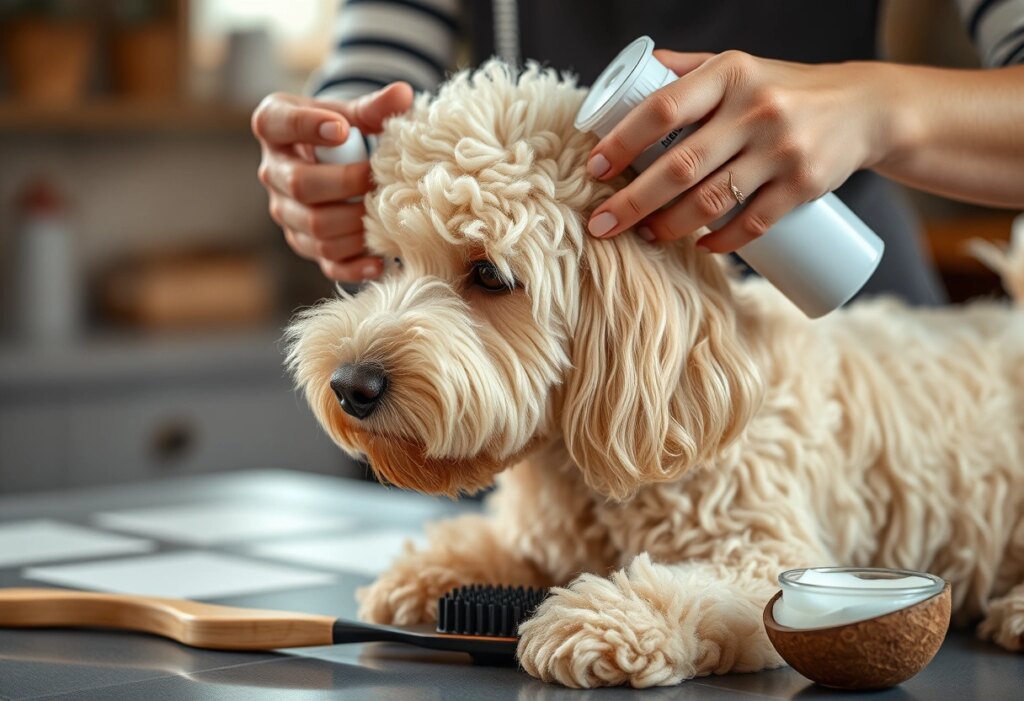
Dematting spray usually loosens matted dog hair faster than coconut oil, especially on the dense, curly coats Doodles are known for, but the full answer depends on how bad the mat is and how you use each product. If you’ve ever spent an hour wrestling with a tennis-ball-sized tangle behind your Goldendoodle’s ear, you already know this isn’t a simple either-or question. Both options have a real place in a grooming routine, just not the same place.
I’ve tested both methods more times than I’d like to admit on my own curly-coated crew, and I want to walk you through what each one actually does to the hair shaft, where they fall short, and how to combine them so you’re not fighting your dog’s coat every weekend.
Why Doodle Coats Mat So Easily in the First Place
Matted dog hair happens when loose, shed fur gets trapped instead of falling away. On a short-haired breed, dead hair sheds onto your floor and furniture. On a Poodle-mix coat, that same loose hair gets caught in the curl pattern and winds around the hair still attached to the skin. Over days, that trapped hair twists tighter, picks up moisture, dirt, and friction from collars or harnesses, and forms a mat.
Doodles are particularly prone to this because their coats were bred to be low-shedding, which sounds great until you realize “low-shedding” really means “shedding into itself.” Wavy and curly coat types (the F1b Goldendoodle or a curly Bernedoodle, for example) trap hair fastest. Straighter-coated F1 Doodles mat less often but still need regular brushing behind the ears, in the armpits, and around the collar line where friction is highest.
Once hair starts matting, it doesn’t loosen on its own. It needs mechanical separation, moisture, or both. That’s where dematting spray and coconut oil come into the conversation, and where a lot of pet parents start guessing instead of knowing.
How Dematting Spray Actually Works
A dematting spray is a leave-in conditioning product built around slip. Most formulas combine lightweight conditioning agents with silicones or similar slip-enhancing compounds that coat each hair strand, reducing friction so a comb or brush can glide through without catching. The goal isn’t to dissolve the mat chemically. It’s to make the hair slippery enough that mechanical separation (combing, brushing, finger-splitting) becomes possible without pulling on the skin underneath.
This matters more than people realize. According to the ASPCA’s grooming guidance, neglected mats can pull tight against the skin, restrict circulation, and create warm, damp pockets where bacteria and yeast thrive, sometimes leading to painful skin infections underneath the mat before you even notice there’s a problem. A good dematting spray reduces the force needed to work through a tangle, which means less pulling on that already-stressed skin.

When you’re shopping for one, look for a formula with real slip, not just a nice scent. A detangling spray built to stop matted dog hair fast should let you feel the comb loosen within a few passes, not fight the same knot for ten minutes straight.
Pairing dematting spray with the right tool makes a real difference too. A Metal Comb for Dogs, Dog Grooming Detangler with widely spaced teeth on one side and finer teeth on the other lets you work from the outer edge of a mat inward, which is the safest direction for a curly coat.

- EASY DEMATTING & DETANGLING: Our dog grooming comb features extra-long stainless-steel teeth that glide through tough kn…
- EXTRA LONG PINS: Engineered with PINs that are 30% longer, this dematting comb reaches deeper into dense, curly, or long…
- ERGONOMIC HANDLE: Designed with a non-slip, ergonomic handle, this metal dog comb ensures a secure grip and reduces hand…
Coconut Oil for Dogs: What It Can and Can’t Do
Coconut oil shows up in a lot of homemade grooming advice, and I understand why. It smells nice, it’s cheap, and it genuinely does moisturize dry fur and flaky skin thanks to its fatty acid content, mostly lauric acid, which has recognized antimicrobial properties. People reach for coconut oil for dogs expecting it to melt mats away the same way it softens dry elbows.
Here’s where expectations and reality part ways. A 2021 study published in the Journal of Applied Microbiology confirmed coconut oil’s antimicrobial activity against certain skin bacteria and fungi, which is useful for skin health, but the research never credited it with any mat-loosening or detangling mechanism. It’s a moisturizer and a mild antimicrobial agent, not a slip agent. The fatty texture that makes it feel soothing on skin is the same texture that makes it act like a magnet for dust, loose fur, and debris when applied to a coat that’s already tangled.
Used sparingly on small, loose knots, coconut oil can soften the hair enough to help you tease it apart with your fingers. Used generously on an established mat, it tends to coat the tangle in a greasy layer that attracts more loose hair and dirt, making the mat denser rather than looser. If you’ve ever applied too much and watched the mat seem to grow instead of shrink, that’s exactly why.
Coconut oil treats the skin underneath a mat better than it treats the mat itself. Think of it as a supporting player, not the main event, when matted dog hair is already established.
Dematting Spray vs Coconut Oil: Side-by-Side Comparison
To make this easier to act on, here’s how the two stack up across the factors that actually matter when you’re standing over a squirmy dog with a mat the size of a golf ball.
| Factor | Dematting Spray | Coconut Oil |
|---|---|---|
| Speed on established mats | Fast, usually loosens within 2-5 minutes of light combing | Slow, often needs repeat applications over hours or days |
| Mess level | Low, dries without residue in most formulas | High, greasy residue attracts dirt and loose hair |
| Best use case | Active mats and daily detangling of curly or wavy fur | Dry skin support and very minor, loose tangles |
| Risk of worsening mats | Low when used as directed | Moderate to high if overapplied |
| Coat safety for Doodles | High, formulated for curly or textured coats | Variable, depends heavily on quantity used |
| Price Tier | $$ | $ |
Based on this comparison, dematting spray is the clear choice when you’re actively trying to loosen matted dog hair, while coconut oil works better as an occasional skin-conditioning add-on rather than a primary detangling product.

Step-by-Step: Combining Both Methods Safely
You don’t have to pick a side permanently. Here’s the method I use that respects what each product is actually good at:
- Step 1: Spray a dematting spray generously onto the mat and the surrounding half-inch of coat. Let it sit for one to two minutes to penetrate the hair shaft.
- Step 2: Using your fingers, gently split the mat into smaller sections from the outer edge inward. Never pull from the base near the skin.
- Step 3: Switch to a wide-tooth comb and work through each small section slowly. If it’s not moving, add more spray rather than forcing the comb.
- Step 4: Once separated, follow with a steam-based tool. A Pecait 3-in-1 Steam Brush with Release Button and Tank adds gentle warm moisture while brushing, which can relax the remaining frizz without the greasiness coconut oil leaves behind.
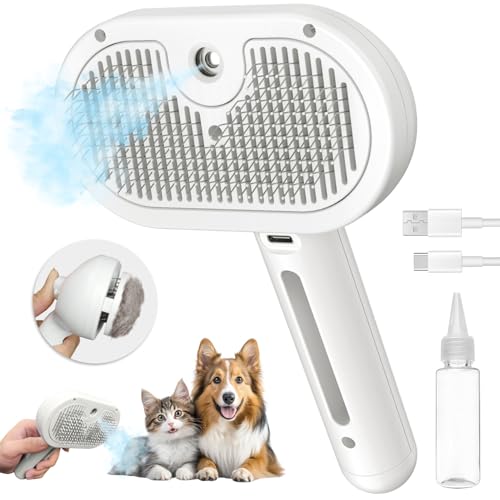
- 【Cat Steam Brush for Shedding – A Gentle Grooming Experience】 Indulge your feline friend in a luxurious grooming session…
- 【Effortless Self-Cleaning Cat Brush for Indoor Cats – No Hassle, No Mess】 Tired of tangled hair clinging to your brush? …
- 【3-in-1 Cat Hair Brush – The Ultimate Grooming Tool】 Meet your all-in-one grooming solution! Our cat steam brush seamles…
If coconut oil has already been used and left residue, a bath with a conditioning formula helps reset the coat before you try detangling again. A Dog Shampoo Half Gallon that cleans, conditions, and detangles strips out excess oil while leaving enough slip behind that your next dematting session goes faster.

- LARGE VALUE SIZE (64 OZ): Save time and money with our extra-large half gallon 64oz bottle of premium dog shampoo, suita…
- 4-IN-1 DOG SHAMPOO: Effectively cleans, conditions, detangles, and moisturizes your dog’s skin. Keep your dog’s fur soft…
- PROUDLY MADE IN THE USA: Our shampoo for dogs is a quality American-made product formulated and tested in the best facil…
For a deeper comparison of tools that handle the heaviest tangles, this guide on how to remove matted dog hair without cutting walks through the exact tools worth keeping in your grooming kit.
When to Stop and Call a Professional Groomer
Not every mat is a DIY job, and knowing when to stop matters as much as knowing the technique. The National Dog Groomers Association recommends professional dematting once a mat sits closer than one inch from the skin. At that depth, the risk of nicking skin with a comb or scissors rises sharply, and the dog’s discomfort increases too. If you’ve tried dematting spray, worked through it with a comb, and the mat still won’t budge or your dog is clearly in pain, that’s your signal to book a groomer rather than keep pushing.
Severe matting across large areas of the body, especially if it’s paired with redness, odor, or visible irritation underneath, should go straight to a groomer or vet rather than a home fix. Dematting spray and coconut oil are both tools for prevention and mild to moderate tangles, not substitutes for professional care once a mat has become a welfare issue.
Which One Should You Actually Reach For?
If you’re asking which product solves matted dog hair fastest and with the least mess, dematting spray wins in nearly every practical scenario a Doodle owner faces. Coconut oil still has a role for dry skin support between grooming sessions, but it shouldn’t be your first response to an active mat. Keep a dematting spray in your grooming caddy for daily maintenance, and save coconut oil for occasional skin conditioning rather than detangling duty.
For dogs whose coats mat frequently around the collar or harness, comparing your current comb against other options matters too. If you’re unsure whether your current tool is doing more harm than good, this breakdown of a slicker brush versus a dematting comb explains which is actually safer for sensitive, curly-coated breeds.
Can I use coconut oil and dematting spray together on the same mat?
You can, but order matters. Use dematting spray first to loosen the mat mechanically, then apply a very small amount of coconut oil afterward if the skin underneath looks dry or irritated. Applying coconut oil first tends to make the mat greasier and harder for a comb to grip.
Why does my Doodle’s coat mat even though I brush regularly?
Doodle coats trap loose hair instead of shedding it, so even frequent brushing can miss hidden mats forming close to the skin, especially behind the ears, under the collar, and in the armpits. Using a dematting spray before each brushing session adds slip that helps the brush reach those hidden layers rather than skimming the surface.
Is coconut oil safe to leave on a dog’s coat overnight?
A small amount left on for a short conditioning treatment is generally fine, but leaving it on overnight invites dirt, dust, and loose fur to stick to the coat, which can create new mats rather than preventing them. If you use it, apply a thin layer and bathe it out within a few hours.
How often should I use dematting spray on a Doodle’s coat?
For curly or wavy Doodle coats prone to matting, using dematting spray before every brushing session, ideally every other day, helps prevent small tangles from becoming full mats. Dogs with straighter coats may only need it a couple of times a week or whenever you notice resistance while brushing.


