


Dog training collars rank among the most searched (and most misunderstood) tools for pet parents raising a reactive puppy, especially when that puppy is a sensitive Doodle who reads every ounce of your tension through those thick, curly ears. If your Goldendoodle lunges at the mail carrier or your Labradoodle puppy nips when startled, you’ve probably wondered whether a collar is the fix or just a quick patch over a bigger behavioral issue. This guide breaks down what actually matters when picking gear, which seven options are worth your money in 2026, and how to use any tool responsibly so you’re building trust instead of fear.
Before we get into specific products, it helps to understand why aggression in puppies isn’t something you can just “shock away.” The ASPCA has been clear for years that positive reinforcement produces more reliable, longer-lasting behavior change than punishment-based methods, and that’s doubly true for puppies whose nervous systems are still developing. The American Veterinary Society of Animal Behavior (AVSAB) has gone further, stating outright that aversive training techniques can actually increase fear, anxiety, and aggression rather than resolve it. So any dog training collar you buy in 2026 should be chosen with that research in mind, not against it.
Why Aggression in Puppies Needs Specialized Training Tools
Puppy aggression almost never comes from “dominance.” It’s usually fear, overstimulation, poor socialization, or a startle response that hasn’t been taught an alternative yet. A Doodle puppy who growls when a stranger reaches for her isn’t trying to run the household. She’s overwhelmed and doesn’t have a better coping skill yet. That distinction matters because it changes what “training” should look like. A tool that punishes the growl without addressing the underlying fear can suppress the warning sign while leaving the fear fully intact, which sometimes leads to a bite with no warning at all later on.
This is exactly why vibration-based dog training collars have become the preferred middle ground for reactive puppies. They interrupt a behavior with a startling but non-painful sensation, giving you a window to redirect your puppy’s attention and reward the calmer choice. Used this way, a puppy training collar becomes a communication tool rather than a punishment device, and that framing changes everything about how your dog experiences training sessions.
Vet-Approved Criteria for Choosing a Training Collar
Not all dog training collars work the same way, and the differences matter a lot more than most product listings let on.

- Vibration collars: Deliver a buzzing sensation similar to a phone on silent. No pain involved, just an attention interrupt. Generally the safest starting point for reactive or anxious puppies.
- Static (shock) collars: Deliver an electrical stimulation at adjustable intensity. These require careful fitting, conservative settings, and ideally guidance from a trainer, since misuse can worsen anxiety-driven aggression.
- Remote training collars: Allow you to deliver tone, vibration, or static correction from a distance, useful for recall work and off-leash reactivity management once a puppy has basic skills down.
Look for collars with a tested range of vibration-only or tone-only modes, a secure but adjustable fit for a growing neck, and some kind of safety lockout so an accidental press doesn’t deliver a jolt. For Doodle puppies specifically, fit is a bigger deal than people expect. Their thick, curly coats can trap moisture against the skin and make contact points less reliable, so a collar with adjustable contact probes and breathable straps will serve a Bernedoodle or Goldendoodle far better than a generic one-size strap.
“The goal of any training tool should be to teach your puppy what to do, not just punish what not to do. If a collar is making your dog shut down, flinch, or avoid you, it’s working against you, not for you.” — a sentiment echoed by most veterinary behaviorists today.
Top 7 Dog Training Collars Reviewed
Here are seven standout options worth considering for 2026, with notes on which temperaments and coat types they suit best. All price tiers are relative, since Amazon pricing shifts constantly.
| Product | Collar Type | Best For | Range | Price Tier |
|---|---|---|---|---|
| 3-Pack Multi-Dog Training Collar | Static + Vibration + Tone | Multi-dog households | Up to 4,500 ft | $$ |
| E-Collar Educator FOB | Remote Static/Vibration | Precision correction, experienced handlers | 300 yards | $$$$ |
| Ultra-Light Slim Collar | Static + Vibration | Small or sensitive-necked puppies | Short to mid range | $$ |
| Standard Vibration-Only Collar | Vibration/Tone Only | Highly fearful or reactive puppies | Varies by model | $ |
| GPS-Enabled Training Collar | Static + Location Tracking | Off-leash recall training | Varies, often cellular-based | $$$$$ |
| Waterproof Rechargeable Collar | Static + Vibration | Active, outdoorsy Doodles | Mid to long range | $$$ |
| Beginner Combo Training Kit | Tone + Vibration | First-time collar users | Short range | $ |
If you’re managing more than one dog, or you simply want backup units on hand, the Shock Collar for Dogs 3 Pack with 4500FT Range is a practical, budget-friendly option. The extended range is more range than most households actually need day to day, but it’s reassuring for larger properties, and having three units means you’re not scrambling for a replacement if one battery dies mid-walk. For a reactive puppy, I’d recommend sticking to the vibration or tone settings almost exclusively and treating the static function as a last resort you may never need to use.

- ADJUSTABLE STIMULATION LEVELS: Features multiple stimulation levels, allowing you to customize 4 Effective Training Mode…
- 4500FT Long Range:Perfect for multi-dog households who want to grant their furry companions ultimate outdoor freedom to …
- 3-Channel Multi-Dog Control:The smart remote supports an advanced 3-channel system, allowing you to seamlessly train up …
For handlers who want finer control, the E-Collar Educator FOB 300 Yard Training Collar is a premium investment built for precision. The finger-operated dial lets you dial in extremely low intensities, which matters a lot if you’re working with a Doodle puppy who startles easily. This isn’t really a beginner’s dog training collar. It shines in the hands of someone who has already worked with a trainer and understands how to pair tone cues with reward-based redirection, rather than reaching for intensity first.
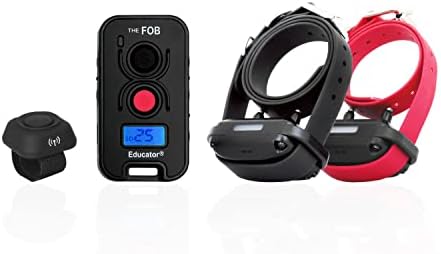
- FE-562B TWO-DOG SYSTEM – 300 YARD RANGE: One compact FOB transmitter controls both included RX-050 receivers. Follow the…
- BLUETOOTH FINGER BUTTON – PAIR BEFORE USE: Included Finger Button connects to the FOB transmitter via Bluetooth for clos…
- PROGRAMMABLE CONTROLS: Programmable S buttons can be configured for Electronic Stimulation with a Pulsing or Tapping Sen…
If your puppy is on the smaller end, think a Mini Poodle mix or a young Cavapoo, fit becomes the whole ballgame. The Shock Collar for Small Dogs, Ultra-Light & Slim Training Collar is designed with a slimmer band and lighter housing so it doesn’t drag on a smaller neck or get buried under a thick coat. This is a solid affordable pick for pet parents whose puppy’s “aggression” is really fear-based reactivity in a small body, since the lighter unit feels far less intrusive during short training sessions.

- 【40% Smaller/Lighter/Slimmer Design】The latest 2026 model, featuring an 40% smaller/lighter/slimmer dog training collar,…
- 【Tailored for Small Dogs】Suitable for small dogs with neck sizes from 6-19 inches, equipped with a breathable and adjust…
- 【Innovative Training Modes】Offers a total of 198 adjustable levels for precise training, including sound, vibration, and…
Rounding out the list, vibration-only models remain the gentlest entry point for puppies who shut down at the first hint of static correction, GPS-enabled collars are worth the splurge for families doing serious off-leash recall work, waterproof rechargeable units suit active Doodles who swim or hike regularly, and beginner combo kits are a sensible low-cost starting point if you’ve genuinely never used a dog training collar before and want to learn the ropes on tone and vibration settings only.
Pairing Tools with Positive Reinforcement Techniques
A collar by itself doesn’t teach your puppy anything. It only creates a moment where learning can happen, and that moment is wasted if it isn’t immediately followed by a reward for the behavior you actually want. A 2019 study published in the Journal of Veterinary Behavior found that dogs trained using aversive methods showed measurably higher stress markers, including elevated cortisol and more stress-related behaviors like lip licking and lowered body posture, compared to dogs trained with reward-based methods. That’s a strong signal that even a well-fitted dog training collar should be used as a brief interrupt, not a repeated punishment.

In practice, that looks like this: use the lowest vibration or tone setting that gets your puppy’s attention, immediately redirect to a sit or a look-at-you cue, then reward generously with a treat or praise the second your puppy complies. Over weeks, your puppy starts associating the interrupt with an opportunity to earn something good, not a threat to brace against. If you’re also dealing with destructive chewing during this stage, which is common in overstimulated puppies, a reliable anti-chew spray can take some pressure off your furniture while you work through the bigger behavioral picture.
Common Mistakes Pet Parents Make with Aggressive Puppies
The most frequent misstep I see is reaching for the highest static setting first because the puppy “didn’t respond” to a lower one. Usually the puppy did respond, just not in a way that was obvious, like a brief freeze or ear flick, and cranking the intensity only teaches the dog that the collar is unpredictable and scary. Another common error is using any dog training collar inconsistently, which confuses a puppy more than using no tool at all. If the vibration means “stop” on Monday but gets ignored on Tuesday because you’re busy, your puppy learns the cue is optional.
It’s also worth separating out normal puppy mouthiness from true aggression. A lot of what owners call an “aggressive dog collar” need is actually just an adolescent dog testing boundaries during the 6 to 18 month adolescence stage, which responds well to structure and consistent tools rather than anything punitive. True aggression, meaning repeated growling, snapping, or biting with little warning, is a different situation entirely and deserves professional eyes on it. If you’re seeing bite incidents rather than just reactivity, working with a certified canine behaviorist for bite rehabilitation is a far safer path than trying to solve it with gear alone. No vibration training collar or static unit replaces an actual behavior modification plan built around your specific dog.
Final Thoughts on Choosing the Right Puppy Training Collar
Picking the right dog training collar in 2026 comes down to matching the tool to your puppy’s actual emotional state, not just the behavior you’re seeing on the surface. Vibration-first options are the safer starting point for most Doodle puppies, static corrections should stay low and rare, and no collar should ever replace the slower work of building trust through consistent, reward-based training. Used thoughtfully, a good puppy training collar is one piece of a much bigger puzzle, not a shortcut around it.
Are dog training collars safe for aggressive puppies?
They can be safe when fitted correctly and used primarily on vibration or tone settings rather than high-intensity static correction. Puppies displaying true aggression, not just reactivity, should be evaluated by a professional before relying on any collar as the main training tool.
What is the best type of collar for a reactive Doodle puppy?
A vibration training collar is generally the gentlest and most appropriate starting point for reactive or fearful Doodle puppies, since it interrupts behavior without causing pain and works well alongside positive reinforcement training.
At what age can I start using a puppy training collar?
Most trainers recommend waiting until a puppy is at least five to six months old and has already learned basic cues like sit and come. Introducing a collar too early, before your puppy understands foundational commands, tends to create confusion rather than clarity.
Can a training collar make puppy aggression worse?
Yes, if it’s used at high intensity or applied punitively without pairing it with reward-based redirection. Research on aversive training methods has linked them to increased fear and stress responses, which can escalate rather than resolve aggressive behavior in sensitive puppies.


