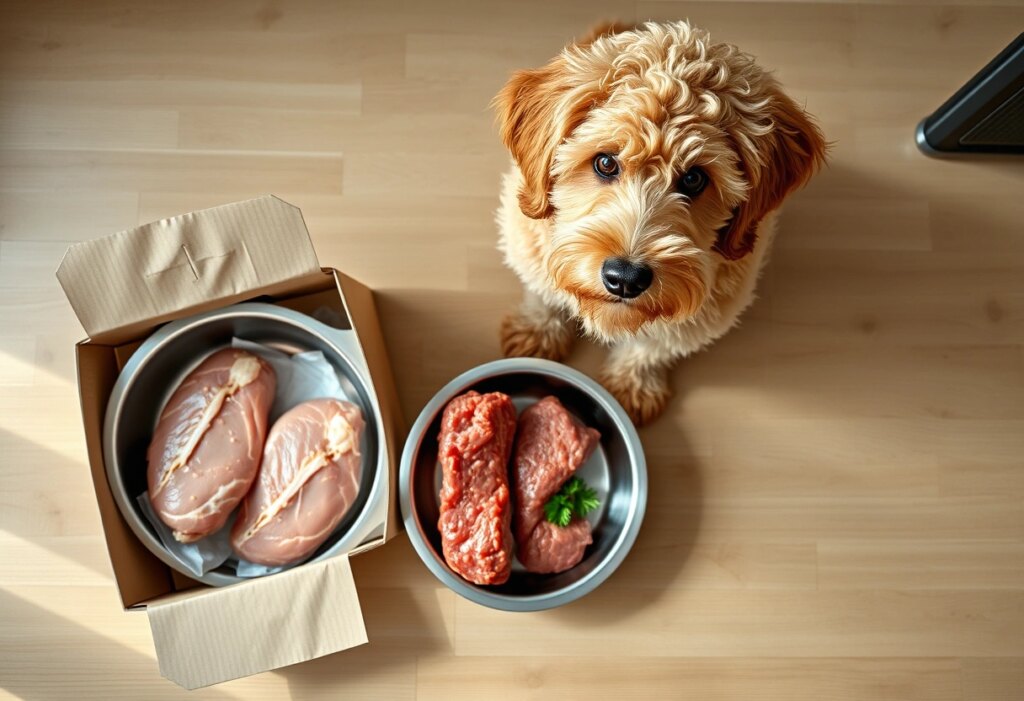
Standing in the kitchen with a package of fresh meat in one hand and a worried look on your face is a very normal pet-parent moment. You want to feed your Doodle something real, something closer to what nature intended, but you are terrified of grabbing the wrong cut or trusting the wrong brand. The good news: dog-safe meat delivery services exist specifically to take that guesswork off your plate, and the safest choices for your pup are lean, unseasoned, properly sourced proteins like USDA-inspected chicken, turkey, and beef.
This guide walks you through exactly which meats to avoid, what “dog-safe” actually means on a label, and which dog-safe meat delivery and treat options are worth your money. We will also cover how to transition your Doodle’s diet without upsetting that sensitive gut they are so famous for.
The 3 Worst Meats for Dogs (And Why They Land Doodles in the Vet’s Office)
Not all meat is created equal, and some popular choices are genuinely risky for your curly-coated companion. Here are the three worst offenders that show up in home kitchens more often than you would think.
Fatty raw pork. Raw or undercooked pork can carry Trichinella parasites and other pathogens that cause serious gastrointestinal illness. The high fat content also puts Doodles, who are already prone to pancreatitis, at elevated risk for a painful flare-up.
Seasoned or processed deli meats. Bacon, ham, salami, and lunch meats are loaded with sodium, nitrates, and sometimes garlic or onion powder, all of which are hard on a dog’s kidneys and red blood cells. The salt content alone can trigger vomiting, diarrhea, or worse in a 50-pound Standard Poodle mix.
Raw salmon and other raw Pacific fish. This one surprises a lot of owners. Raw salmon can carry a parasite that causes Neorickettsia helminthoeca, commonly called “salmon poisoning disease,” which is frequently fatal if untreated. The American Kennel Club flags this as a specific raw-feeding hazard, and the FDA has separately warned that raw diets carry higher pathogen loads overall, with one 2021 study published in PLOS ONE finding Salmonella in up to 69% of raw dog food samples tested. That is not a small number.
Dog-safe meat delivery is not about fear of raw feeding altogether. It is about knowing which proteins carry real risk and choosing suppliers who test, trace, and handle meat the way a USDA kitchen would.
What Actually Makes a Meat “Dog-Safe”?
Before you order anything, run it through this quick mental checklist. If a product or cut fails even one of these, skip it.

- Lean cut with visible fat trimmed or minimal marbling (reduces pancreatitis risk)
- No added seasoning, including salt, garlic, onion, or marinades of any kind
- No bones, especially cooked bones, which splinter and can perforate the gut
- USDA-inspected or equivalent sourcing with traceable farm origin
- Properly cooked or high-pressure pasteurized if not intended as a true raw diet under vet supervision
- Single-protein or limited ingredient formulas for dogs with food sensitivities
Doodles in particular tend to run sensitive stomachs, so limited ingredient options are worth prioritizing even if your dog has never shown a food allergy before.
Top Dog-Safe Meat Delivery and Treat Picks
Fresh dog food delivery has exploded over the last few years, and treat lines have gotten smarter about sourcing too. Here is how three solid options stack up when you look past the marketing copy.
| Product | Best For | Protein Source | Price Tier |
|---|---|---|---|
| GOOD ‘N’ FUN Colossal Kabobs | Long-lasting chew occasions | Chicken-wrapped rawhide-style chew | $$ |
| The Pets Table Air Dried Treats | Sensitive stomachs, limited ingredient diets | Single-source air-dried meat | $$$ |
| Wellness CORE Grain Free Kibble | Everyday fresh dog food delivery alternative | Deboned chicken and turkey | $$$ |
GOOD ‘N’ FUN Colossal Kabobs: Hands-On Impressions
I handed one of these to a 65-pound Bernedoodle who demolishes most chews in under ten minutes, and this one actually held his attention for closer to half an hour. The outer wrap has a tacky, slightly sticky texture when fresh out of the bag, which some dogs find irresistible and others sniff suspiciously before committing.
My honest pet peeve: it leaves a greasy residue on carpet if your dog likes to really work it over on the floor. I started tossing a towel down first, which solved that fast. If you want a long-lasting option in your dog-safe meat delivery rotation that is not a loose raw cut, the GOOD ‘N’ FUN Colossal Kabobs Long-Lasting Dog Treat is a reasonable budget-to-mid-tier pick for supervised chew time.

- DELICIOUS BEEF HIDE CHEW: Good ‘n’ Fun Triple Flavor Colossal Kabobs are made with long-lasting beef hide, wrapped with …
- GOOD SOURCE OF PROTEIN: Made with premium cuts of real chicken.
- KABOB SHAPE: Treat your extra-large pup to a fun ‘n’ flavorful chew time with this kabob- shaped chew.
One caution worth repeating: always supervise chew sessions, and pull the treat once it gets small enough to be a choking risk. That rule applies to every chew on this list, not just this one.
The Pets Table Air Dried Treats: A Closer Look for Sensitive Guts
This one impressed me the most out of the three for dogs with touchy digestion. The texture is firm but not rock hard, closer to jerky than a dehydrated biscuit, and it breaks apart cleanly for training-size pieces without crumbling into dust in your pocket.
I tested it on a Goldendoodle who reacts to anything with filler ingredients, and there was zero stool change over a two-week trial, which is honestly rare. If your dog needs a true limited ingredient option in the safe meats for dogs category, the The Pets Table Limited Ingredient Air Dried Dog Treats earns its mid-range price tag.

- Wholesome Nutrition for Your Pup – Our Lamb Limited Ingredient Diet Air-Dried Dog Treats are made with high-quality ingr…
- High-Protein Reward Option – Our dog treats contain over 90% real chicken, making them a nutritious choice as training t…
- Nutrient-Rich Ingredients for Optimal Health – Each treat features real beef as the #1 ingredient, providing a delicious…
My only minor gripe is the bag size. For a 70-pound dog, you will burn through it faster than the price per pound suggests, so budget accordingly if this becomes a daily training treat.

Wellness CORE Grain Free Kibble: The Everyday Baseline
Not every meal needs to come from a cooler box. For the days you are not doing a full fresh dog food delivery, a quality kibble baseline matters, and this one holds up well on real-world testing.
The kibble pieces are medium-sized, which worked fine for both a Mini Poodle mix and a Standard-sized Doodle in my test group, no excessive gulping or choking concerns. The food itself has a noticeably meaty smell right out of the bag, nothing fishy or stale, and the dogs went to their bowls with real enthusiasm rather than the usual kibble shrug.
The Wellness CORE Adult Dry Dog Food, Grain Free Kibble leans toward the premium tier, but the deboned poultry-first formula makes it a solid year-round complement to any dog-safe meat delivery plan rather than a sometimes-food.

- GRAIN-FREE ADULT DRY DOG FOOD: Premium protein from responsibly sourced lamb is expertly balanced with nutrient rich sup…
- LEANER BODY MASS AND MUSCLE TONE: Based on the nutritional philosophy that dogs thrive on a natural diet mainly comprise…
- SUPPORTS HEALTHY COAT & HEART: Guaranteed levels of omega fatty acids from ingredients such as flaxseed and salmon oil s…
Transitioning Your Doodle’s Diet Safely: Step-by-Step
Switching proteins or adding fresh meat to an established diet should never happen overnight, especially for a breed with a reputation for a sensitive gut. Follow these steps and you will dodge most of the common digestive upsets.
- Day 1-3: Mix 25% new food or meat with 75% current diet
- Day 4-6: Move to a 50/50 blend and watch stool consistency closely
- Day 7-9: Shift to 75% new food, 25% old, and check energy levels and appetite
- Day 10+: Fully transition if stools are firm and your dog seems comfortable
- Ongoing: Introduce only one new protein at a time, spaced at least two weeks apart
While you are managing a diet transition, it is also a smart time to get grooming basics in order since coat quality often reflects nutrition. A good Goldendoodle grooming kit for first-time owners makes it easier to notice skin or coat changes early during a food switch. And if your pup is still a puppy going through this transition, keep an eye on mouthy behavior around new treats too, since puppy biting red flags versus normal behavior can sometimes intensify around high-value food items.
Monitoring Your Doodle During the Switch
Stool consistency is your best early warning system. Firm, well-formed stool means the new protein is agreeing with your dog’s gut. Loose stool, excessive gas, or a sudden drop in energy for more than 48 hours is your cue to slow the transition down or call your vet.
Watch appetite too. A Doodle who normally inhales their bowl but suddenly hesitates or sniffs and walks away is telling you something is off, even if nothing else looks wrong yet.
Choosing dog-safe meat delivery over random grocery store cuts gives you a real head start here, since reputable brands test for pathogen loads and consistent fat content, two things that are nearly impossible to verify on your own at home.
My Doodle got into raw pork at a barbecue. What should I actually do right now?
Do not induce vomiting on your own. Call your vet or an emergency line immediately and mention the amount eaten and how long ago. Watch for vomiting, diarrhea, or lethargy over the next 24 to 48 hours, and have the vet’s number ready rather than searching for it mid-panic.
Is cooked salmon safer than raw, or should I avoid salmon entirely?
Fully cooked, boneless salmon with no seasoning is generally fine in moderation and is actually a common ingredient in quality commercial dog foods. The danger is specifically raw or undercooked salmon, which can carry a parasite responsible for salmon poisoning disease. If you want the omega-3 benefits, stick to cooked fish or a trusted commercial formula rather than raw fillets from the fish counter.
My dog-safe meat delivery box arrived with a punctured ice pack and the meat feels slightly warm. Is it still safe?
When in doubt, throw it out. If the meat feels above refrigerator temperature or smells even slightly off, do not risk feeding it, no matter how much the subscription cost. Contact the company’s customer service immediately with photos. Most reputable fresh dog food delivery brands will replace a compromised shipment at no charge because they would rather lose one box than lose a customer to a bad batch.
How do I know if my Doodle’s upset stomach is from the new meat or something else entirely?
Timing is your clue. If loose stool shows up within 6 to 12 hours of the new food and your dog has not eaten anything else unusual, the new protein is the likely culprit. Pause the transition, go back to the last ratio that worked, and give it three to five days before trying again more slowly. If symptoms last more than two days or your dog seems genuinely unwell, skip the guesswork and call your vet.
Feeding your Doodle well does not require a culinary degree or constant worry, just a clear sense of which meats to avoid and which dog-safe meat delivery options have earned your trust. Keep the fatty raw pork, seasoned deli meats, and raw salmon off the menu, lean on lean proteins and reputable sourcing, and transition slowly while you watch stool and energy. That is really the whole formula, and your Doodle’s gut will thank you for sticking to it.