Goldendoodle food can make a noticeable difference when loose stool, gurgling, gas, or occasional vomiting keeps interrupting your dog’s day. The best choice is not always the most expensive bag. It is the formula your veterinarian considers nutritionally complete, appropriate for your dog’s age, and compatible with the suspected trigger.
Start by ruling out illness before changing foods repeatedly. Then compare gentle options by protein source, fiber, calorie density, and life stage. The six choices below include everyday formulas, limited-ingredient approaches, and veterinary diets worth discussing with your dog’s care team.
Key Takeaways
- Persistent vomiting, diarrhea, appetite loss, or weight loss deserves veterinary attention.
- Choose Goldendoodle food based on complete nutrition, digestibility, and your dog’s individual history.
- Switch gradually over 7 to 10 days while tracking stool quality and appetite.
- A prescription elimination or hydrolyzed diet may be needed if food sensitivity is suspected.
- Portion size matters because Goldendoodles can gain weight quietly beneath a fluffy coat.
“Gentle” does not mean bland forever. A gentle diet should still provide balanced nutrition for the dog in front of you, not just temporarily quiet the stomach.
Why Does Your Goldendoodle’s Stomach Seem So Sensitive?
Goldendoodles often have enthusiastic appetites. They may swallow treats quickly, sample sidewalk treasures, or react poorly when several foods are introduced at once. That behavior can look like a food allergy, even though the actual cause may be overeating, parasites, stress, infection, pancreatitis, or a sudden diet change.
Common mild signs include soft stool, extra gas, audible stomach noises, and occasional urgency after meals. A single loose bowel movement is not automatically a crisis, especially if your dog remains bright, hydrated, and interested in food.
Repeated vomiting, bloody stool, black stool, weakness, painful posture, dehydration, fever, or unexplained weight loss needs veterinary attention. Puppies, seniors, and dogs with known medical conditions may need help sooner because they can become dehydrated quickly.
Your Goldendoodle diet also includes treats, chews, table scraps, supplements, and flavored medications. If the bowl looks perfect but the stomach remains unsettled, write down everything entering your dog’s mouth for several days. That record often reveals the extra biscuit or rich chew causing trouble.
If itchy paws, recurrent ear problems, skin redness, or chronic diarrhea appear together, ask about a structured food trial. Our guide to dog food for sensitive stomachs and skin allergies can help you organize that conversation without guessing at ingredients.
What Should You Look for in Gentle Goldendoodle Food?
Begin with a food labeled complete and balanced for your dog’s life stage. Puppies need growth nutrition, adults need maintenance nutrition, and older dogs may need different calorie and nutrient targets. A food that seems gentle but lacks appropriate balance is not a sound long-term plan.
Digestibility matters, but the ingredient list alone cannot predict how every dog will respond. A formula with moderate fat, familiar ingredients, and a protein your dog has eaten safely may work better than a fashionable recipe packed with several novel ingredients.

Look at body condition, too. A thick doodle coat can hide extra padding. The WSAVA body condition score tool gives pet parents and veterinarians a shared way to assess shape by feeling the ribs, waist, and abdominal tuck.
- Choose a protein source your dog has tolerated, unless your veterinarian recommends a novel or hydrolyzed protein trial.
- Favor a measured fiber level rather than adding pumpkin, bran, and supplements all at once.
- Keep treats below a modest portion of daily calories, especially during a food trial.
- Ask your veterinarian about calorie needs if your Goldendoodle is gaining weight despite normal portions.
A veterinary-guided elimination diet is different from casually buying limited ingredient dog food. During a true trial, every treat, chew, flavored tablet, and bite from the children has to match the plan. Otherwise, the result becomes difficult to interpret.
Which Six Foods May Be Worth Discussing With Your Vet?
The comparison below is a starting point, not a promise that any formula will treat disease. Protein tolerance, stool response, age, activity, and medical history all matter. Use the price tier as a relative shopping guide rather than a fixed cost claim.
| Option | Protein approach | Fiber and digestion notes | Life-stage fit | Price Tier |
|---|---|---|---|---|
| The Farmer’s Dog Human-Grade Dog Food Plan, Poultry Set | Poultry-based fresh meals | Moist texture may suit dogs that dislike dry food; portions need careful measuring | Adult dogs, with veterinary review for special needs | $$$$ |
| Hill’s Science Diet Adult 7+ Dry Dog Food | Conventional animal-protein dry formula | Crunchy texture, moderate portions, and easy storage | Senior dogs age 7 and older | $$$ |
| VICTOR Select Gluten-Free Beef Meal & Brown Rice Dry Dog Food | Beef-centered dry recipe | Dry kibble can be practical, though some sensitive dogs do better with added water | Adult dogs, depending on veterinary guidance | $$ |
| Veterinary hydrolyzed-protein diet | Proteins broken into smaller components | Designed for controlled food trials under veterinary supervision | Dogs with suspected food reactions | $$$$ |
| Single-animal-protein limited ingredient diet | One carefully selected animal protein | Fewer variables can make stool and skin tracking easier | Adults, unless the label states otherwise | $$$ |
| Veterinary gastrointestinal diet | Highly digestible protein blend | Often chosen for short-term digestive support under professional advice | Depends on the specific formula | $$$$ |
1. The Farmer’s Dog Human-Grade Dog Food Plan, Poultry Set
Fresh poultry meals can appeal to Goldendoodles that turn away from dry kibble or need more moisture in the bowl. In practical use, the soft texture is easy to portion with a spoon, and cleanup is less dusty than shaking kibble from a bag. The tradeoff is refrigerator space and a feeding routine that requires more planning than leaving a scoop of dry food in a container.
For pet parents considering The Farmer’s Dog Human-Grade Dog Food Plan, Poultry Set, I would confirm the calorie amount and life-stage fit with the veterinarian before making it the sole diet. The smell is more noticeable than dry food, and a picky dog may begin expecting every meal to be soft and aromatic.

- HUMAN-GRADE DOG FOOD: The Farmer’s Dog real, human-grade dog food is made with the same quality and standards as human f…
- A PERSONALIZED PLAN FOR YOUR DOG: Click ‘Customize Now” to take our quick 2-minute quiz and get a custom plan tailored t…
- GREAT FOR ALL AGES AND BREEDS: Great for all dog breeds and ages, our recipes have essential vitamins and minerals that …
2. Hill’s Science Diet Adult 7+ Dry Dog Food
Older Goldendoodles may benefit from a senior-focused formula that is easy to measure and store. The kibble format is tidy, travels well, and does not require a refrigerator. If your dog has sensitive teeth, soaking it in warm water for a few minutes can soften the meal, although some dogs dislike the changed texture.
Hill’s Science Diet Adult 7+ Dry Dog Food | #1 Veterinarian … may fit a senior dog whose stomach reacts to rich foods, but it is not a universal solution for vomiting or chronic diarrhea. Watch portion size closely. Less activity with age can make familiar scoops too generous.

- Healthy heart, kidneys, and bladder supported by antioxidants and balanced minerals
- Lean muscles supported with high-quality protein
- Made with natural ingredients
3. VICTOR Select Gluten-Free Beef Meal & Brown Rice Dry Dog Food
This type of beef-based kibble may suit an adult Goldendoodle that has done well with beef and needs a practical dry option. The bag-friendly format is convenient for travel, boarding, and puzzle feeders. My small pet peeve with dry food is the bowl noise on hard floors, plus the crumbs that hide in curly facial hair when a dog eats too enthusiastically.
VICTOR Select Gluten-Free Beef Meal & Brown Rice Dry Dog Food should not be chosen simply because a recipe sounds cleaner or because your dog has a sensitive stomach. Gluten is not the usual explanation for every digestive complaint. Ask whether the beef and the full ingredient profile match your dog’s history.
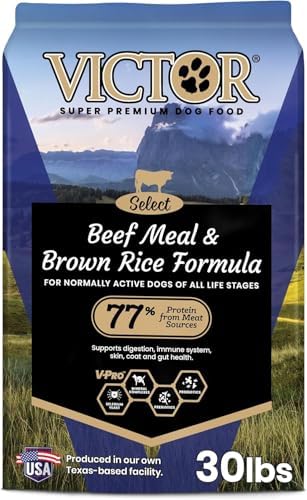
- BEEF PROTEIN DRY DOG FOOD: VICTOR Beef Meal & Brown Rice super premium dog food is formulated for normally active dogs; …
- HIGH QUALITY INGREDIENTS: VICTOR’s Select line of dry dog kibble offers specific proteins in a variety of formulated ble…
- FROM PUPPY TO ADULT: Suitable for small dogs, medium dogs and large breed dogs through all life stages, this high qualit…
4. Veterinary Hydrolyzed-Protein Diet
A hydrolyzed formula is often considered when a veterinarian suspects a food reaction and wants fewer confounding variables. It is not the same as picking a random limited ingredient dog food from a store shelf. The trial needs strict consistency, a defined duration, and a plan for judging stool, skin, and appetite.
This is a medical nutrition choice, not a casual upgrade. If your Goldendoodle has recurrent ear infections alongside digestive problems, ask whether a supervised trial is appropriate before buying several different bags.
5. Single-Animal-Protein Limited Ingredient Diet
A single-animal-protein recipe can make the bowl easier to evaluate because there are fewer major protein variables. It may be useful for an adult dog that has already tolerated one protein and needs a simpler routine. Still, “limited ingredient” does not guarantee that a dog will tolerate every recipe carrying that label.

Read the full ingredient panel and check for treats that contain other meats. During a food trial, one sneaky flavored chew can muddy the result. This style of Goldendoodle food is most useful when selected with a clear question in mind.
6. Veterinary Gastrointestinal Diet
Veterinary gastrointestinal diets are often used when a dog needs a highly digestible meal for a defined period. The correct choice depends on the cause of the signs, hydration status, fat tolerance, and any condition found during an examination. Some dogs accept the texture immediately. Others need warm water or a gradual transition.
Do not use a gastrointestinal formula to postpone care for a dog that is repeatedly vomiting or becoming weak. A temporary improvement can hide a problem that still needs testing.
How Can You Switch Foods Without Upsetting Your Dog Further?
Most transitions should take 7 to 10 days, a timeframe commonly recommended by VCA Animal Hospitals. Sensitive dogs may need longer. A rushed switch can create diarrhea even when the new food is a good match.
- For the first two days, mix about 25% new food with 75% current food.
- Move to roughly half new and half current food for the next two or three days.
- Use about 75% new food for another two days if stool and appetite remain steady.
- Feed the new food alone after that, or pause at the last tolerated ratio if symptoms appear.
Measure meals with a consistent scoop or kitchen scale. Feed at predictable times, slow down fast eaters with a puzzle bowl, and avoid new treats during the transition. A simple log should include stool score, vomiting, gas, appetite, energy, and any unusual snack.
If loose stool begins, contact your veterinarian for advice rather than cycling through multiple foods. Goldendoodle food changes can become impossible to assess when every few days brings a new recipe.
When Is a Food Change Not Enough?
A food change is not enough when symptoms persist, worsen, or keep returning. Merck Veterinary Manual guidance supports investigating ongoing gastrointestinal signs rather than assuming a diet problem. Your veterinarian may recommend a fecal test, blood work, imaging, pancreatic testing, or a carefully controlled diet trial.
Seek prompt care for repeated vomiting, blood in vomit or stool, black stool, marked lethargy, a painful belly, collapse, refusal to drink, or signs of dehydration. Call sooner for a puppy, senior, or dog taking medication for another condition.
Weight loss is another warning sign. A Goldendoodle may look full-bodied because of its coat while losing muscle underneath. Take monthly photos from above and from the side, feel the ribs, and record body weight when possible.
FAQ
What is the gentlest Goldendoodle food for a dog with loose stool?
There is no single gentlest food for every dog. Ask your veterinarian whether a highly digestible gastrointestinal diet, a hydrolyzed diet, or a familiar complete adult formula makes sense. Avoid switching several foods at once, and seek care if loose stool lasts more than a short period or comes with vomiting, weakness, blood, or appetite loss.
Can a Goldendoodle eat limited ingredient dog food long term?
Yes, some limited ingredient dog foods are suitable for long-term feeding when labeled complete and balanced for the dog’s life stage. Confirm the choice with your veterinarian if the diet is being used for suspected allergies, weight loss, chronic diarrhea, or another medical concern.
How long should I test new Goldendoodle food?
A basic transition takes about 7 to 10 days, but a food sensitivity trial may require a much longer veterinary-directed period. Keep the diet strict, including treats and chews, and record stool, skin, appetite, and weight rather than judging the result after one meal.
Why does my Goldendoodle still have diarrhea after changing food?
The cause may not be the food. Parasites, infection, pancreatitis, stress, medication effects, and other illnesses can cause diarrhea. Stop treating the bowl as the only suspect and contact your veterinarian, especially if symptoms recur or your dog loses weight, becomes tired, vomits, or refuses water.
A Safer Feeding Plan for Your Goldendoodle
The best Goldendoodle food is the one that supports steady stool, healthy body condition, good appetite, and normal energy while meeting your dog’s nutritional needs. Start with veterinary guidance, transition slowly, and keep the rest of the diet boring for a little while.
Food can help, but it cannot diagnose a sick dog. If your companion continues to vomit, develops diarrhea, or loses weight, put testing ahead of another shopping trip. A calm, measured plan protects daily comfort far better than constant formula hopping.