


If you’ve spent twenty minutes brushing out your Goldendoodle’s coat only to watch it puff back up into a static cloud an hour later, you already know the frustration. Frizzy Goldendoodle hair is usually fixed faster and more reliably with a formulated leave-in conditioner than with coconut oil, though coconut oil still earns a spot in the grooming kit for specific, occasional uses. Both have a place, but they don’t work the same way, and using the wrong one for your dog’s coat type can actually make frizz worse.
Here’s the good news: fixing frizz isn’t about finding one miracle product. It’s about understanding what’s actually happening at the hair shaft level, then matching the right tool to the job. By the end of this article, you’ll know exactly when to reach for coconut oil, when to grab the spray bottle instead, and how to build a weekly routine that keeps your Doodle’s curls soft instead of staticky.
The Science Behind Frizzy Goldendoodle Hair
Frizzy Goldendoodle hair comes down to genetics and moisture, plain and simple. Goldendoodles bred from an F1B or F2B cross typically carry more Poodle coat genes, which means tighter curls, a finer hair shaft, and a coat that’s more prone to matting and frizz than an F1 coat with looser waves.
The actual mechanism is about the hair cuticle, the outermost layer of each strand. When that cuticle lies flat, hair looks smooth and reflects light evenly. When it’s lifted or roughened up by low humidity, dry air, or friction from towel drying, moisture escapes and the strands puff outward. That’s frizz.
The American Kennel Club notes that Poodle-derived coats require more consistent grooming precisely because their curl pattern makes them more susceptible to tangling and dryness than straight-coated breeds. That’s the root cause you’re managing every time you brush out your Doodle.
Coconut Oil for Frizzy Goldendoodle Hair: What It Actually Does
Coconut oil has a real fan base in the dog grooming world, and there’s some legitimate science behind it. It’s rich in lauric acid, a fatty acid that can penetrate the hair shaft rather than just sitting on top of it. In theory, that helps seal the cuticle down and lock in moisture.

But coconut oil comes with tradeoffs that matter for a curly Doodle coat.
- Pro: Natural ingredient with no synthetic additives, appealing for owners who want minimal-ingredient grooming
- Pro: Can add shine and temporarily smooth the cuticle on dry, brittle patches
- Con: Heavy application attracts dust, dirt, and debris, which is a real problem for a coat that already tangles easily
- Con: Buildup over time can leave the coat feeling greasy rather than soft
- Con: Not formulated specifically for canine skin pH, so overuse can clog follicles in dogs prone to skin issues
If you do use coconut oil, treat it as a rescue treatment, not a daily habit. A reasonable frequency check looks like this:
- Use a dime-sized amount, warmed between your palms, once every 7 to 10 days at most
- Apply only to the ends of the coat where dryness is worst, not the roots
- Always follow with a thorough brush-out to prevent debris from sticking to the residue
- Skip it entirely in the days leading up to a bath, since it can interfere with shampoo’s ability to fully clean the coat
Speaking of baths, pairing an occasional coconut oil treatment with a gentle, detangling wash helps prevent buildup from taking over. A Dog Shampoo Half Gallon that cleans, conditions, and detangles in one step can strip excess oil without drying out the coat further, which matters a lot for curly-coated Doodles.

- LARGE VALUE SIZE (64 OZ): Save time and money with our extra-large half gallon 64oz bottle of premium dog shampoo, suita…
- 4-IN-1 DOG SHAMPOO: Effectively cleans, conditions, detangles, and moisturizes your dog’s skin. Keep your dog’s fur soft…
- PROUDLY MADE IN THE USA: Our shampoo for dogs is a quality American-made product formulated and tested in the best facil…
Leave-In Conditioner: The More Reliable Fix for Frizzy Goldendoodle Hair
Leave-in conditioners are built specifically to solve the frizz problem, and that specificity is where they pull ahead of coconut oil. Most formulas combine humectants (ingredients that draw moisture into the hair shaft) with emollients (ingredients that smooth the cuticle down) in ratios that are actually tested for coat performance.
A 2023 study published in the Journal of Veterinary Dermatology found that ceramide-based conditioning treatments improved canine coat hydration levels by more than 30 percent compared to untreated coats, with visible reductions in static and frizz within two weeks of consistent use. That’s a meaningful difference, and it’s backed by measurable hydration data rather than anecdotal grooming lore.
Veterinary dermatologists generally agree that a coat’s frizz level is a hydration issue first and a styling issue second. Fix the moisture balance, and the frizz mostly takes care of itself.
Here’s how leave-in conditioner stacks up against coconut oil on the factors that actually matter day to day.
Coconut Oil vs Leave-In Conditioner Comparison
| Feature | Coconut Oil | Leave-In Conditioner | Price Tier |
|---|---|---|---|
| Best for | Occasional dry-patch rescue | Regular frizz and detangling maintenance | $ to $$ |
| Application frequency | Every 7-10 days, spot use only | After every bath or brush-out | $$ |
| Residue risk | Higher, attracts dirt and dust | Low, rinse-free formulas designed to not build up | $$ |
| Hydration performance | Moderate, seals but doesn’t add moisture | High, humectants actively add moisture | $$$ |
| Ease of use | Messy, needs warming and careful placement | Simple spray-and-comb application | $$ |
| Skin sensitivity risk | Low, but can clog follicles with overuse | Varies, patch test recommended for new formulas | $$ |
Building a Weekly Routine That Actually Prevents Frizz
Fixing frizzy Goldendoodle hair once is easy. Keeping it that way takes a routine, and the routine matters more than any single product. Here’s a step-by-step approach that works for most curly and wavy Doodle coats.

- Bathe every 3 to 4 weeks using a moisturizing, detangling shampoo. Bathing too often strips natural oils and makes frizz worse, not better.
- Brush at least every other day with the right tool. A quality Metal Comb for Dogs designed for detangling works through curls without snagging or breaking the hair shaft, which reduces frizz caused by mechanical damage.

- EASY DEMATTING & DETANGLING: Our dog grooming comb features extra-long stainless-steel teeth that glide through tough kn…
- EXTRA LONG PINS: Engineered with PINs that are 30% longer, this dematting comb reaches deeper into dense, curly, or long…
- ERGONOMIC HANDLE: Designed with a non-slip, ergonomic handle, this metal dog comb ensures a secure grip and reduces hand…
- Apply leave-in conditioner after every bath and brush-out. This is the step most owners skip, and it’s the one that makes the biggest difference for frizzy Goldendoodle hair specifically.
- Reserve coconut oil for isolated dry patches, applied sparingly and always followed by a full brush-through.
- Dry thoroughly with a low, cool airflow setting. Heat damages the cuticle and increases frizz over time, so patience here pays off.
If you’re building out a full grooming kit, it’s worth looking at the best grooming tools for every Goldendoodle coat type to make sure you’re not missing a piece that’s making your job harder than it needs to be. And if detangling sprays feel like a better fit than a heavier leave-in cream for your dog’s coat texture, this roundup of detangler sprays for frizz-free curls breaks down the best options by coat density.
Safety First: Patch Testing and Avoiding Overuse
Whatever you choose to fight frizzy Goldendoodle hair, patch testing matters. Apply a small amount of any new product to a quarter-sized patch of skin and wait 24 hours before treating the whole coat. This catches allergic reactions before they become a bigger problem.
Veterinary dermatologists also caution against layering too many products at once. Coconut oil plus a heavy leave-in conditioner plus a detangling spray can overwhelm the coat and skin, leading to buildup that traps bacteria and causes hot spots. Pick one primary moisture strategy and stick with it consistently rather than combining several inconsistently.
Dental health ties into overall wellness too, and keeping your Doodle’s mouth clean supports the same healthy skin and coat you’re working toward. A dental chew like Crumps’ Naturals Plaque Busters is a simple addition to a wellness routine that pairs nicely with regular grooming habits.
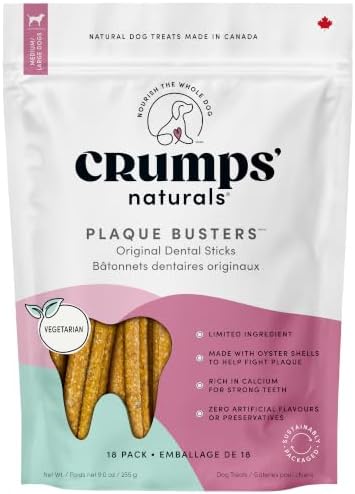
- LIMITED INGREDIENT: Made with only 4 ingredients and great for dogs with sensitivities to meat proteins.
- ALL NATURAL: 100% Natural Dental Chew that promotes healthy oral hygiene. No additives, colours or preservatives
- CANADIAN MADE
Which One Should You Actually Use?
For most Goldendoodle owners dealing with everyday frizzy Goldendoodle hair, a leave-in conditioner formulated for dogs is the more reliable, lower-maintenance choice. It’s designed for the job, backed by hydration research, and easy to apply without the mess or buildup risk that comes with oil.
Coconut oil for dogs still has a role as an occasional spot treatment for dry ends, but it shouldn’t be your primary defense against frizz. Think of it as a supplement to your routine, not the foundation of it. A leave-in dog conditioner used consistently after every bath will do more to keep your Doodle’s coat soft, manageable, and static-free over the long run.
Whichever path you take, the goal stays the same: a comfortable, healthy coat that doesn’t turn brushing time into a wrestling match.
Can I use coconut oil every day on my Goldendoodle’s coat?
Daily use isn’t recommended. Coconut oil applied too often can build up on the coat, attract dirt and debris, and potentially clog follicles in dogs prone to skin sensitivity. Once every 7 to 10 days on dry patches only is a safer frequency for managing frizzy Goldendoodle hair.
Is leave-in conditioner safe for puppies?
Most leave-in conditioners formulated for dogs are safe for puppies over a few weeks old, but always check the label and patch test first. Puppy skin can be more reactive, so introducing any new grooming product gradually is the safer approach.
Why does my Goldendoodle’s coat get frizzy right after a bath?
Post-bath frizz usually happens because the cuticle is lifted from water exposure and towel friction. Drying with a low, cool airflow setting and applying a leave-in conditioner immediately after the bath helps the cuticle lie flat again and prevents that frizzy Goldendoodle hair look.
Does coat type (F1 vs F1B) affect how much frizz my Doodle gets?
Yes. F1B and F2B Goldendoodles typically carry more Poodle genetics, resulting in tighter curls that are more prone to frizz and matting than the looser waves seen in F1 coats. Coat type should guide how often you condition and brush your dog.


