

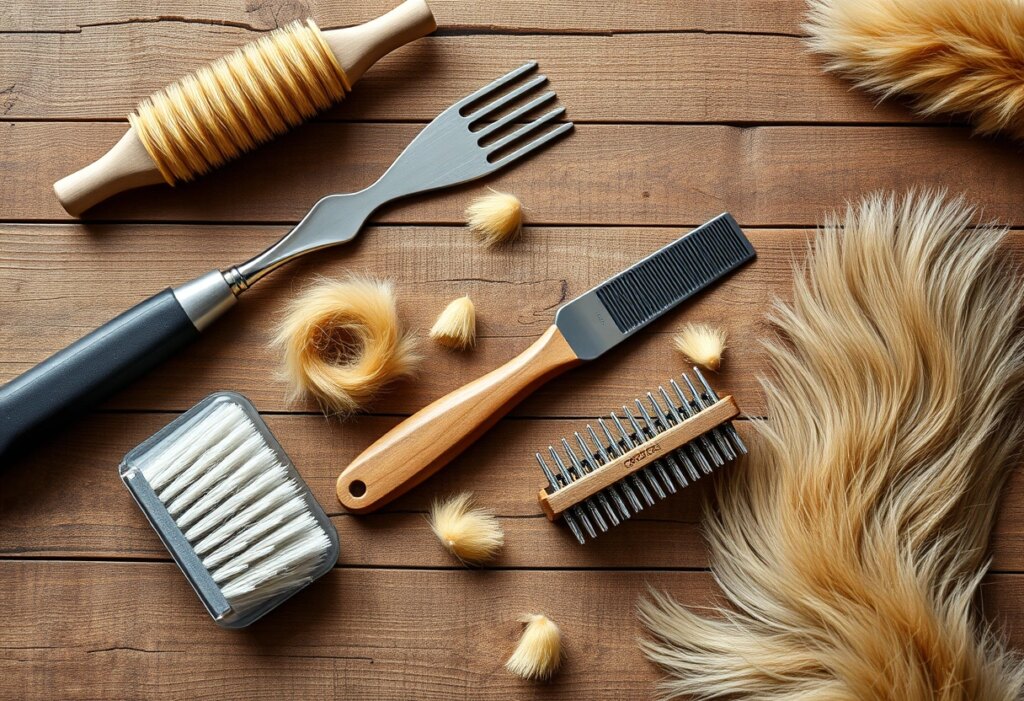
Goldendoodle grooming tools are not one-size-fits-all, and if you have been reaching for the same brush regardless of whether your pup has curls, waves, or a flat coat, you are probably fighting mats you do not need to fight. The right tool depends almost entirely on genetics. An F1 Goldendoodle, an F1B, and an F2 can all look wildly different by the time they hit adulthood, and that texture dictates everything from brushing frequency to which grooming tools actually work. This guide breaks down what to use for each coat type so you stop guessing and start grooming with a plan.
Why Coat Type Determines Tool Choice
Every Goldendoodle carries a mix of Poodle and Golden Retriever genes, and how those genes combine determines whether your dog ends up with tight curls, loose waves, or a straighter, flatter coat. First-generation (F1) doodles often land somewhere in the middle, with wavy fur that sheds a bit less than a Golden but mats more than people expect. F1B doodles, bred back to a Poodle, tend toward tighter curls and shed very little, which sounds great until you realize that low-shedding coats trap loose hair against the skin instead of releasing it, which is exactly how mats form. The Poodle Club of America has long noted that curlier, denser coat textures carry a higher matting risk simply because dead hair has nowhere to go without regular mechanical removal. That is the whole reason goldendoodle grooming tools cannot be a single universal kit. A tool that works beautifully on a straight-coated dog might barely touch the undercoat of a curly one, and a tool built for curls can be too aggressive on fine, straight fur. Knowing your dog’s coat category first saves you money on the wrong equipment and saves your dog from uncomfortable, painful detangling sessions later.
Matting is rarely a coat problem. It is almost always a schedule problem. Even the best goldendoodle grooming tools cannot undo weeks of skipped brushing.
Essential Tools for Curly Coats
Curly-coated Goldendoodles, the ones that look almost identical to a Poodle, need the most consistent attention of the three types. The American Kennel Club reports that curly-coated doodles generally need brushing three to four times a week to stay ahead of tangles, and honestly, some owners find daily quick passes work better than trying to catch up on a bad mat every few days. The two non-negotiable tools here are a quality slicker brush and an undercoat rake. The slicker handles the surface curls and keeps them separated, while the rake gets down to the base of the coat where mats actually start, usually behind the ears, in the armpits, and around the collar area. A metal comb rounds out the kit nicely for spot-checking problem areas after brushing. The Metal Comb for Dogs, Dog Grooming Detangler works well here because the wide-set teeth glide through loosened curls without snagging, letting you confirm you actually got through to the skin rather than just skimming the top layer.

- EASY DEMATTING & DETANGLING: Our dog grooming comb features extra-long stainless-steel teeth that glide through tough kn…
- EXTRA LONG PINS: Engineered with PINs that are 30% longer, this dematting comb reaches deeper into dense, curly, or long…
- ERGONOMIC HANDLE: Designed with a non-slip, ergonomic handle, this metal dog comb ensures a secure grip and reduces hand…
Curly coat grooming also depends heavily on what happens in the bath, not just what happens with a brush. Dry, brittle curls tangle faster and snap more easily, so a moisturizing shampoo and conditioner combo matters more for this coat type than any other. If your dog is prone to itchy, sensitive skin under all that curl, it is also worth reading up on calming aids for hyper Goldendoodle puppies since grooming sessions tend to go smoother when a wiggly pup is relaxed rather than squirming through every brush stroke.
Best Tools for Wavy Coats
Wavy coats sit in a comfortable middle ground, and honestly this is the texture most F1 Goldendoodles end up with. It is loose enough that mats are less frequent than with curly coats, but dense enough that a basic bristle brush alone will not cut it. The combination here is a pin-and-bristle brush for daily maintenance paired with a wide-tooth comb for the trickier spots like the tail feathering, the chest, and behind the legs. The pin side lifts loose fur and debris from the undercoat while the bristle side smooths the top layer and distributes natural oils, which helps keep waves looking healthy rather than frizzy. A wide-tooth comb is your backup for catching small tangles before they tighten into knots, especially after a bath when wet wavy hair tends to clump.

Bath products matter just as much for wavy coats as they do for curly ones, since a wave that dries out becomes frizzy and prone to friction tangles. The Dog Shampoo & Conditioner for All Breeds, Goldendoodles formula is worth a look here because it is built with doodle coats specifically in mind, targeting the detangling issues that come with mixed Poodle-Retriever fur rather than treating every breed the same way.
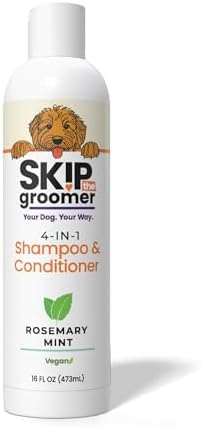
- RESET FOR BATH DAYS: Start softer. Reset smarter. Part of the Skip the Groomer Reset system, this 4-in-1 shampoo and con…
- FRESH COAT, EASY BRUSH-THROUGH: Regular use helps prevent mats from forming in the first place. This dematting shampoo l…
- GENTLE ON SKIN, TOUGH ON DIRT: Perfect for dogs with curly coats and sensitive skin. The naturally calming formula sooth…
Wavy-coated puppies also tend to be the chewiest, most mouthy age group when it comes to grooming resistance, especially during teething. If brush time turns into bite time, it is worth checking out these bite-training tools that actually work before grooming sessions become a wrestling match every single time.
Straight-Coat Grooming Essentials
Straight-coated Goldendoodles, sometimes called “flat coats” or informally the least “doodle-like” of the bunch, are the closest genetically to their Golden Retriever side. They mat far less often, but they make up for it with heavier, more noticeable shedding, especially during seasonal coat blows in spring and fall. For this coat type, a bristle brush handles daily surface maintenance just fine, but the real workhorse is a de-shedding tool designed to pull loose undercoat fur out before it ends up on your couch. These tools use fine teeth or blades to reach the soft undercoat without cutting the topcoat, which is important because straight-coated doodles still have that dense double-layer structure underneath, even if it does not look curly on top.
Bathing frequency can be slightly less intensive for straight coats compared to curly ones, but the shampoo you choose still matters, particularly during shedding season when skin can get irritated from all that loose fur working its way out. The Dog Shampoo Half Gallon, Cleans, Conditions & Detangles option is a practical pick if you are grooming a larger doodle at home regularly, since the bigger bottle size means you are not constantly reordering during peak shedding months.

- LARGE VALUE SIZE (64 OZ): Save time and money with our extra-large half gallon 64oz bottle of premium dog shampoo, suita…
- 4-IN-1 DOG SHAMPOO: Effectively cleans, conditions, detangles, and moisturizes your dog’s skin. Keep your dog’s fur soft…
- PROUDLY MADE IN THE USA: Our shampoo for dogs is a quality American-made product formulated and tested in the best facil…
Maintenance Schedule and Professional Grooming Cadence
Regardless of coat type, having the right goldendoodle grooming tools only works if you actually stick to a routine. Curly coats need brushing most days of the week, wavy coats do well with three or four sessions weekly, and straight coats can often get by with two or three unless it is shedding season. Professional grooming every four to six weeks is a reasonable baseline across all three coat types, though curly-coated dogs sometimes need it closer to every four weeks to keep mats from building up between visits. Straight-coated dogs can often stretch to six or eight weeks between professional trims since they need less shape maintenance overall.

Here is a quick side-by-side comparison to help you match goldendoodle grooming tools to your dog’s actual coat, along with realistic brushing frequency and where each tool tends to fall on cost.
| Coat Type | Primary Tool | Secondary Tool | Brushing Frequency | Price Tier |
|---|---|---|---|---|
| Curly (F1B, F2 typical) | Slicker brush + undercoat rake | Metal detangling comb | 3-4x weekly | $$ |
| Wavy (F1 typical) | Pin-and-bristle combo brush | Wide-tooth comb | 3x weekly | $$ |
| Straight (Golden-dominant) | De-shedding tool | Bristle brush | 2-3x weekly | $$$ |
| All coat types (bath care) | Doodle-specific shampoo/conditioner | Half gallon detangling shampoo | Every 2-4 weeks | $$ |
One thing that trips people up is assuming their puppy’s coat at eight weeks old predicts the adult coat. It usually does not. Puppy fur is almost always softer and less textured than what comes in around six to twelve months, sometimes later. According to the American Kennel Club, coat transition periods are when mats are most likely to sneak up on owners, because the fur is changing texture faster than the grooming routine is adjusting to it. If your six-month-old’s coat suddenly feels different under your hands, that is your cue to reassess your tools, not a sign you are doing something wrong.
Choosing the right goldendoodle grooming tools also saves money long term. Mats that go untreated often require a full shave-down at the groomer, which costs more than a slicker brush or rake ever would and leaves your dog looking nothing like themselves for months while the coat regrows. A modest investment in the correct dog deshedding tool or comb pays for itself the first time it prevents an emergency grooming appointment.
Frequently Asked Questions
How do I know which coat type my Goldendoodle has?
Look at the fur texture once your dog reaches six to twelve months old, since puppy coats often shift as adult fur comes in. Tight ringlets mean a curly coat, loose S-shaped waves mean a wavy coat, and fur that lies flat with minimal curl pattern typically means a straighter, Golden Retriever-dominant coat. Generation also gives you a hint, since F1B and F2 doodles trend curlier while F1 doodles often land in the wavy middle ground.
Can I use the same goldendoodle grooming tools for all coat types?
Not effectively. A slicker brush and undercoat rake built for curly coats can feel harsh on fine, straight fur, while a basic bristle brush made for straight coats will not reach the dense undercoat that causes mats in curly-coated dogs. Matching goldendoodle grooming tools to the specific coat texture gets better results and is more comfortable for your dog during each session.
How often does a curly-coated Goldendoodle need professional grooming?
Most curly-coated Goldendoodles do best with professional grooming every four to six weeks, with four weeks being safer if mats tend to form quickly around the ears, armpits, or collar area. Between appointments, consistent at-home brushing with the right goldendoodle grooming tools is what actually keeps the coat manageable, since even a great groomer cannot undo weeks of buildup in one visit.
Why does my straight-coated Goldendoodle shed so much if doodles are supposed to be low-shedding?
Straighter-coated doodles carry more Golden Retriever genetics, which means more of a traditional double coat and noticeably more seasonal shedding compared to curlier littermates. A dog deshedding tool used a couple times a week, especially during spring and fall coat blows, makes a real difference in how much loose fur ends up on your furniture instead of in the brush.


