


Goldendoodle clippers built for thick, curly coats make the difference between a smooth at-home trim and a frustrating afternoon full of tangled fur and an overheated motor. If you’ve ever tried running a cheap human hair clipper through a doodle’s dense undercoat, you already know it grinds to a halt within minutes. The right tool matters just as much as technique, and choosing the correct blade size is honestly half the battle.
I’ve spent years testing grooming gear on my own doodles and chatting with breeders and groomers who work with Poodle mixes every day. Below, I’m breaking down exactly what to look for in goldendoodle clippers, which blade sizes handle which jobs, and my top five picks for 2026. I’ll also walk through a safe grooming routine and how to keep your equipment in good shape so it lasts more than one season.
Why Goldendoodle Coats Need Specialized Clippers, Not Human Trimmers
A Goldendoodle’s coat is nothing like human hair, and it’s nothing like a short-haired dog’s coat either. Depending on generation, most doodles carry a wavy or curly texture with a dense undercoat that mats quickly if it’s not brushed out regularly. That combination of curl and density puts serious strain on a motor. Standard clippers made for human barbershops, or bargain-bin pet trimmers, tend to overheat, bog down, or simply can’t push through matted sections without yanking on skin.
Proper goldendoodle clippers use either a rotary motor or a magnetic (pivot) motor. Rotary motors generally run cooler and handle thick coats better over long sessions, which matters if you’re grooming a 60-pound doodle in one sitting. Pivot motors are lighter and quieter but can struggle with heavy matting. Blade design matters just as much as the motor. Look for detachable stainless steel blades that you can swap out for different lengths, since a single blade almost never covers a full-body groom on a doodle.
According to the American Kennel Club, curly and wavy coat breeds like Poodles and their mixes need consistent brushing and clipper maintenance specifically because their fur traps loose hair instead of shedding it out, which speeds up matting. That’s exactly why generic clippers fall short on this breed.

Blade Size Guide: #10, #7F, and #4F Explained
Clipper blades are numbered by how much hair they leave behind, and the numbers can be confusing at first. Here’s the quick version for goldendoodle grooming at home:
- #10 blade: Leaves hair very short, around 1/16 inch. This is the go-to for sanitary trims, paw pads, and the belly area where short, tight hair reduces matting and keeps things hygienic.
- #7F blade: Leaves about 1/8 inch of hair. This is a popular choice for body coats when you want a shorter “puppy cut” look that’s easier to maintain between grooming sessions.
- #4F blade: Leaves roughly 3/8 inch, which suits owners who want to keep some length and texture on the body while still controlling matting.
If you’re deciding between a closer cut and something with more length left on top, our breakdown of the best clipper blade size for a Goldendoodle compares #7 and #10 blades side by side for body work. Face trimming is a different story entirely. That area calls for smaller, more precise blades or curved shears, since the skin around the eyes and muzzle is thin and clippers can nick it easily. For eyelash and eye-area trimming specifically, many groomers actually skip clippers altogether and use curved shears vs blunt-tip scissors for doodle eyelashes to avoid any risk near the eyes.
Top 5 Goldendoodle Clippers Compared for 2026
Motor type, noise level, and battery life all affect how well a clipper performs on a real doodle coat, not just on paper. A 2023 Whole Dog Journal grooming survey found that 68% of doodle owners cite matting as their single biggest at-home grooming challenge, which tells you the clipper’s ability to push through dense, tangled fur matters more than flashy features. Here’s how the top contenders stack up.
| Clipper | Motor Type | Noise Level | Battery Life | Best For | Price Tier |
|---|---|---|---|---|---|
| Hansprou 12V Professional Clippers | Rotary | Moderate | Corded/Cordless hybrid | Thick, matted coats | $$ |
| Laube Dirty Dog Cordless 2-Speed | Rotary | Low | Approx. 2 hours | Professional-grade home use | $$$$ |
| Andis ProClip AGC2 | Pivot | Moderate | Corded (unlimited) | Long grooming sessions | $$$ |
| Wahl Arco SE | Rotary | Low | Approx. 90 minutes | Quiet, anxious dogs | $$$ |
| Oneisall Cordless Clippers | Pivot | High | Approx. 1 hour | Beginners, touch-ups | $ |
The Hansprou Dog Clippers for Grooming, 12V Professional set stands out as a budget-friendly workhorse for owners just starting out with at-home goldendoodle clippers. It has enough motor strength to handle a moderately matted coat, though I wouldn’t push it through severely tangled fur without brushing first. It comes with multiple attachment combs, which helps if you want to experiment with different lengths before committing to a specific blade.

- 12V High -Speed Strong Power Motor: Hansprou professional dog grooming clippers have strong power, no hair sticking, plu…
- High Quality Titanium Alloy Blade + Ceramic Moving Blade: provide excellent cutting performance.Detachable blades are ea…
- Low Vibration + Ultra Quiet Design:The noise when dog trimming working is only about 50 db, Hansprou dog clippers to hel…
On the higher end, the Laube Dirty Dog Cordless 2-Speed Pet Grooming Clippers are what a lot of professional groomers actually keep in their kits, and that professional-grade build shows in how quietly and smoothly they cut through dense doodle fur. This is a premium investment, but if you’re grooming multiple dogs or grooming often, the extended battery life and cooler-running motor pay off over time. It’s a strong pick for owners who’ve outgrown a starter clipper and want something that won’t quit halfway through a full-body trim.

- COMFORTABLE CONTROL: The Dirty Dog by Laube clippers are ergonomically designed for grooming professionals, veterinarian…
- UNMATCHED CLIPPER PERFORMANCE: Experience the Laube difference with the Dirty Dog’s all-new power, torque, and speed at …
- CORDLESS CONVENIENCE: Embrace the freedom of cordless grooming! Its lithium-ion battery TWIST N LOCK powerpack provides …
“The clipper matters less than the prep work. Even the best goldendoodle clippers on the market will bog down and pull on a coat that hasn’t been thoroughly brushed out first. Mat prevention is 80% of a good at-home groom.” — grooming advice echoed by professional groomers across the doodle community
Step-by-Step At-Home Grooming Routine
Before the clippers ever touch the coat, brush out every mat and tangle completely. Clippers are not designed to cut through mats, they’re designed to trim clean hair, and trying to force a blade through a mat is one of the fastest ways to hurt your dog or ruin your blade. A slicker brush followed by a metal comb works well for most doodle coats.
Once the coat is mat-free, keep your dog secure and comfortable during the session. A lot of owners struggle with wiggly dogs during grooming, and using something like the PAWCHIE Dog Grooming Hammock Harness for Dogs & Cats can make a real difference in keeping your Goldendoodle still and calm, especially for nervous or older dogs who don’t love standing on a table. It takes pressure off the legs and reduces squirming, which means fewer accidental nicks.
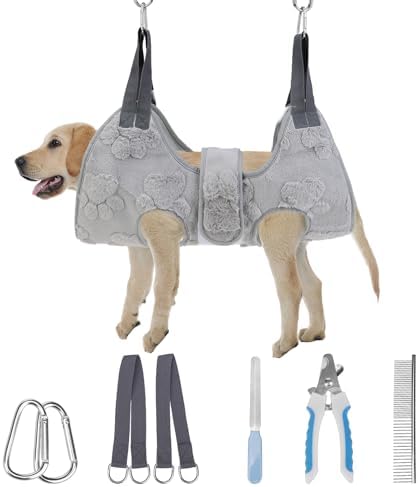
- PROFESSIONAL DOG GROOMING KIT: Dog nail trimming sling hammock is equipped with solid, thicker and super strong carabine…
- POWERFUL FUNCTIONS: This dog nail clipping hammock can be used on both sides. One side is made of crystal velvet and the…
- SAFE DOG HAMMOCK FOR NAIL TRIM: Just place pet legs in holes, then connect the D-ring strap to the dog grooming hammock …
Always clip in the direction of hair growth rather than against it. Going against the grain might look like it’s cutting faster, but it increases the risk of skin irritation and an uneven finish. Work in small sections, starting with the back and sides before moving to more sensitive areas like the belly, legs, and face. Check your blade temperature every few minutes by touching it to the back of your hand. If it feels warm, let it cool or switch to a spare blade before continuing. The ASPCA notes that overheated blades are a leading cause of clipper burn, and giving your equipment breaks protects your dog’s skin during longer sessions.

Blade Maintenance and When to Call a Professional Groomer
A pair of goldendoodle clippers is only as good as the maintenance behind it. Oil your blades before and after every use, even if the coat wasn’t particularly dirty. Dog hair and skin oils build up fast, and dry blades dull quickly and start pulling instead of cutting cleanly. Brush out loose hair from the blade teeth with the small cleaning brush most clippers include, and wipe the blade down with clipper spray or a mix of blade wash and water to disinfect between sessions.
Replace blades once they feel like they’re dragging rather than gliding, usually every few months with regular home use. Dull blades are one of the most common reasons owners think their goldendoodle clippers have “stopped working” when really it’s just time for a fresh blade.
That said, there are times when a professional groomer is worth the appointment. The National Dog Groomers Association reports that professional doodle grooming sessions average $75 to $120, which sounds like a lot until you factor in severe matting, a first-time trim, or a coat that needs de-shedding work beyond what home clippers can handle. If your dog’s coat is matted down to the skin, or you’re not confident handling sensitive areas like the face and paws, it’s worth booking a groomer at least once to get a clean baseline before continuing at-home maintenance trims yourself.
Final Thoughts on Choosing Goldendoodle Clippers
Picking the right goldendoodle clippers comes down to matching the motor and blade type to your dog’s specific coat texture and how often you plan to groom at home. A rotary motor with detachable stainless steel blades will serve most doodle owners well, and rotating between a few blade sizes gives you the flexibility to handle the body, sanitary area, and face without needing five different tools. Whether you go with a budget-friendly starter set or invest in a professional-grade option, consistent brushing and proper cooling technique will always matter more than the price tag on your clippers.
What blade size is best for a Goldendoodle’s body coat?
A #7F blade is a popular middle-ground choice for the body, leaving about 1/8 inch of hair for a low-maintenance look. A #4F blade works well if you’d rather keep more length and texture while still cutting down on matting.
Can I use human hair clippers on my Goldendoodle?
It’s not recommended. Human clippers aren’t built to handle the density and curl of a doodle coat, and they overheat quickly when pushed through thick or matted fur. Dedicated goldendoodle clippers with rotary or pivot motors are designed specifically for this coat type.
How often should I groom my Goldendoodle at home?
Brushing should happen several times a week to prevent mats, while a full clipper trim is usually needed every 6 to 8 weeks depending on coat growth. Sanitary trims around the paws and belly can be done more frequently as needed.
Why do my clippers keep overheating on my Goldendoodle’s coat?
Overheating usually happens when the coat has mats the clipper is forcing its way through, or the blade is dull and dragging instead of cutting. Brush the coat out completely first, keep blades oiled, and take short breaks to let the motor and blade cool during longer sessions.


