


Blunt-tip scissors are the safer choice for trimming eyelash hair around a Goldendoodle’s eyes, while curved shears belong on the body coat where there’s more room for error. That single distinction trips up a lot of well-meaning pet parents, and honestly, I get why. Both tools look similar in a grooming kit, both promise precision, and both get recommended online without much explanation of when to use which. After years of grooming my own Doodle mixes and talking with professional groomers for this site, I want to walk you through exactly why tip shape matters so much near the eye area, and how to trim safely without a trip to the emergency vet.
Why Goldendoodle Eyelash Trims Matter
Goldendoodles inherit that soft, wavy Poodle-type coat that keeps growing instead of shedding out on a normal cycle. Left alone, the fur around the eyes grows long enough to curl inward and poke the cornea, or it mats down and traps moisture against the skin. Groomers who specialize in flat-coated Doodle breeds report this constantly: dogs coming in with red, weepy eyes that clear up almost overnight once the offending hair is removed. Chronic tearing, squinting, and that reddish-brown tear staining under the eyes are often just an overgrown eyelash problem, not a medical mystery.
The tricky part is that this is one of the few grooming tasks where the tool touches skin just millimeters from a genuinely fragile structure. A slip while trimming the back leg feathering is a non-event. A slip an inch from the eyeball is not. That’s exactly why the tool you reach for matters more here than almost anywhere else on the dog’s body.
Curved Shears Explained: Precision With a Catch
Curved grooming shears are built for shaping. The blade arcs slightly so it follows the natural curve of a dog’s body, which makes them the go-to tool for rounding off paws, trimming ear edges, and blending a rounded head shape. Professional groomers love them because that curve lets you shape hair in one smooth pass instead of a series of choppy straight cuts.

The catch, and it’s a real one, is the tip. Most curved shears end in a sharp point, because that point is what lets a groomer get into tight spots and create clean lines. Near the eye, that same sharp point becomes a liability. If the dog turns its head, sneezes, or gets startled by a noise while you’re mid-snip, a pointed curved shear can nick the eyelid or, worse, make contact with the eye itself. A pair like the Hair Stylists Shears with Twin Tail (A-6 inch-Curved Scissor) is genuinely excellent for shaping the rounded “teddy bear” face style Doodles are known for, but I keep that pair strictly for cheek and muzzle contouring, never for the hair directly bordering the eyelid.

- Constructed from 440C steel – the highest grade of stainless Steel with Coated Titanium for strength and durability.
- Specially designed for hair cutting, bent blade makes it easier for you to cut hair arround ear, head and other special …
- Finger holes specially designed for women.easy to operation.And no matter how long you use,the barber scissors will be a…
Curved shears aren’t dangerous by nature. They’re dangerous in the wrong location. Think of them as a specialty tool for shaping the surrounding face, not the hair that sits right against the eye.
Blunt-Tip Scissors Explained: Safety Built Into the Design
Blunt-tip scissors, sometimes called round-tip or safety scissors, are shaped so the ends are rounded off rather than coming to a point. This is the exact same design principle behind children’s craft scissors, and it’s not a coincidence. A rounded tip physically cannot poke or puncture the way a pointed blade can, even if the dog moves unexpectedly mid-cut.
This is why groomer training materials and animal welfare organizations consistently steer pet parents toward rounded tips for any facial trimming, especially around the eyes, nose, and mouth. The ASPCA notes that facial grooming carries elevated injury risk precisely because dogs can’t be counted on to stay perfectly still, and blunt tools remove the sharpest source of that risk. A basic pair like the Juvale School Supplies for Kids Blunt Tip Scissors sounds almost too simple for a grooming kit, but that simplicity is the point. The rounded ends make it nearly impossible to cause the kind of puncture injury a pointed shear can, which makes it a smart pick for nervous first-time trimmers or dogs that fidget.

- Innovative Scissor Design: The Juvale Blunt Tip Scissors 24-Pack provides a safe and ergonomic solution for young artist…
- Versatile Crafting Tools: These scissors cut through materials like construction paper and felt, making them an essentia…
- Ergonomic Comfort for All: Equipped with stainless steel blades and soft-grip handles, these scissors ensure comfort and…
Blunt-tip scissors do have a tradeoff. They’re less precise for detailed shaping work, so you won’t get the crisp lines a curved shear gives you on the body coat. For eyelash trimming, though, precision takes a back seat to safety, and that tradeoff is one worth making every time.
Head-to-Head Safety Comparison
Laid out side by side, the difference between curved grooming shears and blunt-tip scissors becomes pretty clear. The National Dog Groomers Association of America includes tool selection as a core part of its grooming safety curriculum, and rounded tips near the face are a standard recommendation across professional training programs. A 2021 Whole Dog Journal reader survey on at-home grooming also found that pet parents using blunt-tip tools for facial trims reported meaningfully fewer accidental nicks than those using pointed shears in the same area.

| Feature | Curved Shears | Blunt-Tip Scissors | Price Tier |
|---|---|---|---|
| Tip Shape | Sharp, pointed | Rounded, safety-designed | $$$ |
| Best Use | Body and face shaping | Eyelash and eye-area trimming | $ |
| Precision | High, clean shaping lines | Moderate, functional but less crisp | $$ |
| Injury Risk Near Eyes | Higher, sharp point can nick skin | Lower, no puncture point | $ |
| Recommended Skill Level | Intermediate to advanced | Beginner-friendly | $$ |
| Small Detail Facial Work | Good for muzzle and cheek trimming | Ideal for eyelid borders | $$$ |
For the small-scale detail work involved in trimming facial fringe, a compact tool designed for tight, sensitive areas makes a real difference. The Natzerat 6 PCS Facial Hair Small Grooming Scissors For Men set was originally designed for human facial grooming, but the small, easy-to-control blades translate surprisingly well to trimming stray hairs around a Doodle’s muzzle and brow line, where you need control in a small space without the reach of full-size shears.
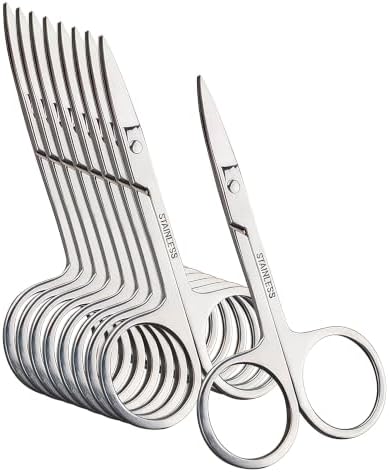
- Bulk Value Set for Family & Travel – This kit provides 6/12/24 pcs small scissors, curved or rounded tips, offering abun…
- Dual Safety & Precision Tip Design – Features both rounded and curved safety tips that gently glide away from the skin t…
- Multi-Purpose Tool – These grooming scissors serve as precise eyebrow scissors, effective nose hair trimmer for men and …
Never use pointed curved shears within an inch of your dog’s eye, no matter how steady your hand feels. Blunt-tip scissors trade a little precision for a lot of peace of mind, and that’s the right trade when you’re working this close to the eye.
Step-by-Step Safe Trimming Technique
Here’s the routine I use, and the same one most groomers walk their clients through for at-home touch-ups between salon visits:
- Set up in good light. Natural daylight or a bright lamp near your grooming spot helps you see exactly where the hair ends and the eyelid begins.
- Restrain gently but securely. Have your dog sit, tuck them between your knees or against your body, and support the head with one hand under the chin. A second person holding treats or steadying the dog helps enormously with wiggly Doodles.
- Comb the hair down and away from the eye using a metal comb, isolating just the strands that are actually in the line of sight.
- Use blunt-tip scissors only for this step, and always cut parallel to the skin, never pointing toward the eye.
- Take small snips rather than one big cut. Trimming a little at a time gives you room to correct course if your dog shifts.
- Reward calm behavior with a treat or praise every few snips to keep the whole experience low-stress.
If your dog won’t sit still, has a heavily matted face, or you simply feel your hands shaking, stop and call a professional. There’s no shame in it, and it’s genuinely the safer call. If cost is what’s holding you back from booking a groomer, this breakdown of mobile groomer vs salon vs DIY pricing can help you figure out the most budget-friendly option in your area. And if the eye-area hair has already tangled into the rest of the facial coat, it’s worth reading up on DIY clippers versus professional groomers for a matted coat before attempting any scissor work at all, since cutting into a mat blind is one of the most common ways accidental nicks happen.
When to Leave It to a Professional
Some situations call for a groomer’s steady hand no matter which tool you own. If your Goldendoodle has a history of snapping or lunging during face handling, if the hair around the eyes is matted tight to the skin, or if you notice redness, swelling, or discharge that looks like more than simple tearing, skip the DIY approach entirely. Also worth mentioning: hair removal around the ears carries its own set of risks, and if you’re tackling that area too, our guide on how to remove ear hair from Doodles painlessly at home covers the safest technique for that separate but related grooming task.
Between professional visits, blunt-tip scissors are the tool I trust for quick touch-ups on eyelash growth, and I’ve never once regretted keeping the pointed curved shears reserved for areas with more forgiving margin for error.
Frequently Asked Questions
Can I use regular curved grooming shears on my Goldendoodle’s eyelashes if I’m careful?
It’s not recommended, even for experienced hands. The sharp point on curved shears means any sudden head movement from your dog during the cut carries real risk of injury near the eye. Blunt-tip scissors remove that risk almost entirely and are the safer standard for this specific area.
How often do Goldendoodle eyelashes need trimming?
Most Goldendoodles need eye-area trims every two to four weeks, depending on how fast the coat grows and how curly or wavy the texture is. If you notice your dog squinting, pawing at their face, or developing tear staining, that’s a sign it’s time for a trim regardless of the calendar.
Are blunt-tip scissors less effective at cutting through thick Doodle fur?
Blunt-tip scissors handle fine facial hair around the eyes just fine, since that hair is typically thinner and more manageable than the body coat. They’re not designed for heavy shaping work, but for isolated eyelash trims, they cut cleanly enough to get the job done safely.
What should I do if I accidentally nick my dog’s eyelid while trimming?
Stay calm, rinse the area gently with clean water or saline, and apply light pressure with a clean cloth if there’s bleeding. Contact your veterinarian right away for any cut near the eye, even a small one, since eyelid injuries can affect the eye itself and often need proper evaluation.


