

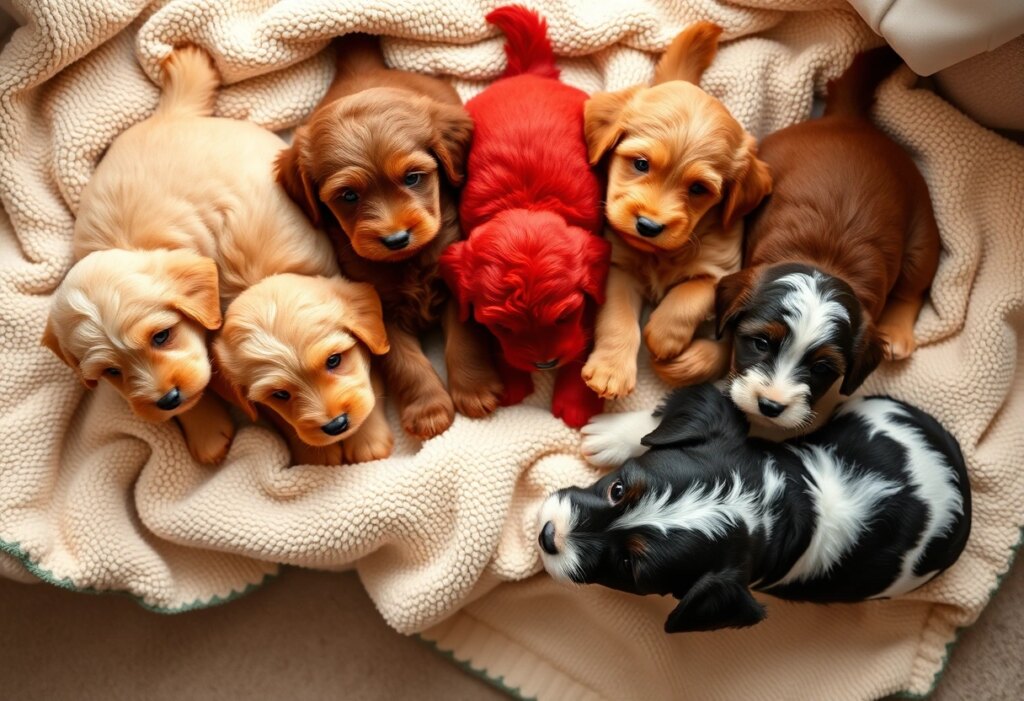
The Goldendoodle color chart is the first thing most future puppy parents want to see, and honestly, that makes sense. But before you fall for that gorgeous red or moody merle puppy in the breeder’s photos, you need to know that coat color is tied to genetics that affect texture, shedding, and sometimes even health screening priorities. This guide walks you through exactly what those colors mean, which ones are more prone to change as your puppy grows, and how to tell a responsible breeder from one who’s chasing trends over temperament.
By the end, you’ll know how to read a Goldendoodle color chart like a pro, what questions to ask before you put down a deposit, and why the cutest coat isn’t always the healthiest bet. Let’s get into it.
Why Coat Color Anxiety Is Real (And What It’s Actually Tied To)
If you’ve spent hours scrolling breeder websites trying to decide between a cream puppy and a red one, you’re not alone. Coat color feels like a permanent decision, and in a way, it is. But what a lot of new owners don’t realize is that color genetics in Goldendoodles are linked to coat texture, shedding tendency, and even certain pigment-related sensitivities.
A puppy’s color comes from a mix of genes inherited from both the Poodle and Golden Retriever sides of the pedigree. Depending on which combination your puppy carries, you might get a coat that stays true to its puppy shade, or one that fades dramatically by the time your dog turns two or three years old.
This matters for practical reasons too. Darker, curlier coats tend to need more frequent brushing to prevent matting, while lighter, wavier coats can sometimes be more forgiving between grooming sessions. If you’re already thinking ahead to maintenance, it’s worth browsing our Best Goldendoodle Brush Picks: Slicker vs Comb Guide 2026 so you know what tools fit your future dog’s coat type.
The Goldendoodle Color Chart Explained
A proper Goldendoodle color chart breaks down into a handful of main categories, each with its own visual signature and genetic backstory. Here’s what to look for in photos or in person.
- Cream: A pale, almost ivory shade, often the most consistent color over a dog’s lifetime with minimal fading.
- Apricot: A warm, golden-tan hue that’s popular but prone to lightening as the puppy matures.
- Red: A deep, rusty auburn color that looks striking as a puppy but is the shade most likely to fade significantly.
- Chocolate: A rich brown tone usually inherited from a chocolate or brown Poodle parent, less common in traditional Goldendoodle lines.
- Black: Solid black coats occur when a black Poodle is used in the cross, and this color tends to hold steady with age.
- Parti: A coat that’s at least 50 percent white with patches of another color, creating a striking two-tone look.
- Phantom: A base color (often black or chocolate) with lighter markings above the eyes, on the muzzle, chest, and legs, similar to a Doberman’s pattern.
- Merle: A mottled, marbled pattern of dark patches over a lighter base, visually striking but tied to some serious genetic considerations we’ll cover shortly.
Every one of these variations can technically appear on a Goldendoodle color chart, but not all of them are equally common, and not all breeders handle them responsibly.
The Fading Gene: What GANA’s Research Actually Shows
Here’s something that catches a lot of new owners off guard. According to the Goldendoodle Association of North America (GANA), roughly 90 percent of red and dark apricot puppies carry the progressive graying gene, meaning their rich puppy coat color will lighten substantially by adulthood.
“The coat color your puppy is born with is rarely the coat color they’ll have as an adult, especially in reds and dark apricots. Fading is a normal genetic trait, not a sign of poor health or improper care.” (paraphrased from GANA breeder education materials)
So if you’re picking a puppy specifically because of that deep red coat, know that it will likely soften to a lighter gold or apricot tone within two to three years. This isn’t a defect. It’s simply how the fading gene, sometimes called the “graying gene,” expresses itself over time. Breeders who understand their lines should be able to tell you whether a puppy’s parents faded and by how much.

This is also a good moment to mention that coat color has zero bearing on personality. A red puppy isn’t more energetic than a cream one, and a merle puppy isn’t calmer than a phantom. If you’re dealing with a puppy who’s mouthy or nippy regardless of coat shade, our Puppy Won’t Stop Biting? Best Bite-Training Tools That Work guide can help you get ahead of that behavior early.
Coat Type Comparison: Wavy Fleece vs. Curly vs. Straight
Color is only half the picture. The other half is coat texture, and this is where things get practical fast. The American Kennel Club (AKC) notes that Poodle-derived coats generally fall into a spectrum from loose wave to tight curl, and Goldendoodles inherit somewhere along that spectrum depending on their generation and parentage.
| Coat Type | Shedding Level | Color Retention | Grooming Needs | Price Tier (Grooming Tools) |
|---|---|---|---|---|
| Wavy Fleece | Low to minimal | Moderate fading likely | Weekly brushing, occasional trims | $$ |
| Curly (Poodle-type) | Very low | Fading varies, often noticeable | Frequent brushing, regular professional grooming | $$$ |
| Straight (Retriever-type) | Moderate to high | Best color retention | Regular brushing, seasonal deshedding | $$ |
Wavy fleece coats are the most common in F1 Goldendoodles and offer a nice middle ground: low shedding, softer texture, but still prone to some color fading over time.
Curly coats, more typical in F1B or multigenerational Goldendoodles with heavier Poodle influence, shed the least but require the most grooming commitment. If you’re planning to do trims at home, our 7 Best Mini Goldendoodle Grooming Kits for Home Haircuts roundup is worth a look before your puppy’s first shaggy phase hits.
Straight coats are less common but do appear, usually in puppies with a stronger Golden Retriever genetic pull. These coats shed more but tend to hold their original color best, since the fading gene expresses less dramatically on straighter hair types.
A Doodle Coat Chart Isn’t Just About Looks, It’s About Lifestyle Fit
When you’re comparing a doodle coat chart across different breeders’ litters, think beyond the photo. Ask yourself how much grooming time you realistically have each week, whether anyone in the house has allergies, and how much shedding you’re willing to tolerate on furniture and clothes.
A curly, low-shedding coat might sound ideal on paper, but it also means monthly grooming appointments or serious at-home tool investment. A wavier, moderate-shedding coat might suit a busier household better, even if it means a bit more fur on the couch.
None of this is about picking the “correct” answer. It’s about matching a coat type to your actual daily routine, not just your Pinterest board.

Buyer Checklist: Verifying a Breeder Before You Commit
Once you’ve got a sense of the goldendoodle puppy colors you’re drawn to, it’s time to vet the breeder, not just the litter. Here’s a step-by-step approach that protects both your wallet and your future dog’s health.
- Request health testing documentation. Ask for OFA (Orthopedic Foundation for Animals) certifications on hips, elbows, and eyes for both parent dogs, not just verbal assurances.
- Ask to see parent coat photos at different ages. This gives you a realistic idea of how much your puppy’s color might fade or hold steady.
- Confirm the parent pairing isn’t merle-to-merle. Breeding two merle dogs together significantly raises the risk of vision and hearing impairments in puppies, a concern well documented in canine genetics research tied to OFA data.
- Ask about temperament testing, not just coat goals. A breeder fixated on rare colors over sound temperament and health screening is a red flag.
- Get everything in writing. Health guarantees, vaccination records, and a written contract should all be standard, not optional extras.
For general breed standards around coat structure and genetics in Poodle-derived dogs, the American Kennel Club offers solid background reading, especially if you’re trying to understand how Poodle coat genetics carry into hybrid breeds like the Goldendoodle.
When Merle Marketing Gets Risky
Merle Goldendoodles have exploded in popularity because, well, they’re striking. But responsible breeders know that merle-to-merle breeding is a serious ethical line. Double merle puppies face substantially higher odds of deafness and vision problems, a pattern seen across multiple merle-carrying breeds, not just Doodles.
If a breeder can’t clearly explain the merle genetics in their pairing, or seems more focused on the color than the health testing behind it, that’s your cue to keep looking. A gorgeous coat isn’t worth a lifetime of preventable health struggles.
Celebrating Your Doodle However They Show Up
Once you’ve settled into life with your new puppy, whatever shade they land on, there’s a fun side to all this too. Doodle owners have built a whole community around celebrating their dogs’ quirks and colors. If you’re the type who likes marking milestones, something like the I Do Too! Parents Getting Married Dog Tee Shirt makes for a sweet keepsake photo moment if your Doodle is part of a family wedding.

- LIGHTWEIGHT AND COMFORTABLE | Soft, breathable fabric keeps your dog cozy without the bulk.
- MADE WITH LOVE IN THE USA: Proudly designed and printed in New Jersey with high-quality materials.
- SIZES: Our Hoodies and Tees are design to dress any breed size and age. We carry sizes from XS to 6X check our size char…
And for owners who like a little sentiment mixed with their daily routine, a relaxed graphic tee like the Living The Prayers Graphic Tee pairs nicely with long walks and grooming days where comfort matters more than style.

Seasonal Fun for Every Coat Color on the Chart
Whether your Goldendoodle ended up cream, red, parti, or somewhere in between, the holidays are a great equalizer for coat-color pride. A festive piece like the Ninety3POD Merry Christmas Woofmas Xmas Noel shirt is a fun way to mark your Doodle’s first holiday season, no matter which shade they landed on the goldendoodle color chart.

- ⚡ SIZE: Multiple sizes in vertical and horizontal rectangle shape, 0.75in or 1.25in thickness. Please refer to size char…
- ⚡ ARTIST QUALIFIED: made of high museum-quality canvas. Anti-yellowing surface, water and fade resistant. Gallery wrappe…
- ⚡ COOL STYLE: the sawtooth hanger on the top side allows for easy attachment to hooks or nails, while the rubber pads at…
Key Takeaways Before You Sign That Deposit
- Coat color on any Goldendoodle color chart is largely cosmetic and doesn’t predict temperament or energy level.
- Red and dark apricot puppies commonly fade due to a well-documented graying gene, so don’t be surprised by adult color shifts.
- Coat texture (wavy, curly, or straight) matters more for daily grooming reality than color does.
- Merle-to-merle breeding carries real health risks and should be a dealbreaker if not explained clearly.
- Health testing and temperament always outrank color when choosing a responsible breeder.
At the end of it all, the goldendoodle color chart is a fun starting point, but it shouldn’t be your deciding factor. Health screening, breeder transparency, and coat texture suited to your lifestyle matter far more for a happy, healthy Doodle over the next twelve to fifteen years. Choose the puppy whose breeder does things right, and the color you fall in love with will just be a nice bonus.
Will my red Goldendoodle puppy’s color stay the same as an adult?
Probably not. Research cited by the Goldendoodle Association of North America shows that around 90 percent of red and dark apricot puppies carry a progressive graying gene, meaning their coat will likely lighten to a softer gold or cream tone by the time they’re two to three years old. This is a normal genetic trait, not a health concern.
Is a merle Goldendoodle safe to adopt?
A single merle Goldendoodle from a responsible breeder is generally fine, but you should avoid puppies from merle-to-merle pairings. Double merle breeding significantly raises the risk of deafness and vision problems, so always ask the breeder directly about the parent genetics before committing.
Does coat color affect shedding or allergy-friendliness?
Not directly. Shedding and allergy-friendliness are tied more to coat texture (wavy, curly, or straight) than to color itself. A curly coat generally sheds the least regardless of whether it’s cream, chocolate, or black.
What’s the rarest color on the Goldendoodle color chart?
Chocolate and true black Goldendoodles are typically the rarest, since they require specific Poodle parent genetics that aren’t as common in standard Golden Retriever crosses. Merle patterns are also uncommon and require careful, ethical breeding practices to produce safely.


