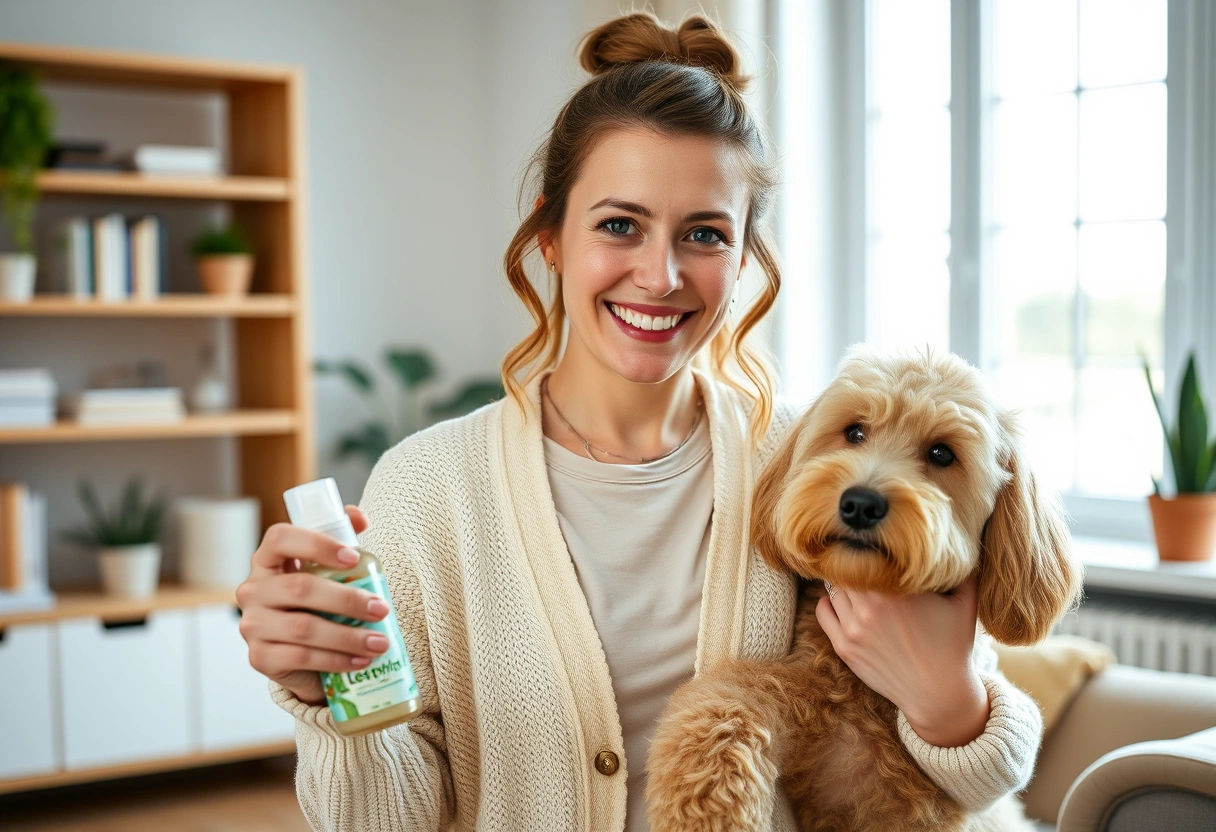
A goldendoodle detangling spray usually beats coconut oil for daily mat prevention, but coconut oil still earns a spot in your grooming cabinet for occasional deep conditioning. If you’ve ever spent forty minutes wrestling a comb through a mat behind your dog’s ear, you already know this decision matters more than it sounds. Both methods work, but they work differently, and picking the wrong one for your dog’s coat stage can mean more mats, not fewer.
I’ve tested both approaches on my own doodle through every coat phase, from the soft puppy fuzz to the thick, wavy adult coat that seems to attract every stick and burr in the backyard. Below, I’ll walk through what’s actually happening on a chemical level with each product, then hand you a side-by-side comparison so you can decide what fits your routine.
Why Goldendoodle Coats Mat Easily
Goldendoodles inherit their coat texture from the Poodle side of the family, and that’s exactly why brushing a doodle feels nothing like brushing a Labrador. Poodle-derived hair grows in a continuous cycle rather than shedding out seasonally, and the wavy or curly shaft has a natural bend that causes loose hairs to wrap around each other instead of falling to the floor. Add in an undercoat from the Golden Retriever side, and you’ve got two different hair types tangling together every time your dog rolls in the grass or gets rained on.
The American Kennel Club notes that mixed coats like these require considerably more upkeep than single-coated breeds, often two to three times the maintenance. F1B Goldendoodles (bred back to a Poodle) tend to have the tightest curl and the highest mat risk, while F1 doodles with looser waves mat a bit less but still need regular attention. Friction points like behind the ears, in the armpits, and around the collar are usually the first places you’ll find a mat forming, so those spots deserve extra attention during every brushing session.
Coconut Oil for Dogs: What It Actually Does to the Coat
Coconut oil has a loyal following in the doodle community, and there’s real chemistry behind why it works. It’s rich in lauric acid, a medium-chain fatty acid that penetrates the hair shaft rather than just sitting on top of it. That penetration is what gives coconut oil its reputation for smoothing frizz and adding shine, since it fills in tiny gaps in the hair cuticle that would otherwise catch on each other and form mats.

Used sparingly, a small amount of coconut oil for dogs rubbed between your palms and worked through dry, brittle patches can genuinely soften the coat and make combing easier. It’s also gentle enough for sensitive skin and doesn’t carry the fragrance additives some sprays do. But coconut oil has real downsides for regular use. It’s an oil, which means it attracts dust, dirt, and debris like a magnet. Use too much, or use it too often, and you’ll end up with a greasy, dull coat that actually holds onto more grime than it repels. It’s also messy to apply evenly, and washing out coconut oil residue tends to require a stronger shampoo than the gentle products. Read more: Best Shampoo for Goldendoodle Hair: Top Detangling Picks, which usually means more frequent baths.
Detangling Spray: The Slip Mechanism Behind Leave-In Conditioners
A doodle coat detangler spray works on a completely different principle than oil. Most leave-in formulas rely on lightweight conditioning agents, and some use a touch of silicone, to coat the outside of each hair shaft with a slick, smooth layer. That slickness is often called “slip” in grooming circles, and it’s the reason a comb glides through hair that would otherwise snag every few strokes.
Unlike coconut oil, a good goldendoodle detangling spray is formulated to rinse out cleanly or evaporate without leaving heavy residue, so it doesn’t attract dirt the way an oil-based product does. Veterinary grooming guidance from VCA Animal Hospitals points out that leave-in conditioning sprays reduce the mechanical stress on hair during brushing, which translates directly into fewer broken hairs and less discomfort for your dog. Breakage is actually a bigger contributor to matting than most owners realize, since broken, frayed hair tangles far more easily than a smooth, intact strand.
Pairing a quality spray with the right shampoo base makes a noticeable difference here. A formula like the Dog Shampoo Half Gallon, Cleans, Conditions & Detangles sets the coat up for easier detangling from the start, since a coat that’s properly conditioned during the bath needs less product afterward to stay smooth between washes.

- LARGE VALUE SIZE (64 OZ): Save time and money with our extra-large half gallon 64oz bottle of premium dog shampoo, suita…
- 4-IN-1 DOG SHAMPOO: Effectively cleans, conditions, detangles, and moisturizes your dog’s skin. Keep your dog’s fur soft…
- PROUDLY MADE IN THE USA: Our shampoo for dogs is a quality American-made product formulated and tested in the best facil…
Coconut Oil vs Detangling Spray: Side-by-Side Comparison
Here’s how the two methods stack up when you look at real-world use rather than marketing claims. I’ve included a Price Tier column using a relative scale instead of exact dollar figures, since actual pricing shifts often and varies by retailer.
| Factor | Coconut Oil | Detangling Spray | Price Tier |
|---|---|---|---|
| Mess Factor | High (greasy residue, hard to apply evenly) | Low (spray-and-comb, minimal residue) | $ (Coconut Oil) / $$ (Spray) |
| Mat Prevention Rate | Moderate; best for occasional deep conditioning | High; designed specifically for daily detangling | $$ (Spray) |
| Cost Per Use | Very low, a little goes a long way | Low to moderate depending on formula | $ to $$ |
| Buildup Risk | High if overused | Low, formulated to rinse clean | N/A |
| Best Use Case | Weekly deep-conditioning treatment | Daily or every-other-day brushing routine | N/A |
| Ease of Application | Moderate (needs warming, even distribution) | Very easy (spray bottle, quick coverage) | $$ (Premium sprays) / $ (Basic sprays) |
Professional groomers surveyed by the National Dog Groomers Association have reported that consistent use of a detangling spray before brushing can cut total brushing time by up to 40 percent, mostly because the comb moves through the coat in fewer, longer strokes instead of catching and yanking repeatedly. That time savings adds up fast when you’re brushing a doodle two or three times a week.

“The biggest mistake I see doodle owners make is trying to brush a completely dry coat with nothing on it. Whether you reach for oil or spray, adding some slip before the comb touches the hair is what actually prevents breakage.”
Building the Right Tool Kit for Either Method
No matter which product you lean toward, the tool doing the actual detangling matters just as much as what you spray or rub on beforehand. A wide-tooth Metal Comb for Dogs, Dog Grooming Detangler works through both coconut-oiled and spray-conditioned coats without snagging, since the rounded metal teeth glide rather than tear. I keep one in the bathroom and one in my grooming bag so there’s never an excuse to skip a session.

- EASY DEMATTING & DETANGLING: Our dog grooming comb features extra-long stainless-steel teeth that glide through tough kn…
- EXTRA LONG PINS: Engineered with PINs that are 30% longer, this dematting comb reaches deeper into dense, curly, or long…
- ERGONOMIC HANDLE: Designed with a non-slip, ergonomic handle, this metal dog comb ensures a secure grip and reduces hand…
If your dog gets fidgety during longer detangling sessions, a training treat can turn the whole process into something they actually look forward to. I like keeping a bag of Crumps’ Naturals Plaque Busters nearby to reward calm behavior while I work through mats, especially with puppies who are still learning that brushing isn’t a punishment.
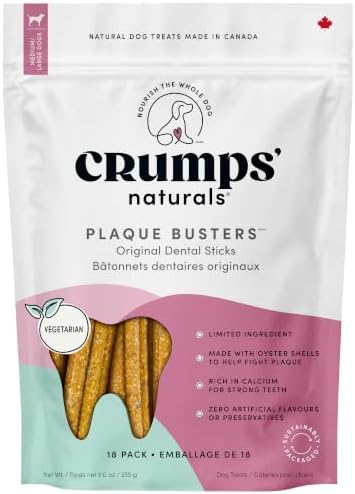
- LIMITED INGREDIENT: Made with only 4 ingredients and great for dogs with sensitivities to meat proteins.
- ALL NATURAL: 100% Natural Dental Chew that promotes healthy oral hygiene. No additives, colours or preservatives
- CANADIAN MADE
If you’re still building out your grooming supplies, our roundup of 7 Best Goldendoodle Grooming Kits for At-Home Haircuts covers the full lineup of tools worth having on hand before mats become a recurring headache.
My Home-Tested Verdict and Routine by Coat Stage
After going back and forth for months, here’s where I landed: a goldendoodle detangling spray is my everyday tool, and coconut oil is my once-a-week extra for dry patches or after a swim in chlorinated water, which tends to strip natural oils. Trying to use coconut oil daily just isn’t practical, it’s too easy to overdo it and end up with a heavier, dirt-trapping coat.
For puppy coats, which are softer and mat less aggressively, a light misting of detangling spray before a gentle brush-out two or three times a week is usually enough. Once your doodle hits the coat transition around five to eight months, when the soft puppy fuzz starts giving way to the denser adult coat, mats show up faster and in new places. This is when I increase brushing to every other day and start using a small dab of coconut oil once a week on the legs and ears, where the adult coat tends to come in thickest first.
For fully adult coats, I stick to spray before every brushing session and reserve coconut oil for the day before a bath, working it through dry ends about twenty minutes before shampooing. That timing lets the lauric acid penetrate a bit before the wash, and the shampoo removes any excess so you’re not left dealing with buildup. If your dog is due for a fresh cut, it’s worth weighing whether a professional trim or a home haircut makes more sense for your budget and skill level, and our breakdown of Groomer vs DIY: Mini Goldendoodle Teddy Bear Cut Costs lays out both paths clearly.
Whichever method you settle on, consistency beats intensity every time. A quick daily pass with a dog hair detangler spray prevents far more mats than an occasional, heavy-handed coconut oil treatment ever will.
Frequently Asked Questions
Can I use coconut oil and detangling spray together on my Goldendoodle?
Yes, but space them out. Using a goldendoodle detangling spray for daily brushing and reserving coconut oil for a weekly deep-conditioning treatment gives you the benefits of both without the greasy buildup that comes from layering oil on top of spray every day.
How much coconut oil for dogs is safe to use on the coat?
A small amount, roughly a teaspoon warmed between your palms, is plenty for most doodle coats. Applying more than that regularly increases the risk of a greasy coat that attracts dirt and requires extra shampooing to remove.
Why does my Goldendoodle mat so much more than my other dog?
Goldendoodles inherit a wavy or curly coat texture from the Poodle side of their genetics, which causes loose hair to wrap around itself instead of shedding out. Combined with an undercoat from the Golden Retriever side, this creates significantly more mat potential than a single-coated breed.
Is a detangling spray better than coconut oil for puppy coats?
For puppy coats, a light detangling spray is generally the safer everyday choice since puppy hair is finer and can get weighed down by oil more easily. Coconut oil can still be used occasionally on dry patches, but a doodle coat detangler spray is gentler for frequent use on young coats.