

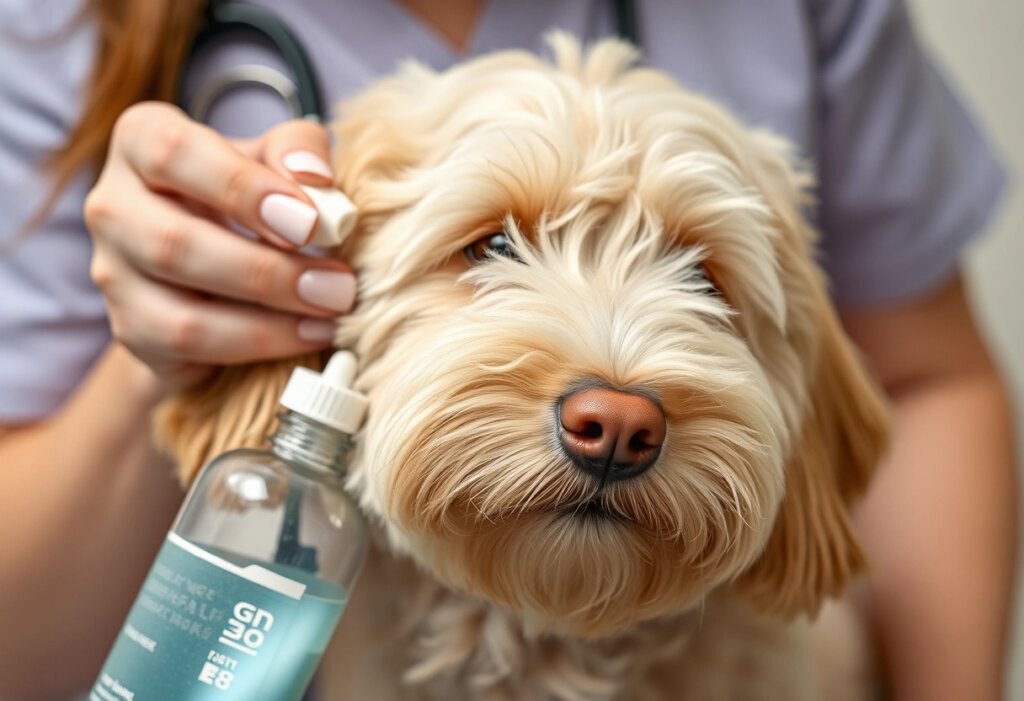
If your Goldendoodle shakes his head, tilts it to one side, or you catch a whiff of something funky when you lift that floppy ear, you already know the worry that follows. Goldendoodle ear cleaning isn’t just a grooming nicety for this breed, it’s a frontline defense against the recurring infections that plague dogs with hairy, low-hanging ears. So let’s settle the real question: cotton balls or ear wash solution, which one actually gets the job done?
Here’s the direct answer. A veterinary-formulated ear wash solution outperforms cotton balls used alone, because it chemically breaks down wax and dries out the canal where bacteria and yeast like to set up shop. Cotton balls, on their own, only wipe away what’s visible on the surface. They can’t touch the debris sitting deeper in that curvy canal, and if used carelessly, they can actually push gunk further in rather than out. The winning approach, as you’ll see below, combines both tools in the right order rather than picking one over the other.
Why Goldendoodle Ears Are an Infection Magnet
Goldendoodles inherited two ear traits that work against them: a pendulous, folded ear flap and a generous coat of hair growing right inside the canal. That combination traps heat, moisture, and dead skin cells in a space that barely gets airflow.
Veterinary dermatology literature backs this up. Dogs with floppy, pendant ears show a measurably higher incidence of otitis externa compared to breeds with upright ears, largely because the folded flap blocks ventilation and keeps the canal warm and humid, prime conditions for yeast and bacterial overgrowth. VCA Animal Hospitals also notes that routine ear maintenance meaningfully cuts down on infection recurrence in predisposed breeds.
That’s not a reason to panic every time your dog scratches an ear. It’s a reason to build cleaning into your regular grooming rhythm, the same way you’d schedule brushing or nail trims.
A damp, dark ear canal is basically a petri dish with fur. Keeping it dry and clean matters more for Goldendoodles than for almost any other popular breed.
Cotton Balls vs. Ear Wash Solution: The Real Comparison
Neither tool is useless, but they serve different jobs. Cotton balls are great for the visible, outer part of the ear, the flap and the entrance to the canal. Ear wash solution is built to go further, loosening wax and killing off the microbes that cause odor and inflammation.

| Method | Best For | Limitations | Price Tier |
|---|---|---|---|
| Cotton Balls Alone | Wiping visible debris, drying outer flap, gentle daily touch-ups | Can’t reach deep canal wax; risk of pushing debris inward if overused | $ |
| Ear Wash Solution | Dissolving wax buildup, antimicrobial action, deep canal cleaning | Needs proper massage technique; overuse can irritate sensitive skin | $$ |
| Combined Method (Solution + Cotton Ball Wipe) | Full ear maintenance, infection prevention, vet-recommended routine | Takes a few extra minutes; dog needs to tolerate handling | $$ |
| Prescription Otic Treatments | Active infections diagnosed by a vet | Requires veterinary diagnosis, not for routine maintenance | $$$ |
Looking at this side by side, the pattern is clear. Cotton balls handle the easy, visible part of goldendoodle ear cleaning, while an actual ear wash solution handles the part you can’t see but that causes the most trouble. If you’re shopping around for a reliable product, our breakdown of the best dog ear cleaner for Goldendoodles with infections walks through formulas that are gentle enough for weekly use but strong enough to actually dry the canal.
Pros and Cons: Cotton Ball Cleaning
Cotton ball cleaning has a loyal following among Doodle owners, and honestly, some of that loyalty is earned. It’s cheap, gentle, and it’s the right tool for the outer ear and the hairy flap where loose debris collects.
- Pro: Inexpensive and always on hand
- Pro: Gentle on sensitive skin around the ear opening
- Pro: Good for quick visual checks and light surface wiping
- Con: Cannot reach the vertical or horizontal canal where real wax buildup hides
- Con: Rolling or packing cotton too far in can compact debris against the eardrum area
- Con: Offers zero antimicrobial benefit on its own
Never substitute a cotton swab or Q-tip for a cotton ball. Swabs are narrow enough to shove debris deep into the canal, and that’s exactly how minor wax turns into a painful blockage.
Pros and Cons: Ear Wash Solution
Ear wash solutions are formulated with drying agents and mild acids that change the pH of the canal, making it inhospitable to the yeast and bacteria that cause most Doodle ear infections.
- Pro: Breaks down wax so it can be flushed or wiped out, not pushed in
- Pro: Antimicrobial and drying properties reduce infection risk
- Pro: Vet-recommended as the baseline for breeds with pendulous ears
- Con: Requires correct technique (fill, massage, let the dog shake) or it’s less effective
- Con: Overuse, especially daily use in a healthy ear, can irritate skin and strip natural protective oils
If your dog has a history of chronic wax buildup, a prescribed maintenance product like DERMOTIC OIL 0.01 % OTIC SOLN may be recommended by your vet for softening stubborn debris before a routine wipe-down. This type of product is typically reserved for cases your veterinarian has already evaluated, so check with them before adding it to a routine.
There is an issue displaying Amazon products. Please contact the administrator to check that.The Correct Step-by-Step Cleaning Method
The best results come from combining both tools in sequence, not picking a side. Here’s the routine veterinary technicians generally recommend for Doodle ears.
- Pluck or trim excess hair from inside the ear canal opening so solution and air can actually reach the skin.
- Apply the ear wash solution generously, filling the canal without forcing the bottle tip inside.
- Massage the base of the ear for about 20 to 30 seconds. You should hear a soft squelching sound, that’s the solution breaking up wax.
- Let your dog shake his head. This is the step most owners skip, and it’s the one that actually brings loosened debris up and out.
- Wipe the outer canal and flap with a cotton ball, never a swab, to remove what the shake brought to the surface.
- Repeat on the second ear, and offer a treat. Positive reinforcement makes next week’s cleaning much easier.
A good slicker brush also helps before you even start, since trimming the fur around the ear flap with the right tool reduces matting and keeps air moving. The GoPets Small Pin Slicker Brush, Dog & Cat is a handy option for gently detangling the fur around the ears before a cleaning session, so hair doesn’t trap moisture against the skin.
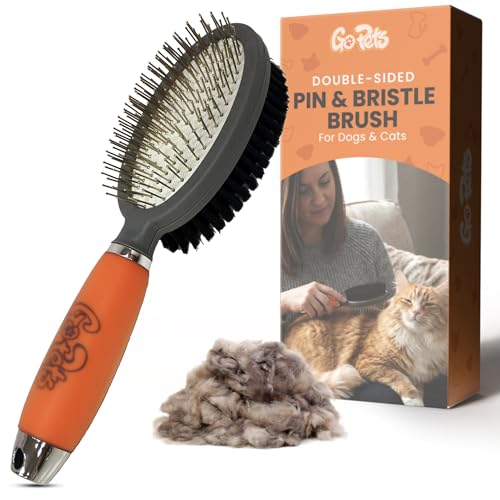
- DOUBLE-SIDED COAT CARE – Built to provide the right comb for any fur type, this pet grooming brush features pin and bris…
- PIN & BRISTLE FUNCTIONALITY – Pin side helps detangle knots, loosen light mats, and reach deeper layers for undercoat ca…
- GENTLE DEEP GROOMING – Designed for deep grooming that remains gentle on pets, helping maintain coat condition while min…
For a wider rundown of formulas by canal sensitivity and scent strength, our guide to the 7 best ear cleaning solutions for Goldendoodles compares options for everyday maintenance versus heavier wax conditions.

When Cleaning Isn’t Enough: Signs You Need the Vet
Routine goldendoodle ear cleaning prevents most problems, but it won’t fix an active infection. Watch for these warning signs between cleanings:
- A strong, yeasty, or foul odor coming from the ear
- Redness, swelling, or heat inside the flap
- Dark brown, black, or bloody discharge
- Repeated head shaking or scratching at one ear
- Yelping or pulling away when the ear is touched
- Visible head tilt or loss of balance
If you’re seeing dark discharge paired with odor, it’s worth reading through our comparison of home remedies versus vet treatment for brown dog ear discharge so you know what’s reasonable to try at home and when it’s time to pick up the phone instead.
Active bacterial infections typically need a prescribed antibiotic, not an over-the-counter wash. A product like Ciprofloxacin, (PF) 0.2 % Otic Solution is the kind of prescription-only treatment a veterinarian may prescribe once they’ve confirmed what’s actually growing in that ear. Never apply a prescription otic solution without a current diagnosis, since the wrong treatment can mask symptoms while the underlying infection keeps progressing.
There is an issue displaying Amazon products. Please contact the administrator to check that.Building a Weekly Routine That Actually Works
Consistency beats intensity here. A quick weekly check with a proper ear wash solution, followed by a cotton ball wipe, does more for long-term ear health than an occasional deep clean after things have already gone wrong.
Keep a simple checklist taped inside your grooming cabinet:
- Weekly solution flush and cotton ball wipe (more often in humid weather or after swimming)
- Monthly hair trim around the canal opening
- Daily quick sniff test during regular petting sessions
- Immediate vet call if odor, discharge, or pain shows up
According to the American Kennel Club, breeds with hairy, floppy ears like Goldendoodles are among the most prone to recurring otitis, which is exactly why a maintenance routine matters more than reactive treatment. A dry, clean canal simply doesn’t give bacteria and yeast the environment they need to multiply.
Think of goldendoodle ear cleaning less as a chore and more as a five-minute weekly investment that saves you an emergency vet visit, a round of antibiotics, and a very uncomfortable dog. Cotton balls and ear wash solution aren’t competitors, they’re teammates. Use the solution to do the real cleaning work, and let the cotton ball finish the job on the surface. Stay consistent, watch for the warning signs, and your Goldendoodle’s ears will thank you with far fewer head shakes and a lot more happy ear scratches.
Can I use only cotton balls for Goldendoodle ear cleaning?
Cotton balls alone can handle light surface debris on the outer ear flap, but they can’t dissolve wax or reach deep into the canal. For real goldendoodle ear cleaning that prevents infections, pair cotton balls with a veterinary ear wash solution rather than relying on cotton alone.
How often should I clean my Goldendoodle’s ears?
Most Goldendoodles do well with a weekly ear wash solution flush and cotton ball wipe. Dogs that swim often or live in humid climates may need cleaning every three to four days to keep the canal dry.
Is it safe to use cotton swabs instead of cotton balls?
No. Cotton swabs are narrow enough to push wax and debris deeper into the ear canal, which can lead to blockages or injury near the eardrum. Stick to cotton balls or soft gauze for wiping the outer canal.
What signs mean my Goldendoodle’s ear infection needs a vet, not home cleaning?
A strong odor, dark discharge, redness, swelling, or a head tilt all signal an active infection that cleaning alone won’t resolve. These cases typically need a diagnosed, prescribed treatment rather than routine goldendoodle ear cleaning products.


