
Goldendoodle ear infection symptoms can start with a few vigorous head shakes after a bath, then turn into an unpleasant odor, redness, or a sore ear that your dog will not let you touch. Because yeast, bacteria, allergies, mites, and trapped moisture can look alike, a veterinary exam is the safest way to choose treatment. Home products may support gentle care, but they cannot identify what is causing the problem or replace prescribed medication.
Goldendoodles often have floppy ears and curly hair around the ear opening, which can make moisture and irritation harder to spot. Resist the urge to clean deep inside the canal. Look for changes, keep your dog comfortable, and call your veterinarian if symptoms appear.
How Can You Tell If Your Goldendoodle Has an Ear Infection?
Watch for repeated head shaking, scratching at one ear, or rubbing the side of the face against furniture. The ear flap may look pink or red, feel warmer than usual, or have a strong, musty smell. Discharge can be waxy, dark, yellow, or pus-like. Any of these signs can occur with several ear problems, so they do not confirm an infection on their own.
Notice how your dog reacts, too. Pulling away, yelping, holding the head at an angle, or guarding the ear can signal pain. A Goldendoodle ear infection may be painful even when the outer ear looks only mildly irritated. Avoid pressing on the ear or trying to inspect a sore canal at home.
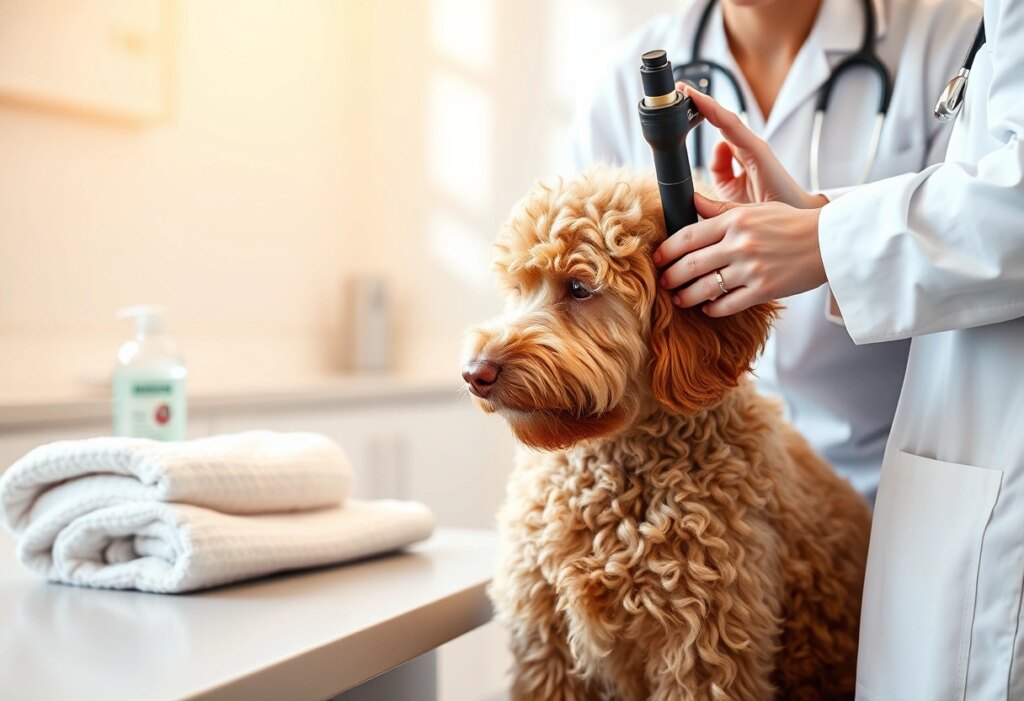
A veterinary exam lets the clinician check the canal and, when needed, examine a sample of discharge under a microscope. That matters because medication for yeast may not be the right choice for bacteria, and some ear medications are unsafe if the eardrum is damaged. Don’t use leftover drops from a previous episode without veterinary guidance.
Which Ear Infection Treatments and Products Are Actually Safe?
Effective dog ear infection treatment starts with a diagnosis. Your veterinarian may recommend a prescription ear medication, an oral medicine, a cleaning solution, or a combination, depending on the cause and severity. Follow the directions for amount and duration. Stopping early because the ear looks better can leave the underlying problem unresolved.

Ask whether a particular vet-recommended ear cleaner is appropriate before using it. Some cleaners are intended for routine wax removal, while others may irritate inflamed tissue or be unsuitable if the eardrum is not intact. Never put rubbing alcohol, peroxide, vinegar, essential oils, or human ear drops into your dog’s ear unless your veterinarian explicitly directs you to do so.
Cotton swabs can push debris deeper or injure the canal. If your veterinarian says cleaning is safe, use the recommended solution and soft cotton or gauze only where you can see. Stop if your dog shows pain, and do not force the ear open.
Products marketed for skin or general cleaning are not automatically ear treatments. For example, Petrivium Natural Dog Yeast Infection Relief for Itchy Skin is a product to discuss with your veterinarian if you are considering it for a dog with itching. Its name does not establish that it treats an ear canal infection, and it should not be placed in the ear. Ask your vet to review the label and ingredients alongside any prescribed medication.
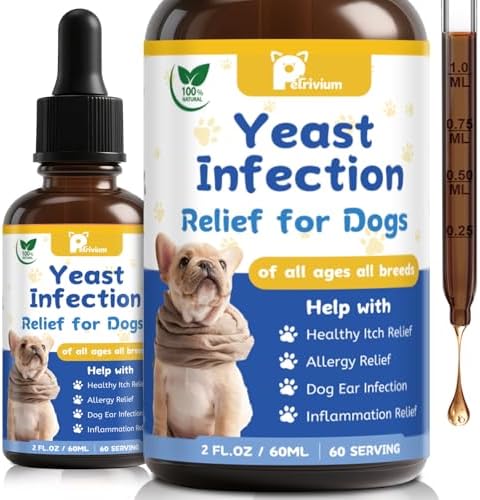
- 🌿【Natural Anti-Itch Treatment】Petrivium Natural Yeast infection treatment for dogs Formulated specifically to fight itch…
- 🐾【Itchy Ear Relief And Skin Wellness】Targeted to fight yeast infections in your dog’s ears and skin, An infusion of herb…
- 🛡️【Effectively Targets Yeast Overgrowth】Our yeast infection drop liquid work from the inside out to combat yeast overgro…
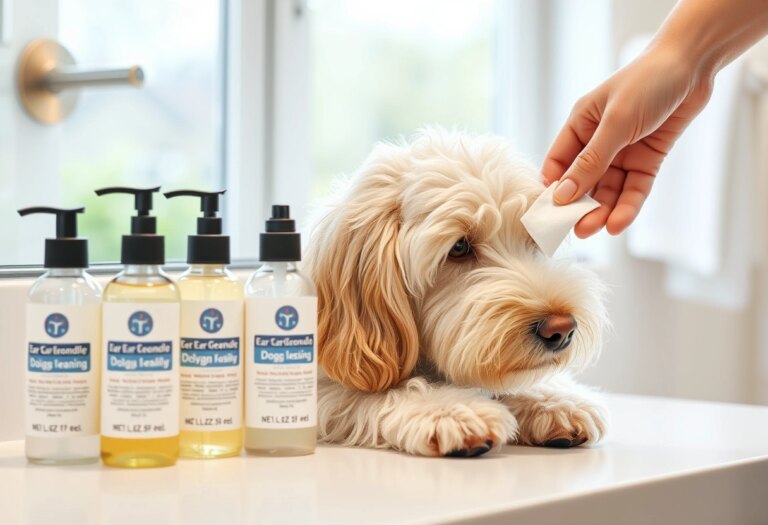
Pet wipes can be useful for visible dirt on the outer ear flap, provided your dog tolerates them and the label supports that use. Dog All Purpose + Allergy Pet WiPees™ should be treated as an outer-ear grooming aid, not a way to clean down inside the canal or cure infection. Keep the wipe away from the opening, and stop if the skin becomes red or your dog reacts. One small practical nuisance with wipes is that a damp one can feel cold against a sensitive ear, so let your dog sniff it first.

- ITCHY EARS. RED PAWS. RAW HOT SPOTS. If your pup’s licking, scratching, or flaking nonstop, these allergy wipes for dogs…
- DAILY RELIEF FOR ALLERGY-PRONE SKIN These dog wipes lift allergens from fur, soothe irritation, and support skin barrier…
- PH-BALANCED & SAFE TO LICK AFTER No alcohol, no sulfates, no second guessing. These wipes for dogs are powered by 98%+ b…
The third item is even more important to distinguish from ear medication. Vetericyn Plus Cat Wound Care Spray is labeled for wound care, not treatment of a dog’s ear infection. Do not spray it into the ear canal or substitute it for prescribed drops. If you already own it, ask your veterinarian whether it is suitable for any separate, visible skin concern on your pet.

- HEALING AID AND SKIN REPAIR: Use a few times daily to flush and decontaminate your cat’s wounds, cuts, abrasions, sores,…
- CAT FIRST-AID ESSENTIAL: Works great on every feline species at any life stage to relieve skin problems
- SAFE & EFFECTIVE: Made with a non-toxic hypochlorous technology that is pH-balanced and safe if licked or ingested
| Product or care option | Best suited for | Important limit | Price Tier |
|---|---|---|---|
| Veterinarian-prescribed ear medication | Diagnosed infection or inflammation | Use only as directed for your dog | $$$ |
| Vet-approved ear cleaner | Routine cleaning when your veterinarian recommends it | Not a substitute for infection treatment | $$ |
| Dog All Purpose + Allergy Pet WiPees™ | Gentle wiping of visible outer-ear dirt, if tolerated | Keep out of the canal | $$ |
| Petrivium Natural Dog Yeast Infection Relief | Discussing a skin-support product with your veterinarian | Not confirmed as an ear infection treatment | $$$ |
| Vetericyn Plus Cat Wound Care Spray | Ask your vet about separate wound-care use | Not an ear infection product | $$ |
What Does the Research Say About Canine Ear Infections?
The Merck Veterinary Manual reports that otitis externa, inflammation of the outer ear canal, affects up to 20% of dogs. Its causes vary, and underlying allergies or other skin conditions can contribute to recurring trouble. The Merck Veterinary Manual’s overview of otitis externa explains why identifying the cause matters before choosing care.
AAHA’s allergic skin disease guidance estimates that allergies affect up to 20% of dogs. In some dogs, allergic inflammation affects the ears as well as the skin, so repeated episodes may call for an allergy assessment rather than another round of cleaning alone. If your dog also has itchy paws or recurring skin irritation, bring those details to the appointment. Our guide to dog food for sensitive stomachs and skin allergies may help you prepare questions about diet, but don’t change foods as a replacement for an exam.
“A clean-looking ear is not proof that the canal is healthy. If your Goldendoodle keeps shaking or scratching, let your veterinarian check what you cannot see.”
When Should You Stop Home Care and Call the Veterinarian?
Call promptly if your dog has severe pain, marked swelling, blood, pus, or a sudden change in hearing. Balance problems, stumbling, a tilted head, or unusual eye movements need urgent veterinary attention. These signs can point to a more serious problem than mild surface irritation.

Book an appointment for recurring episodes, too. A Goldendoodle ear infection that returns soon after treatment may be linked to allergies, anatomy, moisture, resistant organisms, or another underlying issue. Your veterinarian can decide whether further testing or a different treatment plan is needed.
Do not wait for home cleaning to work if symptoms are getting worse or fail to improve promptly after the veterinarian’s instructions. If medication is hard to apply, call the clinic for a demonstration rather than wrestling with your dog’s sore ear. Calm praise and a small treat after each attempt can make future care less stressful.
How Can You Help Prevent Future Goldendoodle Ear Problems?
Prevention is about sensible routines, not constant cleaning. Ask your veterinarian how often your dog’s ears need checking and whether a cleaner is appropriate. Goldendoodle ear care should fit your dog’s history: some dogs need occasional maintenance, while others do better with minimal handling between exams.
After swimming or a bath, gently dry the visible parts of the ear with a soft towel. Keep water and shampoo out of the canal, and avoid inserting cotton or tools. Ask your groomer and veterinarian how to manage hair around the ear opening; trimming may help some dogs, but plucking can irritate the skin and should not be done routinely without professional advice. For broader coat planning, see our article on Goldendoodle grooming costs and DIY haircuts.
If allergies seem to track with ear flare-ups, share a symptom diary with your veterinarian. Note when itching starts, what areas are affected, and whether ear trouble follows a bath, a walk, or a food change. An organized history can help the vet identify patterns and create a safer prevention plan.
Frequently Asked Questions
Can I clean my Goldendoodle’s ear before the vet visit?
If the ear is painful, swollen, bleeding, or producing pus, leave it alone and contact your veterinarian. Cleaning can remove material the clinic may want to examine. For a comfortable ear with only light surface dirt, wipe the visible flap gently, but do not put anything into the canal.
Can a Goldendoodle ear infection clear up without medication?
Some irritation may settle, but an actual infection can worsen or return without the right diagnosis and treatment. If odor, discharge, repeated scratching, or head shaking persists, arrange an exam rather than waiting several days while trying home remedies.
How often should I use an ear cleaner?
Follow your veterinarian’s schedule. Frequent cleaning can irritate some ears, while other dogs need a tailored routine because of recurring wax or moisture. Ask which product to use and what signs mean you should pause.
What should I do if symptoms return after treatment?
Contact the clinic and explain when the symptoms came back, which medicine was used, and whether every dose was given. A recurring Goldendoodle ear infection may need another examination or investigation of allergies and other contributing factors. Don’t restart old medication unless your veterinarian tells you to.
For a Goldendoodle ear infection, the safest plan is a timely exam, the right medication for the cause, and gentle prevention tailored to your dog. Keep products out of the canal unless your veterinarian approves them, and call promptly when pain, discharge, swelling, or balance changes appear.