

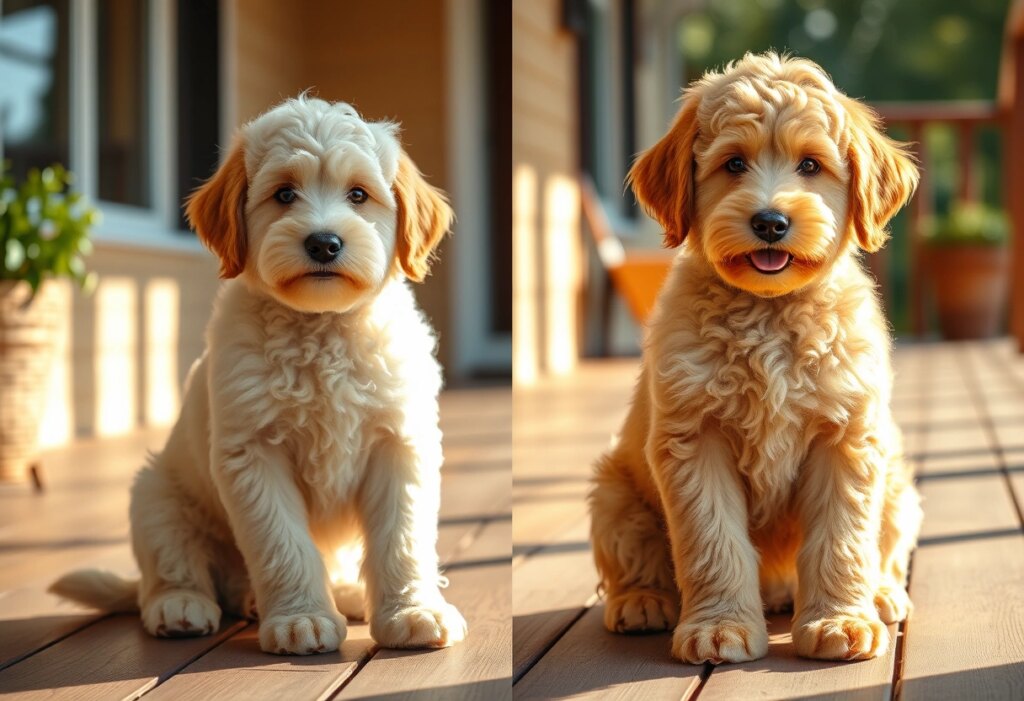
Goldendoodle or Labradoodle: it’s one of the most common questions new puppy parents ask us, and honestly, there’s no wrong answer here. Both breeds make wonderful family companions, but the right fit depends on your home, your energy level, and what you’re hoping for in a canine best friend. By the end of this guide, you’ll know exactly which one matches your lifestyle.
Let’s get the quick answer out of the way first. Labradoodles tend to have a slightly more independent, steady temperament suited for structured training, while Goldendoodles usually lean into affection and people-pleasing behavior. Neither is “better,” they’re just built a little differently. Below, we’ll walk through origins, coat care, energy needs, and health considerations so you can make a confident, informed decision.
Where Goldendoodles and Labradoodles Came From
The Labradoodle has an interesting origin story. Wally Conron developed the breed in Australia back in 1989 while working for the Royal Guide Dog Association, trying to create a hypoallergenic guide dog for a visually impaired woman whose husband had allergies. He crossed a Labrador Retriever with a Poodle, and the result was a dog with the trainability of a Lab and the low-shedding coat of a Poodle. According to Australian Cobberdog Club history records, this pairing was so successful that it sparked the entire designer-dog movement.
Goldendoodles came along a bit later, emerging in the United States during the 1990s as breeders looked to replicate that same formula using Golden Retrievers instead of Labs. The goal was similar: combine the Poodle’s coat with a beloved family breed’s gentle nature. Goldendoodles quickly built a reputation as warm, snuggly, eager-to-please companions, which is part of why they’ve become such fixtures in American households.
When you’re comparing a goldendoodle or labradoodle for your own home, it helps to remember that both breeds share half their genetics. The differences you’ll notice mostly trace back to whether the Lab or the Golden Retriever parent’s personality shines through more strongly in that particular litter.
Temperament Differences: Labradoodle vs Goldendoodle
Labradoodles often carry a bit more of that classic Labrador focus and drive. They tend to be quick learners with a steady, work-ready mindset, which explains why so many service and therapy dog programs still use them today. They’re affectionate, but sometimes in a slightly more reserved, “let’s get things done” kind of way.
Goldendoodles, on the other hand, are famous for wearing their hearts on their sleeves. They crave physical closeness, tend to bond intensely with every family member, and often show more visible enthusiasm in everyday interactions. If you want a dog that greets you like you’ve been gone for a year even after a five-minute errand, a Goldendoodle usually delivers that experience more consistently.

Temperament in doodle breeds is never guaranteed by name alone. Genetics, early socialization, and the specific parent breeds used all shape how a puppy turns out, so meeting the parent dogs before you commit is one of the smartest things a buyer can do.
Coat & Grooming Needs Checklist
This is where a lot of families get surprised after bringing their puppy home. Both breeds inherit curly or wavy coats from their Poodle parent, but coat type varies litter to litter, and grooming demands can be significant regardless of which doodle you pick.
- Shedding: Both Goldendoodles and Labradoodles with tighter, curlier coats shed minimally. Looser, wavier coats shed more and may not be as allergy-friendly.
- Grooming frequency: Per general AKC grooming guidance, professional grooming every 4 to 6 weeks is typical for curly-coated doodles to prevent matting and skin issues.
- At-home brushing: Plan on brushing 3 to 4 times per week minimum, more often during shedding season or if the coat is longer.
- Allergy-friendliness: Neither breed is 100% hypoallergenic. Curlier, Poodle-dominant coats produce less dander, but no doodle is guaranteed allergen-free.
- Ear care: Both breeds have floppy ears prone to moisture buildup, so weekly ear checks help prevent infections.
If you’re leaning toward a Goldendoodle specifically, our guide on Goldendoodle grooming cost for mini vs standard sizes breaks down what to budget for professional visits based on coat length and body size. Pairing that with the right home tools makes a real difference between grooming appointments.
Speaking of home grooming, a soft-bristle brush and detangling comb are non-negotiables for either breed. For families who want to see exactly which tools professional groomers actually recommend, our roundup of grooming tools built for curly coats covers the essentials without the guesswork.
Energy Levels & Family Fit
Both Labs and Poodles rank among the American Kennel Club’s top 10 most trainable breeds, and that trainability comes paired with real exercise needs. A goldendoodle or labradoodle puppy is not a low-energy couch companion during its first two to three years. These are working-breed hybrids that need daily physical and mental engagement to stay balanced.
Here’s a simple checklist to match either breed to your household’s actual lifestyle:
- Step 1: Count your realistic daily exercise time, not your aspirational amount. Both breeds typically need 45 to 60 minutes of activity daily.
- Step 2: Assess your yard or nearby walking access. Apartment living works for either breed only with consistent outdoor commitment.
- Step 3: Consider household noise and activity level. Goldendoodles often adapt more easily to chaotic, kid-heavy homes thanks to their people-focused nature.
- Step 4: Think about training goals. If you want a dog for structured tasks, sport, or service-style work, the Labradoodle’s Lab-driven focus may edge ahead.
- Step 5: Factor in size. Both breeds come in mini, medium, and standard sizes, so match the size to your space and strength for handling leash pulling.
If size is your biggest deciding factor, our detailed breakdown on Labradoodle size compared to Goldendoodle size is worth reading before you commit to a specific breeder’s litter.

Waiting for puppy pickup day is its own kind of test of patience. Plenty of families keep a soft plush stand-in around the house in the meantime, and something like the GUND Designer Pups Collection Cocco Labrador Puppy Plush works well as a comforting placeholder for kids who are counting down the days.
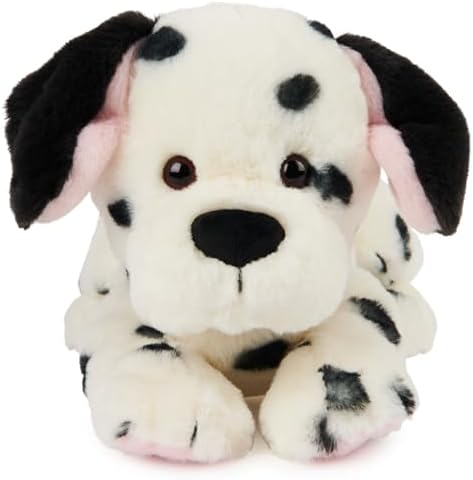
- REALISTIC DALMATIAN PUPPY: Checkers is a 14” realistic Dalmatian with soft white spotted plush, black ears, and warm bro…
- Soft & Huggable: This adorable plush toy features machine-washable construction for easy cleaning and is made from a sof…
- Gift with GUND: Our plush dolls, teddy bears, sensory toys and stuffed animals make timeless birthday and baby shower gi…
Health Considerations & Final Verdict
Health is where the goldendoodle or labradoodle decision really should be grounded in facts rather than preference alone. Both breeds inherit health tendencies from their parent breeds, and reputable breeders test for these conditions before placing puppies with families.
| Health/Lifestyle Factor | Labradoodle | Goldendoodle | Price Tier |
|---|---|---|---|
| Hip Dysplasia Risk | Moderate (inherited from Lab lineage) | Moderate to slightly higher (inherited from Golden lineage) | $$$ |
| Average Lifespan | 12 to 15 years | 12 to 15 years | $$$ |
| Grooming Demand | Moderate to high | High | $$$$ |
| Trainability | Very high, task-focused | Very high, affection-motivated | $$ |
| Best Suited Household | Active families, structured training goals | Families wanting a highly affectionate companion | $$ |
| Reputable Breeder Investment | Mid to high, health testing included | Mid to high, health testing included | $$$$$ |
According to data referenced by the Orthopedic Foundation for Animals, both breeds average a 12 to 15 year lifespan when hip and elbow health are properly screened in the parent dogs. Neither breed is inherently riskier overall, but hip dysplasia remains a concern worth discussing directly with your breeder. You can learn more about screening standards through the American Kennel Club’s health resource center, which outlines the genetic testing responsible breeders should provide.
While you’re weighing breeders and researching temperament traits, it helps to have some lighthearted breed-themed touches around the house too. Something like the EKGJW Vintage Blue Floral Golden Retriever Kitchen Towel is a small, budget-friendly way for Goldendoodle-leaning families to celebrate the breed’s heritage in the kitchen.
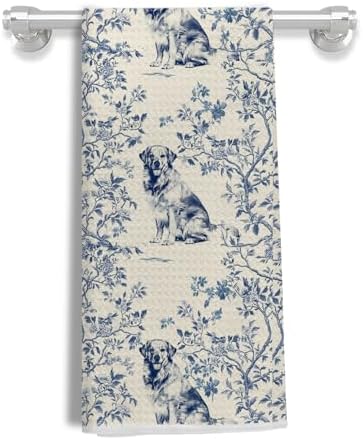
- 【SIZE】Our kitchen towels come in a handy 16×24 inch size, lasts a long time.
- 【Versatile Use】: Perfect for a wide range of kitchen tasks or bathroom, this towel can be used for drying dishes, wiping…
- 【Durability Meets Style】: Built to last, our dish towel is withstand frequent washings without fading or fraying. Its sl…
Choosing a Reputable Breeder for Either Variety
Whichever direction you lean, the breeder you choose matters more than the breed name on paper. A responsible breeder will provide health clearances for hips, elbows, and eyes, let you meet both parent dogs, and answer questions openly about temperament and lineage.
Red flags to watch for include breeders who won’t let you visit in person, can’t produce health testing paperwork, or have multiple litters available at once with no waiting list. A trustworthy Labradoodle vs Goldendoodle breeder should feel more like a partner in your decision than a salesperson rushing you toward a deposit.
Puppies also benefit from familiar comfort objects during the early transition home. A plush companion like the Auswella 18-Inch Plush Beagle Dog can double as a cuddly transitional toy that helps soothe a new puppy adjusting to unfamiliar surroundings during those first few nights.

- 18 inch soft plush Beagle. Expertly designed with authentic beagle markings, floppy ears, sweet expressive eyes, and lif…
- Perfect as a cuddle companion, nursery decoration, bedroom décor accent, collectible plush, or comforting emotional supp…
- Lifelike Beagle with a Cute Curved Tail and Tri Colored. Prodominently Black and White on His Body. Modeled after our be…
Final Takeaway
There’s genuinely no losing choice between a goldendoodle or labradoodle, as long as the match fits your family’s real daily rhythm rather than an idealized version of it. Labradoodles tend to suit families wanting a focused, trainable companion, while Goldendoodles often fit best with households craving nonstop affection and closeness.
This doodle puppy guide should leave you feeling equipped rather than more confused. Take your time, meet the parent dogs, ask hard questions about health testing, and trust that a well-matched, well-bred puppy from either variety will reward you with years of loyal companionship. Your puppy’s safety and long-term well-being should always come before any preference for looks or breed trend.
Frequently Asked Questions
Is a Goldendoodle or Labradoodle better for first-time dog owners?
Both breeds work well for first-time owners because of their trainability and friendly nature. Goldendoodles are often recommended slightly more often for beginners thanks to their eager, people-pleasing temperament, but a well-socialized Labradoodle from a reputable breeder is just as manageable for a first-time family.
Which sheds less, a Labradoodle or a Goldendoodle?
Shedding depends more on coat type than breed name. Curly, Poodle-dominant coats in either breed shed minimally, while looser wavy coats shed more. Ask your breeder about the specific coat type of the litter rather than relying on breed alone.
Do Goldendoodles or Labradoodles have more health problems?
Neither breed is significantly more prone to health issues overall. Both share a typical lifespan of 12 to 15 years and carry a moderate risk of hip dysplasia. Choosing a breeder who health tests the parent dogs matters more than the breed choice itself.
How do I decide between a Goldendoodle or Labradoodle for my family?
Consider your household’s energy level, how much affection and closeness you want from your dog, and your grooming routine capacity. A structured, training-focused family often leans toward a Labradoodle, while families wanting a constantly affectionate companion tend to prefer a Goldendoodle.


