


The right goldendoodle shedding brush depends almost entirely on your dog’s coat type, and picking the wrong one is probably why you’re still finding tufts of fur on your couch every week. Wavy coats, curly coats, and straighter coats each shed differently, and each one needs a specific tool to pull loose undercoat hair out before it turns into a mat. Below, I’ll walk you through exactly which brushes work for which coat, the technique that actually prevents matting, and the mistakes I see Doodle parents make over and over again.
Why Coat Type Determines Your Goldendoodle Shedding Brush Choice
Not all Goldendoodles have the same coat, even within the same litter. The Goldendoodle Association of North America classifies coats into three main categories: wavy (fleece), curly, and straight (hair coat). A wavy coat has loose, open curls and tends to be the most common type you’ll see in F1 and F1B Goldendoodles. A curly coat is tighter, denser, and closer to what you’d find on a Poodle. A straight coat, which shows up less often, resembles a Golden Retriever’s coat more closely and sheds the most visibly of the three.
This matters because your goldendoodle shedding brush needs to match the density and texture of the fur it’s working through. A brush that glides easily through a wavy coat might barely scratch the surface of a tight curly coat, and a tool built for dense curls could feel too aggressive on a thinner, straighter coat. If you’ve been using one brush for everything and wondering why it’s not working, coat mismatch is usually the reason.
Slicker Brushes vs. Undercoat Rakes: Which One Actually Stops Shedding?
This is the question I get asked most often, and the honest answer is: it depends on what’s happening underneath the topcoat. A lot of new Doodle owners assume their dog is “low shedding” because that’s how the breed gets marketed, but that’s not quite accurate. Data referenced in the Canine Inherited Disorders Database and OFA/CHIC breed records shows that the Poodle-derived coat genetics in Goldendoodles still produce a soft undercoat that sheds, just in a way that’s less noticeable than a typical double-coated breed because the hair tends to get trapped in the curl instead of falling straight to the floor.
That trapped hair is exactly why brushing matters so much. A slicker brush works the surface and midlayer of the coat, pulling out loose fur and preventing the early stages of tangling. An undercoat rake goes deeper, reaching down to the base of the coat where dense, shed undercoat hair likes to hide. If your Goldendoodle has a thicker or curlier coat, you’ll likely need both tools in rotation rather than picking just one. I go into a lot more detail on this comparison in Slicker Brush vs Undercoat Rake for Goldendoodles: The Truth, which is worth a read if you’re trying to figure out which one to reach for first.

Brushing isn’t just about keeping fur off your floors. For a Doodle, it’s preventive skin care. Loose undercoat hair that doesn’t get removed regularly is one of the biggest hidden causes of matting, hot spots, and skin irritation in this breed.
Top 5 Brush Picks by Coat Type
Here’s my breakdown of the best tools for each coat type, based on what actually gets used in real grooming routines rather than what just looks good in a photo. I’ve included a Price Tier column instead of exact prices since Amazon pricing shifts often, but this gives you a fair sense of where each tool sits relative to the others.
| Brush/Comb | Best Coat Type | Pros | Cons | Price Tier |
|---|---|---|---|---|
| Slicker Brush | Wavy & straight coats | Fast surface detangling, good for daily upkeep | Doesn’t reach deep undercoat on curly coats | $$ |
| Undercoat Rake | Curly & dense wavy coats | Pulls loose undercoat hair, reduces matting risk | Can feel harsh if used too aggressively | $$ |
| Metal Comb (Long-Tooth) | All coat types, finishing tool | Precision detangling, checks for missed mats near skin | Slower than a brush for large areas | $ |
| Double-Sided Dematting Comb | Curly & matted-prone coats | Cuts through early mats without shaving | Sharp teeth need gentle, careful handling | $$ |
| Bristle/Horse-Style Body Brush | Straight & thin wavy coats | Distributes natural oils, adds coat shine | Too soft for thick curly undercoat removal | $ |
Best Metal Comb for Finishing Touches (All Coat Types)
Once you’ve worked through the coat with a slicker brush or rake, a good metal comb is what tells you whether you actually got everything out. I recommend keeping a Metal Comb for Dogs, Dog Grooming Detangler on hand as a finishing tool. Run it through the coat after brushing, especially around the ears, armpits, and tail, since those are the spots where mats sneak up on you first. If the comb glides through cleanly, you’re done. If it catches, that’s a sign there’s still loose undercoat hair or an early mat that needs more attention.

- EASY DEMATTING & DETANGLING: Our dog grooming comb features extra-long stainless-steel teeth that glide through tough kn…
- EXTRA LONG PINS: Engineered with PINs that are 30% longer, this dematting comb reaches deeper into dense, curly, or long…
- ERGONOMIC HANDLE: Designed with a non-slip, ergonomic handle, this metal dog comb ensures a secure grip and reduces hand…
Best Dematting Comb for Curly and Wavy Coats
For curlier Goldendoodles, or any dog that’s gone a few days without brushing, a dedicated dematting tool saves a lot of frustration. The 2 Pack Double Sided Dematting Comb for Dogs Cats has two different tooth spacings on each side, so you can start with the wider teeth to loosen a mat and switch to the finer side to finish the job without pulling on the skin. This is especially handy for the leg feathering and belly area on curly coats, where mats form fastest and where a slicker brush alone often isn’t enough.
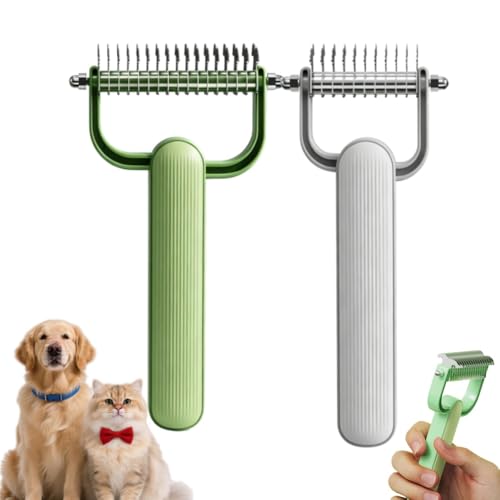
- ✨【Efficient Hair Removal Experience】The V-tooth pet grooming comb features efficient hair removal, designed for both cat…
- 🌀【Upgraded Material】This deshedding comb is crafted from upgraded material, providing durability, suitable for long term…
- 🖐【Ergonomic Handle for Comfort】The ergonomic handle of this pet comb offers comfortable design with a soft, fitted grip,…
Best Bristle Brush for Straighter Coats
If your Goldendoodle leans toward the straighter, more Golden Retriever-like coat, a firm bristle brush does a nice job of smoothing the coat and pulling out loose surface hair without over-processing the fur. The Histotree Orange Black Horse Brush for Grooming Body Stiff bristles work well here, giving the coat a nice sheen while still removing a good amount of shed hair during a quick daily pass. It’s not going to replace a rake for a dense curly coat, but for thinner or straighter coats, it’s a solid, budget-friendly option to keep in the grooming caddy.
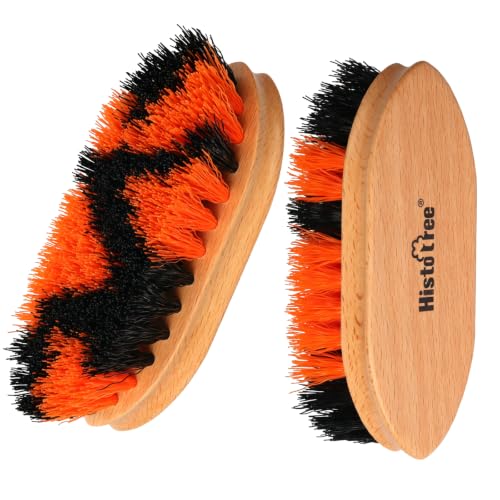
- Dual-Color Crimped Bristles for Deep&Gentle Grooming:Our Histotree horse brush features crimped bristles in contrasting …
- Sturdy&Durable Beech Wood Brush Back:This horse grooming brush is made of beech wood with smooth edges and an ergonomic …
- Multi-Purpose Equine Grooming Tool:This 30mm long crimped bristles horse brush works great for dry brushing to remove su…
If you’re specifically dealing with a mini-sized wavy or curly coat, I also put together a full breakdown of sizing and bristle spacing in Best Slicker Brush for Mini Goldendoodles: Grooming Guide, which covers a few smaller-frame considerations this article doesn’t get into.
Step-by-Step Brushing Technique to Prevent Matting
Having the right goldendoodle shedding brush only helps if you’re using it correctly. The American Kennel Club’s grooming guidelines recommend brushing double-coated and curly-coated breeds two to three times a week at minimum, and honestly, most Goldendoodles do better with a quick daily pass instead. Here’s the routine I recommend:
- Start with a line-brushing method. Work in small sections, brushing from the skin outward rather than just skimming the top layer.
- Use a slicker brush first to loosen surface tangles, then follow with an undercoat rake for curly or dense wavy coats.
- Check high-friction areas like behind the ears, under the collar, the armpits, and the tail base every single session, since these mat the fastest.
- Finish with a metal comb to confirm there are no hidden tangles left close to the skin.
- Reward with a treat or calm praise throughout, especially with puppies, so brushing stays a positive experience instead of something they dread.
Consistency matters more than intensity here. A calm five-minute session daily beats one long, stressful 45-minute wrestling match on the weekend, both for your dog’s comfort and for actually keeping shedding under control.

Common Shedding Mistakes Doodle Parents Make
A few patterns come up again and again with Goldendoodle owners, and most of them are fixable with small changes:
- Brushing only the topcoat. If you’re not reaching the undercoat, you’re only managing half the problem. This is the number one reason people feel like their goldendoodle shedding brush “isn’t working” when really it’s the technique that needs adjusting.
- Skipping brushing between grooming appointments. Professional grooming every six to eight weeks doesn’t replace home brushing. The gap in between is exactly when mats form.
- Using human hairbrushes or the wrong bristle stiffness. These tools aren’t built for dog coat density and can cause discomfort or skip over trapped undercoat entirely.
- Bathing too often without brushing first. Wetting a matted or tangled coat tightens those knots, making them much harder to remove afterward.
- Ignoring seasonal shedding shifts. Spring and fall often bring heavier shedding cycles, and sticking with the same light routine year-round can let loose fur build up unnoticed.
Correcting even one or two of these habits, paired with the right brush for your dog’s specific coat, usually makes a noticeable difference within a couple of weeks. For general coat health background and canine grooming physiology, the ASPCA also has helpful guidance on how coat maintenance ties into overall skin health.
It’s also worth remembering that coat type isn’t just a grooming detail, it plays into bigger lifestyle questions too, like how much maintenance your dog will realistically need compared to other breeds. If you’re still deciding between a Doodle and a more traditional retriever, Goldendoodle vs Golden Retriever: Which Is Lower Maintenance? breaks that comparison down in more detail.
Final Thoughts on Choosing Your Goldendoodle Shedding Brush
Matching your goldendoodle shedding brush to your dog’s actual coat type, whether that’s wavy, curly, or straight, makes grooming faster, more comfortable for your dog, and far more effective at controlling loose hair before it becomes a mat. Rotate between a slicker brush, an undercoat rake, and a comb depending on what your dog’s coat needs that week, and stay consistent with a few short sessions rather than one long one. Your Goldendoodle will be more comfortable, and your floors will thank you too.
What is the best brush for a curly Goldendoodle that sheds a lot?
For curly coats, an undercoat rake paired with a dematting comb tends to work best. Curly coats trap loose hair instead of shedding it onto the floor, so you need a tool that reaches down to the base of the coat rather than just brushing the surface.
Do Goldendoodles actually shed even though they’re marketed as hypoallergenic?
Yes. Goldendoodles carry Poodle-derived coat genetics that reduce visible shedding, but they still produce and lose undercoat hair regularly. That hair often gets caught in the curl or wave instead of falling to the floor, which is why consistent brushing is so important.
How often should I brush my Goldendoodle to control shedding?
Most Goldendoodles do best with brushing two to three times a week at minimum, though a quick daily session tends to work even better for curlier or denser coats since it prevents small tangles from building into full mats.
Can I use the same brush for all Goldendoodle coat types?
Not ideally. A slicker brush works well on wavy or straight coats, but curly coats usually need an undercoat rake or dematting comb to reach the dense undercoat. Using the wrong tool for your coat type is one of the most common reasons shedding feels unmanageable.


