


If you’re stuck between a Goldendoodle vs Labradoodle and trying to figure out which one will actually settle down on your couch instead of bouncing off the walls, you’re asking the right question before bringing home a puppy instead of after. The short answer: Goldendoodles tend to run calmer on average, thanks to their Golden Retriever lineage, but individual temperament swings wide enough that breed label alone won’t guarantee a chill dog. Let’s get into what the research actually shows and how to pick the right fit for your household.
This isn’t a small decision. Whether you’re a first-time dog owner worried about managing a hyper puppy, or a family with young kids who needs a dog that won’t knock everyone over during zoomies, the calmness question matters more than coat color or size. By the end of this guide, you’ll know the behavioral science behind each breed’s energy, the real exercise math, how generation and breeding style shift the odds, and exactly what to look for when you meet a litter in person.
What the Behavioral Data Actually Says About Goldendoodle Temperament
Temperament isn’t just a vibe breeders talk about. It’s been measured. The Canine Behavioral Assessment and Research Questionnaire (C-BARQ), developed by the University of Pennsylvania School of Veterinary Medicine, has collected owner-reported behavioral data across tens of thousands of dogs, and it consistently shows Golden Retriever-lineage dogs scoring higher on trainability and lower on excitability compared to Labrador Retriever-lineage dogs.
That distinction matters directly for our Goldendoodle vs Labradoodle comparison, since both breeds inherit their base temperament from these two parent lines crossed with Poodles. Golden Retrievers were historically bred as steady, biddable retrievers that work calmly alongside hunters for hours. Labradors were bred with a bit more drive and mouth-driven enthusiasm, which shows up as slightly higher excitability scores in behavioral surveys.
According to the C-BARQ research database at the University of Pennsylvania, trainability and excitability are two of the most heritable behavioral traits tracked across retriever breeds, meaning lineage genuinely predicts a meaningful chunk of a dog’s baseline temperament.
What does this mean in practice? A Goldendoodle temperament often leans toward eager-to-please, food-motivated, and quick to settle once trained. A Labradoodle temperament tends to bring more physical enthusiasm and a slightly longer runway to calm down as a puppy, though both mature into wonderful companions with consistent handling.
Goldendoodle vs Labradoodle: Energy, Exercise, and Sociability Side by Side
Numbers help cut through the guesswork. Here’s how these two doodle breeds stack up across the traits that actually affect your daily routine.
| Trait | Goldendoodle | Labradoodle | Price Tier |
|---|---|---|---|
| Daily Exercise Need | Around 45 minutes moderate activity | 60+ minutes, often higher intensity | $$$ |
| Excitability Level | Lower, settles faster after play | Higher, especially as a puppy | $$$ |
| Trainability | Very high, quick to learn cues | High, but more food and toy driven | $$$ |
| Sociability with Strangers | Warm, gentle, low guarding instinct | Enthusiastic, sometimes jumpy greeter | $$$ |
| Best Fit Household | Families wanting a mellow, affectionate dog | Active owners who enjoy long walks and play | $$$$ |
| Grooming Investment | Moderate, wavy or curly coat upkeep | Moderate to high depending on coat type | $$$$ |
Notice the Price Tier column reflects the overall ownership investment (grooming, training classes, and general upkeep), not a static dollar figure, since costs shift regionally and by breeder.
Pros and Cons: Matching the Calmest Doodle Breed to Your Lifestyle
Neither breed is objectively better. It’s about fit. Here’s the honest breakdown.

Goldendoodle pros:
- Generally regarded as the calmest doodle breed option for households with young kids or seniors
- Lower excitability means less jumping and mouthing during greetings
- Highly trainable, responds well to positive reinforcement with minimal frustration
- Tends to bond closely and settle into a predictable daily rhythm
Goldendoodle cons:
- Still needs daily mental stimulation or can develop separation anxiety
- Golden Retriever lineage carries its own health watch list, including joint and heart concerns
Labradoodle pros:
- High drive makes them excellent partners for runners, hikers, or agility fans
- Playful, food-motivated nature makes basic training fast once you channel that energy correctly
- Tends to be a bit more resilient and less prone to clinginess than some Goldendoodles
Labradoodle cons:
- Labradoodle temperament as a puppy can be a handful without consistent structure
- Needs a genuine 60-plus minute daily activity commitment per most Labradoodle breed club guidance, and skipping it often shows up as chewing or barking
If you’re still torn, our full breakdown on Goldendoodle vs Labradoodle: Which Doodle Is Right for You? covers grooming, shedding, and size differences that go beyond temperament alone.
Speaking of settling into home life with a mellow doodle, a lot of Goldendoodle owners lean into the aesthetic too. This Colorful Goldendoodle Face Golden Doodle Dog Lover item makes a fun, low-key way to show off your calm companion around the house or as a gift for a fellow doodle parent.

How Generation and Coat Type Shift Temperament Predictability
Here’s where things get more nuanced than just “Goldendoodle vs Labradoodle.” Within each breed, the generation matters almost as much as the parent breed lineage.
An F1 doodle (first-generation cross of a purebred Poodle and a purebred Golden Retriever or Labrador) tends to show the widest temperament range, since genetics haven’t been filtered through multiple generations. An F1B doodle (a first-generation doodle bred back to a Poodle) leans more toward Poodle traits, including higher sensitivity and a bit more reactivity in some lines. Multigenerational doodles, bred doodle to doodle over several generations, tend to be the most predictable in temperament because breeders can select specifically for calm, stable dispositions over time.
The Goldendoodle Association of North America (GANA) maintains breeding standards specifically to help reduce this unpredictability, encouraging health testing and temperament screening across generations rather than breeding purely for coat appearance. Reputable Labradoodle breed clubs follow similar principles, though standardization varies more by individual breeder.

This is exactly why two Goldendoodles from different breeders can feel like completely different dogs. One multigen Goldendoodle raised by a breeder who prioritizes calm parent dogs will likely be mellower than an F1 Goldendoodle from a breeder who selected purely for a wavy coat. The same logic applies in reverse for Labradoodles.
A Buyer’s Checklist for Meeting Puppies and Parents Before You Commit
Before you put down a deposit on either breed, take these steps seriously. They matter more than color, coat pattern, or even the specific breed label.
- Meet both parent dogs in person whenever possible, not just photos. Watch how the mother and father react to strangers, loud noises, and handling.
- Ask for health clearances on hips, elbows, heart, and eyes, especially for Golden Retriever-lineage dogs prone to cardiac issues.
- Observe the litter during a calm moment, not just right after a nap or during feeding time, so you see baseline energy rather than a temporary spike.
- Ask about generation (F1, F1B, or multigen) and how the breeder selects for temperament, not just coat type.
- Request a temperament test result if the breeder offers one, since many reputable doodle breeders now run basic puppy aptitude assessments around seven to eight weeks old.
- Discuss the breeder’s return policy and post-adoption support, which signals how invested they are in long-term outcomes over quick sales.
Once your puppy comes home, the early weeks set the tone for lifelong behavior regardless of breed. If your new pup turns out to have more Labrador-style enthusiasm than expected, having the right tools on hand makes a real difference. Our guide on Puppy Won’t Stop Biting? Best Bite-Training Tools That Work walks through exactly what worked for high-energy doodle puppies during the nipping phase.
For everyday life with your new companion, a lot of doodle households enjoy leaning into the theme around the house. This EKGJW Vintage Blue Floral Golden Retriever Kitchen Towel is a sweet, practical touch for Goldendoodle owners who want a small nod to their dog’s retriever roots in the kitchen.
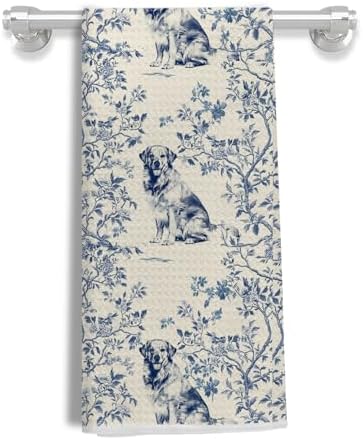
- 【SIZE】Our kitchen towels come in a handy 16×24 inch size, lasts a long time.
- 【Versatile Use】: Perfect for a wide range of kitchen tasks or bathroom, this towel can be used for drying dishes, wiping…
- 【Durability Meets Style】: Built to last, our dish towel is withstand frequent washings without fading or fraying. Its sl…
Why Individual Temperament Still Beats the Breed Label
Even with all this data, no breed guarantees a specific personality. A poorly socialized Goldendoodle can be more reactive than a well-raised Labradoodle, and vice versa. The C-BARQ data shows population-level trends, not individual guarantees.
That said, if you’re choosing purely on averages, Goldendoodles remain the safer bet for households prioritizing a calm, easygoing companion, while Labradoodles suit owners who want an energetic partner for an active lifestyle. Both breeds respond beautifully to positive reinforcement training, structured routines, and adequate daily exercise.
If your search extends beyond temperament comparisons and you’re actively looking for a puppy, our resource on Goldendoodle Puppies for Sale: Top Trusted Places in 2026 lists vetted breeders who screen for both health and temperament.
Even Cockapoo fans watching this Goldendoodle vs Labradoodle debate from the sidelines know the doodle-lover culture runs deep. If you want something lighthearted for casual wear, this Funny Cockapoo Peeking Dog Design T-Shirt is a playful way to represent the broader doodle community while you make your decision.

Final Takeaway: Choosing Calm the Safe Way
The Goldendoodle vs Labradoodle debate ultimately comes down to matching energy levels honestly, not chasing a cute photo online. Goldendoodles tend to edge out as the calmer, more settled choice thanks to their Golden Retriever heritage and lower excitability scores in behavioral research. Labradoodles bring a livelier, more athletic spirit that thrives with owners ready to match that energy daily.
Whichever direction you lean, prioritize meeting the parent dogs, asking about generation and breeding standards, and working with a breeder who screens for temperament rather than coat alone. That single decision protects your family’s safety and your new puppy’s long-term well-being far more than the breed name on paper ever could.
Frequently Asked Questions
Which is the calmest doodle breed for a family with young kids?
Goldendoodles generally rank as the calmest doodle breed for families with young children, thanks to lower excitability scores and a gentler, more patient temperament inherited from their Golden Retriever lineage. That said, always meet the specific puppy and its parents before deciding, since individual temperament varies within any litter.
Does Labradoodle temperament improve with age?
Yes. Labradoodle temperament often mellows significantly between one and three years old as the dog matures out of the high-energy puppy stage. Consistent daily exercise and structured training during the first year make a noticeable difference in how quickly that calm baseline settles in.
Is an F1B Goldendoodle calmer than an F1 Goldendoodle?
Not necessarily calmer, but often more predictable. F1B Goldendoodles carry a higher percentage of Poodle genetics, which can bring more sensitivity and alertness rather than pure calmness. Multigenerational Goldendoodles bred specifically for temperament tend to offer the most consistent, settled disposition.
How much daily exercise does a Labradoodle really need compared to a Goldendoodle?
Most Labradoodle breed club guidance recommends at least 60 minutes of daily exercise, while Goldendoodles typically do well with a more moderate 45-minute baseline. Skipping exercise for either breed usually shows up as restlessness, chewing, or excessive barking at home.


