


If you’re torn between a Goldendoodle vs Labradoodle because you’re worried about puppy teeth and whether your future dog will actually listen to you, you’re asking exactly the right question before bringing a puppy home. The short answer: Labradoodles typically edge out Goldendoodles in bite inhibition speed, while Goldendoodles often have a slight trainability advantage thanks to their eagerness to please. Neither difference is huge, though, and both breeds respond beautifully to the same positive-reinforcement approach.
Both crosses share a Poodle parent, which is why they’re often lumped together as nearly identical. But the Golden Retriever and Labrador Retriever halves of the equation bring their own quirks to the table. Understanding those differences now can save you months of frustration later, especially during the chaotic puppy biting phase every new owner dreads.
This article walks through the real behavioral differences, the trainability data behind the hype, a step-by-step bite prevention plan you can start today, and a side-by-side comparison to help you decide which doodle fits your household.
Bite Inhibition Breakdown: Golden Retriever vs Labrador Retriever Roots
Puppy nipping isn’t aggression. It’s exploration, teething discomfort, and overstimulation rolled into one sharp little package. But the parent breed behind your doodle does shape how intense and how long that phase lasts.
Labrador Retrievers were bred for retrieving game with a soft mouth, which generally translates into Labradoodles learning bite inhibition a bit faster once they understand what’s expected. Golden Retrievers carry a similar soft-mouth retrieving instinct, but Goldendoodles tend to be more mouthy as puppies simply because they’re more physically affectionate and use their mouths to seek attention.
Neither tendency is a dealbreaker. The American Kennel Club notes that both the Labrador Retriever and Golden Retriever consistently rank among the top 10 most popular breeds in the United States, a popularity driven largely by their trainability and family-friendly temperament (AKC, 2023 registration statistics). That trainability carries over into their doodle offspring, which is good news no matter which cross you choose.

If your current dog already has an ear discharge issue from excessive head shaking or scratching during the teething phase, it’s worth reading up on home remedies versus vet treatment for brown dog ear discharge so you know what’s normal irritation versus something that needs a vet visit.
Trainability Comparison: What the Intelligence Rankings Actually Show
Here’s where the shared Poodle parent really shines. In Stanley Coren’s widely cited book The Intelligence of Dogs, the Poodle ranks second among all breeds for working and obedience intelligence, just behind the Border Collie. That genetic contribution gives both Goldendoodles and Labradoodles a strong baseline for learning speed.
When comparing goldendoodle vs labradoodle trainability side by side, the differences come down to motivation style rather than raw smarts:
- Goldendoodles are often more eager to please, which makes praise-based training highly effective. They can be slightly more sensitive to a sharp tone.
- Labradoodles tend to be food-motivated and food-driven, which makes treat-based training almost foolproof, though they can get distracted by smells on walks.
- Both crosses inherit the Poodle’s quick pattern recognition, so they pick up commands like sit, stay, and come faster than most non-Poodle mixes.
- Goldendoodles generally show a bit more patience during repetitive training drills.
- Labradoodles often need more physical outlets before training sessions to burn off excess energy and focus better.
In practice, this means the easiest doodle to train really depends on your training style. If you lean on praise and connection, a Goldendoodle may click faster. If you’re treat-motivated and consistent with food rewards, a Labradoodle will likely surprise you with how quickly it catches on.
Puppy training sessions go a lot smoother when your dog isn’t frantically mouthing your hands the entire time. A plush toy can redirect that energy during downtime, and something like the GUND Designer Pups Collection Cocco Labrador Puppy Plush gives puppies an appropriate chew-and-cuddle outlet that isn’t your sleeve.
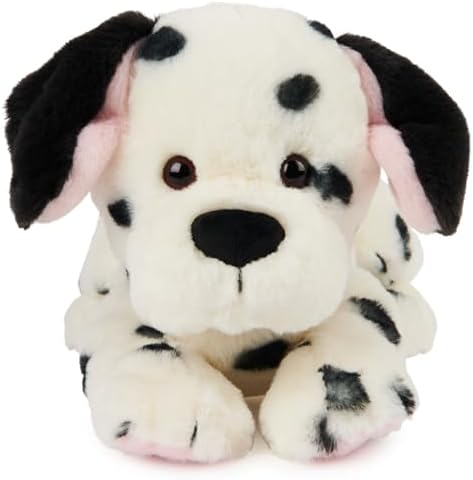
- REALISTIC DALMATIAN PUPPY: Checkers is a 14” realistic Dalmatian with soft white spotted plush, black ears, and warm bro…
- Soft & Huggable: This adorable plush toy features machine-washable construction for easy cleaning and is made from a sof…
- Gift with GUND: Our plush dolls, teddy bears, sensory toys and stuffed animals make timeless birthday and baby shower gi…
Puppy biting is a developmental stage, not a character flaw. Every retriever-type puppy, doodle or otherwise, needs to learn bite inhibition through consistent, gentle feedback during the first few months of life.
Step-by-Step Doodle Biting Behavior Prevention Protocol (8-20 Week Window)
The 8 to 20 week window is the single most important stretch for shaping lifelong doodle biting behavior. Miss it, and you’ll be managing a bigger problem at 40 pounds instead of 15. Here’s the protocol vets and trainers recommend most often.
- Redirect immediately, every time. The moment teeth touch skin, calmly remove your hand and offer a chew toy instead. No yelling, no yanking away dramatically.
- Use a consistent verbal marker. A simple “ouch” or “ah-ah” said in a normal tone teaches the puppy that teeth on skin ends the fun, without creating fear.
- Reward the pause. The second your puppy stops biting and licks or sniffs instead, praise immediately. Timing matters more than the words you use.
- Schedule structured chew time. Give your puppy a rotating selection of textured chew toys several times a day so biting urges have a legal outlet.
- Avoid overtired play sessions. Overtired puppies, especially Labradoodles with high energy reserves, bite harder when overstimulated. Build in nap breaks.
- Practice hand-feeding exercises. Hand-feed a few pieces of kibble daily so your puppy learns gentle mouth pressure around fingers is rewarded, not teeth.
- Socialize with other vaccinated puppies. Puppy playgroups teach bite inhibition faster than any human can, since other puppies give immediate feedback.
For a more detailed, step-by-step walkthrough of this exact process, including troubleshooting for stubborn nippers, the guide on puppy biting fix and bite inhibition training breaks down each stage with specific timing cues.

According to the ASPCA, consistent redirection paired with positive reinforcement remains the most effective, fear-free method for reducing nipping in puppies of any breed, which lines up closely with what veterinary behaviorists recommend for both Goldendoodles and Labradoodles.
Goldendoodle vs Labradoodle: Pros and Cons Comparison Module
Beyond biting and trainability, your day-to-day life with either breed depends heavily on energy level, coat maintenance, and how well they fit your household rhythm. Here’s a side-by-side breakdown.
| Trait | Goldendoodle | Labradoodle | Price Tier (Puppy Cost Range) |
|---|---|---|---|
| Bite Inhibition Speed | Moderate, mouthy early on | Faster, soft-mouth retrieving instinct | N/A |
| Trainability | High, eager to please | High, food and task motivated | N/A |
| Energy Level | Moderate to high | High to very high | N/A |
| Coat Upkeep | Heavy, prone to matting around ears | Moderate, varies by coat type generation | N/A |
| Family Fit | Excellent with young kids | Excellent with active families | N/A |
| Standard Breeder Puppy | Reputable breeder, health-tested | Reputable breeder, health-tested | $$$$ |
| Mini or Toy Variety | Smaller size, apartment friendly | Smaller size, apartment friendly | $$$ |
Both breeds shed minimally compared to straight retrievers, but the Goldendoodle’s coat tends to mat faster around the ears and legs if brushing gets skipped for even a week. If you’re already dealing with tangles, the roundup of detangling sprays for severely matted dog ears can save you an emergency grooming appointment.
Grooming day doesn’t have to feel like a chore, either. Keeping a lighthearted kitchen setup, like drying your pup off with something as simple as an EKGJW Vintage Blue Floral Golden Retriever Kitchen Towel, is a small way doodle owners celebrate the breed they love while handling the practical mess of post-bath fluff.
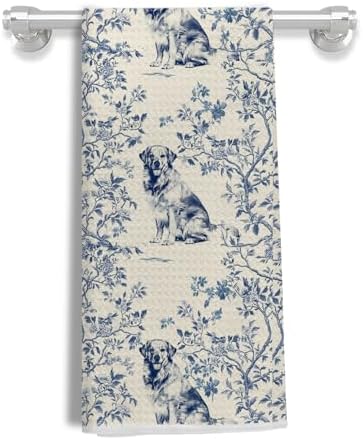
- 【SIZE】Our kitchen towels come in a handy 16×24 inch size, lasts a long time.
- 【Versatile Use】: Perfect for a wide range of kitchen tasks or bathroom, this towel can be used for drying dishes, wiping…
- 【Durability Meets Style】: Built to last, our dish towel is withstand frequent washings without fading or fraying. Its sl…
Key Takeaways Before You Choose
- Labradoodles tend to settle out of mouthy biting slightly faster thanks to Labrador soft-mouth retrieving instincts.
- Goldendoodles often train a touch easier with praise-based methods because of their eagerness to please.
- Both breeds inherit strong learning ability from their Poodle parent, ranked among the smartest breeds by Stanley Coren.
- The 8 to 20 week window is critical for shaping lasting bite inhibition in either cross.
- Coat maintenance, not biting behavior, is usually the bigger long-term daily commitment between the two.
Whichever direction you lean in the goldendoodle vs labradoodle decision, remember that individual temperament varies more within a litter than between the two breeds as a whole. A well-socialized Labradoodle puppy can be mouthier than a laid-back Goldendoodle littermate, and vice versa. Meeting the parents and asking breeders about their socialization practices tells you more than breed averages ever will.
Even families who haven’t settled on their doodle yet enjoy having a soft stand-in around the house. A plush companion like the Auswella 18-Inch Plush Beagle Dog gives kids something gentle to practice calm handling with before the real puppy bounds through the door.

- 18 inch soft plush Beagle. Expertly designed with authentic beagle markings, floppy ears, sweet expressive eyes, and lif…
- Perfect as a cuddle companion, nursery decoration, bedroom décor accent, collectible plush, or comforting emotional supp…
- Lifelike Beagle with a Cute Curved Tail and Tri Colored. Prodominently Black and White on His Body. Modeled after our be…
Whether you land on a Goldendoodle or Labradoodle, the real deciding factor in puppy bite inhibition and trainability success is consistency. Supervised socialization, predictable routines, and patient repetition matter more than which parent breed contributed more DNA. Choose the temperament that matches your lifestyle, commit to the training window early, and either doodle will grow into a gentle, responsive family companion.
In the goldendoodle vs labradoodle comparison, which one bites less as a puppy?
Labradoodles tend to settle out of nippy, mouthy behavior slightly faster because of the Labrador Retriever’s soft-mouth retrieving background. Goldendoodles are often more mouthy early on simply because they use their mouths to show affection, but both improve quickly with consistent bite inhibition training during puppyhood.
Which is considered the easiest doodle to train, Goldendoodle or Labradoodle?
Both are highly trainable thanks to their shared Poodle parent, which ranks near the top of intelligence studies like Stanley Coren’s breed rankings. Goldendoodles often respond faster to praise-based training, while Labradoodles tend to excel with treat and food-motivated methods, so the easiest doodle to train really depends on which reward style you use.
What causes doodle biting behavior to worsen suddenly?
A sudden spike in doodle biting behavior is usually tied to teething discomfort, overtiredness, or lack of appropriate chew outlets. Scheduling regular nap breaks, offering rotating chew toys, and avoiding overstimulating play sessions typically brings the behavior back under control within a few days.
How long does puppy bite inhibition training usually take?
Most puppies show significant improvement in bite inhibition within 4 to 6 weeks of consistent redirection and positive reinforcement, especially when training starts during the 8 to 20 week socialization window. Some individual dogs, particularly high-energy Labradoodles, may need a few extra weeks of structured practice before nipping fully fades.


