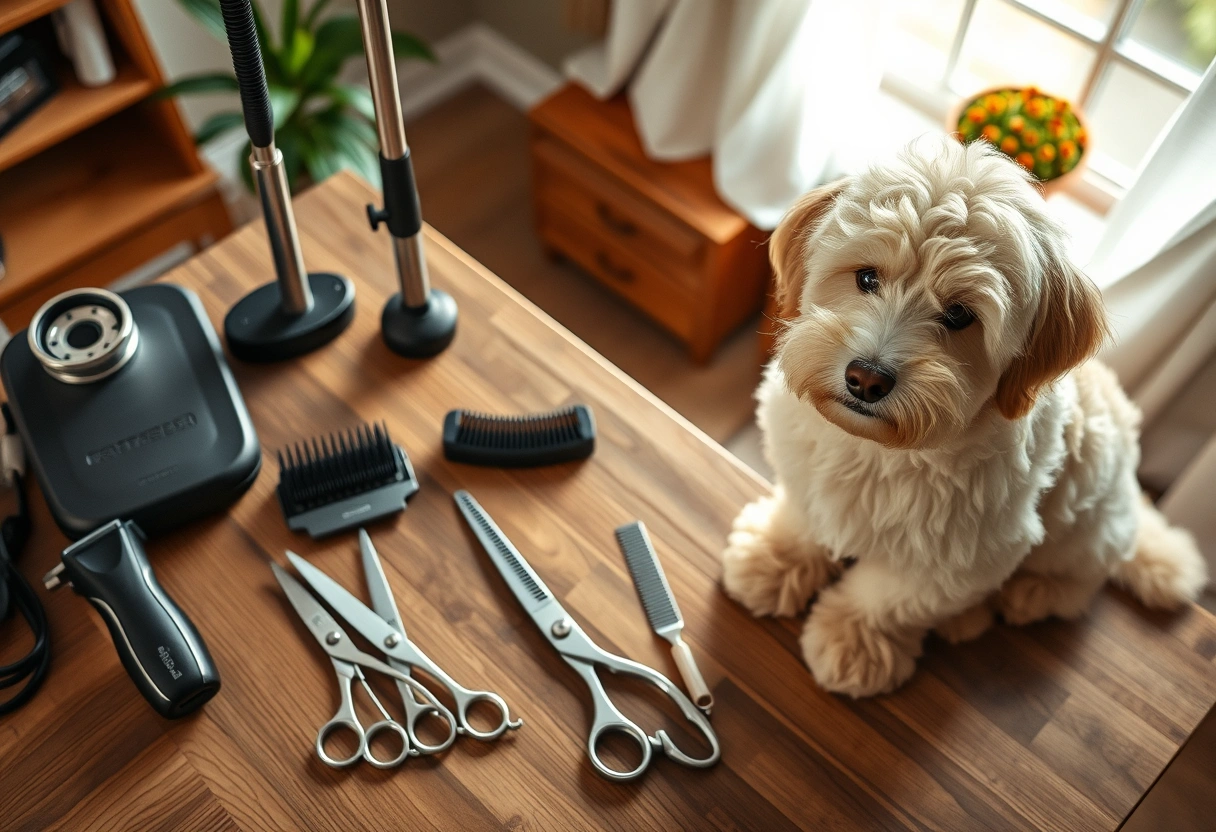
Mini goldendoodle clippers are the single biggest factor between a smooth home grooming session and a matted, uneven mess that sends you running to a professional groomer. If you’ve ever tried to push a cheap clipper through a wavy or curly F1B coat and watched it snag, stall, or leave patchy tracks, you already know that not all clippers are built for doodle fur. This guide walks through exactly what to buy, why your dog’s coat texture matters more than you’d think, and how to build a grooming routine that keeps your pup mat-free between salon visits.
Why Mini Goldendoodle Coats Need Specific Clipper Blade Types
Mini Goldendoodles don’t have one universal coat. Depending on the generation, you might be dealing with a wavy fleece coat, a tight curly coat, or something closer to a straight-haired throwback. The Goldendoodle Association of North America classifies coat types into these general categories, and each one behaves differently under a blade. Wavy F1B coats tend to have dense undercoat mixed with looser topcoat, which means they mat fast at the base if brushed only on the surface. Curly coats, closer to a Poodle’s texture, need blades that can glide through tight coils without pulling.
This is why generic human hair clippers or basic pet trimmers from a big box store often disappoint doodle owners. Standard mini goldendoodle clippers need enough torque to move through thick, damp-feeling fur without bogging down, and blades sharp enough to cut cleanly rather than tug. A dull or underpowered blade doesn’t just frustrate you mid-groom, it can actually cause discomfort for your dog, since repeated tugging on curly fur is uncomfortable at the skin level. Choosing the right mini goldendoodle clippers from the start saves you both a lot of grief.
Coat texture, not coat length, is what determines how a clipper performs. A groomer once told me the biggest mistake doodle owners make is buying a clipper built for short-haired breeds and expecting it to handle a curly coat the same way. It just won’t.
Top Clipper Picks: Cordless vs Corded Motors
The cordless versus corded debate comes up constantly in doodle owner groups, and honestly, there’s no universally right answer. It depends on your dog’s tolerance for grooming sessions and how much coat you’re working through in one sitting.
Corded clippers generally deliver consistent power throughout a long session since they’re not relying on a battery that can dip in performance as it drains. Many professional-grade clippers, including well-known Andis and Wahl models, run somewhere in the 5,000 to 7,000 strokes per minute range according to Andis technical specifications, which is what allows them to cut through dense doodle fur without bogging down or overheating. If your Mini Goldendoodle has a full-body groom ahead of it, a corded option with steady RPM performance tends to hold up better than a budget cordless unit that slows down halfway through.
That said, cordless clippers offer freedom of movement that makes trimming around paws, ears, and the face far less stressful for a wiggly dog. If you’re mostly doing touch-ups and face trims between full grooms, a cordless model is usually the more practical everyday tool. The Laube Dirty Dog Cordless 2-Speed Pet Grooming Clippers is a solid example of this style, giving you two speed settings so you can slow things down for sensitive areas and speed up for thicker body fur, all without a cord getting in your way mid-groom.

- COMFORTABLE CONTROL: The Dirty Dog by Laube clippers are ergonomically designed for grooming professionals, veterinarian…
- UNMATCHED CLIPPER PERFORMANCE: Experience the Laube difference with the Dirty Dog’s all-new power, torque, and speed at …
- CORDLESS CONVENIENCE: Embrace the freedom of cordless grooming! Its lithium-ion battery TWIST N LOCK powerpack provides …
On the corded side, the Hansprou Dog Clippers for Grooming, 12V Professional set is worth a look if you want steady, uninterrupted power for longer sessions. It’s a budget-friendly pick compared to salon-grade professional units, but it still gives you enough consistent motor performance to work through a full body trim without stalling out on thicker patches of coat.

- 12V High -Speed Strong Power Motor: Hansprou professional dog grooming clippers have strong power, no hair sticking, plu…
- High Quality Titanium Alloy Blade + Ceramic Moving Blade: provide excellent cutting performance.Detachable blades are ea…
- Low Vibration + Ultra Quiet Design:The noise when dog trimming working is only about 50 db, Hansprou dog clippers to hel…
If you want a broader rundown of full grooming setups rather than just clippers, our guide on the best at-home grooming kits for Doodles breaks down bundled options that pair clippers with combs and shears in one purchase.

Comparing the Top Dog Grooming Clippers for Doodle Coats
Here’s a quick side-by-side look at how these tools stack up when it comes to power type, ideal use case, and general investment level.
| Product | Power Type | Best For | Price Tier |
|---|---|---|---|
| Hansprou Dog Clippers for Grooming, 12V Professional | Corded, 12V motor | Full-body trims, thick or matted coats | $$ |
| Laube Dirty Dog Cordless 2-Speed Pet Grooming Clippers | Cordless, 2-speed | Face, paw, and touch-up trims | $$$ |
| PAWCHIE Dog Grooming Hammock Harness | N/A (restraint tool) | Keeping wiggly dogs still during grooming | $$ |
Essential Grooming Toolkit Beyond the Clippers
Clippers do the heavy lifting, but they’re not the whole job. A proper doodle grooming toolkit needs a few supporting tools to actually prevent mats rather than just cutting through the ones that already formed.
- Slicker brush: The workhorse for daily maintenance. Fine, closely-spaced pins pull out loose undercoat and break up early tangles before they become full mats.
- Undercoat rake: Designed to reach past the topcoat and pull loose fur from the dense layer underneath, which is exactly where Mini Goldendoodle mats tend to start.
- Thinning shears: Useful for blending clipper lines, softening the look around the face, and thinning out thick spots without taking off length.
- Comb attachments: Doodle fur is dense enough that standard attachment guards sized for short-haired breeds often clog quickly. Look for wider-spaced, doodle-specific guard combs that won’t bog down the blade.
If mats have already set in and brushing alone isn’t cutting it, it’s worth checking our roundup of the best deshedding tools for Doodles for options built specifically for detangling matted coats before you reach for the clippers at all.
Step-by-Step Home Grooming Routine to Prevent Matting
Consistency matters more than intensity here. The American Kennel Club recommends brushing doodle coats three to four times weekly to prevent pelting, which is the term for when loose fur and undercoat compact into a dense mat close to the skin. Skipping even a few days can let a small tangle turn into something that needs to be cut out entirely.
A realistic weekly routine looks something like this:

- Brush thoroughly with a slicker brush before every bath, working in sections from the skin outward, not just over the top layer of fur.
- Follow with an undercoat rake around the legs, chest, and rear, where mats form fastest.
- Bathe with a conditioning shampoo formulated for curly or wavy coats to keep fur manageable and reduce static that leads to tangling.
- Dry completely with a blow dryer on a cool or low setting while brushing simultaneously. Air-drying alone often causes curly fur to mat as it dries unevenly.
- Use your mini goldendoodle clippers for a light body trim every four to six weeks, and reserve full clipper sessions for when the coat starts looking noticeably shaggy or uneven.
Keeping your dog still and comfortable during clipper work is half the challenge, especially with younger or wigglier Mini Goldendoodles. A tool like the PAWCHIE Dog Grooming Hammock Harness for Dogs & Cats can make a real difference here, gently supporting your dog’s weight so they’re less likely to squirm or shift mid-trim, which also reduces your risk of an accidental nick.
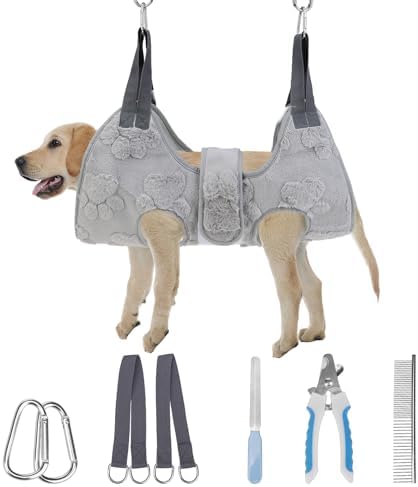
- PROFESSIONAL DOG GROOMING KIT: Dog nail trimming sling hammock is equipped with solid, thicker and super strong carabine…
- POWERFUL FUNCTIONS: This dog nail clipping hammock can be used on both sides. One side is made of crystal velvet and the…
- SAFE DOG HAMMOCK FOR NAIL TRIM: Just place pet legs in holes, then connect the D-ring strap to the dog grooming hammock …
Common At-Home Clipping Mistakes and How to Fix Them
Even with the right mini goldendoodle clippers in hand, technique still trips up a lot of first-time home groomers. A few mistakes show up again and again.
Clipper burn happens when a blade runs too hot or is pressed against the same patch of skin for too long, usually in tight areas like the armpits or groin. Keep the clipper moving, take breaks to let the blade cool, and use blade coolant spray if you’re doing a longer session. If you notice redness or your dog flinching, stop immediately and let the skin settle before continuing.
Uneven face trims are probably the most common complaint among doodle owners doing their own grooming. The fix is patience: work in small sections, use thinning shears rather than clippers around the eyes and muzzle for more control, and always trim with the grain of hair growth rather than against it. Rushing a face trim is how most uneven results happen.
Using the wrong guard length is another frequent error. Doodle coat is deceptively dense, so a guard that looks like it should leave an inch of fur can end up shaving closer than expected once you press through thick undercoat. Test on a small, less visible patch first, like the back leg, before committing to a full-body pass with new mini goldendoodle clippers.
Skipping the pre-clip brush-out is a mistake that causes a domino effect of problems. Clipping over a matted or tangled coat pulls on the skin, dulls blades faster, and produces a patchy, uneven finish. Always brush thoroughly before turning on the clippers, no exceptions.
Frequently Asked Questions
What size clipper blade is best for a Mini Goldendoodle’s coat?
Most home groomers do well with a #4 or #7 blade for body work, which leaves a manageable length without shaving too close. A #10 or #15 blade works better for sanitary areas and paw pads where a closer trim is needed. Always test your mini goldendoodle clippers on a small patch first since blade numbers can cut differently depending on coat density.
How often should I use clippers versus scissors on my doodle?
Clippers are best for a full body trim roughly every four to six weeks, while scissors or thinning shears are better suited for touch-ups between full grooms, especially around the face and paws. Relying only on clippers can make the coat look flat and lose the natural texture doodle owners tend to want.
Can I use human hair clippers on my Mini Goldendoodle?
It’s not recommended. Human hair clippers aren’t built to handle the density and texture of doodle fur, and they tend to overheat or dull quickly when pushed through thick undercoat. Dedicated mini goldendoodle clippers are designed with stronger motors and blades suited for pet fur, which makes the whole process safer and faster.
How do I keep my dog calm during at-home clipper sessions?
Start with short sessions and plenty of treats so your dog builds a positive association with the sound and feel of clippers. A grooming hammock or harness can also help by gently supporting their body weight, which reduces squirming. Never force a session if your dog seems overly stressed; take a break and try again later.