


Nooking toys for dogs give pups a safe, soft outlet for that gentle sucking and nuzzling habit many Doodles pick up as puppies, and the right pick can turn an anxious chewing session into a calm, self-soothing ritual. If you’ve caught your Goldendoodle or Labradoodle quietly suckling on a blanket corner or a stuffed toy’s ear at bedtime, you’re not imagining it. This is a real, documented behavior, and it’s far more common in Doodle breeds than most owners realize.
Why Some Dogs Develop a Sucking or Nooking Habit
Nooking (sometimes called “nursing” or “suckling” behavior) shows up most often in puppies who were weaned early or separated from their littermates too soon. The behavior mimics nursing, and it tends to show a comfort-seeking root rather than a hunger-driven one. Veterinary behaviorists affiliated with the ASPCA have noted that self-soothing habits like nooking, licking, or chewing a specific object often develop as coping mechanisms during stressful transitions, like a move, a new family member, or simply being left alone for the first time.
Doodles, with their sensitive, people-oriented temperaments, seem especially prone to this. Goldendoodles and Bernedoodles in particular tend to form strong attachments to one specific object (a stuffed donkey, a particular blanket corner) and return to it nightly. That’s not a bad thing on its own. Nooking toys for dogs give that instinct somewhere safe to go instead of a sock, a pillow corner, or your sleeve.
What Makes a Safe Nooking Toy
Not every plush toy on the shelf is built for repeated, prolonged suckling. A good nooking toy needs to check a few boxes before it ends up in your dog’s crate or bed:

- Non-toxic materials. Food-grade silicone or untreated fleece are the safest bets, since these toys get mouthed for extended stretches, not just chewed briefly.
- No small or detachable parts. Button eyes, squeakers that pop loose, or plastic bits can become choking hazards once a determined Doodle gets persistent.
- Reinforced stitching. Doodle jaws, even gentle ones, apply steady pressure over time. Double-stitched seams hold up far longer than single-pass seams.
- Washability. A toy that gets sucked on nightly needs to go through the wash regularly to stay sanitary.
- Appropriate size. Too small and it’s a swallowing risk; too large and your dog may lose interest or struggle to hold it comfortably.
If your dog is still a puppy and working through this stage, it also helps to understand the broader picture of puppy development and temperament. Our guide on choosing between a boy or girl Goldendoodle puppy covers some of the early personality differences that can influence how intensely a pup self-soothes.
Top 7 Nooking Toy Picks for 2026
We compared texture, durability, and overall value across a range of nooking toys for dogs currently on the market. Below is a side-by-side look at how each option stacks up for Doodles specifically, since their coat type and jaw strength can affect which toys hold up best.
| Toy Type | Material | Best For | Durability | Price Tier |
|---|---|---|---|---|
| Silicone Lick Mat (Pumpkin Butter style) | Food-grade silicone | Mealtime soothing, anxious eaters | High | $$ |
| Plush Mop-Style Squeaky Toy | Fleece rope + plush body | Nighttime nuzzling, tug comfort | Moderate | $$ |
| Squishy Fleece Comfort Toy (2 Pack) | Soft plush fleece | Crate time, travel soothing | Moderate | $$ |
| Weighted Snuggle Pillow Toy | Fleece shell, weighted fill | Separation anxiety, solo sleeping | High | $$$ |
| Textured Silicone Teether | Medical-grade silicone | Teething puppies, light suckling | High | $ |
| Heartbeat Comfort Plush | Fleece with battery insert | New puppies, first nights alone | Moderate | $$$$ |
| Durable Chenille Nook Blanket | Chenille fabric | Corner-suckling habit, blanket chewers | Moderate | $$ |
For dogs who gravitate toward licking as part of their soothing routine rather than pure suckling, a textured lick mat gives them a slower, more deliberate outlet. The Woof Green FlipMat & LickWells Pumpkin Butter Dog Lick Mat works well for this purpose, combining a textured silicone surface with a flavored butter spread that encourages slow, repetitive licking instead of frantic suckling on bedding or clothing.

- Dual-Sided Design: This double-sided slow feeder and lick mat is the ultimate dog enrichment toy—providing two times the…
- Slow-Feeding Enrichment Mat for Dogs: Since licking helps dogs naturally self-soothe, each side provides a different cha…
- Powerful Suction for Stable Use Anywhere: Four push-button suction cups on each side keep the FlipMat in place on smooth…
For the classic nighttime nuzzler, a soft plush toy with a rope component gives dogs something to both mouth and tug gently. The Grey Donkey Mop Squeaky Dog Toy with Rope has a floppy, fleece-like texture that many Doodles treat almost like a surrogate littermate, tucking it under a paw before settling in for the night. It’s budget-friendly enough to replace once it shows wear, which matters for a toy that gets this much nightly use.
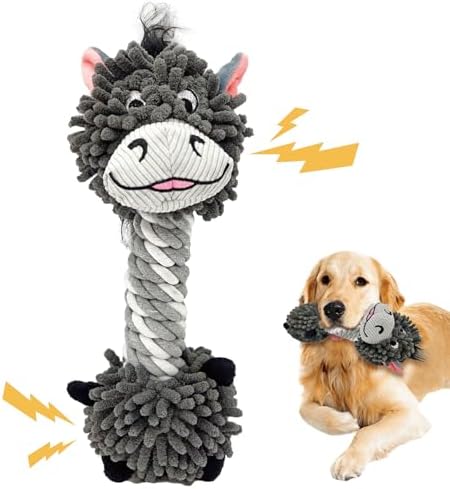
- 🐕Safe&Quality Material:This adorable donkey plush squeaky dog toy for chewers,choose soft comfortable mop plush,more tea…
- 🐕Rope Neck Design:Our QPAWS designed farm animal series dog squeak toys have 4 styles:grey donkey,brown donkey,black and…
- 🐕3-in-1 Multi-Functional Dog Toy:Donkey stuffed animal+squeaky dog toy+rope dog toy,head and body each built-in a squeak…
Smaller, squishier toys can work well for crate training or car rides, where a dog needs something compact to nuzzle without a lot of bulk. The ORB Sugar Swaps Fat Cat Squishy Toy 2 Pack gives you a backup toy automatically, which is a practical detail when a favorite nooking toy inevitably needs a wash cycle. Having a near-identical replacement on hand keeps the routine consistent for dogs who get attached to a specific texture.

- Every ORB Curiosities Sugar Swaps Squishy Fat Cats 2 Pack will include 2 Individual Squishy Fat Cat Toys – 1 Blue Fat Ca…
- ORB Curiosities Sparklee Sugar Swaps are made with extra-strength Thermoplastic Rubber (TPR) that makes them super soft …
- Squish, Squeeze, Smush, and Stretch! Sparklee Sugar Swaps proprietary sugar-water special filling makes for a unique tac…
How to Introduce a Self-Soothing Dog Toy the Right Way
Handing your dog a brand-new nooking toy and walking away rarely works. Dogs form attachments to objects gradually, and the introduction process matters almost as much as the toy itself.
- Start during calm moments. Offer the toy when your dog is already relaxed, not mid-panic during a thunderstorm or right as you’re leaving the house.
- Pair it with praise. Use a calm, happy tone and a small treat the first few times your dog interacts with it, so the toy itself becomes associated with good feelings.
- Keep it accessible, but special. Store the toy somewhere your dog can reach it independently, like a designated spot in the crate or bed, rather than rotating it with every other toy in the bin.
- Avoid forcing contact. If your dog ignores it at first, let them investigate on their own time. Some dogs take a few days to settle into a new comfort object.
- Watch for redirection success. If your dog shifts from suckling on blankets or clothing to the designated toy within a week or two, the introduction is working.
This kind of gradual, reward-based approach lines up with standard positive reinforcement training principles, which also apply well beyond soothing habits. If your Doodle’s self-soothing behavior seems tied to broader anxiety, it’s worth reading about the full cost of ownership, including behavioral support, in our Goldendoodle cost per month ownership guide, which breaks down what training and enrichment tools typically run.

Nooking isn’t a sign your dog is broken or spoiled. It’s a self-regulating behavior, and in most cases, giving it a safe, designated outlet is more effective (and far less stressful for everyone) than trying to eliminate it entirely.
When Nooking Crosses Into Compulsive Behavior
Occasional suckling on a favorite toy before naptime is normal. But there’s a line between a comforting habit and a compulsive one, and it’s worth knowing where that line sits. The ASPCA notes that excessive self-soothing behaviors can sometimes point to underlying anxiety that needs more than a toy to resolve. A 2021 study published in Applied Animal Behaviour Science similarly found that repetitive self-directed behaviors in dogs, when they escalate in frequency or intensity, often correlate with heightened stress markers rather than simple habit.
Signs that nooking has moved beyond normal self-soothing include:
- The behavior happens almost constantly, even during play or outdoor time
- Your dog becomes distressed or aggressive if the toy or object is removed
- Suckling is accompanied by other stress signals like excessive panting, pacing, or loss of appetite
- The habit has shifted toward self-directed licking or chewing on their own body (paws, flank, tail)
- Nothing seems to interrupt or redirect the behavior, even with high-value treats
If any of these sound familiar, it’s time to loop in your veterinarian or a certified applied animal behaviorist rather than relying on nooking toys for dogs alone. Chronic skin irritation from ear issues can also sometimes get mistaken for anxiety-driven licking, so it’s worth ruling out physical causes first. Our breakdown of at-home ear infection care kits for Goldendoodles can help you figure out whether discomfort is driving some of the self-directed licking behavior you’re seeing.
Most Doodles who nook are perfectly content, well-adjusted dogs who’ve simply found a comforting ritual. The goal isn’t to eliminate the behavior but to make sure it’s channeled toward something safe, washable, and durable enough to handle nightly use. With the right self-soothing dog toy on hand, you can support that instinct instead of fighting it, while keeping an eye out for the handful of warning signs that suggest a vet visit is in order.
Frequently Asked Questions
What exactly is “nooking” in dogs?
Nooking refers to a dog gently sucking or suckling on a soft object, like a blanket corner, stuffed toy, or even a person’s sleeve, as a self-soothing behavior. It often resembles nursing motions and is thought to be linked to early weaning or general comfort-seeking, particularly in sensitive, people-oriented breeds like Doodles.
Are nooking toys for dogs safe for puppies?
Yes, as long as the toy is made from non-toxic materials, has no small detachable parts, and is sized appropriately for your puppy’s mouth. Soft fleece and food-grade silicone options are generally considered the safest choices for repeated, prolonged suckling.
Will giving my dog a nooking toy make the habit worse?
Generally, no. Redirecting the behavior toward a designated, safe object tends to reduce destructive habits like chewing furniture or clothing. The goal is to give the self-soothing instinct an appropriate outlet rather than suppress it entirely.
When should I worry about my dog’s suckling behavior?
If the behavior becomes constant, is paired with signs of distress, or shifts toward self-directed licking or chewing on your dog’s own body, it’s time to consult a veterinarian or certified animal behaviorist. These signs can indicate underlying anxiety that a toy alone won’t resolve.


