

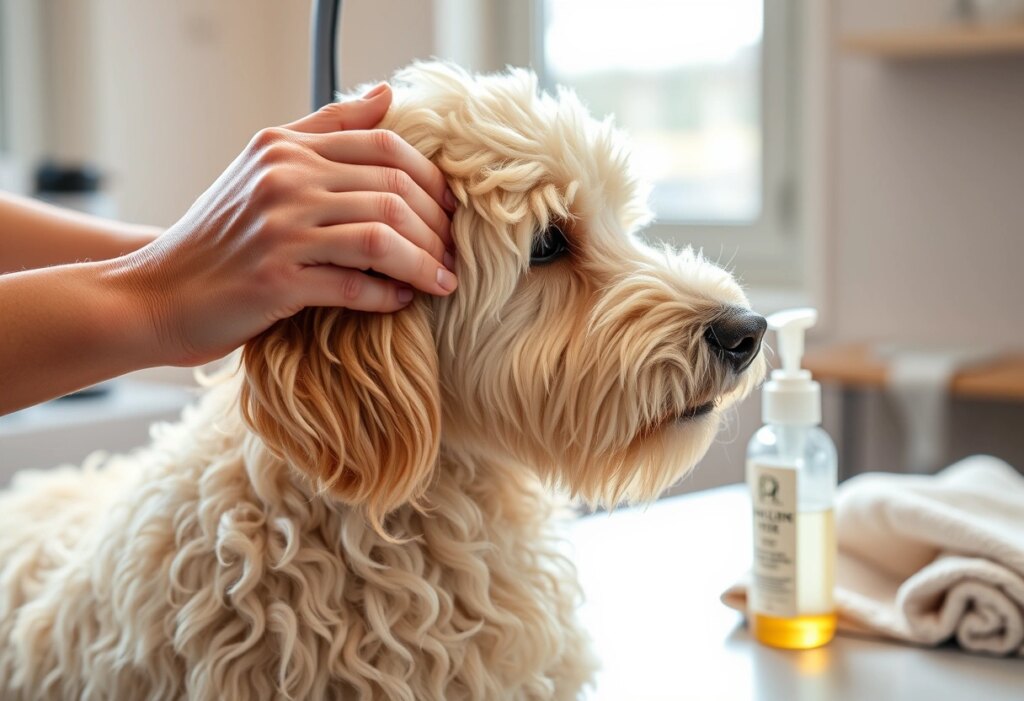
If your Goldendoodle keeps getting ear infections no matter what you try, you’re not imagining it and you’re not doing something wrong. The honest answer to how to prevent ear infections in Goldendoodles comes down to three things done consistently: keeping ear hair trimmed short, drying ears thoroughly after water exposure, and cleaning with the right products on a predictable schedule. It sounds simple because it is, but “simple” and “easy to stay consistent with” aren’t always the same thing.
Goldendoodle ears are basically built to trap trouble. Those floppy, hair-covered flaps look adorable, but they block airflow and hold onto moisture like a damp towel folded over a warm surface. According to VCA Animal Hospitals, breeds with hairy, pendulous ears face a notably higher risk of otitis externa, which is the medical term for the outer ear inflammation most doodle owners eventually deal with. The good news is that once you understand why the ear canal turns into a breeding ground, the prevention routine actually makes a lot of sense.
Early Warning Signs Every Doodle Parent Should Watch For
Catching a problem early is often the difference between a five-minute cleaning session and a two-week course of vet-prescribed medication. Make it a habit to check your dog’s ears once a week, even when everything seems fine. You’re looking for changes, not just obvious distress.
- Head shaking or tilting that happens more than once or twice a day
- A yeasty or sour odor coming from the ear canal (healthy ears shouldn’t smell strong)
- Redness or swelling visible on the inner ear flap or canal opening
- Excessive scratching at the ears or rubbing the side of the face against furniture
- Dark, waxy, or crusty discharge that wasn’t there the week before
- Sensitivity to touch around the ear base when you’re grooming or petting
If you notice any of these, it’s worth checking whether what you’re seeing is normal buildup or something more serious. This guide to Goldendoodle ear infection versus normal wax breaks down the visual differences so you’re not guessing in the moment.
The Step-by-Step Routine That Actually Prevents Ear Infections in Goldendoodles
Consistency beats intensity here. A short routine done every week will always outperform an intense cleaning session done once a month. Here’s the sequence groomers and vets tend to recommend for doodle coats.
1. Trim or Pluck Ear Hair Weekly
Hair growing inside the ear canal traps wax, dirt, and moisture. Many groomers pluck this hair with fingers or forceps, while others prefer trimming it with small, blunt-tipped scissors or clippers designed for sensitive areas. Whichever method you choose, do it gently and stop immediately if your dog shows pain, since aggressive plucking can cause irritation that mimics an infection.

2. Apply a pH-Balanced Ear Cleanser After Baths or Swims
Water that gets trapped in the canal after a bath, lake swim, or even a rainy walk is one of the biggest triggers for infection. A dog-specific, pH-balanced cleanser breaks down wax and evaporates moisture far better than plain water or human products, which can actually disrupt the ear’s natural bacterial balance.
3. Dry Thoroughly, Every Single Time
After cleansing, gently massage the base of the ear for about 20 to 30 seconds, then let your dog shake their head (this is normal and helps loosen debris). Follow up with a soft, cotton-free wipe or a clean microfiber cloth to pat the outer canal dry. Never insert anything deep into the ear canal.
4. Stick to a Vet-Recommended Cleaning Frequency
Research referenced by the AKC Canine Health Foundation suggests that routine ear cleaning significantly reduces recurrence in dogs prone to chronic otitis. For most Goldendoodles, that means a full cleaning every one to two weeks, with a quick visual check weekly in between. Overcleaning can be just as harmful as undercleaning, so resist the urge to do it daily unless your vet specifically advises it.
If you want to keep a closer eye on what’s happening deeper in the canal, tools like the Otoscope Ear Camera with 1.21” Screen let you actually see inside the ear canal on a small screen instead of guessing based on smell or head shaking alone. It’s a nice middle ground between a routine home check and an unnecessary vet visit.
Ear infections rarely show up overnight. They build slowly, through trapped moisture, overlooked hair growth, and a few skipped cleaning sessions, until suddenly your dog is in real discomfort. The routine that prevents ear infections in Goldendoodles isn’t complicated, but it does need to be a habit, not an afterthought.
Grooming Tools Compared: What Actually Works
Walk into any pet store and you’ll find a wall of ear care products, all claiming to be essential. Some genuinely help. Others are outdated or, worse, risky. Here’s an honest breakdown of the most common tools used in a dog ear cleaning routine.
| Tool | Best For | Pros | Cons | Price Tier |
|---|---|---|---|---|
| Ear Powder | Drying before plucking | Improves grip on hair, reduces slipping during plucking | Doesn’t clean debris, can cause buildup if overused | $ |
| Plucking Forceps | Removing canal hair | Precise, reusable, good for regular groomers | Requires practice, can irritate skin if used roughly | $$ |
| Cotton-Free Cleansing Wipes | Quick outer-ear wipe-downs | Gentle, disposable, safe for beginners, no risk of pushing debris deeper | Not enough for deep wax buildup | $$ |
| pH-Balanced Liquid Cleanser | Full weekly cleaning routine | Breaks down wax, dries moisture, vet-recommended for most doodles | Needs a gentle massage technique to work well | $$ |
| Medicated Otic Solutions | Active infections (vet-prescribed only) | Targets bacteria or fungus directly, fast relief for diagnosed cases | Not for routine prevention, requires a diagnosis first | $$$$ |
A safety note that’s worth repeating: never use cotton swabs inside the ear canal. They tend to push wax and debris deeper rather than removing it, and they can injure the delicate ear canal lining if your dog moves suddenly. Stick to cotton-free wipes for the outer ear and liquid cleansers for anything deeper.
When Home Care Isn’t Enough
Sometimes even a solid prevention routine isn’t enough to stop an infection that’s already taken hold, especially in doodles with allergies or naturally narrow ear canals. If your vet diagnoses a bacterial infection, they may prescribe something like Ciprofloxacin (PF) 0.2% Otic Solution to clear it up.
There is an issue displaying Amazon products. Please contact the administrator to check that.For cases involving inflammation alongside infection, vets sometimes turn to combination treatments such as Neomycin-Polymyxin B-Hydrocortisone Otic Solution, which addresses both the bacterial and inflammatory sides of the problem. Neither of these should be used without a vet’s diagnosis and guidance, since using the wrong medication on the wrong type of infection (bacterial versus yeast) can actually make things worse.
There is an issue displaying Amazon products. Please contact the administrator to check that.How Skin and Coat Issues Tie Back to Ear Health
Ear problems rarely show up in isolation. Doodles who deal with skin allergies or chronic itchiness often struggle with recurring ear inflammation too, since both involve the same overactive immune response. If your dog has been licking their paws or body excessively, it’s worth reading about Goldendoodle excessive licking causes and fixes, since the underlying trigger (often food sensitivities or environmental allergens) can be the same thing fueling ear flare-ups.

It’s also worth mentioning that grooming costs, including ear care tools and routine vet checks, are part of the bigger picture of doodle ownership. If you’re comparing overall costs between popular crosses, this breakdown of Mini Goldendoodle price versus Mini Labradoodle gives a realistic sense of what ongoing care, grooming included, tends to run.
Building the Habit That Actually Prevents Ear Infections in Goldendoodles
None of this works as a one-time fix. The dogs who avoid chronic ear infections are usually the ones whose owners treat ear checks like brushing teeth: quick, routine, and non-negotiable. A weekly glance, a monthly hair trim, and a cleanse after every swim add up to a level of prevention that medication alone can’t match.
Set a reminder on your phone if you need to. Keep the cleanser and wipes in the same spot every time so it’s never a hassle to grab them. Small, repeated actions are what actually protect your dog’s ears long term, not a single deep clean every few months.
A Reassuring, Safety-First Takeaway
Every doodle parent worries about missing something, and that worry is actually a good sign. It means you’re paying attention. The goal isn’t to be perfect. It’s to notice changes early, stay consistent with the basics, and call your vet the moment something feels off rather than waiting to see if it resolves on its own.
Learning how to prevent ear infections in Goldendoodles isn’t about buying every product on the shelf. It’s about a handful of simple habits, done regularly, that keep the ear canal dry, clean, and well-ventilated. Do that consistently, and you’ll likely spend a lot less time at the vet dealing with painful, recurring infections.
How often should I clean my Goldendoodle’s ears to prevent infections?
Most Goldendoodles do well with a full ear cleaning every one to two weeks, along with a quick visual check weekly. Dogs who swim often or have known allergies may need slightly more frequent attention, but daily cleaning is usually unnecessary and can irritate the ear canal.
Is it safe to pluck ear hair myself, or should I leave it to a groomer?
Plucking a small amount of hair at home is generally safe if done gently and only when hair pulls out easily without resistance. If your dog shows pain, or if the hair growth is dense and tangled with wax, it’s safer to let a professional groomer handle it to avoid injuring the ear canal.
Can I use human ear cleaning products on my Goldendoodle?
No. Human ear products are formulated for a different pH balance and can disrupt the natural bacterial environment in a dog’s ear canal, potentially triggering the very infections you’re trying to prevent. Always use a dog-specific, pH-balanced cleanser.
What’s the difference between normal ear wax and an infection in Goldendoodles?
Normal wax is typically light tan or yellowish with little to no odor. Signs of infection include dark discharge, a strong yeasty or sour smell, redness, swelling, and visible discomfort when the ear is touched. If you’re unsure, a vet check is the safest way to tell the difference.


