

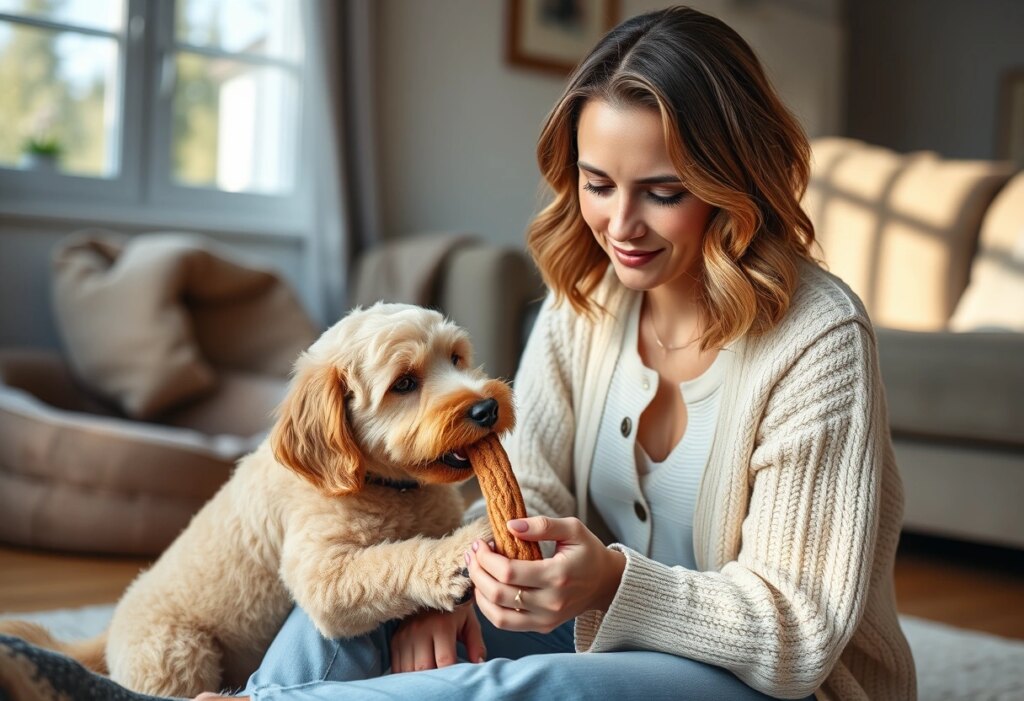
Puppy biting is one of the most common complaints I hear from new Doodle parents, and the good news is that it’s almost always a normal, fixable part of growing up rather than a sign something is wrong with your pup. Whether you’ve got a Goldendoodle shredding your sleeve or a Labradoodle latching onto your shoelaces, the mouthy phase can feel endless. But there’s a real difference between tools that teach your puppy how to control that bite and simply hoping the behavior fades on its own. Let’s look at what actually works, backed by behavior science, and how to apply it to your own living room.
Why Doodle Puppies Bite: Teething and Instinct Working Together
Most puppy mouthing starts for one of two reasons, and in Doodles, both are usually happening at once. The first is teething, which typically runs from about 3 to 6 months of age as adult teeth push through sore gums. The second is instinct. Poodles were bred as retrievers, and many Doodle mixes carry sporting or herding genetics from the other parent breed, whether that’s a Golden Retriever, Labrador, or Bernese Mountain Dog. That lineage means your puppy has a genuine biological drive to grab, carry, and mouth objects, including hands, pant legs, and the occasional toddler sock. This isn’t defiance. It’s a developmental stage layered on top of inherited behavior, and understanding that distinction changes how you respond to it.
Bernedoodles and Labradoodles in particular tend to be a bit more mouth-oriented early on because retrievers naturally use their mouths to explore the world. If you’ve noticed your puppy biting harder during specific windows, like right before a nap or during high-energy play, that’s typically the teething discomfort or overstimulation talking, not aggression.
The Science Behind Bite Inhibition Training
Bite inhibition is the learned skill of a dog controlling the force of its mouth, and the research backing it up is fairly compelling. A 2021 study published in Applied Animal Behaviour Science found that puppies who developed bite inhibition through structured play with littermates and humans showed significantly fewer reports of adult-onset aggression later in life. In other words, the mouthy puppy phase isn’t just something to survive. It’s actually a critical training window. Puppies who never get appropriate feedback about how hard is too hard often grow into adult dogs with a weaker understanding of their own bite force, which matters a great deal if that dog is ever startled, in pain, or scared.
This is why trainers and behaviorists increasingly treat the biting phase as an opportunity rather than a problem to be waited out. According to the American Kennel Club, consistent and gentle feedback during this stage sets the foundation for a dog that mouths softly, if at all, as an adult. Skipping this stage, or handling it inconsistently, is one of the more common reasons families end up calling a trainer later for a dog that still nips during excitement or handling.

Comparing Bite Inhibition Tools vs the Ignore Method
There isn’t one single right answer here, and honestly, most successful puppy biting plans use a combination of approaches rather than relying on just one. Below is a comparison of the most common tools and methods pet parents reach for, including the ASPCA’s recommended withdrawal-of-attention technique.
| Tool / Method | Best For | Effort Level | Price Tier |
|---|---|---|---|
| Frozen Chew Toys | Teething relief, redirecting hard bites | Low | $$ |
| Bitter Anti-Chew Sprays | Protecting furniture, hands, cords | Low | $ |
| Clicker-Based Redirection | Teaching soft mouth, long-term behavior change | Medium to High | $$ |
| Ignore and Withdraw Attention (ASPCA Method) | Play biting, attention-seeking nips | Medium (requires consistency) | $ |
| Soft Training Muzzle (Supervised Use) | Grooming, vet visits, high-intensity biting episodes | Medium | $$ |
Frozen chew toys work well because cold temperatures numb sore gums, giving your puppy a legitimate outlet instead of your fingers. A squeaky plush toy like the PetPhindU Pet Dog Squeaky Plush Toy gives your puppy something satisfying to grab and shake, which helps burn off that retriever instinct in a safe direction rather than onto your sleeve.

- Safe Material: This plush toy for dog fetch, watermelon plush is made of safe cotton and polyester, watermelon dog toy i…
- It Is Funny and Interactive: The design of watermelon-shaped plush toy is exaggerated and different from most of the rea…
- Behavior Training: Your pet dog is bored when you are not home. The dog may do something strange and bad to please herse…
The ASPCA’s ignore method, on the other hand, teaches a different lesson. Instead of pulling your hand away quickly (which actually mimics prey movement and can escalate the game), you go limp, make a short “ouch” sound, and remove your attention entirely by standing up and turning away for 10 to 20 seconds. Repeated consistently, your puppy learns that biting ends the fun, not continues it. This method requires patience and household-wide consistency, but it’s budget-friendly since it costs nothing but repetition.
Puppy biting isn’t a behavior problem to punish out of your dog. It’s a communication skill your puppy hasn’t learned yet, and your job is to teach it, not suppress it.
Step-by-Step Bite Inhibition Training Protocol for Doodles
Here’s the training sequence I recommend to most Goldendoodle, Labradoodle, and Bernedoodle families, adjusted slightly depending on your pup’s energy level and age.
- Step 1: Identify the trigger. Watch for whether biting happens during play, during handling (brushing, nail trims), or when your puppy is overtired. Each trigger needs a slightly different response.
- Step 2: Redirect immediately. The moment teeth touch skin, calmly swap in a chew toy. Timing matters more than intensity here. Quick, neutral redirection teaches faster than scolding.
- Step 3: Use the yelp-and-withdraw technique. Make a short, sharp “ow” sound, then disengage for a few seconds. This mimics how littermates teach each other bite pressure.
- Step 4: Reinforce the win. The instant your puppy chooses the toy over your hand, praise warmly or offer a small treat. Positive reinforcement cements the new habit far faster than punishment ever will.
- Step 5: Manage overtiredness. A huge percentage of “sudden” biting spikes happen when puppies are overstimulated and need a nap, not more training. Crate time or a quiet chew session often resolves this instantly.
- Step 6: Practice handling exercises. Gently touch paws, ears, and mouth daily, rewarding calm acceptance. This reduces biting during grooming and vet visits later on.
If grooming time tends to trigger extra mouthiness, it also helps to know how to tell if a groomer is gentle with your dog, since a rushed or rough groomer can undo weeks of handling progress in a single session.

For families dealing with a particularly intense teething phase, having a rotating stock of appropriate chew options makes a real difference. If your puppy is in the thick of the 3 to 6 month teething window, this list of chew toys for puppy teething pairs well with the redirection steps above.
When Bite Inhibition Training Tools Aren’t Enough
Sometimes stop puppy biting efforts need extra structure, especially with high-drive Doodles that pick up bad habits quickly if nipping gets rehearsed too many times before training starts. A step-by-step resource like A Beginners Guide to Train a Puppy in Just 7 Days can give new pet parents a structured daily plan to follow rather than guessing at timing and consistency, which is often where training breaks down.

Also worth stocking up on: a well-chosen set of chew toys genuinely built for teething strength rather than generic toys that fall apart in a week. If your current rotation isn’t holding up, this guide to 7 best chew toys to stop aggressive puppy biting breaks down durable options by jaw strength and age.
For situations involving grooming, nail trims, or vet exams where a puppy’s mouthing becomes genuinely difficult to manage safely, a soft, breathable option like the DoggieKit Dog Muzzle, Soft Printed Mesh Puppy Muzzle can provide temporary, supervised safety without discomfort. This should always be a short-term management tool paired with training, never a substitute for addressing the root cause.

- Breathable & Lightweight Material: This printed dog muzzle combines soft, breathable mesh with lightweight yet durable c…
- Upgraded Escape-Proof Neck Design: This puppy muzzle features our upgraded escape-proof elastic neck collar, which comfo…
- Adjustable Snout & Head Strap: This dog mussel enables a securely customized fit for your pup through dual-point snout a…
When to Worry: Normal Mouthing vs a Behavior Red Flag
Most puppy biting is developmentally normal, but there are a few signs that point toward something beyond typical teething or play. If your puppy stiffens, growls low, and bites hard around food, toys, or a resting spot, that’s resource guarding, not play. If biting happens alongside a tucked tail, flattened ears, or an attempt to flee first, that points toward fear-based biting rather than exploratory mouthing. Both situations benefit far more from a certified professional dog trainer or veterinary behaviorist than from DIY tools, since the underlying emotional driver is different from simple teething or instinct.
A good general rule: if your bite inhibition training efforts aren’t showing any improvement after two to three consistent weeks, or if the biting is increasing in intensity rather than decreasing, that’s the signal to bring in outside help rather than pushing harder on your own.
Frequently Asked Questions About Puppy Biting
At what age does puppy biting usually stop?
Most Doodle puppies significantly reduce mouthing between 6 and 8 months, once adult teeth are fully in and consistent bite inhibition training has had time to take hold. Some high-energy pups take closer to a year to fully settle, especially if play biting was accidentally reinforced early on.
Is it bad to let my puppy bite during play?
Soft, controlled puppy mouthing during play isn’t harmful on its own, but it needs clear limits. Allowing unlimited biting without any feedback can delay bite inhibition and make the habit harder to unwind later, so redirecting to a toy consistently is a better long-term strategy.
Does the ignore method actually work for puppy biting?
Yes, when applied consistently by everyone in the household. The ASPCA-recommended approach of withdrawing attention teaches puppies that biting ends playtime rather than continuing it, but it only works if every family member responds the same way every time.
Should I use a muzzle to stop puppy biting at home?
A soft muzzle should only be used short-term and under direct supervision, typically during grooming or vet handling rather than as a general daily fix for puppy biting. It manages the moment but doesn’t teach bite inhibition, so pair it with ongoing training rather than relying on it alone.


