

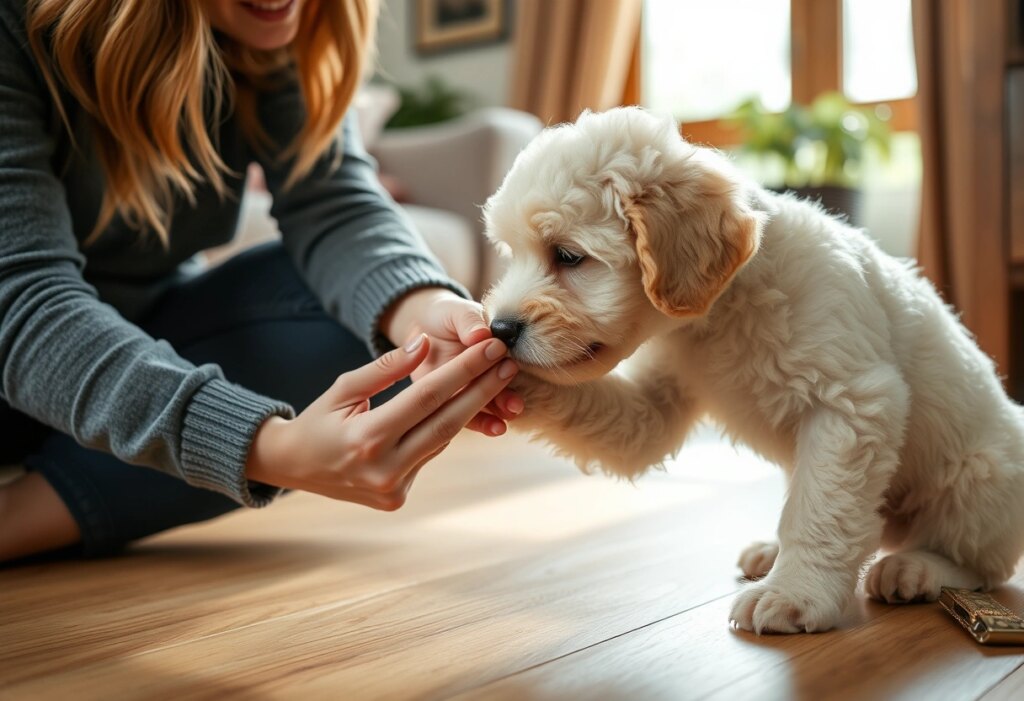
Puppy biting hands is one of the most common complaints I hear from new Doodle parents, and it usually shows up alongside a second, less-talked-about issue: nipping at ankles and feet. These two behaviors look similar on the surface, but they come from different places in your puppy’s brain and body, which means they need different fixes. If you’ve been using the same correction for both and getting nowhere, that’s probably why.
I’ve worked with dozens of Goldendoodle, Labradoodle, and Bernedoodle families over the years, and the pattern is almost always the same. Hand-biting tends to spike during teething and play, while foot-nipping often traces back to herding instincts buried somewhere in the mixed lineage. Treating them as one problem just leads to frustration on both ends of the leash.
Why Doodle Puppies Target Hands vs. Feet Differently
Mouthing and biting aren’t random. They’re tied directly to developmental stages, and understanding the “why” makes the “how to fix it” much easier. According to the American Veterinary Society of Animal Behavior, mouthing behavior in puppies typically peaks between three and six months of age, right as adult teeth are pushing through the gums. That discomfort drives puppies to chew on anything within reach, and hands are often the closest, warmest, most interactive target available.
Foot and ankle nipping is a different animal entirely. Many Doodle mixes carry herding genetics from the Poodle side or from whatever breed was crossed in (Border Collie-Doodles and Aussiedoodles are notorious for this). That instinct to nip at moving heels is hardwired, not a teething symptom. So while hand-biting usually fades with age and proper redirection, foot-nipping can persist longer because it’s rooted in instinct rather than discomfort.
Recognizing which behavior you’re dealing with, and sometimes it’s both, changes your whole approach. A puppy gnawing on your fingers during a cuddle session needs a chew toy swap. A puppy lunging at your ankles as you walk across the kitchen needs a completely different strategy involving movement and impulse control.
Redirecting Puppy Biting Hands With Deterrents and the Right Toys
When it comes to actual puppy biting hands, the goal isn’t punishment, it’s redirection. Yelling or swatting a puppy’s nose tends to backfire, either scaring them or turning the whole interaction into an exciting game. What works better is a two-part system: make hands less appealing and make toys more appealing.
Bitter-tasting sprays applied to hands (or to furniture and cords, for that matter) give puppies an unpleasant taste association without any fear or pain involved. Pair that with immediately offering a chew toy the moment your puppy goes for your fingers. Consistency matters here more than intensity. Every single time those teeth land on skin, calmly remove your hand and replace it with something appropriate to chew.

This is also where having the right toy rotation on hand makes a real difference. If your puppy is going through a rough teething phase, checking out 7 Best Puppy Chew Toys to Stop Biting in 2026 can help you build a lineup that actually holds their interest instead of getting ignored after day two.
For puppies who mouth excessively during grooming, vet visits, or nail trims (situations where hands are right near the face), a properly fitted muzzle can be a useful temporary management tool while you work on the underlying behavior. The DoggieKit Dog Muzzle, Soft Printed Mesh Puppy is soft mesh, so it’s far gentler than the harsh plastic basket styles, and it lets your puppy pant and drink normally while preventing accidental nips during stressful moments.

- Breathable & Lightweight Material: This printed dog muzzle combines soft, breathable mesh with lightweight yet durable c…
- Upgraded Escape-Proof Neck Design: This puppy muzzle features our upgraded escape-proof elastic neck collar, which comfo…
- Adjustable Snout & Head Strap: This dog mussel enables a securely customized fit for your pup through dual-point snout a…
I want to be clear that a muzzle is not a training solution on its own. It’s a management tool for specific short windows, not something to rely on daily. The real fix for puppy biting hands is repetition: redirect, reward calm behavior, and give the mouth something better to do.
Managing Feet and Ankle Nipping in Herding-Lineage Doodle Mixes
Puppy nipping feet requires a different playbook because you’re working against instinct, not just a teething itch. The behavior usually shows up when family members walk past quickly, when kids run through the house, or during walks when the puppy gets excited by movement at ground level.
Structured leash walks help enormously here. Instead of letting your puppy wander and lunge freely, practice short, controlled sessions where you reward calm walking at your side. The moment your puppy’s attention shifts toward your feet, stop moving. Standing still removes the “chase” reward the behavior is seeking. Once your puppy settles, resume walking and praise generously.
Teaching a solid “settle” cue is arguably the single most useful tool for feet-nipping puppies. Practice it in low-distraction environments first: ask for a down, reward calm stillness, and gradually extend the duration before releasing your puppy to move again. Over time, this teaches your puppy that calm behavior, not chasing feet, earns the good stuff.
If you’re working with a high-energy mix and want a more organized approach to building these foundational skills, Best Training Kits for High-IQ Goldendoodles covers structured programs designed for exactly this kind of smart, easily bored puppy.
For puppies recovering from any minor procedure or dealing with skin irritation around the neck that might make them extra fidgety or nippy during handling, an inflatable recovery collar like the EMUST Raised Dog Collars for After Surgery, Inflatable is far more comfortable than the old plastic cone style, which can actually increase frustration-based nipping in some dogs.
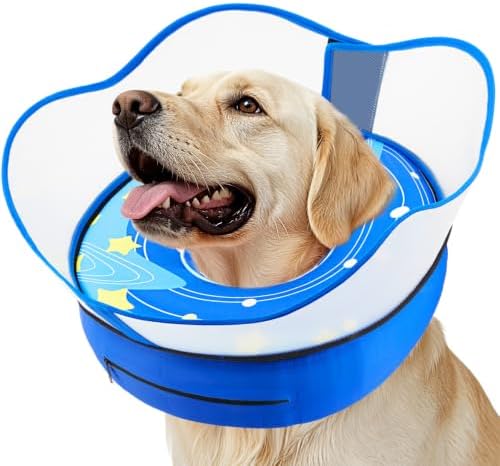
- 【Inflatable Donut + Clear Shield Combo】Our dog donut collar combines a soft inflatable collar with a detachable transpar…
- 【Ultra-Soft Inflatable Design】Made of skin-friendly water resistant fabric and durable inflatable PVC, this e-collar is …
- 【Detachable Shield & Easy to Clean】The transparent protective shield is fully detachable via secure fasteners, making it…
What the Research Says About Reward-Based Training
A 2020 study published in Applied Animal Behaviour Science found that dogs trained using reward-based methods showed significantly fewer problem behaviors, including biting and nipping, compared to dogs trained with aversive techniques. Reward-based training was also linked to a better overall relationship between dogs and their owners.
This lines up with what I see in real households. Punishing puppy biting hands or feet often creates a puppy who becomes hand-shy or unpredictable, sometimes escalating the very behavior you’re trying to stop. Reward-based redirection takes more patience upfront, but it builds a puppy who trusts you, which pays off for the entire life of the dog, not just during the puppy phase.

For more general background on canine developmental behavior and bite inhibition, the ASPCA offers solid, science-backed guidance that pairs well with the strategies above.
Comparing Tools for Hand-Biting vs. Feet-Nipping
Since puppy biting hands and puppy nipping feet call for different gear, here’s a quick side-by-side to help you figure out what belongs in your training toolkit.
| Product | Best For | Key Feature | Price Tier |
|---|---|---|---|
| DoggieKit Soft Mesh Puppy Muzzle | Hand-biting during grooming or vet visits | Breathable mesh, gentle fit, allows panting | $$ |
| EMUST Inflatable Recovery Collar | Nipping linked to post-surgery discomfort | Soft inflatable design, more comfortable than cone-style collars | $$ |
| Back Expandable Pet Backpack Carrier | Removing puppies from overstimulating environments | Expandable, ventilated, good for calming car or outdoor outings | $$$ |
None of these products replace actual training, but they support the process. A muzzle manages risk during specific moments, a recovery collar keeps a healing puppy from fixating on an irritated area, and a carrier gives you a quick way to remove an overstimulated puppy from a chaotic environment before biting escalates.
When Persistent Biting Signals Overstimulation or Needs a Professional Trainer
Some puppies, especially high-energy Bernedoodles and Labradoodles, bite harder and more frequently when they’re overtired or overstimulated rather than simply teething or herding. Watch for signs like biting that intensifies rather than fades during a play session, biting paired with growling or stiff body language, or biting that happens even when your puppy seems calm otherwise.
If you’re consistently applying redirection and reward-based methods for several weeks with no improvement, or if the biting seems to be getting more intense rather than less, that’s the point to bring in a certified professional trainer. This is especially true for large, strong Doodle mixes where an adult dog with unresolved biting habits becomes a genuinely difficult management problem down the road.
There’s no shame in asking for help here. Bernedoodles in particular can be sensitive and easily overwhelmed, and a trainer who specializes in positive reinforcement can spot triggers you might be missing at home. Early intervention is always easier than trying to retrain an adult dog’s habits.
Puppy biting hands and puppy nipping feet both respond well to patience, consistency, and the right tools for the specific behavior in front of you. Stay observant, adjust your approach as your puppy grows out of the teething window, and don’t hesitate to loop in a professional if things aren’t improving on their own timeline.
Frequently Asked Questions
At what age does puppy biting hands usually stop?
Most puppies significantly reduce hand-biting between six and eight months as their adult teeth finish coming in and teething discomfort fades. Consistent redirection during the three to six month peak speeds this timeline up considerably.
Why does my Doodle puppy nip at feet more than hands?
Puppy nipping feet is often linked to herding instincts present in many Doodle mixes, particularly those with Border Collie, Australian Shepherd, or working-line ancestry. This behavior is instinct-driven rather than teething-driven, so it may take longer to fully resolve.
Is it normal for puppy bite inhibition training to take several months?
Yes. Puppy bite inhibition typically develops gradually through consistent, reward-based redirection rather than a single training session. Most families see noticeable improvement within four to eight weeks of consistent practice.
Should I use punishment to stop puppy biting?
No. Research, including the 2020 study in Applied Animal Behaviour Science, shows reward-based methods are more effective at reducing biting than aversive or punishment-based techniques, and they support a stronger overall bond with your dog.


