

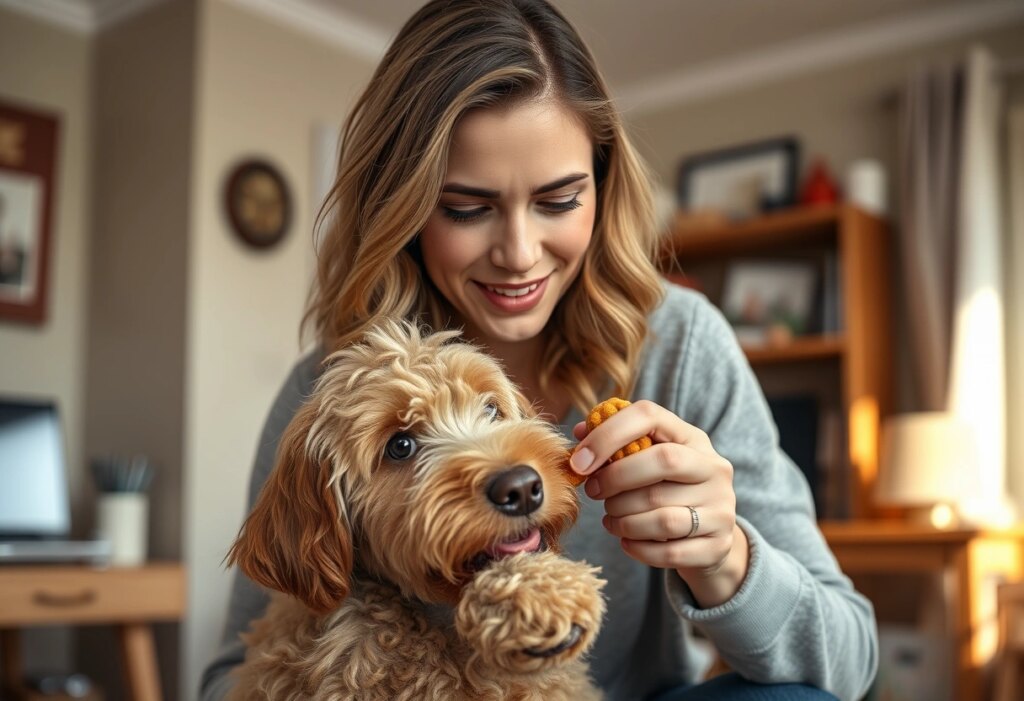
Puppy biting tools can make the difference between a frustrating few months and a genuinely enjoyable puppyhood with your Doodle, especially when those needle-sharp teeth find your fingers, toes, and sleeves on a loop. If you’re reading this with a sock in one hand and a wriggly, mouthy Goldendoodle or Labradoodle pup at your feet, you’re in the right spot. Doodle puppies are smart, high-energy, and oral by nature, which means biting isn’t bad behavior so much as it’s a developmental stage that needs the right tools and the right technique to get through.
I’ve worked with enough Doodle litters and client puppies to know that the families who succeed fastest aren’t the ones yelling “no” the loudest. They’re the ones who show up with a plan: the right chew item in the right hand at the right moment. That’s what this guide is for. We’ll go through the tools that actually work, how to introduce them without confusing your puppy, and the signs that tell you it’s time to call in a professional.
Why Doodle Puppies Bite Hands and Feet in the First Place
Before you can fix the biting, it helps to understand what’s driving it. Puppies explore the world through their mouths the same way toddlers explore with their hands. For Doodle breeds specifically, that oral curiosity gets amplified by high intelligence and a strong play drive inherited from their Poodle and sporting-breed ancestry. Add teething into the mix and you’ve got a puppy who is biologically wired to chew on anything within reach, including you.
According to the American Veterinary Medical Association, puppy teething typically peaks between 3 and 6 months of age, which lines up almost exactly with when most Doodle owners start noticing the sharpest, most persistent biting. Baby teeth are pushing through tender gums, and gnawing provides relief. This is also the window where bite inhibition, the skill of learning how to control jaw pressure, gets built. Puppies who never learn this lesson as youngsters are more likely to bite harder as adults when startled or overstimulated.
Hands and feet get targeted specifically because they move. Puppies are drawn to motion, sound, and texture, and a wiggling toe under a blanket or a hand reaching down to pet them reads as an invitation to play-bite. The good news is that this is a trainable phase, not a permanent personality trait, as long as you’re consistent about what you redirect them toward.
Top-Rated Puppy Biting Tools: Chew Toys, Bitter Sprays, and Training Aids Compared
Not every chew toy or spray on the market is built for a Doodle’s jaw strength or texture preference. I’ve narrowed this down to the categories and products that consistently work across coat types and sizes, from mini Poodle mixes to standard Bernedoodles. The goal with any of these puppy biting tools is to give your puppy something more satisfying to chew than you.

Squeaky plush toys are a great entry point for redirection because the sound mimics prey and instantly shifts focus away from your hand. The PetPhindU Pet Dog Squeaky Plush Toy in the triangle watermelon shape is soft enough for a teething mouth but durable enough to survive repeated tug sessions, and the squeak gives you a built-in attention-grabber the moment your puppy starts mouthing your fingers.

- Safe Material: This plush toy for dog fetch, watermelon plush is made of safe cotton and polyester, watermelon dog toy i…
- It Is Funny and Interactive: The design of watermelon-shaped plush toy is exaggerated and different from most of the rea…
- Behavior Training: Your pet dog is bored when you are not home. The dog may do something strange and bad to please herse…
Beyond toys, there’s a wider category of puppy chew toys, bitter-tasting deterrent sprays, and physical management tools that each serve a different purpose depending on your puppy’s stage and the severity of the biting. Here’s how the main options stack up:
| Tool | Best For | Key Feature | Price Tier |
|---|---|---|---|
| Squeaky Plush Toy | Redirecting mouthy play | Sound lure, soft on gums | $ |
| Bitter Anti-Chew Spray | Protecting furniture, hands, cords | Taste deterrent, non-toxic | $$ |
| Rubber Teething Chews | Heavy teething phase (3-6 months) | Textured, freezer-safe | $$ |
| Breathable Mesh Muzzle (short-term use) | Vet visits, grooming, scavenging control | Allows panting and drinking | $$ |
| Treat-Dispensing Puzzle Toy | Redirecting energy and focus | Mental stimulation | $$$ |
| Tug Rope Toy | Structured bite-inhibition games | Durable, interactive | $ |
| Professional Behaviorist Session | Persistent or aggressive biting | Customized training plan | $$$$ |
A quick note on bitter sprays, since they come up constantly in Doodle owner groups: they work best as a management layer, not a training replacement. If you’re weighing which approach actually changes behavior long-term, our breakdown of bitter spray versus chew toys for stopping puppy biting digs into which method sticks once the novelty wears off.
Introducing Bite Inhibition Training Tools Using Positive Reinforcement
The ASPCA’s training guidelines are clear on this point: reward-based methods reduce biting incidents more reliably than punishment-based corrections, because they teach the puppy what to do instead of just scaring them away from what not to do. Yelping, hand-swatting, or scruffing might stop a bite in the moment, but it often increases anxiety and can actually make mouthing worse over time, especially in sensitive Doodle temperaments.
Puppies don’t bite because they’re being bad. They bite because nobody has shown them yet what’s okay to put in their mouth and what isn’t. Your job isn’t to punish the instinct, it’s to redirect it, consistently, until the new habit sticks.
Here’s how to actually introduce bite inhibition training tools without confusing your puppy:
- Keep a toy within arm’s reach at all times during play sessions so you can redirect the instant teeth touch skin.
- Praise calmly the moment the toy goes in their mouth instead of your hand. Timing matters more than enthusiasm here.
- Avoid pulling your hand away quickly when bitten, since fast movement often triggers more biting, not less. Freeze, then redirect.
- Use the same verbal cue every time, like “toy” or “chew,” so the puppy builds a predictable association.
- End play sessions calmly if biting escalates rather than continuing to engage, which teaches your puppy that gentle play keeps the fun going.
Consistency across every family member matters just as much as the tool itself. If one person tolerates hand-biting during rough play and another redirects every time, your puppy gets mixed signals and the learning curve stretches out much longer than it needs to.

Step-by-Step Redirection Technique for Stopping Puppy Nipping
This is the exact sequence I walk Doodle families through, and it works whether you’ve got a bouncy mini or a boisterous standard-sized pup.
- Notice the warning signs. Most puppies give a tell before they bite: stiffening, a play-bow, or fixating on your hand with wide eyes.
- Offer the chew toy before contact happens, not after. Catching the behavior early is far more effective than reacting to it.
- Say your cue word as you present the toy, pairing the verbal signal with the physical redirection every single time.
- Praise immediately once your puppy’s mouth connects with the toy instead of your skin, using a calm, warm tone rather than high-pitched excitement that can rev them back up.
- Reinforce with a short play session on the toy itself, letting them “win” a gentle tug to satisfy the bite urge in an appropriate way.
- Repeat without frustration. Expect dozens of repetitions daily during peak teething weeks. This is normal, not a sign that the method is failing.
If your puppy also tends to scavenge, grab socks, or mouth at ankles during walks, a short-term management tool can help while the training catches up. The Colenumone Dog Muzzle for Scavenging uses a breathable mesh design that still allows panting and drinking, making it a reasonable short-term option for walks or vet visits where mouthing becomes a safety concern rather than a daily training device.

- Fully Enclosed Design to Stop Scavenging: Unlike open-style muzzles, this dog mouth guard features a fully enclosed mesh…
- Breathable 3D Mesh & Soft Comfort: Crafted from premium air-mesh fabric, this soft muzzle ensures maximum ventilation an…
- Humane Support – Drink & Pant: The spatial structure is professionally designed to allow your dog enough room to pant na…
Muzzles like this should always be introduced gradually and paired with treats so your puppy associates it with something positive, never as a punishment tool. For puppies who need brief, supervised mouth management during grooming or nail trims, a similarly breathable option is the Dog Muzzle with Breathable Mesh Design, which comes in sizing for small, medium, and large breeds, a helpful detail given how much Doodle sizes vary between mini and standard lines.

- 【Comfortable & Breathable】: Crafted from soft, breathable mesh fabric, this dog muzzle is lightweight and durable, ensur…
- 【Adjustable & Stable Fit】: Upgraded escape-proof neck design. Both the neck strap and the forehead strap with a sliding …
- 【Multi-scenario Safe Use】: The soft dog muzzle is a secure and comfortable temporary solution for your pet when your pup…
When Puppy Biting Signals a Deeper Behavioral Issue
Most mouthing resolves with consistent redirection and age, usually tapering off significantly by 6 to 8 months as adult teeth settle in. But there are signs that point to something beyond normal teething, and recognizing them early saves a lot of stress.
Watch for biting that comes with growling and stiff body language rather than loose, playful movement. Pay attention if your puppy bites harder when corrected rather than backing off, or if biting is directed at specific triggers like being touched near the paws, ears, or tail. Resource guarding combined with biting, where your puppy snaps when you approach food or toys, is another signal worth addressing sooner rather than later.
If any of these patterns show up, or if the biting hasn’t improved after weeks of consistent redirection using the puppy biting tools above, it’s worth bringing in a certified professional. Our guide on choosing the right behaviorist for dog bite rehabilitation walks through what credentials to look for and what the first sessions typically involve. There’s no shame in getting outside help. Doodle temperaments are sensitive, and a skilled behaviorist can spot subtle stress signals that are easy to miss when you’re the one on the receiving end of the bites every day.
For broader background on canine development stages and bite inhibition research, the American Kennel Club offers additional detail on how biting evolves from the litter environment into the home setting.
Frequently Asked Questions
What are the most effective puppy biting tools for a Doodle puppy?
The most effective puppy biting tools combine a satisfying chew object with a consistent redirection routine. Squeaky plush toys, rubber teething chews, and tug ropes tend to work best for Doodles because they provide both texture relief for sore gums and an outlet for their strong play drive. Bitter sprays and short-term muzzles can support the process but work best alongside, not instead of, hands-on training.
At what age do Doodle puppies usually stop biting hands and feet?
Most puppies show significant improvement by 6 to 8 months as adult teeth finish coming in, though individual timelines vary. Teething tends to peak between 3 and 6 months, which is when biting is usually at its most intense. Consistent use of puppy biting tools and redirection techniques during this window typically shortens the overall timeline.
Should I use a muzzle to stop my puppy from biting?
A breathable mesh muzzle can be a reasonable short-term management tool for specific situations like vet visits, grooming, or walks where scavenging or mouthing poses a safety risk. It should never replace actual bite inhibition training and should always be introduced gradually with positive reinforcement so your puppy doesn’t associate it with fear or punishment.
Is it normal for Doodle puppies to bite harder than other breeds?
Doodle puppies often seem mouthier than average because of their high intelligence and strong play drive inherited from Poodle and sporting-breed lineage, not because they’re naturally more aggressive. With consistent bite inhibition training and the right puppy biting tools, Doodles typically learn gentle mouth manners just as reliably as any other breed.


