

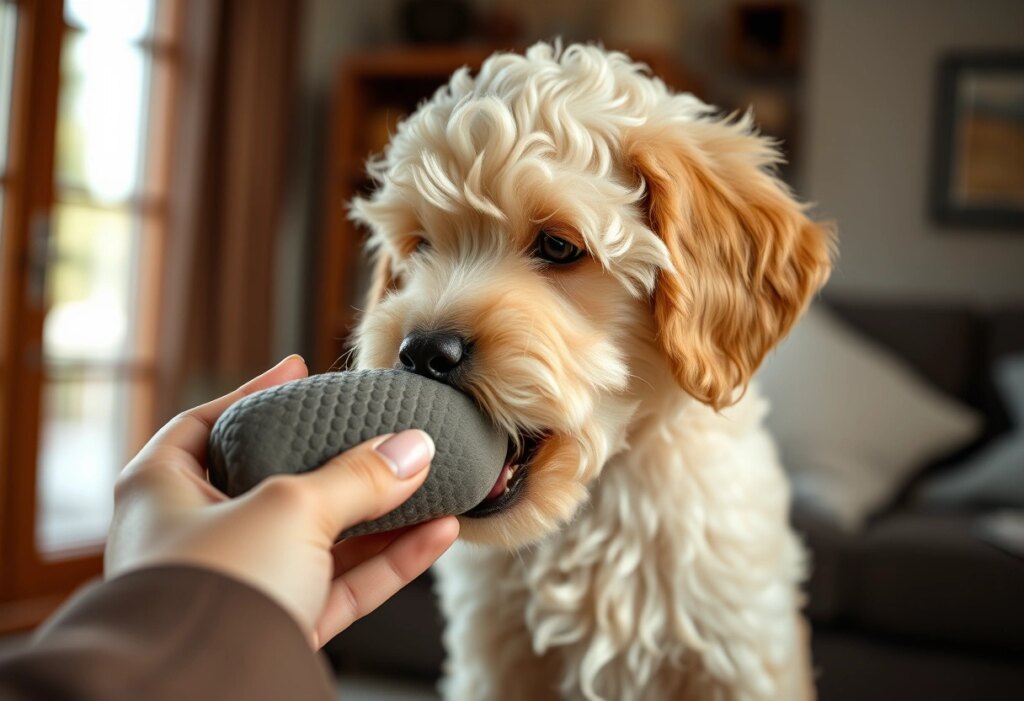
Puppy training tools can make the difference between a frustrating week of bandaged fingers and a calm, confident Doodle who learns to use his mouth gently. If your Goldendoodle or Labradoodle puppy has turned your hands into a chew toy, you’re not imagining the sting, and you’re definitely not alone. That needle-sharp bite feels alarming, but in most cases it’s a normal (if painful) part of puppy development, not true aggression.
So let’s get right to it. The fastest way to stop aggressive-feeling biting is to combine redirection tools, like bitter sprays, snuffle mats, treat-dispensing toys, training clickers, and durable chew toys, with consistent positive reinforcement. Each tool interrupts the biting moment and gives your puppy something better to do with his mouth. Below, we’ll walk through what actually works, what the research says, and how to build a bite-redirection routine that sticks across your whole household.
What Counts as Puppy Training Tools for Biting, and How They Work
When people talk about puppy training tools for biting, they usually mean a mix of taste deterrents, enrichment items, and reward-based gear. None of these work in isolation. They work because they pair an unwanted behavior (teeth on skin) with an immediate, better alternative (teeth on something appropriate).
Bitter sprays applied to hands, furniture, or cords make mouthing unpleasant without pain or fear. Snuffle mats and treat-dispensing toys give your Doodle puppy a job for that busy mouth, which matters because Doodles are smart, food-motivated dogs who bite more when bored or under-stimulated. Training clickers mark the exact instant your puppy chooses a toy over your hand, so the reward lands with precision. And a good rotation of chew toys, textured, durable, sized for a growing jaw, satisfies the physical urge to gnaw that comes with teething.
One often overlooked piece of the kit is simply having treats on hand at the right moment. A hands-free pouch like the Pup Culture Dog Treat Pouch with Poop Bag Dispenser keeps rewards within reach during training walks and backyard sessions, so you can mark and reward the second your puppy redirects to a toy instead of your sleeve.

- FINALLY, A Dog Treat Bag You WANT To Carry – Lets face it, most treat pouches for pet training are boring and industrial…
- REMOVABLE/WASHABLE TREAT BAG- Unlike other dog treat bags, our dog treat holder has a removable treat bag that can be wa…
- NEVER BE CAUGHT WITHOUT A POOP BAG AGAIN – Our discrete poop bag dispenser allows for quicker pick ups and more walking,…
What the Data Actually Says About Puppy Biting
Mouthing and nipping is not a rare quirk. The ASPCA has identified mouthing and biting as among the top behavioral concerns reported by owners of puppies under six months old, right alongside house-training struggles. If your Doodle puppy is biting constantly, he’s acting squarely within normal canine development, not showing a behavioral red flag.

What matters more is how you respond. The American Veterinary Society of Animal Behavior has taken a clear position that reward-based redirection outperforms punishment-based methods for building healthy bite inhibition. Yelping, hand-smacking, or scruffing a puppy doesn’t teach bite control. It teaches fear, and fear can make biting worse, not better. You can read more about positive, science-backed behavior guidance from the ASPCA’s resource on mouthing and biting, which lines up closely with what veterinary behaviorists recommend in clinic.
Puppy biting is a communication problem, not a dominance problem. The fastest fixes come from teaching your Doodle what to do with his mouth instead of just stopping what he’s already doing.
Step-by-Step Bite-Redirection Protocol
Consistency is what actually makes bite inhibition training stick, especially in a multi-person household where a Doodle puppy might get different reactions from everyone. Here’s a simple routine you can start using today.
- Freeze and redirect: The instant teeth touch skin, go still and silent. Dogs often escalate biting when a hand pulls away fast, since it mimics prey movement. Freezing removes the fun, then calmly offer a toy.
- Swap for a chew toy: Always have an appropriate chew toy within reach. Swap it in the moment biting happens, and praise warmly the second your puppy’s teeth land on the toy instead.
- Use a timeout, briefly: If biting continues after redirection, calmly end the interaction for 30 to 60 seconds. Step behind a baby gate or leave the room. No yelling, no drama, just a pause in attention.
- Keep rules consistent across the household: If one person allows rough mouthing during play and another doesn’t, your puppy gets confused signals and the behavior takes longer to fade. Agree on the rules as a family before you start.
- Mark good choices with a clicker: A training clicker paired with a treat helps your puppy understand exactly which behavior earned the reward, speeding up learning compared to praise alone.
Puppies going through the adolescent stretch, typically between five and eighteen months, often backslide on manners they seemed to have mastered as younger pups. If your Doodle is in that phase and biting has crept back in alongside other pushback behaviors, our guide on training tools built for puppy adolescence covers how to handle that regression without losing ground.
Comparing the 5 Best Puppy Training Tools for Biting
Not every tool fits every situation. Some Doodle puppies respond beautifully to a snuffle mat and chew toy rotation, while others, particularly adolescent dogs with more intense biting or leash reactivity layered on top, need a bit more structure during training sessions. Here’s how the top options stack up.
| Tool | Best For | Pros | Cons | Price Tier |
|---|---|---|---|---|
| Bitter anti-chew spray | Furniture, cords, hands | Fast setup, no training skill required | Needs frequent reapplication | $ |
| Snuffle mat | Bored or under-exercised pups | Mentally tiring, slows fast eaters too | Needs regular washing | $$ |
| Treat pouch with dispenser | Hands-free reward timing | Keeps treats accessible on walks and at home | One more item to carry | $$ |
| Durable chew toy rotation | Teething puppies, all breeds | Satisfies natural gnawing urge, long-lasting | Needs size-appropriate replacement as pup grows | $$ |
| Remote training collar (adolescent/advanced cases only) | Older pups with persistent nipping despite redirection | Low-level, no-shock vibration or tone cueing option available | Requires professional guidance, not for young puppies | $$$$ |
When Puppy Training Tools Alone Aren’t Enough
For most puppies, the combination above gets bite inhibition training on track within a few weeks. But some adolescent Doodles, especially those who were under-socialized or who show biting alongside growling, stiff body language, or guarding, need a step up in structure. This is where tools like remote trainers come in, and they should only be introduced with professional guidance, not as a first response to normal puppy mouthing.

For dogs that need remote cueing at a distance, something like the E-Collar Educator FOB 300 Yard Dog Training Collar offers finger-adjustable stimulation levels for precise, low-intensity cueing, which trainers sometimes use for dogs with more entrenched behaviors once basic redirection has been tried.
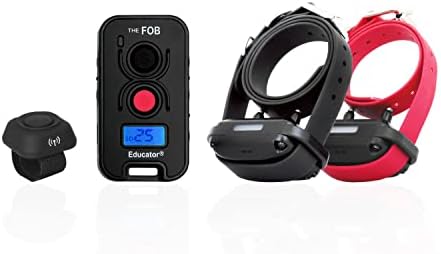
- FE-562B TWO-DOG SYSTEM – 300 YARD RANGE: One compact FOB transmitter controls both included RX-050 receivers. Follow the…
- BLUETOOTH FINGER BUTTON – PAIR BEFORE USE: Included Finger Button connects to the FOB transmitter via Bluetooth for clos…
- PROGRAMMABLE CONTROLS: Programmable S buttons can be configured for Electronic Stimulation with a Pulsing or Tapping Sen…
If you’d rather start with the gentlest possible option in that category, the PaiPaitek No Shock Dog Training Collar with Remote relies on vibration and tone instead of static correction, which some owners prefer as a milder starting point for adolescent dogs. Tools like these are not a shortcut around basic puppy training tools and should never replace the freeze-redirect-reward routine described earlier.

- NO SHOCK. NO PRONGS. NO FEAR — This no shock training collar for dogs stops barking at mailmen, digging roses, chasing s…
- HALF A MILE. ONE REMOTE. TOTAL FREEDOM — Train up to 3300FT — backyard, beach, forest. No more screaming until hoarse or…
- 3 DOGS. 1 REMOTE. 3 CHANNELS. ZERO CHAOS — Save separate vibration & beep levels for each dog — gentle for timid pups, f…
If biting shows up alongside snapping, lunging, or resource guarding rather than simple mouthy play, that’s a different conversation entirely. Our breakdown of training tools for Goldendoodle aggression walks through how to tell the difference and what tools actually help in those tougher cases.
Teething, Anxiety, or Just Not Enough Exercise? Reading the Signals
Before reaching for any gear, it helps to figure out why your puppy is biting in the first place. The right fix depends on the cause.
- Teething (roughly 3 to 6 months): Biting on hard surfaces, drooling, and chewing on furniture legs. Frozen chew toys and extra gnawing outlets help most here.
- Overtiredness or lack of exercise: Sudden, frantic nipping sessions, often in the evening. A longer walk or more structured play usually settles this fast.
- Anxiety or overstimulation: Biting paired with jumpy, hard-to-settle behavior, especially around guests or new environments. This calls for calmer handling, not more stimulation.
- True frustration-based aggression: Stiff body, hard stare, growling before the bite. This is rarer and deserves professional evaluation rather than DIY fixes.
Most biting in puppies under six months falls into the first two categories, and a structured bite inhibition training plan resolves it without much drama. If you’re seeing the fourth pattern, especially with a Doodle older than six months, loop in your veterinarian or a certified veterinary behaviorist before trying any tool on your own. Aggression that includes stiff posture and growling is a different animal, so to speak, from typical puppy mouthing, and it deserves expert eyes.
A Safety-First Takeaway for Doodle Parents
Sharp puppy teeth are startling, but they’re rarely a sign that something has gone wrong with your Doodle. With the right puppy training tools, consistent redirection, and a household that’s on the same page, most biting fades substantially by six to eight months of age. Keep your approach calm, reward-based, and consistent, and give your puppy’s growing body the exercise and chew outlets it genuinely needs.
If biting persists past that window, intensifies, or comes with warning signs like stiffening or growling, don’t wait it out. A quick check-in with your vet or a certified trainer can rule out pain, anxiety, or a deeper behavioral issue, and it’s always the safer call when you’re unsure.
What are the best puppy training tools to stop biting fast?
The most effective puppy training tools combine bitter sprays, snuffle mats, treat-dispensing toys, training clickers, and durable chew toys. These tools work together by making biting unrewarding while giving your puppy a better outlet for his natural urge to chew and mouth.
Is my Doodle puppy’s biting actually aggression?
In most cases, no. Puppy biting under six months is typically teething, play, or overstimulation rather than true aggression. Real aggression usually comes with stiff body language, growling, or guarding, and it warrants a vet or behaviorist consult.
Should I use a training collar to stop puppy biting?
Remote training collars are generally reserved for older, adolescent dogs with persistent nipping that hasn’t responded to redirection, and they should be introduced under professional guidance. For puppies under six months, positive redirection with chew toys and reward-based training is the safer, more effective starting point.
How long does bite inhibition training usually take?
Most puppies show significant improvement within a few weeks of consistent redirection, with biting largely fading by six to eight months old. Consistency across every member of the household speeds up this timeline considerably.


