


A slicker brush handles the daily job of lifting loose undercoat and surface tangles, while a metal comb catches the tight, skin-level mats that hide underneath a Goldendoodle’s wavy or curly topcoat, so the honest answer is that most Goldendoodles need both tools working together, not one instead of the other. If you’ve ever brushed your dog until the coat looked smooth, only to find a walnut-sized mat behind the ear a day later, you already know why this question matters so much for doodle owners specifically.
Goldendoodle coats, especially the F1B types with tighter curls, trap loose hair and moisture in a way that straight-coated breeds simply don’t. That loose undercoat doesn’t fall out on its own. It gets wound into the curl, packed down by friction, and turned into a mat before you even notice. This is why picking the right slicker brush and pairing it with the right comb isn’t just a grooming preference, it’s basically damage control for a coat type that’s working against you from day one.
What a Slicker Brush Does Best
A slicker brush is the workhorse of daily doodle care. Those fine, slightly bent wire pins are designed to reach into the topcoat and pull out loose, dead undercoat before it has a chance to felt together into a mat. Used correctly, with short flicking strokes rather than long hard drags, a slicker brush also does a nice job of separating curls and fluffing the coat so it doesn’t look flat or pancaked after a nap.
This tool shines on light to moderate tangles and general shedding control. The American Kennel Club recommends daily brushing for curly and wavy coat types specifically to prevent matting, and for a Goldendoodle, that’s not an exaggeration. Skip even two or three days and you’re often playing catch-up on tangles that have already started to lock down near the skin.
Where a slicker brush tends to fall short is depth. It works beautifully on the outer layer of hair, but a standard slicker glides right over a mat that’s already tight against the skin instead of breaking it apart. That’s not a flaw in the tool, it’s just not what it was built to do. If you’re still shopping for one, our buyer’s guide to slicker brushes for doodles breaks down pin length, backing style, and handle grip in more detail.

For coat conditioning before you even pick up a brush, some groomers like to use a steam tool to soften the hair and loosen debris first. The Pecait 3-in-1 Steam Brush with Release Button and Tank is one option pet parents use to add light moisture during brushing sessions, which can make a slicker brush glide through a curly coat with noticeably less resistance.
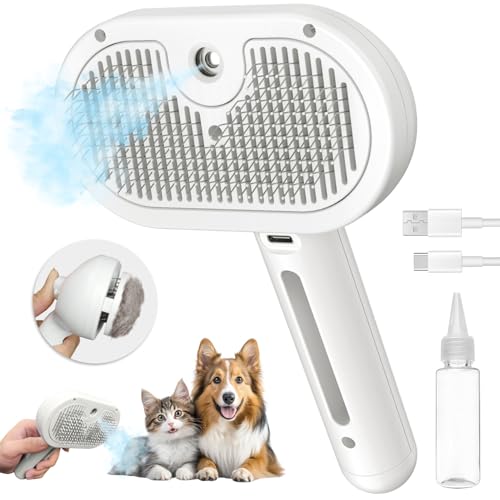
- 【Cat Steam Brush for Shedding – A Gentle Grooming Experience】 Indulge your feline friend in a luxurious grooming session…
- 【Effortless Self-Cleaning Cat Brush for Indoor Cats – No Hassle, No Mess】 Tired of tangled hair clinging to your brush? …
- 【3-in-1 Cat Hair Brush – The Ultimate Grooming Tool】 Meet your all-in-one grooming solution! Our cat steam brush seamles…
What a Metal Comb Does Best
A greyhound-style metal comb is the tool that tells you the truth about your dog’s coat. It has closely spaced metal teeth that can reach all the way down to the skin, which means it catches the mats a slicker brush skims right past. If the comb glides through smoothly from root to tip, the area is genuinely clean. If it snags, stalls, or refuses to pass, you’ve found a hidden mat, usually before it’s visible or has grown big enough to cause skin irritation.
Groomers who work daily with doodle coats treat the comb as a diagnostic tool as much as a grooming one. Standards referenced by the National Dog Groomers Association of America note that combs routinely catch tangles that brushes miss entirely, particularly in dense or curly coat types like Goldendoodles carry. A metal comb for dogs is also gentler on sensitive skin than trying to force a slicker brush through a stubborn knot, since the slower, controlled motion doesn’t drag on the skin the same way repeated brushing can.
This is really where the phrase dematting comb earns its name. A quality metal comb, used section by section, is often the difference between catching a small tangle early and ending up at the groomer for a shave-down because a mat went unnoticed for two weeks. It’s slower than brushing, yes, but it’s the quality control step that a slicker brush alone can’t replace.
Think of the slicker brush as your daily maintenance tool and the metal comb as your inspection tool. One keeps the coat looking good on the surface, the other confirms it’s actually mat-free underneath. Skipping the comb step is how “my dog looked fine yesterday” turns into an emergency trip to the groomer.
Head-to-Head Comparison Table
Here’s how the two tools stack up across the areas that matter most for goldendoodle grooming tools shopping. Keep in mind that roughly 70 percent of matting in doodle coats develops at friction points, like behind the ears, in the armpits, and around the collar area, according to a grooming survey conducted by International Professional Groomers Inc. Both tools have a role to play at those trouble spots, just at different stages of the process.
| Tool | Best Coat Stage | Mat Severity Handled | Finish Quality | Price Tier |
|---|---|---|---|---|
| Slicker Brush | Daily maintenance, light shedding | Light to moderate surface tangles | Fluffy, separated curls | $$ |
| Metal Comb | Post-brush inspection, friction zones | Hidden, skin-level mats | Smooth, confirmed mat-free pass | $ |
| Slicker Brush + Comb Combo Routine | Full-body weekly grooming | Light through moderate, with early detection of severe mats | Even, thorough, salon-quality finish | $$$ |
Notice that neither tool alone covers every stage. A slicker brush handles volume and daily upkeep, while the comb functions almost like a quality check at the end. That’s really the whole argument for using them together rather than picking a favorite and sticking with just one.

The Verdict: Why Most Goldendoodles Need Both Tools
For the vast majority of Goldendoodle coat types, wavy or curly, F1B or otherwise, the combined routine wins. Brush first with the slicker to lift loose hair and knock out light tangles, then follow up with the metal comb section by section to confirm nothing was missed, paying extra attention to the ears, armpits, and collar area where friction mats tend to form first.
A simple weekly schedule that works well for most doodle households looks like this:
- Daily (5 minutes): Quick slicker brush pass over the whole body, focusing on legs and ears
- Every 2-3 days: Full slicker brush session, line by line, against the direction of growth first, then with it
- Weekly: Metal comb inspection pass through friction zones, plus a full-body check after bath day
- After swimming or heavy play: Both tools, since wet or dirty coats mat faster
If you’re building out a full grooming kit, having a stiff-bristle option on hand for finishing touches and distributing natural oils rounds things out nicely. Some pet parents also keep a Histotree Orange Black Horse Brush for Grooming Body Stiff Bristles nearby for a final smoothing pass once the mats are cleared, since a firmer bristle brush can help settle the coat after detangling work.
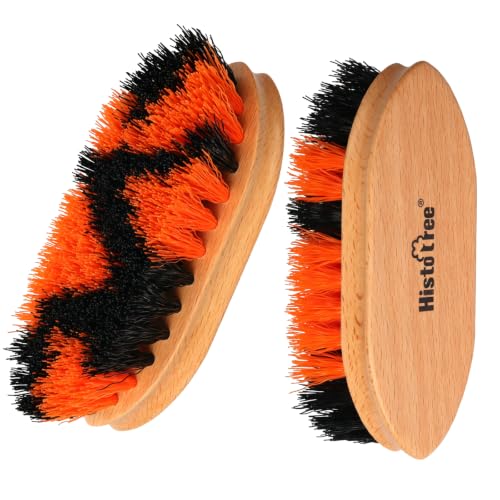
- Dual-Color Crimped Bristles for Deep&Gentle Grooming:Our Histotree horse brush features crimped bristles in contrasting …
- Sturdy&Durable Beech Wood Brush Back:This horse grooming brush is made of beech wood with smooth edges and an ergonomic …
- Multi-Purpose Equine Grooming Tool:This 30mm long crimped bristles horse brush works great for dry brushing to remove su…
For dogs whose coats run especially dense or tend to mat despite daily brushing, trimming the coat shorter can take a lot of pressure off both tools. If regular clipping is part of your routine, our roundup of the best doodle dog clippers for low-shedding coats can help you figure out which clipper setup pairs well with your current brushing schedule. And if you want a second opinion on which specific slicker brush fits a Goldendoodle’s texture, this slicker brush guide built around Goldendoodle hair compares a few of the best picks side by side.
Some pet parents also like having a second, firmer wooden-handled option for dogs with thicker double coats or for use on legs and tail where hair tends to be coarser. The Histotree Black White Stiff Dandy Brush Solid Wood Horse Body Brush works well as that secondary tool for finishing off coarser areas after the main slicker and comb routine is done.
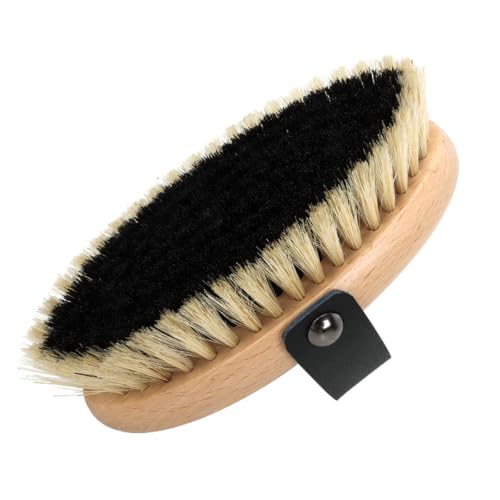
- Dual-Color Dense Bristles for Deep&Gentle Grooming:Our Histotree horse brush features black&white PET bristles to easily…
- Sturdy&Durable Beech Wood Brush Back:This horse grooming brush is made of beech wood with smooth edges and an ergonomic …
- Suitable for all livestock hair:This horse body brush is suitable for removing surface dirt and loose undercoat,leaving …
At the end of the day, choosing between a slicker brush and a metal comb isn’t really the right question. The better question is how to layer them so each one does the job it’s actually good at. Skip the comb step and you’ll eventually miss a mat that turns into a shave-down. Skip the brush and you’re stuck combing through a tangled mess that didn’t need to get that bad in the first place.
Frequently Asked Questions
Can I use just a metal comb and skip the slicker brush entirely?
You technically can, but it will take much longer and be more uncomfortable for your dog. A metal comb alone has to work through loose undercoat that a slicker brush would normally clear out first, so sessions end up longer and there’s more pulling on the skin. Most groomers recommend using the slicker brush for volume removal and saving the comb for the detail work.
How often should I use a dematting comb on my Goldendoodle?
A weekly pass with a dematting comb through the friction zones, ears, armpits, and collar area, is usually enough if you’re already brushing every two to three days with a slicker brush. Dogs with thicker or curlier coats, or those that swim often, may benefit from checking these spots every few days instead.
Will a slicker brush hurt my Goldendoodle’s skin if used too often?
Daily use is fine as long as you’re using light, controlled strokes rather than pressing hard against the skin. Problems usually come from using too much pressure or brushing over a mat instead of working it out gently. If your dog flinches or the skin looks red afterward, ease up on pressure and consider switching to the comb for that spot instead.
What’s the difference between a metal comb for dogs and a regular dematting tool?
A standard metal comb for dogs has smooth, rounded teeth designed to detect and gently work through tangles without cutting hair. Dematting tools, on the other hand, often have small blades or serrated edges built specifically to cut through severe, tightly packed mats. For everyday maintenance and mat detection, a metal comb is usually all you need, saving the blade-style dematting tool for mats that are already too tight to comb out safely.


