


The best slicker brush for goldendoodle coats needs to glide through wavy or curly fur without yanking at the skin underneath, and honestly, most brushes sold in big-box stores fall short of that job. If you’ve ever wrestled with a mat behind your dog’s ear or found a pelted patch near the tail, you already know a flimsy brush just pushes hair around instead of clearing it out. This guide walks through why Goldendoodles mat so easily, how a slicker brush stacks up against rakes and combs, and which five brushes actually earn their keep in 2026.
Why Goldendoodle Coats Mat So Easily
Goldendoodles inherit their coat texture from a genetic tug-of-war between the Poodle’s tight curl and the Golden Retriever’s straighter double coat. Depending on the generation (F1, F1B, or multigen), you get anywhere from a loose wave to a dense curl, and each type traps loose undercoat hair differently. According to the Goldendoodle Association of North America’s coat-type guidelines, the curlier the coat, the more likely shed hair gets caught in the curl pattern instead of falling out naturally, which is exactly how small tangles turn into full mats within days. Add in friction from a harness, moisture from rain or bath time, and you have a near-perfect setup for matting around the ears, armpits, and collar area. This is precisely why a slicker brush for goldendoodle coats has to work differently than a brush made for a Labrador or a short-haired breed.
Slicker Brush vs. Undercoat Rake vs. Comb
These three tools get lumped together, but they solve different problems. A slicker brush uses fine, slightly bent wire pins to catch loose hair and gently work through surface tangles, making it the daily workhorse for a goldendoodle grooming brush routine. An undercoat rake has longer, wider-set teeth designed to reach deep into a thick double coat and pull out dead fur before it mats, which makes it better suited for heavy seasonal shedding than for everyday tangle prevention. A metal comb, meanwhile, is the finishing tool groomers use to check their work, sliding through the coat to confirm no hidden knots remain close to the skin.
A good Metal Comb for Dogs, Dog Grooming Detangler is worth keeping in your kit specifically for this final check. Slicker brushes can mask a mat by smoothing the surface hair over it, but a comb won’t lie to you. If the teeth snag, there’s still work to do.

- EASY DEMATTING & DETANGLING: Our dog grooming comb features extra-long stainless-steel teeth that glide through tough kn…
- EXTRA LONG PINS: Engineered with PINs that are 30% longer, this dematting comb reaches deeper into dense, curly, or long…
- ERGONOMIC HANDLE: Designed with a non-slip, ergonomic handle, this metal dog comb ensures a secure grip and reduces hand…
A slicker brush only prevents matting if it’s reaching the undercoat, not just skimming the top layer. Surface brushing on a curly coat is basically cosmetic, it looks tidy for a day and hides the tangles building up underneath.
Top 5 Slicker Brush Picks for Goldendoodles in 2026
Not every undercoat slicker brush is built the same, and the differences in bristle flexibility, pin length, and handle shape matter a lot more than most owners expect. A brush with pins that are too stiff can cause brush burn on sensitive skin around the belly and legs, while pins that are too short never make it past the topcoat on a dense Goldendoodle. Here’s how the top five contenders compare on the specs that actually affect daily use.

| Brush Type | Bristle Flexibility | Pin Length | Best For | Price Tier |
|---|---|---|---|---|
| Classic Wire Slicker | Firm, minimal flex | Short (8-10mm) | Loose-wave coats, quick touch-ups | $ |
| Curved Ergonomic Slicker | Medium flex | Medium (10-12mm) | Daily line-brushing on wavy coats | $$ |
| Self-Cleaning Slicker | Medium-soft flex | Medium (10-13mm) | Owners who want faster cleanup between sessions | $$$ |
| Double-Sided Slicker/Pin Combo | Soft on pin side, firm on slicker side | Long (12-15mm) | Dense curly coats prone to pelting | $$$$ |
| Professional Groomer-Grade Slicker | Adjustable flex tension | Long (13-16mm) | Thick double coats, frequent mat removal | $$$$$ |
If you’re comparing these against rakes and detangling combs side by side, our breakdown of Poodle vs Goldendoodle grooming tools covers how clippers and brushes differ across coat types in more detail. For most Goldendoodle owners, the curved ergonomic slicker or the self-cleaning option hits the sweet spot between effectiveness and ease of upkeep, especially if brushing time is already competing with a busy schedule.
One option worth calling out here is the Self-Cleaning Deshedding Dog Cat Brush, Thick Double Coat, which retracts its pins with a button push so loose fur pulls away in one motion instead of sticking to your fingers. For owners managing a thick double coat on a limited timeline, this feature alone can shave real minutes off a nightly brushing routine.
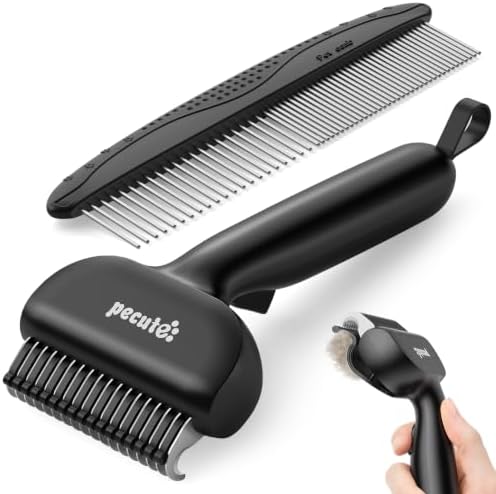
- 1-CLICK SELF-CLEANING — NO MORE MANUAL HAIR PULLING: This undercoat rake solves the grooming frustration. Just press the…
- REMOVES UP TO 95% OF LOOSE FUR — DESIGNED FOR THICK DOUBLE COATS: Engineered specifically for dense undercoats and heavy…
- GENTLE DEMATTING — ROUNDED TEETH GLIDE WITHOUT IRRITATING SKIN: Unlike sharp dematting rakes for dogs, our fine-polished…
Step-by-Step Line-Brushing Technique
Professional groomers rely on a method called line-brushing to make sure every layer of coat gets attention, not just the surface. Start by parting the coat in a straight line near the skin, using your free hand to hold the upper layers out of the way. Brush the small section you’ve exposed with slow, short strokes, working from the skin outward rather than dragging the brush down the full length of the coat in one pass. Once that section is tangle-free, drop the part line down about half an inch and repeat, working your way across the whole body section by section.
This approach matters because a slicker brush for goldendoodle fur that only ever touches the top layer will miss the mats forming closer to the skin, particularly behind the ears, in the armpits, and around the collar line. The American Kennel Club’s grooming guidance on double-coated breeds notes that skipping the base layer is one of the most common reasons mats reappear even in dogs that get brushed regularly. Slow down around bony areas like the hips and elbows, since skin there is thinner and more prone to brush burn if you’re using firmer pins.
Bath day is also a good checkpoint to catch tangles before they set. Working a Dog Shampoo Half Gallon, Cleans, Conditions & Detangles through damp fur before brushing can loosen minor knots enough that your slicker brush glides through without extra pulling, which is especially helpful on curlier coat types that tangle in the shower.

- LARGE VALUE SIZE (64 OZ): Save time and money with our extra-large half gallon 64oz bottle of premium dog shampoo, suita…
- 4-IN-1 DOG SHAMPOO: Effectively cleans, conditions, detangles, and moisturizes your dog’s skin. Keep your dog’s fur soft…
- PROUDLY MADE IN THE USA: Our shampoo for dogs is a quality American-made product formulated and tested in the best facil…
If you’re planning to blow-dry after a bath, it helps to know the difference between grooming tools built for the job and household equipment. Our comparison of a dog blow dryer versus a human hair dryer for Goldendoodles explains why the wrong dryer can actually make matting worse by curling hair back on itself.

Building a Brushing Schedule That Actually Prevents Mats
The National Dog Groomers Association recommends brushing dense or curly coats every one to two days to prevent pelting, compared to two to three times weekly for dogs with straighter, looser coats. For a Goldendoodle with a tight curl pattern, that daily or near-daily commitment isn’t optional if you want to avoid regular trips to the groomer for mat shaving. A consistent schedule using an undercoat slicker brush a few times a week, paired with a comb check afterward, keeps small tangles from becoming the kind of pelted mats that require clipping out entirely.
Owners with looser wave coats can usually get away with three sessions a week, but it’s worth watching high-friction zones like under the collar and behind the legs more closely, since those spots mat faster regardless of overall coat type. Keep in mind that some Goldendoodles simply need more upkeep than owners initially expect. If you’re weighing whether the breed is the right fit for your routine, our article on the downsides of a Goldendoodle covers grooming demands alongside other realistic tradeoffs of the breed.
A reliable dog detangling brush habit doesn’t need to eat up your whole evening. Ten to fifteen minutes of focused line-brushing every other day, done consistently, beats an hour-long rescue session once a month when mats have already set in.
Frequently Asked Questions
What is the best slicker brush for a Goldendoodle with a curly coat?
For tight, curly coats, a slicker brush with longer pins and firmer flex tension works best because it can reach through dense curls to the undercoat instead of just smoothing the surface. A double-sided slicker/pin combo or a professional groomer-grade brush tends to perform better on curly Goldendoodles than a basic short-pin model.
How often should I brush my Goldendoodle to prevent mats?
Dogs with dense or curly coats generally need brushing every one to two days, while looser wavy coats can often be managed with two to three sessions per week. Sticking to a consistent schedule with a slicker brush for goldendoodle fur is far more effective than occasional deep brushing sessions.
Can a slicker brush remove an existing mat, or do I need scissors?
A slicker brush can work through minor tangles, but a fully pelted mat close to the skin usually needs to be worked loose with fingers or a comb first, then finished with the brush. Never try to cut a mat out with scissors directly against the skin, since curly coats hide how close the blade is to the surface. A professional groomer can safely shave out severe mats if brushing alone isn’t enough.
Is an undercoat rake better than a slicker brush for Goldendoodles?
They serve different purposes rather than one replacing the other. An undercoat rake is better for pulling out heavy seasonal shedding from deep in the coat, while a slicker brush for goldendoodle maintenance is better suited for daily tangle prevention and keeping the surface coat smooth between deeper sessions.
For more detail on double-coated breed care and shedding biology, the American Kennel Club’s guide to grooming double-coated dogs is a solid reference to bookmark alongside your regular brushing routine.


