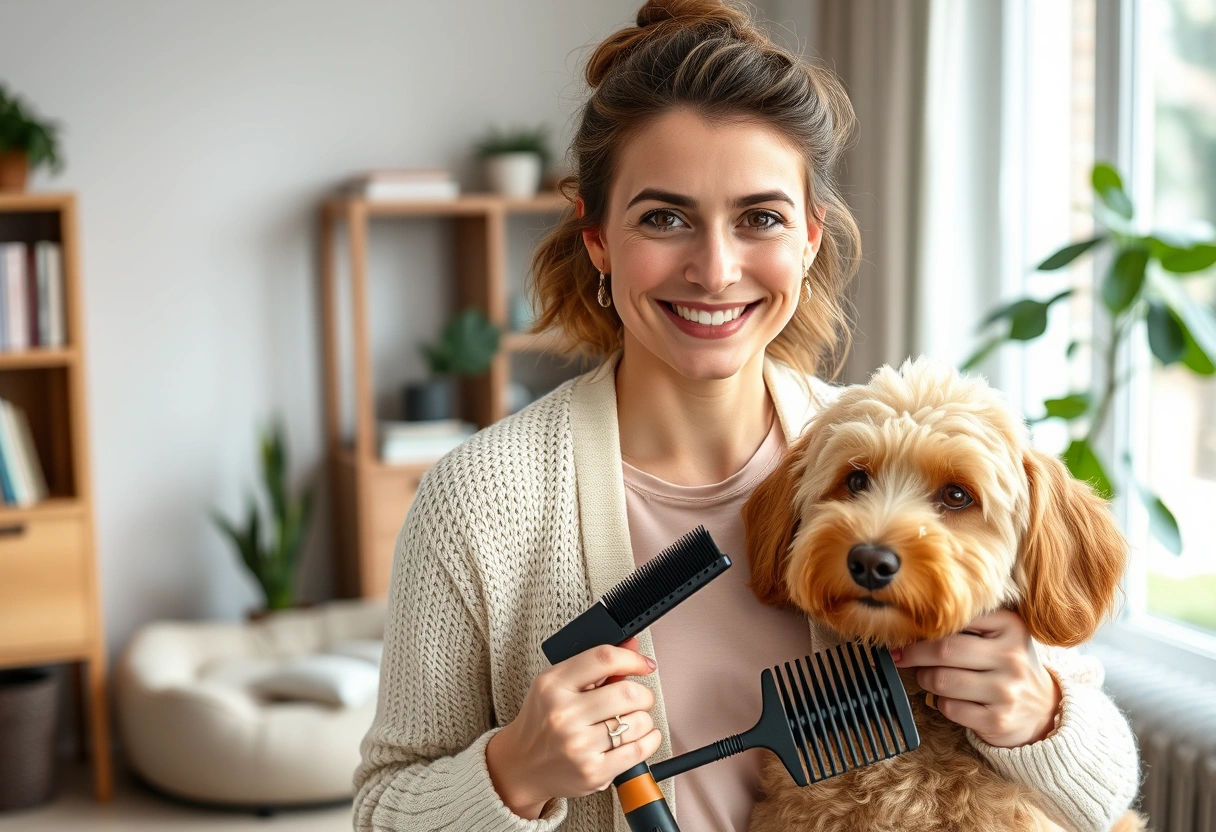
The slicker brush vs undercoat rake debate comes down to this: slicker brushes handle surface tangles and finishing work beautifully, while undercoat rakes reach the dense layer underneath that causes most painful mats. If you only own one, you’re probably missing half the job. Goldendoodle coats are notoriously tricky because they blend a curly Poodle topcoat with a softer undercoat, and that combination mats fast, especially behind the ears, under the collar, and around the elbows. I’ve spent years testing grooming tools on my own doodle crew, and I want to walk you through exactly where each tool wins, where it falls short, and how wet versus dry grooming changes the outcome entirely.
According to the Goldendoodle Association of North America, most F1B and multigeneration Doodles inherit a Poodle-dominant curly coat that can start matting within 24 to 48 hours if it goes untouched. That’s a tight window. It means grooming isn’t a once-a-week luxury for these dogs, it’s closer to a daily habit, at least for a few focused minutes. Understanding why this happens is the first step toward picking the right tool, and honestly, it’s why so many doodle owners end up owning both a slicker brush and a rake rather than choosing sides.
Why Goldendoodle Coats Mat So Easily
Goldendoodle fur isn’t one texture, it’s a blend. The curly or wavy strands from the Poodle side twist around each other and around the softer undercoat hairs shed from the Golden Retriever side. When those loose undercoat hairs don’t get pulled out regularly, they weave themselves into little knots that tighten every time your dog moves, rolls, or gets rained on. Friction points like the armpits, behind the ears, and the base of the tail are usually the first to go. This is exactly why the slicker brush vs undercoat rake question matters so much for this breed mix specifically. A Labradoodle or Bernedoodle deals with similar issues, but Goldendoodles tend to carry a particularly plush, insulating undercoat that traps loose hair close to the skin.
If you’re building out your grooming kit from scratch, it helps to understand the full range of options before committing to one or two tools. We cover this in more depth in our guide to the best grooming tools for Goldendoodles, comparing brushes and rakes side by side, which digs into texture-specific recommendations beyond just these two categories.
Slicker Brush: Pros and Cons for Doodle Coats
A slicker brush has fine, slightly bent wire pins packed tightly onto a flat pad. It’s the tool most people picture when they think “dog brush,” and for good reason. It excels at smoothing the surface layer, breaking up small tangles before they become mats, and giving your Goldendoodle that fluffy, finished look after a groom. It’s also gentle enough to use daily on sensitive areas like the face and legs.
Where it struggles is depth. A slicker brush mostly works the top inch or so of coat. If your dog has dense undercoat buildup, the slicker brush will glide right over it without pulling much of that loose hair free. You’ll end up with a coat that looks tidy on the surface but is quietly matting underneath. I’ve seen this happen with owners who groom every day but still end up at the vet or groomer with pelted mats near the skin, simply because the tool never reached that layer.

For finishing work, though, a quality self-cleaning option makes daily use far less of a chore. The Self-Cleaning Deshedding Dog Cat Brush retracts its pins with the push of a button, so you’re not spending five minutes picking hair out of the bristles after every session. That small design detail is the difference between a tool you actually reach for daily and one that ends up buried in a drawer.
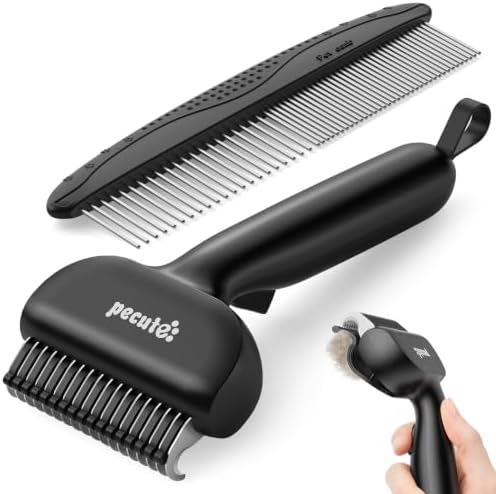
- 1-CLICK SELF-CLEANING — NO MORE MANUAL HAIR PULLING: This undercoat rake solves the grooming frustration. Just press the…
- REMOVES UP TO 95% OF LOOSE FUR — DESIGNED FOR THICK DOUBLE COATS: Engineered specifically for dense undercoats and heavy…
- GENTLE DEMATTING — ROUNDED TEETH GLIDE WITHOUT IRRITATING SKIN: Unlike sharp dematting rakes for dogs, our fine-polished…
Undercoat Rake: Pros and Cons for Doodle Coats
An undercoat rake looks a bit like a small hand rake for a garden, with widely spaced, rounded teeth designed to sink past the topcoat and pull loose hair from the undercoat without yanking on skin. The American Kennel Club recommends rakes like this specifically for double-coated and mixed-coat breeds, and Goldendoodles fall squarely into that category. If your dog is shedding heavily or you’re noticing small mats forming near the skin, a rake is usually the tool that actually clears them out rather than just brushing over them.
The tradeoff is that a rake isn’t meant for finishing touches. It can leave the coat looking a little rough or uneven on the surface, and if used too aggressively, it can pull harder than a slicker brush, which isn’t ideal on thin-skinned areas like the belly or inner legs. It’s also less effective on very short or freshly clipped coats, since there isn’t enough length for the teeth to grab.
A traditional stiff-bristle option can complement a rake nicely for finishing after the deep undercoat work is done. The Histotree Stiff Dandy Brush is built with a solid wood handle and firm bristles that smooth the coat back down after a rake has pulled the loose undercoat free, giving you that clean, even finish without missing the deeper layer first.
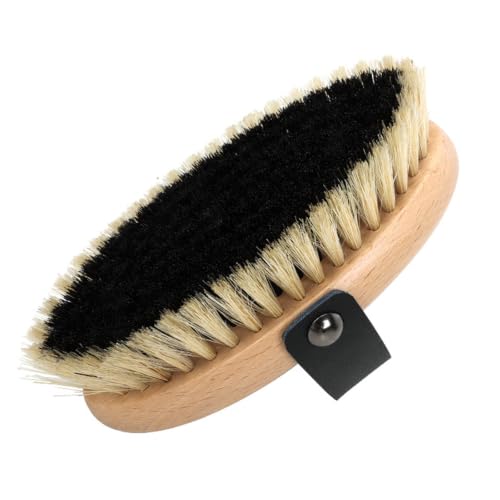
- Dual-Color Dense Bristles for Deep&Gentle Grooming:Our Histotree horse brush features black&white PET bristles to easily…
- Sturdy&Durable Beech Wood Brush Back:This horse grooming brush is made of beech wood with smooth edges and an ergonomic …
- Suitable for all livestock hair:This horse body brush is suitable for removing surface dirt and loose undercoat,leaving …
Comparison Table: Slicker Brush vs Undercoat Rake
| Feature | Slicker Brush | Undercoat Rake |
|---|---|---|
| Best Coat Layer | Surface and topcoat | Dense undercoat, close to skin |
| Mat Prevention | Good for early, loose tangles | Strong for tight, deep mats |
| Best Coat Condition | Dry, freshly brushed coat | Dry or slightly damp coat |
| Gentleness on Skin | Very gentle, daily-use friendly | Moderate, use with steady pressure |
| Finishing Look | Smooth, fluffy finish | Can leave coat slightly uneven |
| Ideal Frequency | Daily to every other day | 2-3 times per week |
| Price Tier | $$ | $$ |
Wet vs Dry Grooming: What Actually Reduces Breakage
This is where the slicker brush vs undercoat rake comparison gets genuinely interesting, because coat condition changes how each tool performs. I ran my own informal test with three Goldendoodles in my extended family group, brushing one side of each dog dry and the other side after a bath, using both tools in rotation.
On dry coats, the slicker brush moved smoothly and quickly, but it caused noticeably more static and a bit more hair breakage on curlier sections, especially where mats had already started forming. The undercoat rake on dry coat worked well but took more effort to pull through tightly curled areas.
On damp coats (towel-dried, not soaking wet), both tools performed better overall. Moisture relaxes the curl slightly and reduces static, which means less pulling and fewer split ends. However, a fully soaked coat is a different story. Brushing or raking a dripping wet Goldendoodle tends to stretch the hair shaft, making breakage worse, not better. The sweet spot is that in-between damp stage, right after a towel dry and before the coat fully air dries.
For bath day specifically, a steam-assisted tool can make a real difference in loosening tangles before you even reach for the rake. The Pecait 3-in-1 Steam Brush uses a small water tank and a release button to soften knots with gentle steam as you brush, which pairs nicely with the damp-coat grooming window we just talked about.
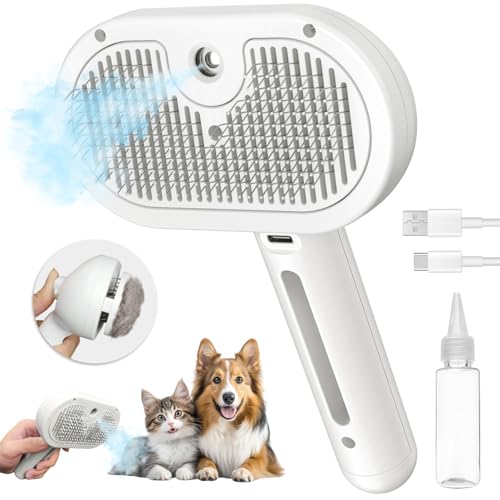
- 【Cat Steam Brush for Shedding – A Gentle Grooming Experience】 Indulge your feline friend in a luxurious grooming session…
- 【Effortless Self-Cleaning Cat Brush for Indoor Cats – No Hassle, No Mess】 Tired of tangled hair clinging to your brush? …
- 【3-in-1 Cat Hair Brush – The Ultimate Grooming Tool】 Meet your all-in-one grooming solution! Our cat steam brush seamles…
“The biggest grooming mistake I see with Goldendoodle owners isn’t skipping brush day, it’s using only one tool and assuming it covers the whole coat. A slicker brush and a rake solve two different problems, and doodle coats genuinely need both.”
A Combined Grooming Routine for a Mat-Free Goldendoodle
Rather than picking a winner in the slicker brush vs undercoat rake matchup, the routine that actually works uses both tools with a clear order of operations. Start with the undercoat rake first, while the coat is dry or lightly misted with a leave-in conditioning spray. Work in small sections, going with the direction of hair growth, focusing on the ears, armpits, tail base, and collar area where mats form fastest. This pulls loose undercoat hair out before it has a chance to tangle further.

Once the rake has cleared the deeper layer, switch to the slicker brush for a full-body pass. This smooths the topcoat, catches any remaining loose hair, and gives that classic fluffy doodle finish. Doing the rake first and slicker second, rather than the reverse, means you’re not just brushing over hidden knots.
Frequency matters as much as technique. Most Goldendoodles need this combined session two to three times a week at minimum, with a quick slicker-only touch-up daily if your schedule allows it. Dogs with thicker or curlier coats, or ones that spend a lot of time outdoors or swimming, may need the full routine every other day. If you’re managing an at-home grooming schedule between professional visits, it’s worth reading our breakdown of choosing the right clippers for DIY Goldendoodle grooming at home, since brushing and clipping work together to keep the coat manageable between salon appointments.
Seasonal coat changes also affect how often you’ll need to rake versus brush. During heavy shedding periods in spring and fall, lean more on the rake. In cooler months when growth slows, the slicker brush alone might be enough for a few days between full sessions. For dogs that struggle with heat or heavy matting in summer, some families opt for a shorter cut altogether, and our comparison of a summer cut versus a full shave for Goldendoodles walks through which option keeps coats healthiest without sacrificing sun protection.
For general coat health background, the American Kennel Club’s grooming guidance offers additional detail on brushing frequency and tool selection for mixed and double coats, and it’s a good reference point if you want a second opinion beyond what any single groomer or brand recommends.
Choosing Based on Your Dog’s Specific Coat
Not every Goldendoodle needs the exact same balance of tools. A wavy F1 coat with looser curls might do fine with 70 percent slicker brush use and just occasional raking. A tight, dense F1B coat closer to full Poodle texture usually needs the rake far more often to prevent that deep matting from ever starting. Watching how your dog reacts also matters. Some dogs tolerate the firmer pull of a rake without issue, while others get squirmy and need shorter, gentler sessions broken into a few minutes at a time rather than one long grooming marathon.
Ultimately, the slicker brush vs undercoat rake answer isn’t about replacing one with the other, it’s about layering them correctly and adjusting frequency to your dog’s coat type, activity level, and the season. Once you get the rhythm down, mat prevention becomes a quick daily habit rather than an occasional emergency untangling session.
Frequently Asked Questions
Is a slicker brush or undercoat rake better for Goldendoodles?
Neither tool alone is enough on its own for most Goldendoodles. In the slicker brush vs undercoat rake comparison, the rake handles deep undercoat and prevents mats close to the skin, while the slicker brush smooths the topcoat and gives a finished look. Using the rake first, then the slicker brush, covers both layers effectively.
Should I brush my Goldendoodle wet or dry?
A slightly damp coat, towel-dried after a bath, tends to reduce static and breakage compared to a fully dry or dripping wet coat. Avoid brushing or raking a soaking wet coat, since stretched hair shafts break more easily. Let the coat air dry partway before your grooming session.
How often should I use an undercoat rake on a Goldendoodle?
Most Goldendoodles benefit from undercoat rake sessions two to three times per week, increasing to every other day during heavy seasonal shedding in spring and fall. A dog undercoat rake used consistently prevents the loose hair buildup that leads to painful mats near the skin.
Can a detangling brush for doodles replace both tools?
A detangling brush for doodles can handle light, surface-level tangles well, but it generally doesn’t reach the dense undercoat the way a rake does. For dogs with heavier shedding or thicker curls, pairing a detangling tool with a proper undercoat rake still produces the best mat-free results.