

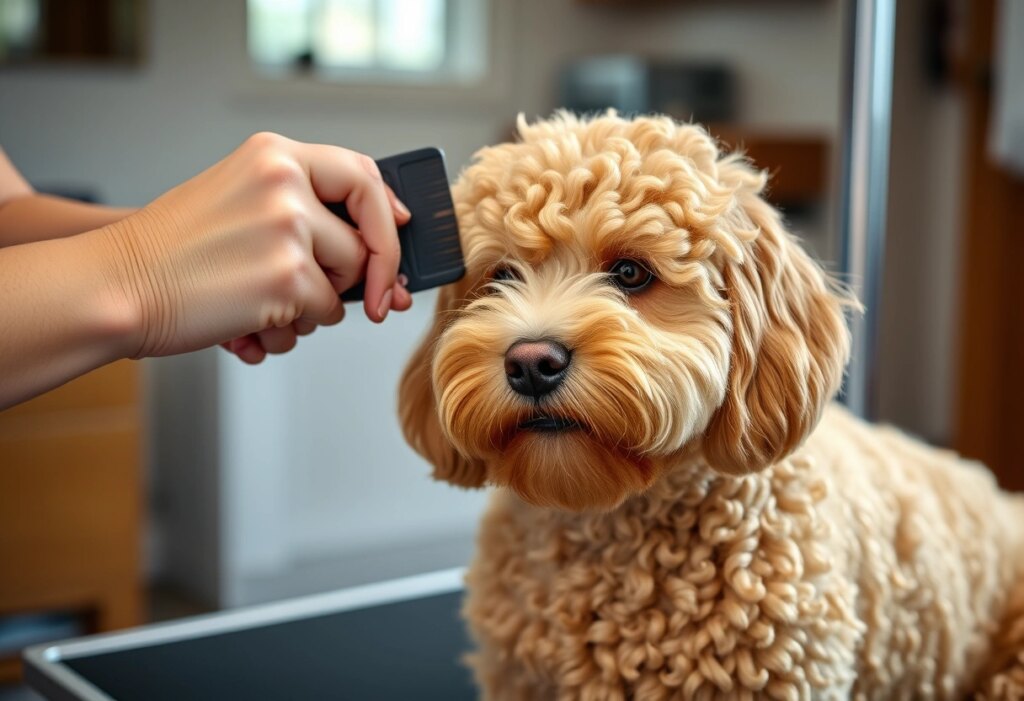
If you’ve ever stared at a tangled clump of fur on your Doodle’s leg and felt your stomach drop, you’re not alone. A dematting comb is almost always the safer first choice for small to medium mats, while a mat splitter is better reserved for dense, deeply packed mats that a comb simply can’t get through. Both tools have a place in your grooming kit, but knowing which one to grab (and when) can mean the difference between a calm grooming session and a trip to the emergency vet.
Doodle coats are notorious for matting fast, sometimes within days of a missed brushing session. That’s not bad luck. It’s biology. Curly and wavy coats trap shed hair instead of letting it fall away, which means tangles build from the inside out before you ever see them on the surface.
This guide walks through exactly how a mat splitter and a dematting comb differ, why your Doodle’s coat mats so easily in the first place, and the safe-use steps that protect your dog’s skin no matter which tool you pick up. By the end, you’ll know exactly when to handle a mat at home and when it’s time to call in a professional groomer.
Why Doodle Coats Mat So Easily (It’s Not Your Fault)
Poodle-mix coats, especially F1b Doodles with tighter curl patterns, hold onto loose undercoat hair instead of shedding it out naturally the way a straight-coated breed does. According to the American Kennel Club, curly and wavy coats require significantly more frequent brushing because dead hair gets caught in the curl structure instead of falling to the floor. That trapped hair twists around itself, picks up moisture, and tightens into a mat over just a few days of neglect.
This is why weekly brushing isn’t optional for Doodles the way it might be for a Lab or a Beagle. Skip even one week and friction points like behind the ears, armpits, and the collar area can turn into small knots that grow fast. A dematting comb works well on these early-stage tangles precisely because it catches that trapped undercoat before it compresses into something denser.

If you’re already dealing with ear-area tangles specifically, it helps to pair your dematting routine with a proper cleaning schedule. Our vet-reviewed guide on Goldendoodle ear cleaning frequency covers how moisture buildup in the ears accelerates matting around that sensitive region.
Mat Splitter vs Dematting Comb: Side-by-Side Comparison
Both tools remove mats, but they work in completely different ways. A mat splitter uses small curved blades to slice through a mat into smaller sections, while a dematting comb uses blunt, rotating teeth that gently tease hair apart without cutting anything. Here’s how they stack up.
| Feature | Mat Splitter | Dematting Comb |
|---|---|---|
| How It Works | Sharp curved blades slice mat into sections | Rotating blunt teeth pull tangles apart gradually |
| Best For | Dense, large, deeply packed mats | Small to medium surface tangles, routine maintenance |
| Skin Injury Risk | Higher if blade angle is wrong | Lower, teeth are blunt-tipped |
| Speed | Fast on thick mats | Slower, more methodical |
| Learning Curve | Moderate to steep for beginners | Beginner-friendly |
| Price Tier | $$ | $ to $$ |
Veterinary dermatologists have long flagged that mats aren’t just a cosmetic nuisance. A compressed mat sits flush against the skin and blocks airflow, trapping moisture underneath it. In humid climates or during summer months, that trapped moisture creates the exact warm, damp conditions that encourage hot spot formation and secondary bacterial infections. This is one of the biggest reasons dermatology experts recommend addressing mats early rather than letting them sit against the skin for weeks.
Never force a mat splitter blade straight down toward the skin. The blade should always glide parallel to the skin’s surface, cutting into the mat from the outer edge inward, never pointed downward like a knife.
For routine upkeep between full dematting sessions, a two-sided tool like the 2 Pack Double Sided Dematting Comb for Dogs Cats gives you both a coarse side for thicker tangles and a fine side for finishing touches, which is handy when you’re working through a Doodle’s uneven coat texture in one sitting.
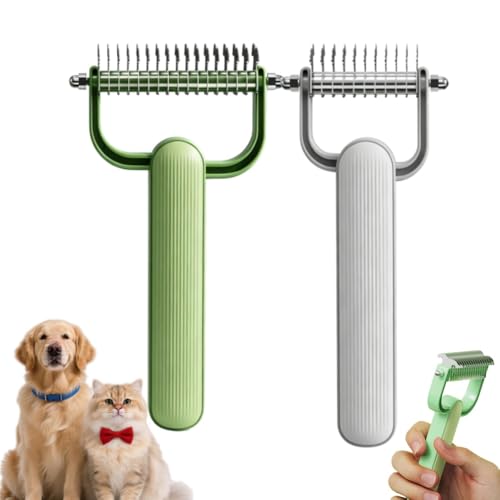
- ✨【Efficient Hair Removal Experience】The V-tooth pet grooming comb features efficient hair removal, designed for both cat…
- 🌀【Upgraded Material】This deshedding comb is crafted from upgraded material, providing durability, suitable for long term…
- 🖐【Ergonomic Handle for Comfort】The ergonomic handle of this pet comb offers comfortable design with a soft, fitted grip,…
Safe-Use Protocol: Dematting Comb Technique
Using a dematting comb safely comes down to patience and preparation. Rushing is what causes most at-home grooming injuries, not the tool itself.
- Check the skin first. Gently part the fur around the mat and look for redness, swelling, or broken skin before touching the tool to the area.
- Apply a detangling spray or cornstarch. Lightly misting the mat with a leave-in detangler, or working a pinch of cornstarch into dry mats, reduces friction so the comb glides instead of pulling.
- Hold the base of the mat. Pinch the hair between the mat and the skin with your fingers. This protects the skin from accidental tugging while you work.
- Work from the tips inward. Start at the outer edge of the mat and slowly comb toward the base, never dragging straight through the whole thing at once.
- Stop every 10-15 seconds. Check your dog’s reaction and the mat’s progress rather than powering through in one long stroke.
A fine metal comb is also worth keeping nearby for finishing passes once the bulk of a mat has loosened. The Metal Comb for Dogs, Dog Grooming Detangler works well for smoothing out the loosened fur after a dematting comb has broken up the bulk of the tangle, giving you a cleaner final result without re-tangling the area.

- EASY DEMATTING & DETANGLING: Our dog grooming comb features extra-long stainless-steel teeth that glide through tough kn…
- EXTRA LONG PINS: Engineered with PINs that are 30% longer, this dematting comb reaches deeper into dense, curly, or long…
- ERGONOMIC HANDLE: Designed with a non-slip, ergonomic handle, this metal dog comb ensures a secure grip and reduces hand…
Safe-Use Protocol: Mat Splitter Technique
A mat splitter can save you time on dense mats, but it demands more precision because it involves actual blades near your dog’s skin.

- Lift the mat away from the body. Never cut into a mat while it’s flat against the skin. Hold it up and away so there’s visible space between the blade and your dog’s body.
- Angle the blade sideways, not downward. The blade should enter the mat from the side, slicing it into thinner sections, never pointed toward the skin.
- Cut small sections at a time. Splitting a large mat into three or four smaller pieces makes each one easier to finish off with a comb.
- Switch tools once the mat is sectioned. Finish loosening each small piece with a dematting comb rather than continuing to cut, since over-cutting can leave bald patches.
- Watch for resistance. If the blade isn’t moving smoothly through the mat, stop. Forcing it increases the odds of slipping toward the skin.
A slicker brush rounds out your toolkit nicely for the maintenance work after mats are gone, keeping loose undercoat from building back up between sessions. The GoPets Small Pin Slicker Brush is a solid pick for daily brushing on sensitive areas like the legs and belly, where new mats tend to form first.
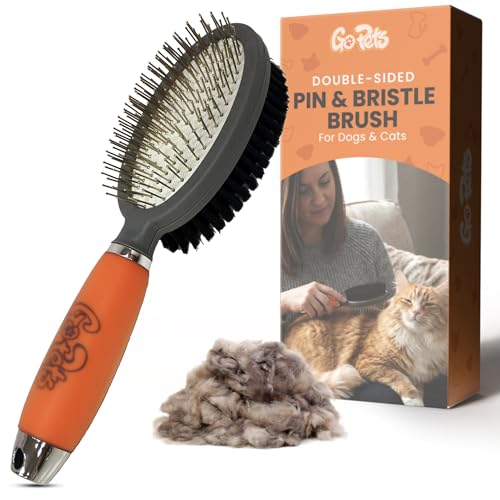
- DOUBLE-SIDED COAT CARE – Built to provide the right comb for any fur type, this pet grooming brush features pin and bris…
- PIN & BRISTLE FUNCTIONALITY – Pin side helps detangle knots, loosen light mats, and reach deeper layers for undercoat ca…
- GENTLE DEEP GROOMING – Designed for deep grooming that remains gentle on pets, helping maintain coat condition while min…
Signs You Should Stop and Call a Professional Groomer
Not every mat belongs in your hands. Knowing when to put the tools down protects both your dog and your own confidence as a pet parent.
- The mat is touching the skin directly. If you can’t see or feel any fur between the mat and the skin, cutting it yourself risks nicking a surface you can’t fully see.
- Your dog yelps or flinches. Pain is a stop signal, not something to push through.
- You notice any bleeding, even minor. Clean the area and contact your vet or groomer rather than continuing.
- The mat feels like a solid pelt. Severely pelted coats, where mats have fused into one continuous sheet, almost always require clippers and professional handling. No comb or splitter is designed for that level of density.
- Multiple large mats cover more than a small area. At that point, a full professional shave-down is usually safer and more humane than hours of at-home dematting.
If your Doodle’s ears specifically are matted and tangled, resist the urge to tug through them with a splitter. Ear fur sits close to delicate cartilage, and a quality detangling spray for severely matted ears paired with a slow comb-out is almost always the safer route for that particular area.
The Safety-First Takeaway
Choosing between a mat splitter and a dematting comb isn’t about which tool is better overall. It’s about matching the right tool to the size and density of the mat in front of you. For routine tangles and weekly maintenance, a dematting comb gets the job done with far less risk. For dense mats that resist combing, a mat splitter can help, but only with careful blade angling and patience.
When in doubt, pelted or severely matted coats are a groomer’s job, not a DIY project. Your dog’s skin, and your own peace of mind, are worth that professional visit.
Is a mat splitter safe to use on a Doodle’s sensitive areas like the ears or belly?
Generally, no. Mat splitters work best on larger, flatter areas like the legs or back where you can clearly see space between the mat and the skin. For sensitive zones like the ears, belly, or armpits, a dematting comb or a detangling spray paired with slow combing is a much safer choice.
How often should I brush my Doodle to prevent mats from forming?
Most Doodle coats need brushing at least three to four times a week, and daily during heavy shedding seasons. Curly and wavy coats trap loose undercoat hair far more than straight coats, so skipping even a week can allow small tangles to tighten into full mats.
Can I use a dematting comb on a wet coat?
It’s best to work on a dry or mostly dry coat with a light detangling spray applied first. Wet mats tend to tighten further as the coat dries, which can make the tangle harder to remove and increase pulling on the skin.
What’s the difference between a mat and normal coat tangling?
A tangle is loose and can usually be separated with your fingers or a basic brush. A mat is compressed hair that has twisted into a dense clump sitting against the skin. Mats require specific pet dematting tools because regular brushing alone won’t break them apart.


