


Dematting tools for dogs are the only safe way to break up severe mats without tearing skin, causing pain, or making the tangle worse. If your Doodle’s coat has gone past the point of a quick brush-out, grabbing scissors or a human comb off your bathroom counter is a mistake that can land you at the emergency vet. The right dematting tools for dogs work with your Doodle’s curly or wavy coat texture, not against it, and they make the difference between a stressful ordeal and a manageable grooming session.
This guide walks through why Doodle coats mat so fast, what veterinary dermatologists say about the real health risks of letting mats sit, and the five tool types you need in your grooming kit for 2026. We’ll also cover a step-by-step dematting process you can do at home, plus the exact signs that mean it’s time to put the comb down and call a professional groomer.
Why Matted Doodle Coats Need Specialized Dematting Tools, Not Scissors or Human Combs
Goldendoodles, Labradoodles, and Bernedoodles inherit a loose, wavy, or tight curl pattern from their Poodle parent. That curl is beautiful, but it’s also a magnet for tangles. Loose fur that would simply fall away on a short-haired breed instead gets trapped in the curl, winding tighter every time your dog rolls, scratches, or gets wet.
Household scissors seem like a quick fix, but they’re genuinely dangerous here. Mats sit close to the skin, and skin folds up into the tangle as it tightens. A pair of kitchen scissors can’t tell the difference between hair and skin, and dematting tools for dogs are specifically designed to separate the two safely.
A standard comb, slicker brush, or even a cheap pet store brush isn’t built for severe mats either. These tools are made for maintenance brushing, not for breaking apart dense, felted clumps. Using the wrong tool usually means a lot of yanking, a lot of yelping, and very little actual progress. That’s where purpose-built dematting tools for dogs come in: they’re engineered with sharp but rounded blades or widely spaced teeth that split mats into smaller sections without pulling at the root.
The Hidden Health Risk: What Happens When Mats Are Left Too Long
Severe matting isn’t just a cosmetic issue. Veterinary dermatologists have long warned about a condition sometimes called matting dermatitis, where dense mats trap moisture, dirt, and bacteria directly against the skin. Without airflow, that damp environment becomes a breeding ground for hot spots, yeast infections, and painful sores that can go unnoticed under thick fur until they’re already inflamed.
According to the ASPCA, regular grooming is one of the most overlooked aspects of preventive pet health care, and neglected coats are a common cause of avoidable skin disease in dogs. Mats left ungroomed for six to eight weeks can tighten enough to restrict blood flow to the skin in severe cases, which is a genuine emergency, not just an inconvenience.
Severe matting rarely happens overnight. It’s usually the result of a few missed brushing sessions that snowballed, which is exactly why consistent use of the right dematting tools for dogs matters more than any single deep-cleaning session.
If you notice your dog flinching when you touch a certain area, a mat that feels unusually warm, or a smell coming from the coat, stop brushing and check the skin underneath. These are signs the mat has already caused irritation, and a vet visit may be needed before any grooming continues.

Comparing the Top 5 Dematting Tool Types for Severe Mats
Not every dematting tool is right for every mat. A loose tangle behind the ears needs a different approach than a dense, pelted mat on the hindquarters. Here’s how the five main tool categories stack up.
| Tool Type | Best For | Pros | Cons | Price Tier |
|---|---|---|---|---|
| Dematting Rake | Dense, felted mats | Sharp curved blades slice through thick tangles quickly | Can nick skin if used too aggressively near the body | $$ |
| Undercoat Rake | Heavy shedding and loose undercoat buildup | Pulls dead undercoat without touching healthy topcoat | Not strong enough for truly dense mats | $$ |
| Slicker Brush | Light tangles and maintenance brushing | Gentle, good for daily use, smooths the coat | Ineffective and painful on severe mats | $ |
| Dematting Comb | Medium mats near sensitive areas (ears, legs, tail) | Precise, works mat edges without cutting fur short | Slower process, requires patience | $$ |
| Detangling Spray | Pre-treatment for any mat size | Softens hair, reduces static and pulling, makes every tool work better | Doesn’t remove mats alone, must pair with a tool | $ |
For most Doodle owners dealing with moderate to severe mats, a dematting comb is the workhorse of the kit. The Metal Comb for Dogs, Dog Grooming Detangler is a solid pick for working through stubborn knots near the ears and legs, where skin is thin and extra caution matters. Its evenly spaced metal teeth let you work section by section without catching skin folds the way a rake can.

- EASY DEMATTING & DETANGLING: Our dog grooming comb features extra-long stainless-steel teeth that glide through tough kn…
- EXTRA LONG PINS: Engineered with PINs that are 30% longer, this dematting comb reaches deeper into dense, curly, or long…
- ERGONOMIC HANDLE: Designed with a non-slip, ergonomic handle, this metal dog comb ensures a secure grip and reduces hand…
If you’re deciding between a comb and a brush for your Doodle’s specific coat type, our breakdown of slicker brush versus metal comb options for Goldendoodles goes into more detail on which tool fits different mat severities.
Step-by-Step: How to Safely Remove a Severe Mat at Home
Working through a mat takes patience, and rushing almost always makes things worse. Follow these steps in order, and stop immediately if your dog shows signs of pain.
- Isolate the mat. Hold the base of the mat close to the skin with your fingers to protect against pulling, then separate it gently from the surrounding healthy fur.
- Apply a detangling spray. Saturate the mat and let it sit for a few minutes. This softens the hair shaft and makes separation far less painful.
- Work from the edges inward. Use your fingers or a dematting comb to peel apart small sections from the outer edge of the mat, never starting from the center.
- Use a dematting tool for the dense core. Once the outer layers are loosened, a dematting rake or comb can split the remaining dense core into smaller, manageable pieces.
- Check the skin frequently. Pause every few minutes to look for redness, warmth, or sores underneath. Any sign of irritation means it’s time to stop.
- Know your limit. If a mat is tight enough to tug the skin when you lift it, or if your dog is panting, pinning ears back, or trying to escape, call a professional groomer instead of continuing.
A double sided dematting comb is especially useful during this process because it lets you switch between wider and finer teeth without reaching for a second tool. The 2 Pack Double Sided Dematting Comb for Dogs Cats covers both the initial loosening pass and the finer finishing work, which is handy when you’re moving between different mat sizes on the same dog.
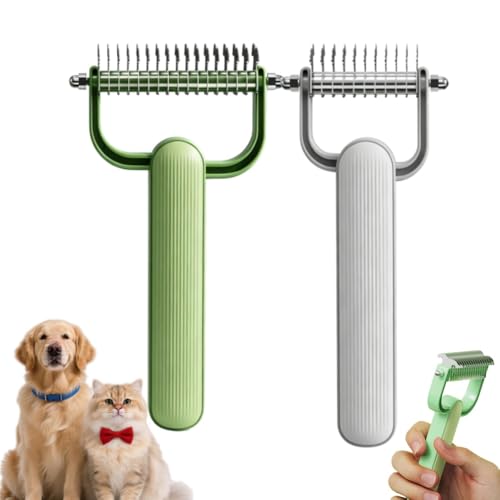
- ✨【Efficient Hair Removal Experience】The V-tooth pet grooming comb features efficient hair removal, designed for both cat…
- 🌀【Upgraded Material】This deshedding comb is crafted from upgraded material, providing durability, suitable for long term…
- 🖐【Ergonomic Handle for Comfort】The ergonomic handle of this pet comb offers comfortable design with a soft, fitted grip,…
Why Doodle Coats Need Brushing 3-4 Times a Week, Not Once
One of the biggest misconceptions new Doodle owners have is that brushing once a week is enough. According to grooming industry data and coat care guidance from the Poodle Club of America, curly and wavy Poodle-mix coats need brushing three to four times a week, compared to roughly once a week for most short-haired breeds.
That difference comes down to coat structure. A short-haired dog’s loose fur sheds and falls away naturally. A Doodle’s curl holds onto that loose fur, winding it into the surrounding coat with every movement. Skip a few days, and what would have been a two-minute brush-out turns into a mat that needs real dematting tools for dogs to fix.
Building a consistent brushing routine is genuinely the best prevention strategy there is. Pairing the right tools, including a quality undercoat rake for shedding season and a slicker brush for daily upkeep, keeps mats from forming in the first place. For a full breakdown of which tools pair best for Poodle and Doodle coats specifically, check out our guide on grooming tools for Doodles versus Poodles.
Between full brushing sessions, a quick daily pass can catch small tangles before they tighten. Automatic or self-cleaning tools make this easier for owners who struggle to keep up with manual brushing every single day. The Cat Brush Self Cleaning Pet Hair Removal Comb Automatic was built with cats in mind, but many Doodle owners use it for quick daily maintenance on looser coat areas like the chest and belly, where fine detangling tools can clear out loose hair fast before it has a chance to mat.
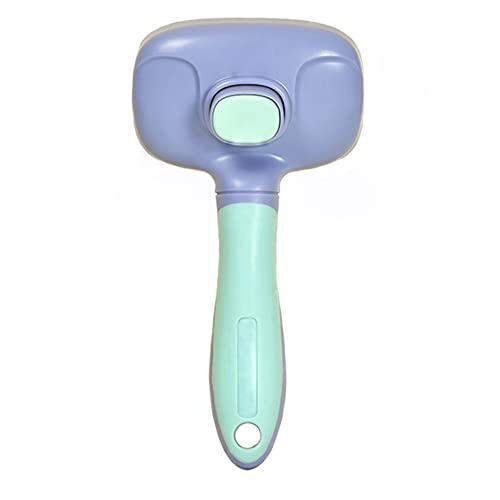
- Material: High Quality ABS + Stainless Steel needle,Special designed for home pets use.
- There are 256 fine needles on the comb, which can comb out 90% of the shed hair. The end of the comb is protected and wi…
- One key self cleaning,Press the self-cleaning button gently,Tear off the whole piece of floating hair
Choosing Between an Undercoat Rake, Detangling Dog Brush, and Dog Mat Remover
With so many tool names floating around, it helps to know what each one actually does. An undercoat rake is built to pull loose, dead hair out from underneath the topcoat during shedding season, which prevents the buildup that leads to mats in the first place. A detangling dog brush, usually a slicker-style brush, is better suited for daily maintenance on a coat that isn’t severely matted yet.

A dog mat remover, whether it’s a rake-style tool or a comb with embedded blades, is specifically designed for mats that have already formed and tightened. These tools typically have sharper edges that can cut through the mat’s structure in small, controlled sections rather than pulling the whole clump at once.
Most experienced Doodle owners end up keeping all three types of dematting tools for dogs on hand, since each one solves a different stage of the matting problem. Using them together, starting with prevention and ending with targeted removal when needed, is far more effective than relying on a single all-purpose brush.
Safety First: When to Stop and Call a Professional Groomer
There’s no shame in handing a severely matted dog over to a professional. Some mats, particularly those that have formed into dense pelts covering large areas of the body, require a groomer’s clippers and experience to remove safely without causing pain or skin damage.
Signs it’s time to call in a professional include mats that cover more than a small patch of the coat, mats that feel tight against the skin, or any mat you can’t lift away from the body even slightly. A groomer may need to shave the area down rather than comb it out, and that’s often the safer, more humane choice compared to a long, stressful dematting session at home.
Whatever tools you choose for the job, the goal is always the same: protect the skin underneath the coat. Mats will grow back if the coat is cut too short in a hurry, but damaged skin takes much longer to heal and can lead to repeated infections. Prioritizing your Doodle’s comfort over a perfectly groomed coat is always the right call.
Final Takeaway on Dematting Tools for Dogs
Severe matting is preventable in almost every case, but once it happens, using the right dematting tools for dogs is what keeps the removal process safe rather than painful. Isolate mats early, work from the edges inward, use a detangling spray to soften the job, and never force a tool through a mat that’s pulling at the skin.
Build a brushing routine of three to four sessions a week, keep a few different dematting tools for dogs in your grooming kit, and don’t hesitate to call a professional groomer when a mat is beyond what’s safe to handle at home. Your Doodle’s skin health should always come before coat length.
What is the best tool for severely matted dog hair?
A dematting rake or dematting comb with sharp, rounded blades works best for severe mats, since these tools split dense tangles into smaller sections instead of pulling at the root. Pairing the tool with a detangling spray makes the process easier and reduces discomfort for your dog.
Can I remove dog mats with scissors?
Scissors are risky because mats sit close to the skin, and skin can fold up into the tangle as it tightens, making accidental cuts common. Purpose-built dematting tools for dogs are designed to separate hair from skin safely, which scissors simply cannot do.
How often should I brush my Doodle to prevent mats?
Doodle coats generally need brushing three to four times a week because their curly texture traps loose fur instead of letting it shed away naturally. Skipping even a few sessions can allow small tangles to tighten into mats that require stronger dematting tools for dogs to remove.
When should I take my dog to a professional groomer instead of dematting at home?
If a mat covers a large area, feels tight against the skin, or won’t lift even slightly away from the body, it’s safer to visit a professional groomer. Groomers often need to shave down dense pelted mats, which protects the skin far better than prolonged at-home dematting attempts.


