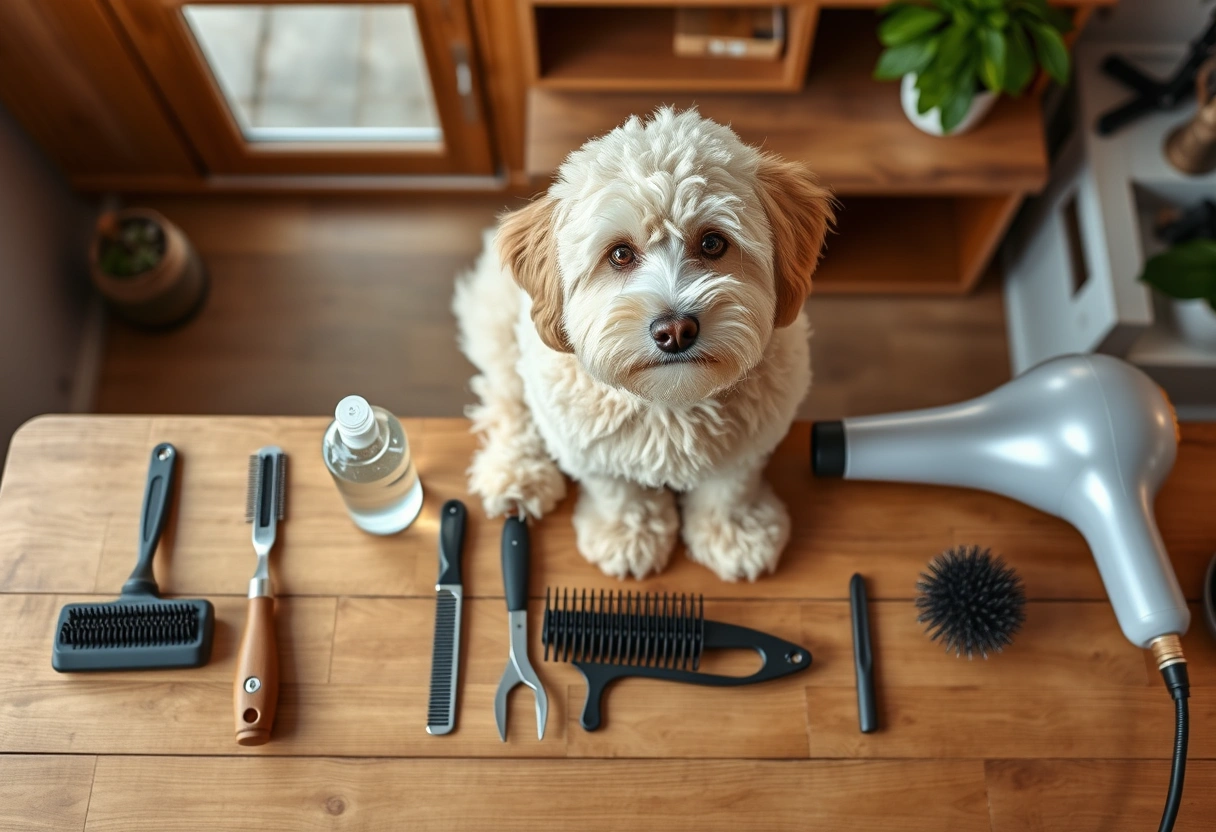
Deshedding tools are the fastest way to stop pouring money into weekly groomer visits just to keep your Doodle’s coat from turning into a felted mess. If you’ve watched your grooming bill creep past what you spend on your own haircuts, you’re not imagining it, and you’re not doing anything wrong. Doodle coats are genuinely harder to manage than a lot of other breeds, but the right deshedding tools can knock a huge chunk off that bill without sacrificing your dog’s comfort.
This guide walks through why Doodle fur mats so easily, seven tools that actually earn their keep, and a realistic at-home routine you can start this week. We’ll also cover the warning signs that mean it’s time to call in a professional groomer, because no brush replaces good judgment.
Why Doodle Coats Mat and Shed Differently Than Single-Coated Breeds
Most Doodles inherit a wavy or curly coat from their Poodle parent, and that texture is the root of the whole problem. Curly hair grows in loops rather than straight lines, so loose undercoat hair gets trapped instead of falling to the floor like it would on a Labrador or a Beagle. That trapped hair tangles with new growth and skin oil, and within days you’ve got a mat forming near the ears, armpits, or collar line.
The American Kennel Club notes that curly and wavy coats need brushing three to four times a week to stay ahead of matting, which is a lot more frequent than the once-a-week routine that works fine for short-haired breeds. Skip a few sessions and you’re not just dealing with tangles, you’re dealing with dense mats that pull on the skin and can hide moisture, irritation, or even early skin infections underneath.
This is exactly why deshedding tools matter so much for Doodle owners specifically. A brush that works great on a Beagle might barely touch the undercoat on a Bernedoodle, and using the wrong tool on the wrong coat type is how a lot of well-meaning pet parents end up with a matted dog anyway.
The 7 Best Deshedding Tools for Doodle Coats
Not every tool on this list will earn a permanent spot in your grooming kit, and that’s fine. Doodle coats vary a lot even within the same litter, so the goal is to find two or three deshedding tools that match your dog’s specific texture and stick with them consistently.

Below is a side-by-side look at how these categories stack up on cost, effort, and results.
| Tool Type | Best For | Effort Level | Price Tier | Groomer Bill Savings |
|---|---|---|---|---|
| Self-cleaning slicker brush | Daily surface detangling | Low | $$ | High |
| Undercoat rake | Deep undercoat, shedding season | Medium | $$ | High |
| Dematting comb | Existing tangles near ears/legs | Medium | $ | Medium |
| Deshedding glove | Anxious or fidgety dogs | Low | $ | Medium |
| Detangling spray | Loosening mats before brushing | Low | $ | Medium |
| Pin brush | Finishing and fluffing | Low | $$ | Low |
| High-velocity dryer | Blowing out loose undercoat | High (learning curve) | $$$$ | Very High |
Professional grooming for a Doodle averages somewhere between $65 and $95 per session according to pricing surveys from the National Dog Groomers Association, and most groomers recommend that appointment every four to six weeks. If you can stretch that to every two months by handling maintenance at home with solid deshedding tools, the savings add up fast over a year.
Self-Cleaning Slicker Brush
A self-cleaning slicker brush is probably the single most useful tool in this entire lineup, because it works on wet or dry fur and pulls loose undercoat without yanking on healthy hair. The retractable pins let you clear out the collected fur with one click instead of picking it out by hand, which matters more than it sounds like once you’re doing this three times a week. The Self-Cleaning Deshedding Dog Cat Brush is built for exactly this kind of thick double coat and holds up well on wavy Goldendoodle and Labradoodle fur without scratching the skin underneath.
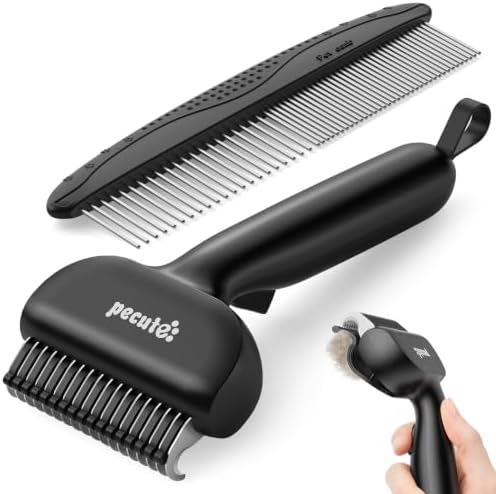
- 1-CLICK SELF-CLEANING — NO MORE MANUAL HAIR PULLING: This undercoat rake solves the grooming frustration. Just press the…
- REMOVES UP TO 95% OF LOOSE FUR — DESIGNED FOR THICK DOUBLE COATS: Engineered specifically for dense undercoats and heavy…
- GENTLE DEMATTING — ROUNDED TEETH GLIDE WITHOUT IRRITATING SKIN: Unlike sharp dematting rakes for dogs, our fine-polished…
Use light, short strokes in the direction of hair growth. Pressing too hard is the most common mistake owners make, and it’s how you end up with brush burn instead of a shiny coat.
Undercoat Rake
An undercoat rake has longer, wider-set teeth than a slicker brush, which lets it reach past the topcoat and pull loose undercoat hair from closer to the skin. This tool earns its place during shedding season, typically spring and fall, when Doodles blow out more undercoat than usual even though they’re not heavy year-round shedders. Think of it as the deep-clean step that comes after your daily slicker brush routine, not a replacement for it.
Dematting Comb for Existing Tangles
Once a mat has already formed, a dedicated dematting comb does a better job than a regular brush at separating the strands without tearing skin. These combs typically have sharp, curved blades on one side for cutting through tough mats and a wider-tooth comb on the other for everyday detangling work. The 2 Pack Double Sided Dematting Comb gives you both options in one purchase, which is handy since mats tend to show up in more than one spot at a time, usually behind the ears and under the collar.
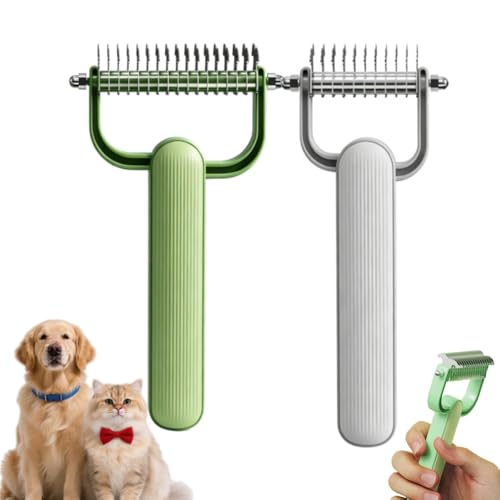
- ✨【Efficient Hair Removal Experience】The V-tooth pet grooming comb features efficient hair removal, designed for both cat…
- 🌀【Upgraded Material】This deshedding comb is crafted from upgraded material, providing durability, suitable for long term…
- 🖐【Ergonomic Handle for Comfort】The ergonomic handle of this pet comb offers comfortable design with a soft, fitted grip,…
If a mat is close to the skin and won’t budge with a comb, stop and don’t force it. That’s a sign you may need clippers or professional help, which we cover in the last section.
Deshedding Glove
Some Doodles, especially puppies or older dogs with arthritis, get anxious around traditional brushes and tolerate a glove far better since it feels more like petting than grooming. The True Touch Five Finger Deshedding Glove has soft rubber tips that collect loose hair while you scratch your dog’s favorite spots, so it doubles as a bonding tool and a shedding tool at the same time.

- MIMICS REAL HUMAN TOUCH Your pet will enjoy a relaxing massage while the over 180 soft silicone grooming tips reach deep…
- 5 FINGER DESIGN Easily contours to reach all the places hair hides like behind their legs, under their chest, in their t…
- PET THE HAIR AWAY Guaranteed to minimize shedding, keeping you and your house clean. Just think how much happier and hea…
It won’t replace a slicker brush for deep undercoat work, but it’s a great gateway tool for dogs who need to build trust with grooming first.

Detangling Spray, Pin Brush, and High-Velocity Dryer
A leave-in detangling spray loosens knots before you brush, which cuts down on the pulling sensation that makes a lot of Doodles squirm during grooming sessions. A pin brush is best saved for the finishing pass, fluffing the coat back up after the heavier deshedding tools have done their job. A high-velocity dryer is the biggest investment on this list, but it blasts loose undercoat straight out of the fur in minutes, which is basically what happens during a professional blowout at the groomer.
Consistency beats intensity every time with Doodle coats. Five minutes of brushing four times a week will save you more mats than one exhausting hour-long session on the weekend.
A Step-by-Step At-Home Deshedding Routine
Replacing one or two monthly groomer visits with an at-home routine is realistic for most Doodle owners, as long as you stay consistent. Here’s a simple sequence that works well for most coat types.
- Start damp, not soaking: lightly mist the coat with detangling spray or water so the brush glides instead of snagging.
- Work in sections: part the fur in layers, starting at the legs and belly where mats hide, then move to the back and tail.
- Brush with a slicker first: short strokes in the direction of growth, checking for any resistance that signals a hidden tangle.
- Follow with the undercoat rake: once a week during shedding season, or every other week the rest of the year.
- Comb out any remaining knots: use the dematting comb gently, never forcing through a tight spot.
- Finish with a pin brush: this fluffs the coat and gives you one last chance to spot missed tangles.
Do this three to four times a week and you’ll likely notice fewer mats within the first two weeks. If your dog’s coat is already significantly matted before you start, it’s worth reading up on the difference between DIY clippers versus a professional groomer for a matted coat before attempting a full detangle yourself, since some mats are genuinely safer to shave out than comb out.
For dogs whose coats get unmanageable in warmer months, a lot of owners also consider a shorter cut to reduce maintenance overall. If that’s on your radar, this comparison of the summer cut versus full shave for Goldendoodles breaks down which option actually reduces grooming work without compromising coat health.
Safety First: When Deshedding Tools Aren’t Enough
Deshedding tools are safe and effective for the vast majority of routine coat maintenance, but there are moments where you need to put the brush down and call a professional. Watch for these warning signs during your grooming sessions.
- Redness or visible irritation where you’ve been brushing, especially around the ears, armpits, or groin
- Mats that feel tight against the skin and don’t loosen with gentle combing or spray
- Your dog yelping or flinching at light pressure, which can mean the mat is already pulling on inflamed skin
- A foul odor or damp feeling under a mat, which can signal a skin infection developing underneath
- Bald patches or excessive scratching that don’t match normal shedding patterns
None of these mean you did anything wrong. Doodle coats are just genuinely tricky, and even experienced owners run into mats that need clipper work rather than a comb. If you’re shopping around for tools that can handle tougher matting situations at home, this roundup of the best dog clippers for matted Doodle hair is a good next stop before your next grooming appointment.
The bigger picture here is that deshedding tools work best as a partnership with your groomer, not a full replacement. Handling regular maintenance at home cuts down how often you need a professional appointment, but it doesn’t eliminate the need entirely, especially for trims, sanitary cleanup, and nail care.
Frequently Asked Questions
How often should I use deshedding tools on my Doodle?
Most Doodles do best with brushing three to four times a week using a slicker brush or comb, with a deeper undercoat rake session added once weekly during shedding season. Skipping more than a few days in a row is usually when mats start forming, since curly and wavy coats trap loose hair instead of shedding it naturally.
Can deshedding tools actually replace professional grooming?
Deshedding tools can stretch the time between professional visits from every four weeks to every six or eight weeks for a lot of Doodle owners, which noticeably cuts the annual grooming bill. They generally can’t fully replace a groomer for trims, sanitary trimming, or heavily matted coats that need clipper work.
What’s the difference between an undercoat rake and a slicker brush?
A slicker brush uses fine, closely spaced pins to smooth the topcoat and catch loose surface hair, making it ideal for daily use. An undercoat rake has longer, wider teeth designed to reach deeper into the coat and pull out the dense undercoat that builds up during seasonal shedding.
Is it safe to remove mats myself with a dematting comb?
Loose or moderate mats are usually safe to work out at home with a dematting comb and some patience, as long as you go slowly and stop if your dog shows discomfort. Tight mats sitting directly against the skin are riskier to comb out yourself and are often safer to have clipped out by a groomer or vet to avoid cutting or bruising the skin underneath.