

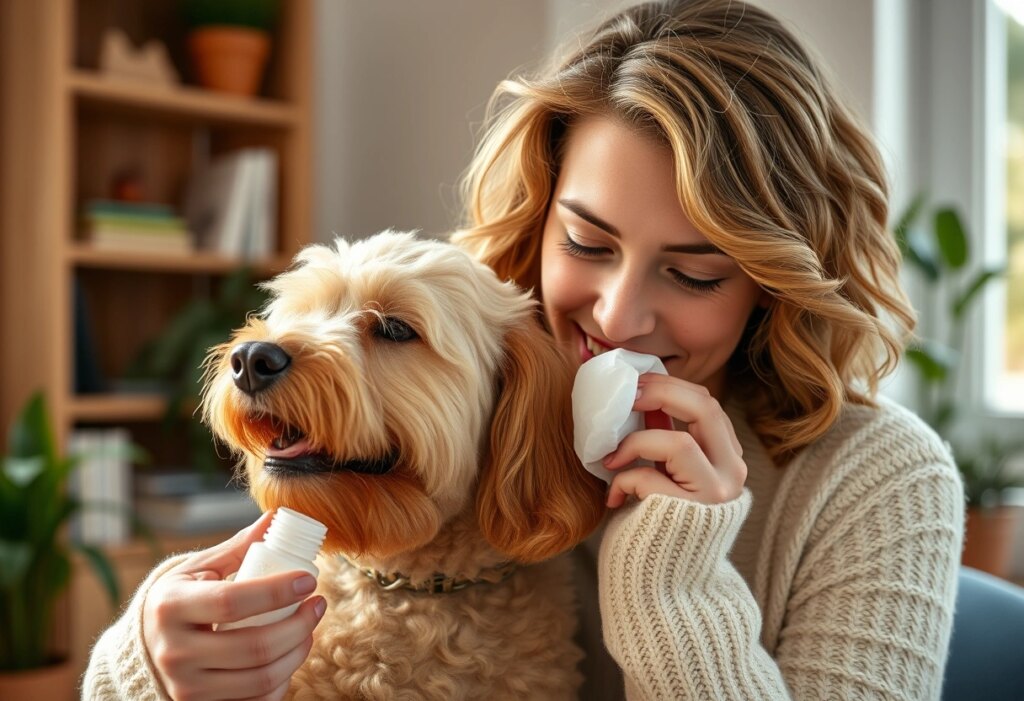
If you own a Doodle, you already know a dog ear cleaner isn’t optional gear, it’s part of your regular grooming kit. Those floppy, fur-covered ears that make Goldendoodles and Bernedoodles so cuddly also trap moisture, warmth, and dead skin cells, creating the perfect breeding ground for both waxy buildup and yeast overgrowth. Below, I’m sharing the five ear cleaners that actually work on stubborn brown wax and musty yeast smell, plus how to tell the two problems apart before you reach for a bottle.
Doodle ears are shaped almost exactly like a trap for bacteria and fungus. The ear canal is an L-shaped tube, and in pendulous-eared breeds, that hairy flap folds down over the opening and blocks airflow. Add in the fact that Doodles are notorious for having hair growing inside the ear canal itself, and you’ve got a recipe for chronic dampness. According to a widely cited epidemiological study published in Veterinary Record, otitis externa (outer ear inflammation) affects roughly 20 percent of dogs at some point in their lives, and dogs with pendulous ears carry a significantly higher risk than prick-eared breeds. That’s not a small statistic when you consider how many Doodle owners I talk to who assume occasional head shaking is just “normal.”
Brown Wax vs. Yeast Buildup: How to Tell the Difference
Not all gunk in your dog’s ear is the same, and figuring out which one you’re dealing with changes how you treat it. Brown wax is usually dry-ish, flaky, and smells faintly earthy, almost like dirt. It builds up gradually and tends to show up more in dogs who swim or get bathed often without proper drying. Yeast buildup, on the other hand, looks greasy, is often darker and almost chocolate-colored, and comes with a distinct sour or “corn chip” odor that’s hard to miss once you’ve smelled it. A study published in the Journal of Veterinary Internal Medicine found that Malassezia pachydermatis yeast is present in over 80 percent of canine yeast-related ear infections, which tells you how common this specific organism is in the Doodle ear environment.
If you’re already noticing a smell before you even get close to your dog’s head, that’s usually your first sign something has shifted from normal wax to a yeast problem. For a deeper breakdown on what’s actually effective for treating infections at home versus what’s just folk remedy noise, I wrote a separate piece on dog ear infection home remedies that actually work, which pairs well with the cleaning routine below.

Top 5 Dog Ear Cleaner Picks for Doodles
When I’m shopping for a dog ear cleaning solution, I’m looking for three things: a pH-balanced formula, zero alcohol (which stings on irritated skin), and some kind of drying agent like boric acid or salicylic acid to keep moisture from lingering after the clean. Those drying agents matter more for Doodles than almost any other breed group because of how much hair sits inside that ear canal. Here’s how the top contenders stack up this year.
| Product Type | Best For | Key Ingredient | Alcohol-Free | Price Tier |
|---|---|---|---|---|
| pH-Balanced Liquid Cleaner | Routine brown wax maintenance | Boric acid, aloe | Yes | $$ |
| Medicated Drying Solution | Active yeast odor control | Salicylic acid | Yes | $$$ |
| Sticky Ear Cleaning Stick | Quick spot cleaning between baths | Adhesive gel formula | Yes | $ |
| Powder-Based Cleaner | Hairy canals prone to moisture | Drying powder base | Yes | $$ |
| Vet-Grade Enzymatic Solution | Chronic or recurring buildup | Enzymatic breakdown agents | Yes | $$$$ |
Each of these formats has a place depending on how bad the buildup is and how much time you want to spend on grooming day. If you’ve been going back and forth on powder versus liquid for your Goldendoodle specifically, I covered that comparison in detail in Goldendoodle ear cleaner: powder vs solution explained, which goes into which texture holds up better in humid climates.
One tool that’s become a staple in my own grooming bag is a quick-use option for in-between cleanings. The 2026 New Sticky Ear Cleaning Stick is handy for lifting surface wax and debris without needing a full liquid flush every single time. It’s not a replacement for a proper dog ear cleaner session, but it’s a solid budget-friendly option to grab visible gunk off the outer ear flap between deeper cleanings.

- 【Sticky Tip for Gentle Ear Cleaning】Designed with a soft adhesive tip, these sticky ear cleaning sticks help pick up vis…
- 【Clean Earbuds, Headphones & More】More than an ear cleaning tool, these sticky cleaning sticks are also suitable for rem…
- 【Soft Design with Easy Handling】The lightweight stick design provides better control during use. The soft sticky tip hel…
Doodle owners also tend to deal with tear staining alongside ear issues, since both are linked to moisture trapped in facial hair. While it’s not technically a dog ear cleaner, I always recommend keeping something like the jioijioi Pets Eye Wipes Tear Stain Remover in the same grooming caddy. Doing a full face-and-ear routine in one sitting means you’re less likely to skip either task, and it keeps the whole head area dry and less hospitable to yeast.

- Pets Eye Wipes:Designed specifically for daily eye care, these pet eye care wipes help remove visible dirt and debris ar…
- Eye Defense Wipes:With a smooth texture that feels gentle on the sensitive skin around the eyes, it can glide easily ove…
- Tear Stain Remover for Pet:Rich in plant extract ingredients, these wipes offer a refreshing cleaning experience and hel…
Step-by-Step Cleaning Method for Doodle Ears
Technique matters just as much as product choice. Here’s the method I use with my own dog, and the one most groomers recommend for pendulous-eared breeds:
- Fill the ear canal generously with your dog ear cleaning solution, don’t just dab at the opening.
- Massage the base of the ear for about 20 to 30 seconds. You should hear a soft squelching sound, that’s the solution breaking up wax deep in the canal.
- Let your dog shake their head (this is normal and helps bring debris upward).
- Use a cotton ball, not a cotton swab, to wipe out the visible canal and outer flap. Cotton swabs can push debris deeper or injure the eardrum if your dog moves suddenly.
- Repeat with a fresh cotton ball until it comes out clean.
As for frequency, most Doodles do well with a full clean once a week, with spot checks in between if they’ve been swimming or playing in high humidity. Over-cleaning is a real risk though. Clean too often and you strip the ear’s natural protective oils, which can actually make your dog more prone to irritation and secondary yeast overgrowth. If you’re using a quality dog ear cleaner, once or twice weekly is plenty for most coats.

For routine ear checks, I like having a visual tool on hand rather than guessing based on smell alone. A Digital Otoscope Ear Camera with Silicone Tips lets you actually see how far down the buildup extends before you commit to a cleaning session, and it’s genuinely useful for catching early-stage yeast before it turns into a full infection.
As a general rule, if your dog’s ears smell clean right after a bath, you’re probably in good shape. If they smell “off” again within two or three days, that’s usually yeast talking, not just regular wax.
Red Flags & When to Call the Vet
No dog ear cleaner, no matter how good, is a substitute for veterinary care when things have progressed past surface-level buildup. Watch for these signs that it’s time to book an appointment rather than keep cleaning at home:
- Persistent odor that returns within a day or two of cleaning
- Constant head shaking or tilting that doesn’t settle down
- Visible swelling, redness, or heat around the ear canal opening
- Your dog yelps or pulls away when you touch the base of the ear
- Discharge that’s thick, yellow, or bloody rather than typical brown wax
These symptoms often point to a bacterial infection layered on top of the yeast, which needs prescription treatment rather than an over-the-counter dog ear cleaner. The American Kennel Club notes that chronic ear infections left untreated can lead to permanent canal narrowing, which makes future flare-ups even harder to manage. It’s genuinely not worth waiting it out if symptoms persist past a few days of consistent home care.
Final Thoughts on Choosing a Dog Ear Cleaner
Doodle ears need more attention than most breeds simply because of how they’re built, hairy, floppy, and prone to trapping moisture. Picking the right dog ear cleaner for your dog’s specific issue, whether that’s routine brown wax or more stubborn yeast buildup, makes a real difference in how often you’re dealing with flare-ups. Combine a solid cleaning solution with consistent technique and you’ll catch most problems long before they turn into a vet visit.
Frequently Asked Questions
How often should I use a dog ear cleaner on my Doodle?
Most Doodles do well with a thorough cleaning once a week, with extra spot checks after swimming or baths. Cleaning more often than that can strip natural oils and actually increase the risk of irritation or yeast overgrowth.
Can I use a human ear cleaning solution on my dog?
No. Human ear products often contain ingredients or pH levels that aren’t suited for a dog’s ear canal. Always use a dog-specific ear cleaner formulated without alcohol and balanced for canine skin.
What’s the difference between brown wax and a yeast infection?
Brown wax is typically dry, flaky, and mildly earthy smelling. Yeast buildup is greasier, darker, and has a distinct sour odor. If the smell returns quickly after cleaning, it’s likely yeast rather than ordinary wax.
Is it normal for Doodle ears to have hair growing inside the canal?
Yes, it’s common in Doodle breeds and part of why they’re more prone to buildup. Some owners have a groomer pluck excess canal hair during routine grooming visits to improve airflow, though this should be done carefully to avoid irritation.


