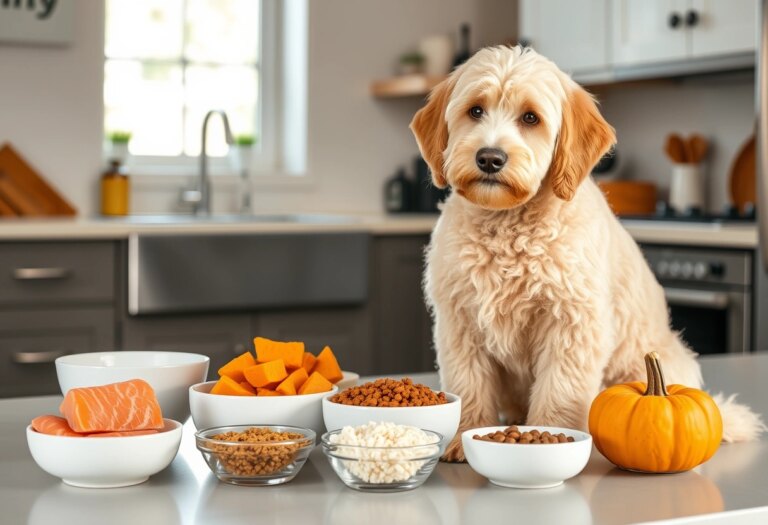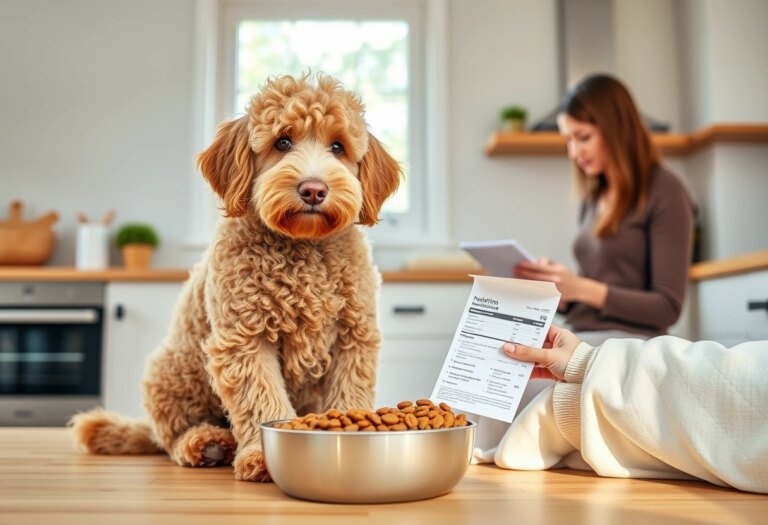


Dog food can help support a Goldendoodle’s recovery from mild diarrhea, but it should never replace veterinary care when symptoms are severe, sudden, or persistent. For a bright, alert adult dog with no blood in the stool and no repeated vomiting, a gentle dry formula, tiny meals, fresh water, and careful observation may be reasonable. Goldendoodles can have sensitive digestion, food intolerances, stress-related loose stool, or a health problem that needs more than a diet adjustment.
When diarrhea needs more than a food change
A single soft stool after a stolen snack is different from watery diarrhea every few hours. Contact your veterinarian promptly if your Goldendoodle seems weak, refuses water, vomits repeatedly, has a painful or swollen belly, or produces black, tarry, or bloody stool.
Veterinary care is also appropriate when diarrhea lasts beyond a day or two, or when the stool problem is getting worse instead of better. The Cornell University College of Veterinary Medicine diarrhea guidance offers a useful reference, but your own veterinarian should make the treatment plan for your dog.
My rule for Doodle families is simple: mild symptoms in a cheerful adult dog may allow a short period of careful feeding, but a sick-looking dog needs a medical assessment before experimenting with a new diet.
Puppies, seniors, pregnant dogs, and Goldendoodles with kidney disease, pancreatitis, diabetes, inflammatory bowel disease, or other ongoing conditions deserve a lower threshold for a phone call. Diarrhea can cause dehydration faster than many people expect, especially in a small puppy.
What to look for in dog food during recovery
The most useful dog food for a recovering Goldendoodle is usually easy to digest, familiar enough to avoid a sudden ingredient shock, and appropriate for the dog’s age and medical history. A long ingredient list is not automatically bad, and a short list is not automatically better.
Look for a complete and balanced formula made for your dog’s life stage. Moderate fat may be easier for some dogs than a rich recipe, while a sensitive stomach dog food may help dogs that react to abrupt ingredient changes. Ask your veterinarian whether a prescription gastrointestinal diet is more suitable if the diarrhea keeps returning.
Do not switch from one kibble to another in a single meal unless your veterinarian tells you to do so. Once stools improve, mix a small amount of the new recipe with the old one and increase it gradually over about a week. A slower change is kinder to a Goldendoodle’s gut.

| Option | Best fit | What to check | Price Tier |
|---|---|---|---|
| Hill’s Science Diet Adult 7+ | Older Goldendoodles needing an age-specific recipe | Life-stage fit, tolerance of the protein and grain sources | $$$ |
| Veterinary gastrointestinal dry diet | Dogs with ongoing or medically significant digestive signs | Use only with veterinary direction | $$$$ |
| Human-grade fresh-in-bowl dry recipe | Pet parents wanting a softer feeding routine | Calorie density, storage, and ingredient tolerance | $$$$ |
| Limited-ingredient sensitive digestion formula | Dogs with suspected food sensitivity | One main protein, simple transition, complete nutrition | $$$ |
| VICTOR Select Beef Meal & Brown Rice | Adult dogs that tolerate beef and rice-based recipes | Fat level, stool response, and individual protein tolerance | $$ |
Five vet-informed dry food options for a Goldendoodle diarrhea diet
1. Hill’s Science Diet Adult 7+ for senior Goldendoodles
For an older Goldendoodle, the Hill’s Science Diet Adult 7+ Dry Dog Food | #1 Veterinarian … is a practical age-matched option to discuss with your veterinarian. During my bowl-and-scoop test, the kibble felt dry and fairly firm, with pieces that were easy to measure without crumbling into a dusty pile. The bag was manageable to pour, although the closure took a little patience to reseal neatly.

- Healthy heart, kidneys, and bladder supported by antioxidants and balanced minerals
- Lean muscles supported with high-quality protein
- Made with natural ingredients
This is not a diarrhea treatment, and an older dog with new loose stool still needs an examination if signs persist. The main advantage is the clear senior focus, which can make it easier to keep an aging Doodle on a consistent routine. Introduce it slowly, and stop if stools worsen.
2. A veterinary gastrointestinal dry diet
A prescription gastrointestinal formula is the option I would put near the top of the conversation for repeated diarrhea, a history of digestive disease, or a dog that is losing weight. These diets are designed around digestibility and nutrient delivery, but the right choice depends on the suspected cause. Your veterinarian may recommend testing before selecting one.
This category is not a casual bargain-bin swap. It can be a premium investment, and some dogs dislike the flavor or need a gradual transition. Still, a veterinarian-directed digestive care dog food may be more sensible than cycling through several retail recipes at home.
3. A simple limited-ingredient dry recipe
For a Goldendoodle that has loose stool after changing proteins or treats, a limited-ingredient formula can make the feeding record easier to understand. Choose one main animal protein your dog has tolerated before, avoid adding table scraps, and keep treats very plain. This is useful for troubleshooting, but it does not prove a food allergy.
Read the label for life-stage suitability and calorie density. Some limited-ingredient recipes are surprisingly rich, and a high-fat meal can create trouble for dogs with sensitive digestion. Ask your veterinarian before using an elimination diet, since proper allergy testing and diet control require careful planning.
4. Human-grade dry food made fresh in the bowl
The Human-Grade Dry Dog Food Made Fresh In The Bowl, Just Add … offers a different feeding experience for pet parents who want to add water at mealtime. I liked the softer texture after mixing and the quieter serving experience compared with hard kibble rattling into a metal bowl. The catch is that preparation adds one more task, and wet leftovers need prompt refrigeration rather than sitting beside the bowl all afternoon.
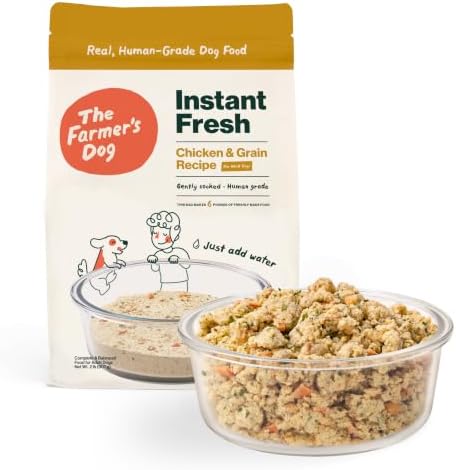
- DRY IN THE BAG. MADE FRESH IN THE BOWL: Instant Fresh is real, human-grade dog food in a pantry-friendly format that tra…
- HUMAN-GRADE DOG FOOD: Instant Fresh is made with the same quality and safety standards as human food
- MINIMALLY PROCESSED: Our Proprietary Low-Heat Drying Technology helps retain more natural nutrients while avoiding the h…
Use the feeding directions as a starting point, then follow your veterinarian’s advice. Adding water can make meals more appealing, but it does not turn a regular recipe into medical care. Watch the stool, appetite, and energy together.
5. VICTOR Select Beef Meal and Brown Rice
For an adult Goldendoodle that already tolerates beef, the VICTOR Select Gluten-Free Beef Meal & Brown Rice Dry Dog … is a mid-tier option worth discussing. In the bowl, the kibble was fairly tidy to scoop, with little loose powder left behind. I also found the bag easier to carry than oversized food sacks, though the seal did not feel especially forgiving when I rushed the closure.
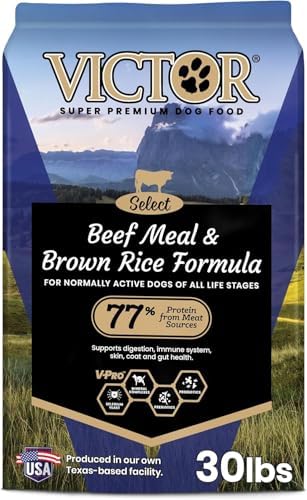
- BEEF PROTEIN DRY DOG FOOD: VICTOR Beef Meal & Brown Rice super premium dog food is formulated for normally active dogs; …
- HIGH QUALITY INGREDIENTS: VICTOR’s Select line of dry dog kibble offers specific proteins in a variety of formulated ble…
- FROM PUPPY TO ADULT: Suitable for small dogs, medium dogs and large breed dogs through all life stages, this high qualit…
“Gluten-free” does not automatically mean easier on every dog, and beef can bother some individuals. Start with a measured portion, skip extra treats, and record what happens. If stool becomes loose again, do not keep pushing through for weeks.

How to feed during recovery
Begin with small meals rather than one large serving. A hungry Goldendoodle may inhale a full bowl, then produce another round of diarrhea. Divide the daily amount into three or four modest feedings, unless your veterinarian gives different instructions.
Fresh water should be available at all times. Check the bowl often, especially after vomiting or outdoor activity. You can track stool color, texture, frequency, appetite, and energy in a phone note. That small record gives your veterinarian useful information.
VCA Animal Hospitals recommends veterinary guidance before fasting a dog or making a major diet change. I would not withhold food from a puppy, senior, or medically fragile dog without that advice. A Goldendoodle may also need a fecal test, hydration support, or medication rather than another bag of dog food.
Keep chews, fatty treats, leftovers, supplements, and flavored medications in the record too. The “mystery snack” is often not mysterious once the whole day is written down. Clean bowls after every meal, and wash bedding if accidents have occurred.
When to call your vet
Call promptly for blood in the stool, repeated vomiting, marked lethargy, pale gums, dry or sticky gums, collapse, belly pain, or signs of dehydration. A dog that cannot keep water down should not be managed with food changes alone.
Persistent diarrhea deserves attention even if your Doodle still wags happily. Parasites, infection, pancreatitis, inflammatory disease, medication reactions, and dietary intolerance can look similar at home. If your Goldendoodle has recurring episodes, read our guide to dog food for sensitive stomach and skin allergies as background, then bring your notes to the veterinary visit.
For an adult with mild symptoms, a cautious transition and a simple meal plan may help. For a puppy or a dog with health conditions, the safer choice is an earlier call. The right dog food is only one piece of the recovery plan.
Frequently asked questions
Should I stop feeding my Goldendoodle during diarrhea?
Do not fast a puppy, senior, underweight dog, or dog with a medical condition unless your veterinarian directs you to. For a healthy adult, ask your veterinary team whether a brief feeding adjustment is appropriate, then use small portions and watch hydration closely.
How quickly should a new dog food be introduced?
Once your dog is stable, mix the new recipe with the old one over roughly seven days. Start with a small amount of the new food, increase it gradually, and pause the transition if stool quality drops.
Can I use a Goldendoodle diarrhea diet for every loose-stool episode?
No. A temporary bland or gentle plan may fit one mild episode, but repeated diarrhea can point to parasites, food intolerance, infection, or another illness. Ask your veterinarian before repeatedly changing dog food or adding supplements.
What should I do if my Goldendoodle has diarrhea and vomiting?
Call your veterinarian, especially if vomiting repeats, water will not stay down, your dog seems tired, or the stool contains blood. Skip treats and do not give human anti-diarrhea medicine unless a veterinary professional specifically approves it.
Final feeding perspective
The best choice depends on the dog in front of you, not just the label on the bag. A gentle dog food may support a short recovery for a bright adult Goldendoodle, while a sick, dehydrated, or repeatedly affected dog needs veterinary care first. Keep portions modest, record changes, and give one plan enough time to judge safely.