

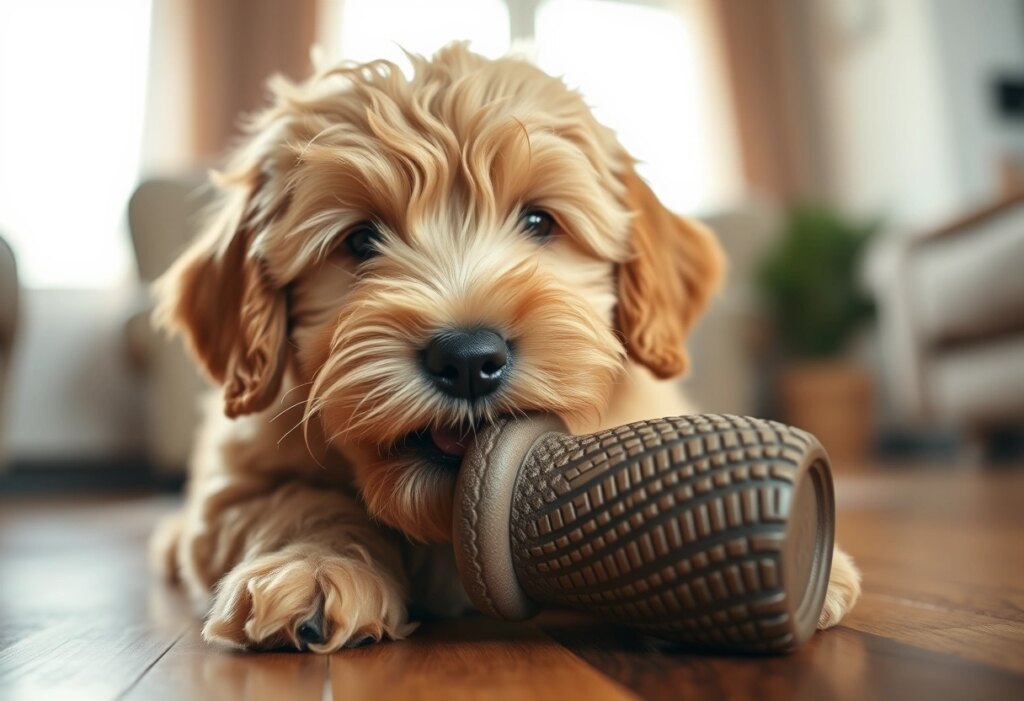
If your puppy won’t stop biting you and your clothes, take a breath. This is almost always a normal developmental phase, not a sign of aggression or a bad temperament, and nearly every puppy goes through an intense biting stretch between 3 and 6 months of age as those sharp baby teeth give way to adult ones. You’re not failing. You just need the right combination of tools and consistency, and that’s exactly what we’re covering here.
By the end of this article, you’ll know why puppy biting happens, which chew and redirect tools actually make a difference, a step-by-step protocol you can start using today, and what to do if nothing seems to be working. Let’s get your sleeves (and your sanity) back.
Why Puppy Biting Happens in the First Place
Puppy biting isn’t random, and it isn’t your Doodle testing to see who’s boss. It’s almost always driven by one of three things: teething discomfort, overtiredness, or a lack of mental and physical stimulation. The American Veterinary Medical Association’s puppy behavior guidelines note that mouthing and nipping are a normal part of canine development, especially as adult teeth erupt and gums become sore.
Think about it from the puppy’s point of view. Their mouth is their primary tool for exploring the world, the same way a toddler reaches for everything within arm’s length. Add in sore gums, an overtired nervous system, or boredom from being under-exercised, and your pant leg becomes the most interesting (and chewable) thing in the room.
There’s also solid research backing up how we should respond. A 2021 study published in Applied Animal Behaviour Science found that bite inhibition in puppies improved fastest when owners consistently redirected the behavior rather than punishing it. Punishment-based responses, like scruffing or yelling, tended to increase fear and sometimes escalated the biting instead of reducing it. The takeaway is simple: redirection works better than correction.
Go-To Chew and Redirect Tools for Puppy Biting
Having the right tools on hand before a biting episode starts makes a huge difference. Here’s a quick checklist of go-to options that work well for teething Doodle puppies:

- Frozen washcloths: Wet a cotton washcloth, tie it in a loose knot, and freeze it. The cold numbs sore gums and gives your puppy something satisfying to gnaw on instead of your hand.
- Rubber teething rings: Textured rubber rings designed for puppies provide gum relief and are durable enough for most Doodle coat types and jaw strengths.
- Flirt poles: A flirt pole lets your puppy chase and bite a toy on the end of a string instead of your clothing, which also burns off excess energy fast.
- Appropriately sized chew toys: Match the toy size to your puppy’s current size and expected adult size. A toy that’s too small is a choking risk, and one that’s too big won’t get used.
Soft, squeaky plush toys are also worth keeping in rotation, especially for younger puppies who are still gentle enough that durability isn’t the top priority yet. The Best Pet Supplies Squeaky Dog Toys with Soft Durable Fabric are a budget-friendly option that gives your puppy an immediate, satisfying alternative to your sleeve the moment nipping starts. The squeak adds a layer of engagement that redirects attention fast, which is half the battle during a biting episode.

- Stuffing free: Our mystery box includes 4 stuffing-free dog toys that won’t make a mess while your pup pulls, tugs and c…
- Keep your dog intrigued: The mystery box includes toys with squeakers placed in the head and in the tail; These squeaky …
- For all breeds: Whether you have a Great Dane or a little Chihuahua, you’ll find the perfect-sized pet toy as each style…
For something a little more novel, a shaped plush toy can hold a puppy’s interest longer than a plain tug rope. The PetPhindU Pet Dog Squeaky Plush Toy, Triangle Watermelon is a fun, affordable addition to a redirect toy rotation, and rotating toys every few days actually helps prevent your puppy from losing interest and going back to furniture or fingers.

- Safe Material: This plush toy for dog fetch, watermelon plush is made of safe cotton and polyester, watermelon dog toy i…
- It Is Funny and Interactive: The design of watermelon-shaped plush toy is exaggerated and different from most of the rea…
- Behavior Training: Your pet dog is bored when you are not home. The dog may do something strange and bad to please herse…
The Step-by-Step Protocol to Stop Puppy Biting
Tools help, but consistency is what actually gets a biting phase under control. Here’s the protocol worth running every single day, with every family member on the same page:
- Yelp and withdraw: The moment teeth touch skin, let out a short, sharp “ouch” and immediately stop playing. Pull your hand or sleeve away and go still. This mimics how littermates teach each other bite pressure limits.
- Offer the redirect immediately: As soon as you withdraw, hand your puppy an appropriate chew toy. The goal is to teach “teeth belong on toys, not people” within seconds of the correction.
- Use short time-outs for repeat offenses: If the biting continues after redirection, calmly remove yourself from the room for 20 to 30 seconds. No yelling, no eye contact, just a brief pause in attention.
- Keep rules consistent across the household: If one family member allows rough mouthing during play and another doesn’t, your puppy gets mixed signals and the phase drags on longer.
- Schedule bite-outlet play sessions: Set aside dedicated tug and chase time with appropriate toys several times a day. A puppy that gets to bite “legally” during structured play is less likely to bite inappropriately the rest of the day.
This same redirect-first approach is also the foundation for managing more serious cases. If you’re seeing growling, snapping, or biting that feels more intense than typical puppy mouthing, our guide on sudden aggression in puppies breaks down the causes and fixes in more detail. And if biting episodes are escalating rather than fading with age, it’s worth reading through what actually works for puppies that won’t stop biting for additional troubleshooting steps.
Puppy biting almost always gets better with age, consistency, and the right redirect tools. It rarely requires anything more dramatic than patience and a well-timed chew toy.
Comparison: Bite Inhibition Training vs. Professional Trainer vs. Vet Check
When basic redirection doesn’t seem to be making a dent, it helps to compare your options side by side. Here’s how the three main paths stack up:
| Approach | Best For | Pros | Cons | Price Tier |
|---|---|---|---|---|
| DIY Bite Inhibition Training | Mild to moderate puppy biting, early intervention | Free or low-cost, builds daily bonding, works for most typical teething behavior | Requires consistency, slower results if family isn’t aligned | $ |
| Certified Professional Trainer | Biting that isn’t improving after weeks of consistent redirection | Personalized plan, expert read on body language, faster progress | Ongoing cost, scheduling required | $$$ |
| Veterinary Behavior Check | Sudden escalation, pain-driven biting, or unusual aggression | Rules out medical causes, access to behavior medication if needed | Appointment cost, may require referral to a specialist | $$$$ |
Most puppies respond well to the first path if you’re consistent for a solid two to three weeks. If progress stalls, a professional trainer can usually identify what’s being missed in your at-home routine. A vet visit becomes the priority if biting shows up suddenly, out of character, or alongside signs of discomfort, since pain is a common hidden driver of behavior changes that get misread as stubbornness.
When You Need Extra Management Tools for Puppy Biting
Sometimes you need a short-term management tool while training catches up, especially during high-energy situations like vet visits, nail trims, or when young kids are nearby and a puppy is overtired and mouthy. A well-fitted muzzle isn’t a punishment tool. It’s a safety accessory used temporarily and paired with positive reinforcement so your puppy doesn’t associate it with anything negative.
The DoggieKit Dog Muzzle, Soft Printed Mesh Puppy is a lightweight, breathable option designed for short-term use, and it can be a useful bridge while you work through structured bite inhibition training. Always introduce any muzzle gradually with treats and short wear times so it stays a neutral, non-stressful tool rather than something your puppy dreads.

- Breathable & Lightweight Material: This printed dog muzzle combines soft, breathable mesh with lightweight yet durable c…
- Upgraded Escape-Proof Neck Design: This puppy muzzle features our upgraded escape-proof elastic neck collar, which comfo…
- Adjustable Snout & Head Strap: This dog mussel enables a securely customized fit for your pup through dual-point snout a…
If biting ever crosses into territory that feels genuinely unsafe, especially with children in the home, it’s worth reading our honest breakdown on whether you should get rid of a dog after it bites before making any big decisions. In the vast majority of puppy cases, though, this never becomes necessary. Puppy biting is a phase, not a permanent personality trait.

Puppy Teething Toys and Daily Habits That Prevent Biting Before It Starts
Prevention is honestly the least talked about part of stopping puppy biting, but it’s often the most effective. A tired, well-exercised, and mentally engaged puppy has far less motivation to chew on your clothes in the first place.
A few daily habits worth building in:
- Rotate two or three puppy teething toys so there’s always a fresh, interesting option available
- Keep a frozen washcloth in the freezer at all times during peak teething weeks
- Build in short naps, since overtired puppies bite more, not less
- End high-energy play sessions with a calm settle period rather than letting excitement spike right before bedtime
According to the American Kennel Club, puppies that get consistent, structured bite-redirect training in the first few months typically show meaningful improvement in bite inhibition by around 6 months of age. That timeline holds true for most Doodle mixes as well, since teething generally wraps up between 6 and 8 months.
Staying Patient While You Wait Out the Phase
It’s easy to feel like puppy biting will never end when you’re in the middle of it, especially with torn sleeves and nipped fingers piling up. But this phase has a clear endpoint, and every consistent redirect you make is shortening it.
Stick with the yelp-and-withdraw method, keep the right chew tools in rotation, and get the whole household on the same page. Puppy biting responds to patience far more reliably than it responds to frustration, and most Doodle puppies grow out of the worst of it well before their first birthday.
At what age does puppy biting usually stop?
Most puppies show significant improvement in biting and nipping between 6 and 8 months of age, once adult teeth have fully come in and gum soreness resolves. Consistent redirection during the 3 to 6 month window tends to shorten the overall timeline for stop puppy biting progress.
Is it normal for a puppy to bite this hard?
Yes, sharp puppy teeth combined with an undeveloped sense of bite pressure make even playful nipping feel intense. This is a normal part of learning bite inhibition, and consistent redirect training using puppy teething toys usually reduces the intensity within a few weeks.
Should I ever punish my puppy for biting?
No. Research shows punishment-based responses tend to increase fear and can escalate biting rather than reduce it. Redirecting to an appropriate chew toy and using brief time-outs is a far more effective and humane way to address puppy nipping.
When should I see a vet about puppy biting?
If biting appears suddenly, feels unusually intense, or is paired with signs of discomfort like whimpering or reluctance to be touched, schedule a veterinary behavior check. Pain-driven biting needs to be ruled out before continuing with standard puppy biting training approaches.


