

If your sweet, obedient Doodle puppy suddenly started acting like she forgot every puppy training tools lesson you ever taught her, take a breath. You are not losing your mind, and your dog is not broken. Somewhere between six and eighteen months, Doodles hit a developmental stretch that trainers and vets call adolescence, and it can feel like your well-mannered pup got body-snatched overnight.
The good news is that this phase is predictable, temporary, and manageable with the right gear and a little patience. This guide walks through exactly what’s happening in your Doodle’s brain, which puppy training tools actually earn their keep during this window, and how to rebuild reliability before adulthood sets in. We’ll compare harnesses, long-lines, and training collars so you can pick what fits your dog’s size, energy, and personality.
Why Your Doodle Suddenly “Forgot” Everything She Knew
Canine adolescence runs roughly from six to eighteen months, depending on breed size and individual maturity rate. For Goldendoodles, Labradoodles, and Bernedoodles, this stage often overlaps with a growth spurt, which means your dog is dealing with a changing body on top of a changing brain.
Researchers at the University of Nottingham published a 2020 study in Biology Letters showing that dogs between five and ten months old demonstrated measurably reduced obedience toward their owners, even dogs with strong training histories. The study drew a direct comparison to human teenagers pulling away from parental authority while staying closely bonded to trusted figures. Your Doodle isn’t rejecting you. She’s going through a biologically normal stage of independence testing.
This period also coincides with a second fear period, a stretch where previously confident puppies can suddenly spook at things they used to ignore, like a trash can lid or a stranger in a hat. Combine hormonal shifts, a second fear period, and a brain that’s still finishing its wiring, and you get a dog who seems to have selective hearing. This is exactly why puppy adolescence training requires a different toolkit than what worked at twelve weeks old.
Adolescence is not a training failure. It’s a neurological fact of canine development, and dogs who get consistent, patient guidance through this window tend to come out the other side as more reliable adult dogs than those who get punished or given up on.
Core Tools Every Doodle Parent Needs During This Phase
You don’t need an entire pet store’s worth of gear, but a few specific tools make this stage dramatically easier. Here’s what actually earns a spot in your training bag:

- Front-clip no-pull harness: Redirects a lunging or pulling adolescent dog’s momentum sideways instead of letting her drag you forward. Essential for Doodles going through leash reactivity flare-ups.
- Long-line (15 to 30 feet): Lets your dog practice recall and off-leash manners in a safely controlled way, without risking a bolt toward a squirrel or another dog.
- Treat pouch: Fast, hands-free access to high-value rewards is non-negotiable when you need to reinforce good choices within a second or two.
- Puzzle feeders: Mental fatigue is just as effective as physical exercise for calming an overstimulated teenage brain, and it’s much easier on joints that are still developing.
If leash walks have turned into a tug-of-war contest, this is also a good time to review why your Goldendoodle is still biting at one year, since mouthing and leash frustration often show up together during adolescent regression.
For the treat delivery piece, a dedicated pouch makes a bigger difference than people expect. The Pup Culture Dog Treat Pouch with Poop Bag Dispenser clips on your waist, holds a decent volume of treats, and keeps a poop bag roll within reach too, which matters a lot on long recall sessions where you’re not going back to the car every five minutes.

- FINALLY, A Dog Treat Bag You WANT To Carry – Lets face it, most treat pouches for pet training are boring and industrial…
- REMOVABLE/WASHABLE TREAT BAG- Unlike other dog treat bags, our dog treat holder has a removable treat bag that can be wa…
- NEVER BE CAUGHT WITHOUT A POOP BAG AGAIN – Our discrete poop bag dispenser allows for quicker pick ups and more walking,…
Comparing Training Tool Categories: What Actually Fits Your Doodle
Not every piece of gear suits every dog, and this is where a lot of pet parents waste money on the wrong equipment. Here’s a straightforward breakdown of control, comfort, and learning curve across the main categories of teenage dog training gear.
| Tool Category | Control Level | Comfort for Dog | Learning Curve | Best For | Price Tier |
|---|---|---|---|---|---|
| Head Halter | Very High | Moderate (needs desensitization) | Steep for owner and dog | Strong pullers, large adolescent Doodles | $ |
| Front-Clip Harness | High | High | Easy | Most Doodle puppies in adolescence | $$ |
| Slip Lead | Moderate | Low to Moderate | Moderate, requires correct technique | Quick walks, vet visits, grooming trips | $ |
| Long-Line (15-30 ft) | Moderate (distance-dependent) | High | Easy to Moderate | Recall practice, controlled off-leash time | $$ |
| Remote Training Collar | High (distance work) | High when fitted and used correctly | Steep, requires professional guidance | Off-leash reliability, distance recall | $$$$ |
Head halters give you the most physical control because they steer the head, but many adolescent Doodles find them irritating at first and need a slow introduction. Front-clip harnesses are the gentler middle ground most families land on, since they offer solid control without the face-rubbing adjustment period. Slip leads are handy for quick in-and-out situations but aren’t meant for daily walks with a dog who’s still testing boundaries.
For dogs who already have a reasonably solid recall and need distance reinforcement, a remote collar can be useful, but it has to be introduced correctly and never used as a punishment tool. The E-Collar Educator FOB 300 Yard Dog Training Collar is built for owners who already understand low-level stimulation as a communication tool rather than a correction, and it’s best paired with professional guidance if you’ve never used one before.
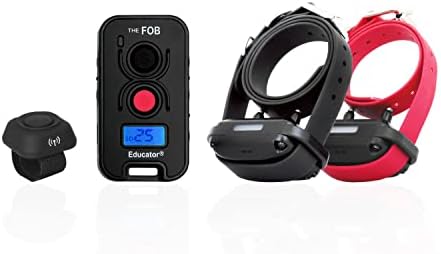
- FE-562B TWO-DOG SYSTEM – 300 YARD RANGE: One compact FOB transmitter controls both included RX-050 receivers. Follow the…
- BLUETOOTH FINGER BUTTON – PAIR BEFORE USE: Included Finger Button connects to the FOB transmitter via Bluetooth for clos…
- PROGRAMMABLE CONTROLS: Programmable S buttons can be configured for Electronic Stimulation with a Pulsing or Tapping Sen…
According to the ASPCA, consistent positive reinforcement during the adolescent window is one of the strongest predictors of a well-adjusted adult dog, while harsh corrections during this fear-sensitive stage can actually create long-term anxiety or avoidance behaviors. That’s a strong argument for leaning toward reward-based tools first and treating stronger tools like e-collars as a last resort, used thoughtfully.
If you’d rather avoid remote collars altogether, a no-shock option can bridge the gap for owners who want a vibration or tone cue instead of stimulation. The PaiPaitek No Shock Dog Training Collar with Remote works well for dogs who respond to a vibration alert, which is often enough to interrupt an impulsive moment and redirect attention back to you.

- NO SHOCK. NO PRONGS. NO FEAR — This no shock training collar for dogs stops barking at mailmen, digging roses, chasing s…
- HALF A MILE. ONE REMOTE. TOTAL FREEDOM — Train up to 3300FT — backyard, beach, forest. No more screaming until hoarse or…
- 3 DOGS. 1 REMOTE. 3 CHANNELS. ZERO CHAOS — Save separate vibration & beep levels for each dog — gentle for timid pups, f…
A Step-by-Step Plan to Rebuild Reliability
Rather than panicking that your dog has backslid permanently, treat this stage as a reset period where you go back to basics with better tools. Here’s a plan that works for most adolescent Doodles:

- Shrink your expectations temporarily. Practice known cues in low-distraction environments again, even if it feels like a step backward. It isn’t.
- Upgrade your rewards. Kibble probably won’t cut it anymore. Switch to small pieces of real chicken, cheese, or freeze-dried liver kept in your treat pouch for instant delivery.
- Reintroduce recall on a long-line. Practice in a fenced yard or open field, rewarding generously every single time she returns, even if she took her time getting there.
- Shorten training sessions. Five to ten focused minutes beat a frustrating thirty-minute slog for a brain that’s already overloaded with hormonal noise.
- Add mental enrichment on tough days. A puzzle feeder before a walk can take the edge off a dog who’s too wound up to focus.
- Stay consistent across the household. Everyone in the home needs to use the same cues and the same reward timing, or your dog will get mixed signals during an already confusing stage.
If leash pulling or sudden lunging has become a daily struggle, it may also help to look at this from a bite-prevention angle, since frustration on leash often shows up as mouthing too. This guide on bite inhibition tools that actually work pairs well with the recall and harness strategies covered here.
Owners of Doodles who were bred from Golden Retriever lines sometimes also wonder whether their dog’s adolescent stubbornness is breed-specific. If that’s you, this breakdown of Goldendoodle versus Golden Retriever temperament and health digs into exactly how much of this phase is Doodle-specific versus just normal puppy development.
Choosing the Right Puppy Training Tools for Your Dog’s Stage
Picking the right puppy training tools isn’t about buying the most advanced gear on the shelf. It’s about matching the tool to your dog’s current struggle. A dog who pulls hard on walks needs a front-clip harness before she needs a remote collar. A dog who won’t come back when called needs a long-line and better treats before she needs any kind of correction tool at all.
Think of your dog recall long line as the single highest-value purchase during this stage, since recall reliability is the skill most likely to keep your dog safe during a season when her impulse control is genuinely compromised. Everything else, from harnesses to collars to treat pouches, supports that core goal of keeping her safe while her brain finishes developing.
Budget matters too. A front-clip harness and a long-line together are a relatively affordable investment compared to the mid-tier and premium cost of a quality remote training system, so most families can start with the basics and only add stronger tools if specific challenges call for them.
Frequently Asked Questions
How long does the teenage phase last in Doodles?
Most Doodles move through adolescence between six and eighteen months old, though larger standard-sized Doodles may extend slightly past eighteen months before settling into adult behavior. Using the right puppy training tools consistently throughout this window tends to shorten the rough patches considerably.
Is it normal for my previously trained puppy to ignore commands now?
Yes, this is one of the most common and well-documented parts of canine adolescence. Research has shown measurable drops in obedience during this age range, so a temporary lapse doesn’t mean your earlier training failed.
Should I use a remote training collar on my adolescent Doodle?
A remote collar can be appropriate for distance recall work once a dog already understands the cue, but it should be introduced gradually and never used as a punishment. Many families get strong results from front-clip harnesses and long-lines alone before ever considering a collar-based tool.
What’s the single most useful tool for surviving puppy adolescence?
A long-line paired with a reliable treat pouch is usually the highest-impact combination, since it lets you rebuild recall safely while rewarding good choices instantly. These two puppy training tools address the core safety concern of this stage, which is impulsive bolting toward distractions.
This stage will pass. Doodles who get patient, reward-based guidance through adolescence consistently grow into the calm, biddable adult dogs their breed reputation promises. Keep your sessions short, your rewards high-value, and your expectations realistic, and you’ll come out the other side with a dog who’s not just obedient again, but more confident than she was before.


