

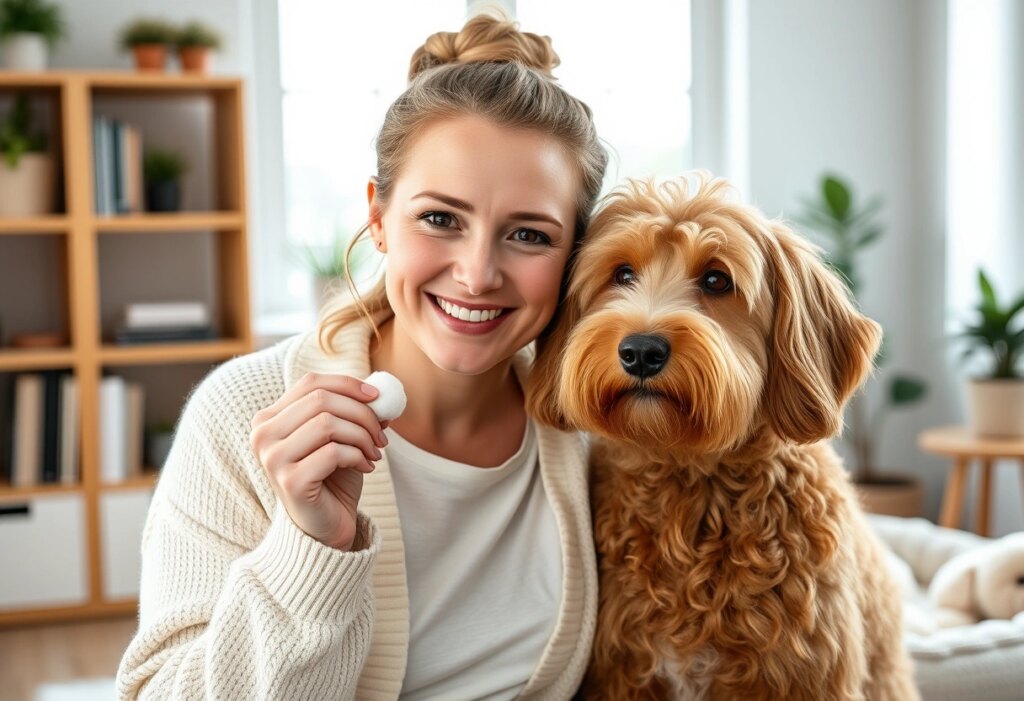
A goldendoodle ear infection needs more than a splash of vinegar and a hope for the best, because the wrong home remedy can actually make inflamed ear tissue worse. If your pup has been shaking their head, scratching at their ears, or you’ve caught a whiff of something funky when you lift that floppy flap, you’re dealing with a genuinely common problem in this breed. The good news is there’s a clear path between what people try at home and what actually holds up to scrutiny. Let’s get into what works, what doesn’t, and when it’s time to hang up the DIY approach and call your vet.
Why Goldendoodles Are Prone to Ear Infections
Goldendoodles didn’t get lucky in the ear department. Their pendant-style ears hang down and trap warm, humid air against the skin, and the wavy or curly hair growing inside the ear canal makes things worse by blocking airflow even further. Add in a swim in the lake or a bath that doesn’t get fully dried out, and you’ve got a small, dark, moist environment where yeast and bacteria throw a party. This isn’t just a hunch pet parents have. Veterinary researchers have documented that drop-eared breeds face notably higher rates of otitis externa (the medical term for outer ear infection) compared to dogs with upright, prick ears, according to research summarized by the American College of Veterinary Internal Medicine. Less air circulation simply means more opportunity for infection to take hold.
This is also why a goldendoodle ear infection tends to be a recurring headache rather than a one-time event. Once the canal has been irritated, the skin can stay inflamed and narrowed for weeks, making it even easier for the next infection to move in. That’s why prevention and routine maintenance matter just as much as treating the active flare-up in front of you.
Popular Home Remedies: What Has Evidence and What’s Just Anecdote
Search “goldendoodle ear infection home remedy” and you’ll find no shortage of kitchen-cabinet solutions. Some have a reasonable basis. Others are repeated so often online that people assume they’re proven, when really they’re just popular.
Apple cider vinegar rinses. Diluted ACV has mild antimicrobial properties and can help restore a slightly acidic pH in a healthy ear canal, which some groomers use as a preventive rinse after swimming or bathing. The problem is that on inflamed, already-irritated skin, that same acidity can sting and cause more discomfort, sometimes discouraging dogs from tolerating any future ear care at all. It’s a reasonable maintenance tool for a healthy ear, but a poor choice for an ear that’s already infected.
Witch hazel. This one is mostly anecdotal. Witch hazel has mild astringent properties, but there’s little veterinary research specifically supporting its use inside a dog’s ear canal, and the tannins in it can be drying to already-inflamed tissue.

Coconut oil. Coconut oil has some documented antimicrobial activity in lab studies, but “some evidence in a petri dish” is a long way from “safe and effective inside a dog’s ear canal.” Oil-based remedies can also trap debris and moisture rather than clearing it out, which works against you when the whole goal is drying and cleaning the canal.
The pattern here is pretty consistent: home ingredients that show mild antimicrobial activity in general use don’t necessarily translate to safe, effective treatment inside a warm, dark, already-compromised ear canal. That’s a different job entirely, and it’s one vets have spent a lot more time studying.
What Veterinarians Recommend Instead
Ear infections aren’t a rare inconvenience. A widely cited 2011 Banfield Pet Hospital study found that roughly 1 in 5 dogs are treated for an ear infection in a given year, which tells you this is one of the most common reasons doodle owners end up in an exam room. Given how frequently vets see this issue, their preferred approach is worth paying attention to.
Most veterinarians steer owners away from acidic DIY rinses like vinegar and toward pH-balanced enzymatic ear cleaners formulated specifically for canine ear tissue. These cleaners are designed to break down wax and debris without stinging inflamed skin, and they typically include ingredients that discourage yeast and bacterial overgrowth without the unpredictable acidity of a homemade mix. A gentle enzymatic cleaner used consistently does two jobs at once: it treats the current mess and helps prevent the next one.
Cleanup around the outer ear flap matters too, especially in a breed with this much hair and this much drool-and-drool-adjacent mess. A soft, alcohol-free wipe like the ZOOP XL Pet Wipes for Dogs & Cats can be handy for wiping down the outer ear and surrounding fur after a cleaning session, keeping debris from working its way back toward the canal.
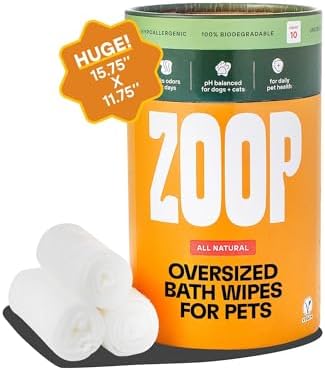
- FAST GROOMING: Save hours of cleaning your dirty pet! Instead of a bath, a quick wipe with a giant towel-sized pet wipe….
- BETTER THAN SHAMPOO: The gentle oversized pet grooming wipe is water-based and infused with skin-supporting nanosilver. …
- ULTRA BIG AND THICK: Pack of 10 absorbent, very thick, giant pet grooming wipes for easy pet cleaning.
For infections that have progressed past routine cleaning, vets sometimes prescribe topical medications tailored to the specific cause. An antibiotic ophthalmic-grade solution such as Ciprofloxacin, 0.3% Ophthalmic Solution is sometimes used off-label by vets for certain bacterial ear conditions, and a topical steroid like Betamethasone Dipropionate (Augmented) 0.05% may be prescribed to calm severe inflammation. Products like these should only be used under direct veterinary guidance, since dosing and application inside the ear canal is very different from other uses, and the wrong product or concentration can cause harm.
There is an issue displaying Amazon products. Please contact the administrator to check that. There is an issue displaying Amazon products. Please contact the administrator to check that.A goldendoodle ear infection almost never resolves faster because you tried something stronger from the kitchen. It resolves faster because the canal gets clean, dry, and left alone long enough to heal, then supported with the right product for the actual cause.
Home Remedy vs. Vet-Recommended Treatment: A Side-by-Side Look
Here’s how the most common home approaches stack up against what vets typically reach for. This comparison isn’t about brand loyalty, it’s about matching the right tool to an inflamed, sensitive ear canal.

| Remedy/Product | Best For | Vet-Recommended? | Price Tier |
|---|---|---|---|
| Diluted apple cider vinegar rinse | Preventive maintenance on healthy ears | Sometimes, not for active infection | $ |
| Coconut oil | Occasional debris softening | Rarely recommended for canal use | $ |
| pH-balanced enzymatic ear cleaner | Routine cleaning and mild infection support | Yes | $$ |
| ZOOP XL Pet Wipes for Dogs & Cats | Outer ear and fur cleanup between baths | Yes, as a supportive tool | $$ |
| Prescription antibiotic solution | Confirmed bacterial infections | Yes, vet-prescribed only | $$$ |
| Prescription topical steroid | Severe inflammation and swelling | Yes, vet-prescribed only | $$$ |
Red Flags That Mean It’s Time to Stop Home Treatment and Call the Vet
Home care has a real ceiling, and knowing where that ceiling is can save your dog a lot of unnecessary discomfort. Watch for these signs that a goldendoodle ear infection has moved past what any home remedy can safely handle:
- A strong, yeasty, or foul odor that doesn’t fade after cleaning, which usually signals a more established yeast or bacterial overgrowth.
- Discharge that’s yellow, green, or bloody rather than the light brown waxy debris you’d see in a normal ear.
- Persistent head shaking or tilting that continues for more than a day or two despite gentle cleaning.
- Pain response when touched, such as yelping, pulling away, or growling when you approach the ear, which is not typical dog behavior for a mild issue.
- Visible swelling or heat in the ear canal or flap, which often points to significant inflammation that needs prescription treatment.
If you’re seeing any of these, it’s time to stop experimenting and get a professional opinion. A vet can look inside the canal with an otoscope, take a swab to identify whether you’re dealing with yeast, bacteria, mites, or a combination, and prescribe something targeted rather than leaving you guessing.
A Safe At-Home Ear Cleaning and Maintenance Routine
Once an active goldendoodle ear infection has been treated and cleared by your vet, the real work is keeping it from coming right back. Here’s a routine that fits well between checkups:
- Check ears weekly. Lift the flap and take a quick look and sniff. Healthy ears should be light pink, minimally waxy, and free of strong odor.
- Trim the hair around and inside the ear opening. Less hair means better airflow. Keeping the surrounding fur tidy also makes it easier to spot early trouble, and a set of blunt-tip scissors designed for trimming near the eyes and ears makes this a much safer job around such a sensitive area.
- Clean with a vet-approved cleanser. Fill the canal, massage gently at the base of the ear for about 20 to 30 seconds, then let your dog shake and wipe away the loosened debris with a cotton ball. If you want a rundown of specific formulas that hold up well against doodle-specific wax and yeast buildup, this guide to ear cleaners for yeast and wax breaks down the top options.
- Dry thoroughly after baths and swims. Moisture is the single biggest driver of recurring infections, so a few extra minutes with a towel or cool blow dryer setting genuinely pays off.
- Keep grooming intervals consistent. A dog carrying too much coat length overall traps more heat and moisture everywhere, ears included. If you’re working with a clipper at home, knowing the difference between a 5F and 7F blade for coat length can help you keep your doodle’s coat manageable without over-trimming a curly or wavy texture that needs some length for protection.
Stick with this routine consistently, and most goldendoodles go from frequent flare-ups to maybe one or two minor issues a year, usually resolved with nothing more than a good cleaning session.
Final Thoughts on Treating a Goldendoodle Ear Infection
There’s no shortcut that replaces an actual diagnosis when your dog’s ear is genuinely infected, but there’s also no reason to reach for prescription-strength products for basic weekly maintenance. The sweet spot is a gentle, consistent home routine paired with quick recognition of when a goldendoodle ear infection has crossed the line into something that needs professional care. Pay attention to your dog’s specific patterns, because some doodles are simply more prone to this than others, and adjust your maintenance schedule accordingly rather than following a generic timeline.
Can I use human ear drops on my Goldendoodle’s ear infection?
No, human ear drops are formulated for a different pH balance and skin type and can irritate or even damage a dog’s ear canal. Stick to products made specifically for canine use, and check with your vet before applying anything new to an already inflamed ear.
How long does a Goldendoodle ear infection take to heal at home?
A mild case caught early and managed with proper cleaning can improve within about a week. More established infections often need prescription treatment and can take two to three weeks of consistent care to fully clear, so patience and consistency matter more than trying multiple remedies at once.
Is apple cider vinegar safe for cleaning a Goldendoodle’s ears?
Diluted apple cider vinegar can work as a preventive rinse on a healthy ear, but it’s generally not a good choice once the ear is already inflamed or infected, since the acidity can sting irritated tissue. A pH-balanced enzymatic ear cleaner is a gentler and more reliable option during an active goldendoodle ear infection.
Why do Goldendoodles get ear infections more than other breeds?
Their floppy, hair-filled ears trap moisture and block airflow far more than upright ears do, creating a warm, damp environment where yeast and bacteria thrive. This anatomical trait is well documented among drop-eared breeds, making regular ear maintenance a bigger priority for Goldendoodle owners than for many other dogs.


