


Goldendoodle vs Labradoodle comparisons usually start with coat type, but temperament is the detail that actually determines whether your household runs smoothly or feels like a daily negotiation. Both breeds are smart, both are friendly, and both can be wonderful family dogs. But their behavioral tendencies aren’t identical, and if you’re picking between the two based on looks alone, you might end up with more energy (or more clinginess) than you bargained for. I’ve spent years writing about Doodle behavior and fielding questions from readers who adopted one type expecting the other’s personality. Let’s look at what the data and real-world experience actually show.
Breed Origins and Genetic Temperament Influences
Every Doodle crossbreed carries a genetic blueprint shaped by its parent breeds, and that blueprint matters more than most new owners realize. A Goldendoodle is a cross between a Golden Retriever and a Poodle, which means it typically inherits the Golden’s eagerness to please, its soft emotional sensitivity, and its strong desire for human closeness. Combine that with Poodle intelligence and you get a dog that’s quick to learn but also quick to feel anxious when left alone or scolded harshly.
A Labradoodle, on the other hand, blends Labrador Retriever genetics with Poodle genetics. Labradors are famously food-motivated, high-energy, and bred originally for retrieving work that demanded stamina and drive. That heritage shows up in Labradoodles as a dog that needs more physical outlets and tends to be a bit more independent emotionally than its Goldendoodle cousin.
The numbers back this up. According to American Temperament Test Society data, Golden Retrievers pass temperament testing at a rate of 85.6%, while Labrador Retrievers pass at 92.3%. That gap reflects a real difference in stress thresholds and reactivity under novel or startling situations. Golden-based dogs, including Goldendoodles, tend to show more sensitivity to stress triggers, while Lab-based dogs, including Labradoodles, generally recover faster and show steadier nerves. This single data point explains a lot about why some Goldendoodle owners report more anxious behaviors while Labradoodle owners more often mention boundless physical energy as their biggest challenge.
Temperament isn’t fixed by breed name alone. It’s a blend of genetics, early socialization, and the specific breeding program behind your individual puppy. Two Goldendoodles from different breeders can behave as differently as a Goldendoodle and a Labradoodle.
Common Behavioral Issues by Breed
When people ask me about doodle behavioral issues, the pattern is usually consistent. Goldendoodles lean toward separation anxiety. Their Golden Retriever ancestry wires them for close companionship, and when that need isn’t met, you’ll see destructive chewing, excessive barking, or pacing when left alone. This isn’t a flaw so much as a mismatch between the dog’s emotional needs and a household that’s gone most of the day.
Labradoodles tend to show different issues entirely. Higher prey drive is common, especially in dogs with strong Labrador retrieving instincts, which can mean more chasing of squirrels, birds, or even bicycles on walks. Jumping is another frequent complaint, since Labradoodles often greet people with the same enthusiastic, bouncy energy their Lab ancestors were known for. The RSPCA’s 2023 “Breed Behaviour and Health Survey” looked specifically at retriever-cross impulsivity scores and found that dogs with stronger retriever lineage, Labradoodles included, scored higher on impulse-control challenges like jumping, mouthing, and difficulty settling in stimulating environments.

Neither pattern is worse than the other, they’re just different. A Goldendoodle’s clinginess might feel exhausting to someone who travels for work, while a Labradoodle’s bounce-off-the-walls energy might overwhelm someone hoping for a mellow couch companion. Matching the behavioral profile to your actual daily life matters more than picking based on coat color or size.
Grooming related stress can also contribute to behavioral flare-ups in both breeds, since Doodles with matted or uncomfortable coats often become more irritable or avoidant during handling. Keeping the coat properly maintained with a quality shampoo like the Chris Christensen Spectrum Ten Dog Shampoo can reduce skin irritation that sometimes shows up as unwanted scratching, licking, or fussiness during brushing sessions.

- SOFT COAT SHAMPOO – Chris Christensen Spectrum Ten Shampoo is designed specifically for soft drop and wavy coats to crea…
- LONG AND FLOWING – Spectrum Ten Dog Shampoo gently cleans the coat and calms unruly hair while eliminating frizz, creati…
- IDEAL COAT TYPES – Chris Christensen Spectrum Ten Shampoo is best suited to medium to long, soft, silky, delicate coats,…
Goldendoodle vs Labradoodle: Behavioral Comparison Table
| Trait | Goldendoodle | Labradoodle | Price Tier (Related Grooming Gear) |
|---|---|---|---|
| Primary Behavioral Risk | Separation anxiety, clinginess | Prey drive, jumping, impulsivity | N/A |
| Energy Level | Moderate to high | High to very high | N/A |
| ATTS Parent Breed Pass Rate | 85.6% (Golden Retriever) | 92.3% (Labrador Retriever) | N/A |
| Trainability | Very high, eager to please | High, but more easily distracted | N/A |
| Best Suited Household | Calmer homes, present owners | Active households, outdoor families | N/A |
| Recommended Slicker Brush Set | Chris Christensen Groomer’s Bundle | $$$$ | |
| Behavior Training Aid (Small Breeds) | Small Dog Shock Collar (Vet-Guided Use Only) | $$ | |
Training and Socialization Needs
Both Goldendoodles and Labradoodles respond extremely well to positive reinforcement training, but the window for shaping good behavior is narrow and the same for both breeds. The American Veterinary Society of Animal Behavior recommends that puppies be exposed to a wide variety of people, environments, sounds, and other animals before 14 weeks of age. Missing this window tends to produce adult dogs that are more fearful or reactive, regardless of breed.
Generation also plays a bigger role in trainability than most buyers expect. An F1 Goldendoodle or F1 Labradoodle (first generation cross) tends to show more unpredictable coat and temperament traits since it’s a 50/50 split. An F1B (bred back to a Poodle) often shows calmer, more Poodle-like focus and lower shedding, which some trainers find easier to work with. Multigenerational Doodles, bred from two Doodle parents over several generations, can vary widely depending on the breeder’s selection goals, so asking directly about the breeding program’s temperament testing is essential before committing to a puppy.
Coat maintenance ties directly into training sessions too, since a Doodle with painful mats will resist handling and may develop negative associations with grooming altogether. Regular use of a quality dematting tool prevents this problem before it starts, and if you want brand recommendations, our guide on the best dematting combs for Goldendoodle fur breaks down which tools actually hold up to curly, dense coats without pulling on sensitive skin.
For households managing a Labradoodle’s higher prey drive or jumping tendencies, some trainers incorporate tools like the Small Dog Shock Collar, Tailored for Small Dogs 5-15lbs as part of a broader, vet-approved behavior modification plan, though positive reinforcement should always be the first line of training before considering aversive tools, and any such device should only be used under professional guidance.

- Fits Small Dogs – Other training collars are labelled ‘For Small Dogs’ but are not really suitable for small dogs due to…
- Tailored for Small Dogs – Our collar straps are adjustable from 0-24 inches, and small dogs like Chihuahuas and Poodles …
- 4 Modes & Click Trainer – Instead of just adjusting the sound level our collar has 9 types of sound (built-in dual speak…
If you’re frequently away from home and worried about how either breed handles alone time, monitoring tools can give you real insight into what’s actually happening behaviorally while you’re gone. Our puppy monitor buying guide walks through what features actually matter for catching anxiety-driven behaviors early, and if you’re torn between a camera setup and hiring help, our comparison of puppy camera versus pet sitter options for Doodles can help you decide which fits your schedule and budget better.

Grooming’s Role in Behavior Management
It might seem unrelated, but grooming routine consistency has a measurable effect on behavior in both Goldendoodles and Labradoodles. Dogs that are groomed regularly from puppyhood tend to tolerate handling, nail trims, and vet visits with far less stress than dogs introduced to grooming later or sporadically. A quality slicker brush and comb set, like the Chris Christensen Groomer’s Bundle Karben Slicker Set, makes at-home maintenance faster and less uncomfortable, which in turn keeps your dog calmer during the process rather than squirming or avoiding brushing altogether.
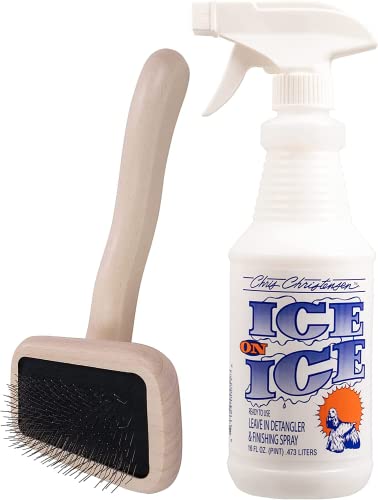
- KARBEN SLICKER BRUSH – The Kärben Slicker brush by Chris Christensen is expertly crafted to cater to the needs of Groome…
- IDEAL FOR ALL COAT TYPES – Kärben Slicker Brushes are perfect for removing tangles, matts, shedding coat, and debris, wh…
- ICE ON ICE – Chris Christensen’s Ice on Ice is a ready to use leave-in conditioner and detangling spray. While it also d…
This matters more for Goldendoodles specifically, since their anxious tendencies can be worsened by uncomfortable or rushed grooming sessions. A Labradoodle, being generally more resilient under stress based on its Labrador heritage, often tolerates imperfect grooming routines better, but neither breed benefits from skipped maintenance.
Which Doodle Fits Your Lifestyle
So, Goldendoodle vs Labradoodle, which one actually has fewer behavioral issues? The honest answer is that it depends entirely on your household’s rhythm. If you work from home, have consistent routines, and can offer near-constant companionship, a Goldendoodle’s attachment style won’t be a problem at all, it’ll actually be a strength. If your home is often empty for long stretches, a Goldendoodle’s separation anxiety risk becomes a real concern worth planning around before adoption.
If you’re an active family with a yard, regular hiking trips, or kids who love playing fetch for hours, a Labradoodle’s higher energy and prey drive will likely feel like an asset rather than a burden. Toss that same dog into a quiet apartment with limited exercise, though, and that same energy turns into chewed furniture and frantic zoomies.
Before bringing home either breed, ask breeders directly about their temperament testing protocols. Reputable breeders should be able to describe how they assess puppy temperament, whether they expose litters to varied stimuli before 8 weeks, and how they match puppies to appropriate homes based on energy and sensitivity levels. A breeder who can’t answer these questions clearly is a red flag regardless of which Doodle crossbreed you’re considering.
At the end of the comparison, both Goldendoodles and Labradoodles are capable of being wonderfully behaved family dogs. The real determining factor isn’t the breed label itself, it’s whether the specific dog’s temperament, shaped by genetics and early experience, matches the home it’s going into. Choosing based on realistic lifestyle fit rather than appearance alone is what actually prevents behavioral issues down the road.
Frequently Asked Questions
Which breed is calmer, a Goldendoodle or a Labradoodle?
Goldendoodles are generally considered the calmer of the two once past puppyhood, though they’re more prone to separation anxiety when left alone. Labradoodles tend to carry higher energy levels well into adulthood due to their Labrador Retriever heritage, making them a better match for active households.
Do Goldendoodles have more behavioral issues than Labradoodles?
Not necessarily more, just different. Goldendoodles tend toward separation anxiety and clinginess, while Labradoodles are more prone to jumping, prey drive, and impulsivity. Neither breed inherently has worse behavior, it depends on how well their traits match your lifestyle.
Does generation (F1, F1B, multigen) affect Doodle behavior?
Yes. F1 Doodles show more unpredictable traits since they’re a direct 50/50 cross, while F1B Doodles bred back to a Poodle often show calmer, more focused temperaments. Multigenerational Doodles vary based on the breeder’s specific selection and testing practices.
What’s the best age to start socializing a Goldendoodle or Labradoodle puppy?
Veterinary behaviorists recommend exposing puppies to varied people, sounds, and environments before 14 weeks of age. This window is critical for both Goldendoodles and Labradoodles, since missing it increases the risk of fearfulness or reactivity in adulthood.


