


My 11-year-old Goldendoodle, Biscuit, stopped finishing his bowl one Tuesday morning, and that single skipped meal sent me straight into a research rabbit hole on kidney failure dog food. If you’re here for the same reason, I get it. Watching a dog you love suddenly go off his food is unsettling, especially once bloodwork comes back showing elevated kidney values. The short version: dogs in renal decline need meals built around restricted phosphorus, moderated (not starved) protein, and controlled sodium, and getting that balance right can genuinely add good months to their life.
Chronic kidney disease isn’t rare in older dogs. IDEXX Veterinary Diagnostics estimates it affects roughly 1 in 10 dogs over age 10, which means plenty of Doodle parents are navigating this exact situation right now. A study published in the Journal of Veterinary Internal Medicine (Ross et al.) found dogs eating a therapeutic renal diet lived a median of 13 months longer than dogs on regular maintenance food. Thirteen months. That’s not a rounding error, that’s time with your dog.
“The kidneys don’t regenerate like other organs. Every bite of food either adds to their workload or lightens it. That’s the entire philosophy behind renal nutrition.” – common refrain among veterinary nephrology specialists
Why Kidney Failure Changes Everything About Your Dog’s Diet
Healthy kidneys filter waste quietly, efficiently, without you ever thinking about them. Damaged kidneys can’t keep up. Phosphorus builds up in the bloodstream because failing kidneys can’t excrete it properly, and that buildup actually accelerates further kidney damage. It’s a nasty feedback loop. Cutting dietary phosphorus breaks that cycle, or at least slows it way down.
Protein gets a bad reputation here, but the real issue isn’t protein itself, it’s protein quality and quantity. Too much low-quality protein creates more nitrogen waste byproducts for struggling kidneys to filter. Vets don’t want to starve muscle mass off your dog. They want lean, highly digestible protein in controlled amounts. Big difference.
Sodium plays into blood pressure, and hypertension is brutal on already-compromised kidneys. So a proper kidney failure dog food isn’t just “less protein.” It’s a three-pronged adjustment: phosphorus down, protein quality up but quantity moderated, sodium reined in. Omega-3 fatty acids often get added too, since they seem to ease inflammation in kidney tissue itself.
One thing I tell every Doodle owner who messages me panicking after a diagnosis: this is not an overnight fix. Kidney failure dog food is a long game. Biscuit’s vet described it as “buying time with better plumbing,” which honestly stuck with me.
What Makes a Food Truly “Vet-Recommended” for Renal Health
Not every bag labeled “senior” or “sensitive” qualifies as a renal diet for dogs. Actual therapeutic renal formulas go through specific formulation targets, usually under 0.3% phosphorus on a dry matter basis for moderate to advanced stages. Compare that to a typical adult formula sitting closer to 0.8 to 1%. That’s a massive cut.
Vet-recommended doesn’t mean “available at the grocery store.” These are therapeutic diets, often requiring a prescription or at minimum a vet’s blessing, because feeding a low phosphorus dog food to a dog that doesn’t actually need it can cause its own problems. Protein restriction in a healthy young dog, for instance, isn’t a good idea at all.

Here’s a detail a lot of articles skip: palatability engineering. Sick dogs eat less to begin with, nausea from uremic toxins kills appetite fast, so renal diet manufacturers pour real effort into making these foods smell and taste appealing despite the restricted ingredient list. That’s a harder formulation puzzle than it sounds.
If your Doodle is dealing with digestive upset alongside kidney concerns, it’s worth reading through natural remedies for an upset stomach in dogs as a companion resource, since nausea management often runs parallel to renal diet transitions.
Top Vet-Recommended Kidney Support Foods Compared
Prescription renal diets like Hill’s Prescription Diet k/d, Royal Canin Renal Support, and Purina Pro Plan NF dominate this category for good reason. They’ve got clinical research behind their formulations and vets trust the consistency batch to batch. Here’s how the renal-specific landscape generally stacks up alongside a quality everyday maintenance option for dogs in earlier, milder stages.
| Food | Phosphorus Level | Protein Approach | Best For | Price Tier |
|---|---|---|---|---|
| Hill’s Prescription Diet k/d | Very Low | Restricted, high quality | Moderate to advanced kidney failure | $$$$ |
| Royal Canin Renal Support | Very Low | Restricted, highly palatable | Picky eaters needing renal support | $$$$ |
| Purina Pro Plan NF Kidney Function | Low | Moderately restricted | Dogs transitioning into renal diets | $$$ |
| Hill’s Science Diet Adult Small Bites | Standard (not renal-specific) | Normal maintenance level | Early-stage monitoring, vet discretion | $$ |
That last row matters for context, not as a renal replacement. In very early kidney stages, before a prescription diet is even warranted, some vets keep dogs on a gentle, easily digestible maintenance food while monitoring bloodwork. I’ve seen Hill’s Science Diet Adult 1-6 Small Bites Dry Dog Food show up in exactly that holding-pattern role. It’s not formulated for renal restriction, so this is strictly a “talk to your vet first” situation, never a self-directed swap once kidney failure is confirmed.
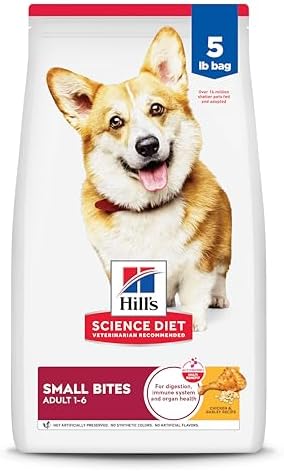
- Healthy skin & coat with Omega-6 & Vitamin E
- Lean muscles supported with high-quality protein
- Made with natural ingredients
I actually tested the small bites kibble shape with Biscuit before his diagnosis worsened, mostly out of curiosity about texture. The kibble pieces are genuinely tiny, almost cat-food sized, which made sense for his smaller jaw and slower eating pace. Crunch level is moderate, not the ear-splitting crunch some kibbles have. The bag itself resealed fine over a few weeks without the lining tearing, which, small thing, but I’ve dealt with cheap bags that shred after two closures.
Wet vs. Dry: Which Texture Helps Dogs with Kidney Failure Eat Better?
Hydration becomes a huge deal once kidneys stop concentrating urine properly. Dogs in renal failure often drink more water just to compensate, and dehydration makes everything worse, lethargy, worsening bloodwork, reduced appetite. Wet food carries roughly 70 to 80% moisture compared to dry kibble’s 10%, so a lot of vets lean toward canned renal formulas specifically for the hydration boost.
That said, dry kibble isn’t off the table. Some dogs genuinely prefer the texture, and a kidney failure dog food that your dog will actually eat beats a theoretically perfect one sitting untouched in the bowl. My honest take after watching Biscuit go through phases: offering both textures, maybe wet in the morning and a small dry portion later, gave him more total calories eaten per day than forcing one format exclusively.
A quirky but genuinely useful addition some owners add is a phosphate binder, which attaches to excess phosphorus in the gut before it’s absorbed. Vetoquinol Epakitin Chitosan Pet Supplement works this way, sprinkled directly onto food rather than given as a standalone pill.

- Kidney Function Support: Vetoquinol Epakitin is a chitosan-based oral powder that provides nutritional support for healt…
- Aluminum Hydroxide-Free Formula: This pet supplement features lactose, calcium carbonate, and hydrolyzed soy protein wit…
- Easy Feeding & Palatable: This convenient supplement powder blends smoothly as a tasty food mix, making it simple for pe…
Texture-wise it’s a fine powder, slightly chalky, almost like a very fine protein powder. Mixing it into wet food is painless, just stir it in and it disappears. Mixing into dry kibble is trickier since it doesn’t cling well without some moisture added, so I started dampening Biscuit’s kibble with a splash of warm water first. Minor pet peeve: the scoop that comes in the container is small enough that measuring larger doses takes a few scoops, a bit tedious at 6am before coffee. Still, it did its job without any GI upset, which isn’t a given with supplements in dogs already prone to nausea.
Water quality matters here too, more than most owners realize. Hard tap water with high mineral content can add to the mineral load your dog’s kidneys are already struggling to process. We switched our home setup over to filtered water using a Waterdrop G5P700A-PRO Alkaline Mineral pH+ Reverse Osmosis System, mostly for our own drinking water, but it ended up filling Biscuit’s bowl too.
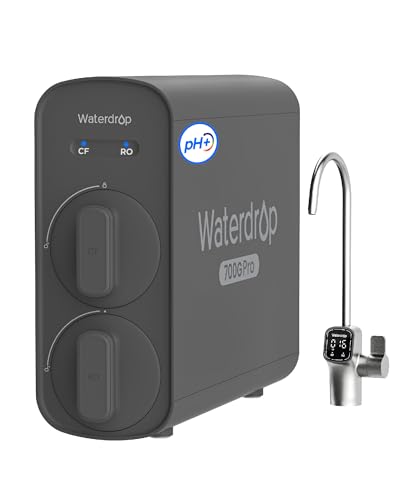
- [ Dual Water Paths, Every Drop Clean ] As a dual-flow RO Water Filtration System, one line connects to the dedicated RO …
- [ Enjoy Alkaline RO Water with 8-Stage RO Filtration ] Enjoy pure, clean water with an 8-stage Reverse Osmosis Filter th…
- [ 700 GPD High Flow Rate ] Experience faster and steadier water flow with this Waterdrop Reverse Osmosis System. With it…
Installation took longer than the box implied, closer to ninety minutes once I accounted for finding the right under-sink clearance. The filtered water itself has a noticeably clean, almost soft taste, no mineral aftertaste at all. Biscuit, who is famously picky about water bowls left out too long, started draining his bowl faster than before. Can’t swear that’s purely the filtration and not coincidence, but hydration compliance did improve. The unit does hum faintly during filtration cycles, loud enough to notice in a quiet kitchen at night, worth knowing if you’re sensitive to that kind of background noise.

Transitioning Your Doodle to a Renal Diet Without the Mealtime Battles
Doodles, especially the fluffier Goldendoodle and Bernedoodle types, can be surprisingly stubborn about sudden food changes. Switching too fast is a common mistake. A seven to ten day gradual transition, mixing increasing ratios of new renal food into the old diet, gives the gut time to adjust and gives your dog’s nose time to accept the new smell without triggering a hunger strike.
Warming the food slightly releases more aroma, which helps a lot with dogs whose sense of smell drives appetite more than taste does. A few seconds in the microwave, stirred well to avoid hot spots, often does the trick. Hand-feeding the first few bites also works surprisingly often, it turns a weird new food into something associated with you, which Doodles respond to given how people-oriented the breed group tends to be.
Positive reinforcement beats forcing the issue every time. Praise calmly when they eat even a little, don’t hover anxiously over the bowl (dogs pick up on that tension fast), and avoid constantly switching flavors looking for the “magic” one, since that trains pickiness rather than solving it. If appetite loss persists past a few days despite gentle encouragement, that’s a vet conversation, not a wait-and-see situation. Appetite stimulants exist and get used often in renal cases.
If your Doodle has a sensitive gut on top of kidney concerns, it’s worth cross-referencing options from dog foods formulated for sensitive stomachs, since some ingredients that soothe digestion overlap with renal-friendly formulations, though always confirm phosphorus levels before combining approaches. For a broader comparison of therapeutic options beyond this list, our roundup of vet-recommended foods for kidney disease digs into additional brands worth discussing with your vet.
According to the American Kennel Club, early detection through routine senior bloodwork remains the single biggest factor in extending quality of life once kidney disease begins, which lines up with everything vets have told me about Biscuit’s case.
Final Thoughts From One Worried Dog Mom to Another
Kidney failure dog food isn’t glamorous. It’s not exciting marketing copy or a trendy ingredient list. It’s a quiet, deliberate tool that buys your dog time and comfort. Biscuit’s still here, still greeting me at the door every evening, tail going, and a huge part of that comes down to taking his renal diet seriously from week one rather than treating it as optional.
Work with your vet, watch the bloodwork trends rather than panicking over one bad number, and remember that a renal diet for dogs is a moving target that gets adjusted as the disease progresses. What works at stage two might need tweaking by stage three. Stay flexible, stay patient, and don’t underestimate how much a small win at mealtime means on a hard day.
My dog refuses to eat his new kidney failure dog food. What should I actually do tonight, not eventually?
Warm a small portion for about ten seconds in the microwave to release more smell, stir well, and hand-feed the first few pieces. If he still won’t touch it after thirty minutes, pick the bowl up rather than leaving it out all night, and try again at the next scheduled meal instead of free-feeding. If he skips two meals in a row, call your vet rather than waiting it out, since appetite loss can snowball quickly in kidney patients.
Can I mix a prescription renal diet with his old regular food to save money?
Only temporarily during a transition period, not as a long-term routine. Mixing regular food back in regularly reintroduces the exact phosphorus and sodium levels the renal diet is designed to avoid, which undercuts the whole point. If cost is the real issue, talk to your vet about generic equivalents or ask about manufacturer loyalty programs, several prescription diet brands offer them.
Is low phosphorus dog food safe for a healthy dog in the house too, or does it need to be separate?
Keep them separate if possible. A healthy young dog eating restricted protein and phosphorus long-term can end up under-nourished for his actual needs. Feed meals in separate rooms or crate one dog briefly during feeding time to prevent food-swapping, especially in multi-dog Doodle households where food stealing is basically a sport.
How fast should I expect to see improvement after switching to a renal diet?
Bloodwork improvements usually take four to eight weeks to show up clearly, not days. Appetite and energy can improve sooner in some dogs, within one to two weeks, simply from reduced toxin buildup. Don’t judge the diet’s success off a single follow-up bloodwork panel too early, ask your vet for a recheck timeline that matches your dog’s specific stage.


