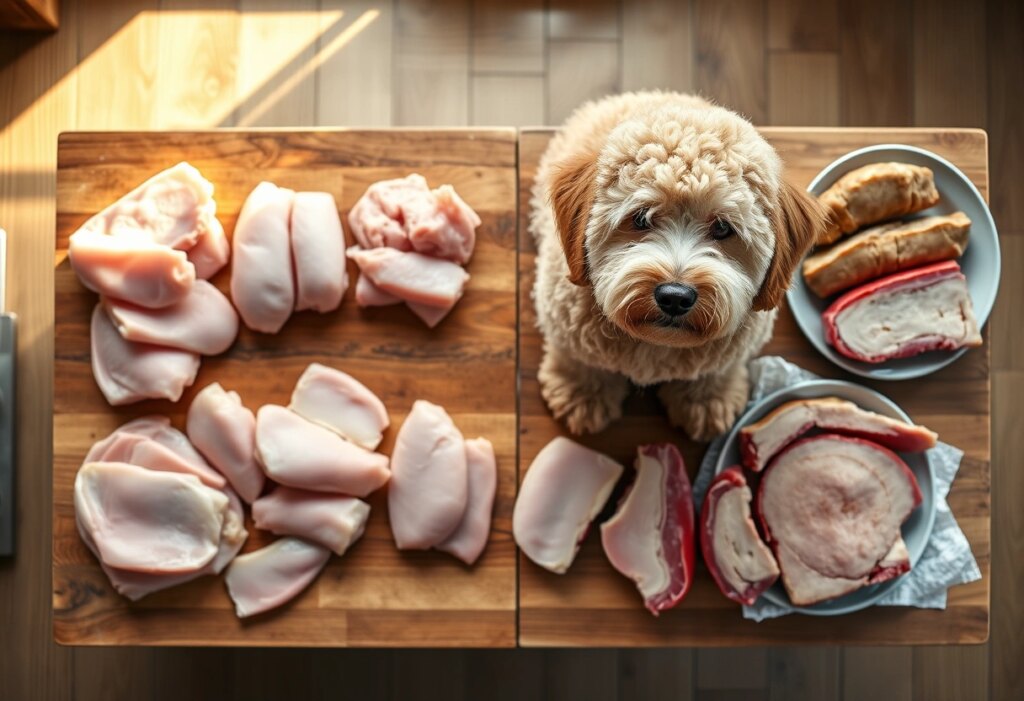
Lean meat vs fatty meat for dogs is one of those debates that sounds simple until you’re standing in the pet food aisle squinting at a guaranteed analysis panel, wondering if 12% crude fat is going to send your Doodle to the emergency vet. Here’s the direct answer: neither lean nor fatty meat is universally “safe” or “unsafe.” The right choice depends on your dog’s activity level, breed sensitivity, weight, and medical history. A lean cut like skinless chicken breast is generally the safer default for most Doodles, especially those prone to weight gain or pancreatic issues, while fattier cuts can actually serve a purpose for lean, high-energy dogs who burn through calories fast.
If your Goldendoodle, Labradoodle, or Bernedoodle has ever had a bout of greasy stool, sudden vomiting, or a hunched “something hurts” posture after a fatty table scrap, you already know this isn’t just a nutrition nerd topic. It’s a real safety question. Let’s get into what’s actually happening in your dog’s gut when fat content shifts, and how to pick proteins that keep tails wagging instead of triggering a vet visit.
The Science of Fat in Canine Diets
Dogs genuinely need dietary fat. It’s not optional, and it’s not something to fear outright. Fat supplies essential fatty acids like linoleic acid, supports skin and coat health (a big deal for a Doodle’s dense curly coat), and delivers more concentrated energy per gram than protein or carbohydrates.
The trouble starts when fat intake spikes too high, too fast, or stays chronically elevated in a dog who isn’t built to handle it. Veterinary nutritionists and the American Kennel Club both point to high-fat diets as one of the leading dietary triggers for canine pancreatitis, a painful inflammation of the pancreas that can escalate quickly without treatment. The pancreas has to work overtime to produce digestive enzymes when fat intake is excessive, and in some dogs that workload tips into inflammation and tissue damage.

This matters more for Doodles than you might expect. Mixed breeds carrying Poodle, Cocker Spaniel, or Miniature Schnauzer ancestry in their lineage can inherit a predisposition toward fat-sensitive digestion. So when we talk about lean meat vs fatty meat for dogs, we’re not talking about a one-size-fits-all rule. We’re talking about matching the fat content of your dog’s protein sources to their individual metabolic reality.
A good rule of thumb from veterinary nutrition circles: treat fat like a dial, not a switch. Small, gradual adjustments based on your dog’s weight trend and stool quality will tell you more than any single ingredient label ever could.
Lean Meat Pros and Cons for Doodles
Lean cuts like skinless chicken breast, turkey breast, and well-trimmed lean beef sit at the low end of the fat spectrum. For a lot of Doodles, especially mini and toy varieties that gain weight easily, lean meat vs fatty meat for dogs tips in favor of lean as the everyday go-to.
- Pro: Lower pancreatitis trigger risk. Less fat per serving means less digestive strain, particularly helpful for dogs with a history of GI flare-ups.
- Pro: Easier weight management. Lean protein helps maintain muscle while keeping calorie density in check, useful for less active or senior Doodles.
- Pro: Gentler on sensitive stomachs. Many dogs recovering from GI upset do better starting back on lean, plain-cooked protein before reintroducing richer foods.
- Con: Can fall short on calories for active dogs. A high-energy Standard Doodle who hikes or swims regularly may need more calorie density than lean meat alone provides.
- Con: Risk of nutrient gaps if overdone. Relying too heavily on ultra-lean meat without balanced fat and fiber can leave a diet nutritionally thin over time.
If your dog tends to run hot in the gut department, lean protein pairs well with the guidance in Best Training Treats for Dogs with Sensitive Stomachs, which covers how to keep training rewards from undoing a carefully balanced diet.
For dogs managing weight or mild fat sensitivity, a lean-forward kibble can anchor the daily diet. Hill’s Science Diet Adult 7+ Dry Dog Food has been a staple in a lot of senior Doodle households I’ve talked to, and after watching a 9-year-old Labradoodle work through a bag of it, the kibble size seemed easy on aging teeth and the stool quality stayed consistent through the whole feeding trial. The smaller kibble shape also seemed to cut down on the gulping-and-choking habit some older dogs develop. One minor gripe: the bag’s resealable strip wears out faster than you’d like after repeated use, so transferring to an airtight container is worth the extra step.

- Healthy heart, kidneys, and bladder supported by antioxidants and balanced minerals
- Lean muscles supported with high-quality protein
- Made with natural ingredients
Fatty Meat Pros and Cons for Doodles
Fattier cuts like pork shoulder, duck, dark poultry meat, and beef trim sit on the opposite end. These aren’t automatically dangerous, but they demand more caution, especially for breeds already prone to pancreatic sensitivity.
- Pro: Higher energy density. Working Doodles, puppies in growth phases, and dogs with high metabolisms can benefit from the extra calories per bite.
- Pro: Palatability boost. Fattier meat often smells and tastes richer to dogs, which can help picky eaters or underweight dogs regain interest in food.
- Pro: Coat and skin support. The additional fat content can contribute to a glossier coat when balanced correctly within total daily calories.
- Con: Elevated pancreatitis risk. This is the big one. Dogs with prior pancreatitis episodes, Cushing’s disease, or a genetic predisposition should avoid fatty cuts almost entirely.
- Con: Faster weight gain. Fat is calorie-dense, so portion control becomes critical, particularly for Doodles who already run on the smaller or less active side.
- Con: Greater GI upset potential. Sudden introduction of fatty meat is a classic cause of acute vomiting and diarrhea, even in dogs without a known sensitivity.
Banfield Pet Hospital’s State of Pet Health reporting has flagged rising GI and pancreatic case volumes tied to diet trends, a pattern that tracks with how often fatty table scraps and rich treats show up as the culprit in vet visits. If your dog has had an upset stomach after a fattier meal, the guidance in What to Give a Dog for Upset Stomach: Natural vs OTC walks through safe recovery steps before reintroducing richer proteins.

For active, lean-bodied Doodles who can handle a bit more richness, a moderate-fat kibble built around real farm-raised protein can hit the sweet spot. NUTRO NATURAL CHOICE Adult Dry Dog Food held up well in a multi-week feeding test with a mid-energy Bernedoodle, no greasy stool, no excess shedding, and the kibble itself didn’t crumble into dust at the bottom of the bag the way some budget options do. The one thing to watch is the fat percentage listed on the bag relative to your dog’s actual activity level since it runs a bit richer than a strictly weight-management formula.

- Supports Whole-Body Health: NUTRO NATURAL CHOICE Adult Dry Dog Food is made with essential nutrients and antioxidants to…
- Made With Real Lamb: Real lamb is the #1 ingredient in this protein-rich recipe
- Supports Healthy Skin & Coat: Made with high-quality protein, this delicious dry dog food also contains Omega 3 & 6 fatt…
Lean vs Fatty Meat Comparison Table
| Protein Type | Fat Content | Best For | Pancreatitis Risk | Price Tier |
|---|---|---|---|---|
| Skinless Chicken Breast | Low (~3-4g per 100g) | Weight management, sensitive stomachs | Low | $ |
| Turkey Breast | Low (~1-2g per 100g) | Senior dogs, low-activity Doodles | Low | $ |
| Lean Trimmed Beef | Moderate (~8-10g per 100g) | Muscle maintenance, moderate activity | Moderate | $$ |
| Dark Poultry Meat (skin-on) | High (~15-20g per 100g) | Active or underweight dogs | Elevated | $$ |
| Duck | High (~20g+ per 100g) | High-energy working Doodles | Elevated | $$$ |
| Pork Shoulder/Belly | Very High (~25g+ per 100g) | Occasional treat only, not daily diet | High | $$ |
Step-by-Step Prevention and Safe Feeding Checklist
Deciding between lean meat vs fatty meat for dogs doesn’t have to be guesswork. A few consistent habits go a long way toward keeping both ends of the fat spectrum safe.
- Check the guaranteed analysis panel. AAFCO sets a minimum of 5.5% crude fat for adult dog food, so anything near that floor is naturally leaner, while formulas climbing past 15-18% fat lean toward the richer end.
- Transition proteins gradually. Swap in new protein sources over 5 to 7 days, mixing increasing amounts with the current food to avoid shocking the gut.
- Portion fatty treats separately from meals. If you’re adding duck jerky or pork-based chews, reduce the fat elsewhere in that day’s feeding to keep total intake balanced.
- Watch stool consistency daily. Greasy, pale, or unusually soft stool is often the first sign fat content has crept too high.
- Track weight monthly. A simple rib-check (you should feel ribs with light pressure but not see them) catches creeping weight gain before it becomes a bigger issue.
- Know your dog’s history. A prior pancreatitis diagnosis means lean protein should be the default, not the exception.
Treats count toward total fat intake too, and they’re easy to overlook. Beefeaters Sweet Potato Wrapped with Chicken Treats turned out to be a nice middle-ground option in testing, chewy but not greasy to the touch, and the sweet potato wrap seemed to settle well even with a dog who normally gets picky after rich snacks. They do have a stronger smell than some treats, which some owners might not love on their hands, but dogs clearly don’t mind. Portion-wise, they’re dense enough that breaking them into smaller pieces for training sessions keeps calorie creep in check.

- The information below is per-pack only
- SAFE RAWHIDE-FREE CHEW: A wholesome rawhide-free alternative made with real chicken wrapped around sweet potato. Crafted…
- SIMPLE RECIPE, EVERYDAY CHEWS: Sweet potato wraps made with real chicken breast and whole sweet potato. Crafted as a lim…
If you’re building out a full feeding plan and want to compare protein sources beyond just fat content, the breakdown in Healthiest Meats for Dogs: 5 Vet-Approved Picks for Doodles covers which cuts deliver the best overall nutrient balance for coat, joints, and energy.
At the end of the day, lean meat vs fatty meat for dogs isn’t about picking a winner forever. It’s about reading your individual dog’s body, energy, and digestive feedback, then adjusting the fat dial accordingly. A dog protein sources decision made with your vet, based on actual bloodwork and body condition, will always beat a blanket rule pulled from a label.
Keeping Your Doodle Safe Long-Term
Low fat dog food isn’t inherently superior, and high fat dog diet choices aren’t inherently dangerous. Context is everything. The safest approach treats fat content as one variable among several, alongside activity level, breed tendencies, and any prior digestive history.
Monitor stool quality, energy levels, and weight on a rolling basis rather than reacting only when something goes wrong. That ongoing awareness is what actually prevents the painful, costly consequences of getting fat content wrong, whether that’s a sluggish, overweight dog or an emergency pancreatitis flare-up.
My Doodle had diarrhea after eating fatty table scraps. What should I do right now?
Pull all fatty food immediately and offer small amounts of plain boiled chicken breast and rice for the next meal or two. If diarrhea continues past 24 hours, your dog seems lethargic, or you notice vomiting alongside a hunched or painful posture, call your vet the same day since those are signs the pancreas may be reacting, not just the gut passing something irritating.
Is it safe to switch my Doodle from a high-fat kibble to a leaner one overnight?
No, sudden switches in either direction can trigger GI upset even when the destination food is technically healthier. Mix the new leaner food in at roughly 25% increments every two days over a week, watching stool consistency at each step before increasing the ratio further.
How do I know if my Doodle is one of the breeds more prone to pancreatitis?
There’s no definitive genetic test for most Doodles, but a history of GI sensitivity, past pancreatitis episodes, or Miniature Schnauzer or Cocker Spaniel ancestry in the mix are red flags worth discussing with your vet. If your dog has had even one confirmed pancreatitis flare, treat every future fatty meal as a real risk, not a one-time fluke.
Can I feed my active Standard Doodle fatty meat every day without issues?
Many lean, high-energy Standard Doodles tolerate moderate fat levels well, but “every day” still needs portion control and consistency rather than variable rich meals. Keep total daily fat intake steady, pair it with regular exercise, and schedule an annual bloodwork panel to catch any early pancreatic strain before it becomes symptomatic.