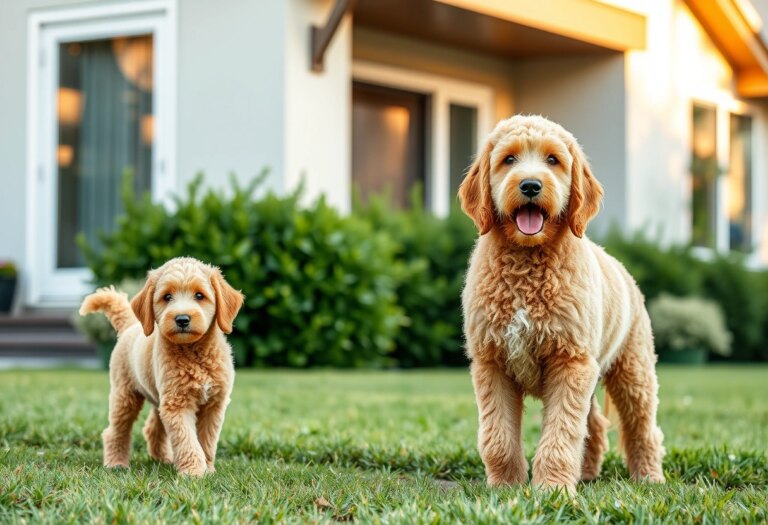

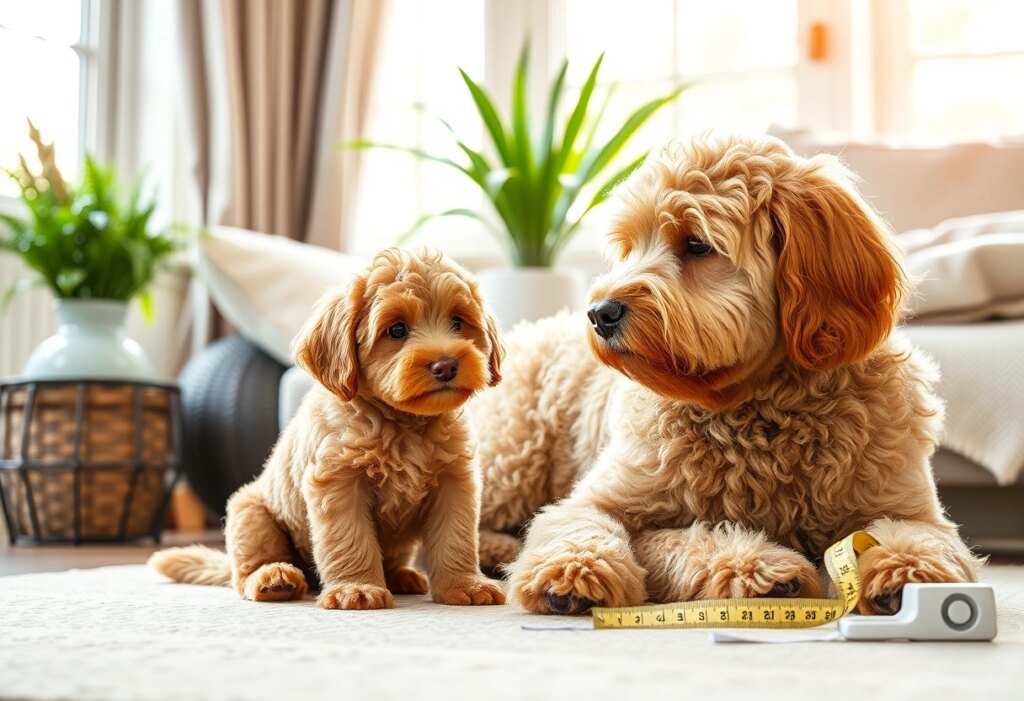
Mini Goldendoodle size is less predictable than many puppy listings make it sound, so plan for a range rather than a promised adult weight. Parent sizes, generation, and inherited traits all matter, and two puppies from the same litter can grow at different rates. A little preparation can help you choose a puppy whose likely adult needs fit your home and routine.
How big does a Mini Goldendoodle usually get?
There is no single measurement that defines every Mini Goldendoodle. Many adults fall somewhere around 13 to 20 inches at the shoulder and 15 to 35 pounds, but those figures are broad estimates, not guarantees. Some end up smaller or larger.
The size of each parent offers useful clues. A Mini Goldendoodle bred from a smaller Poodle and a Golden Retriever may mature differently from one whose Poodle parent is closer to the upper end of the miniature range. Generations matter, too: an F1 cross has one Golden Retriever parent and one Poodle parent, while later-generation pairings can produce a wider mix of inherited traits. None of those labels can predict a puppy’s adult height or weight by itself.
That is why mini Goldendoodle size should be treated as an estimate built from several clues. Ask about both parents, the puppy’s close relatives, and the breeder’s past litters. A stated target is most useful when the breeder can explain how it was estimated.
Coat type can make a dog look bigger or smaller than the scale suggests. A fluffy, curly coat adds visual volume, while a wet or recently clipped coat can change the impression. For practical decisions, rely on measured height and body condition rather than appearance alone.
What do the growth charts and weight estimates really tell you?
A Mini Goldendoodle growth chart can help you see a puppy’s trend, but it cannot account for every genetic difference. Published charts often use broad averages, and a puppy may grow quickly for a while, then slow down. A single weigh-in tells you much less than several measurements taken over time.
At routine visits, ask your veterinarian to record weight and assess body condition. Your vet can help distinguish normal growth from a puppy who is gaining too quickly or not keeping pace as expected. That check is more helpful than trying to force a puppy to match a chart.
Track the basics at home, too. Weigh your puppy on the same scale when possible, note the date, and bring the record to checkups. Use a snug tape measure for height only if your puppy will stand calmly; don’t wrestle a wiggly pup just to get a number.

| Growth clue | What it may tell you | What it cannot promise | Price Tier |
|---|---|---|---|
| Current weight and age | Whether growth is trending steadily across visits | A precise adult weight | $ |
| Parents’ adult weights | A useful family-size reference | That a puppy will match either parent | $$ |
| Growth records from the breeder | How the puppy has developed so far | A final adult measurement | $$$ |
| Veterinary body-condition checks | Whether weight gain appears appropriate for the puppy | A fixed breed-wide growth pattern | $$$$ |
The symbols in this table are broad relative tiers for the type of information or service, not quoted prices. Veterinary fees vary by clinic, and simple home records need no special purchase.
For a cheerful puppy-themed read while you’re getting ready for the muddy early months, The Misadventures of Nala: The Muddy Beginning: A Puppy … is a book option to consider. It’s separate from size planning, of course, but a puppy story can make a nice addition to a family’s new-dog reading pile.

Which parent-breed measurements offer useful context?
The Miniature Poodle gives one reference point. The American Kennel Club’s Miniature Poodle information lists a height range of 10 to 15 inches and a weight range of 10 to 15 pounds. Those measurements describe the Poodle variety, not a guaranteed size for a Poodle mix.
Goldendoodles are not an AKC-recognized standardized breed with one official size range. The name describes a Golden Retriever and Poodle cross, and the parent sizes can vary. As another reference, the AKC Golden Retriever standard lists adult males at 55 to 75 pounds and adult females at 55 to 65 pounds. That is a substantial difference from the miniature Poodle range, which helps explain why parent measurements matter.
The mini Goldendoodle size you see in an adult dog reflects a combination of inherited traits, not a simple midpoint between the parents. Even littermates may have different frames. A breeder’s records for related dogs can help you understand the range they have seen, though they still cannot promise an exact outcome.
Families planning grooming should also remember that coat care is a regular part of life with many Doodles. Size can affect how long brushing and bathing take, but coat texture and matting risk matter just as much. These Mini Goldendoodle haircut and grooming kit tips can help you think through the maintenance side before choosing a puppy.
How can you estimate a puppy’s adult size before choosing?
Meet both parents if you can. Seeing them in person gives you a sense of their frame and build, and it lets you ask practical questions about their health and temperament. If the sire is not available, ask the breeder for his current weight, height, and reliable records rather than relying on a guess.
Ask for adult weights of the parents and, if available, adult offspring from earlier litters. A breeder who tracks those details can explain how their puppies have grown over time. Be cautious about a firm adult-size promise based only on a puppy’s paw size or a single early weigh-in.

Request the puppy’s growth records, veterinary notes, and feeding history. Changes in appetite, parasites, illness, and routine can affect growth, so records give context. Your veterinarian can review them after your puppy comes home and help set a healthy feeding plan.
Mini Goldendoodle weight is only one part of choosing a good match. Look at the puppy’s overall condition, energy, comfort around people, and response to gentle handling. A responsible breeder should welcome thoughtful questions and give you time to consider whether their puppy is right for your household.
For a family announcement or a lighthearted photo once your puppy arrives, the I Do Too! Parents Getting Married Dog Tee Shirt | Sleeveless is a themed clothing pick. It is not a sizing tool, and fit will depend on the dog’s actual measurements, so check the seller’s current sizing information before ordering.

- LIGHTWEIGHT AND COMFORTABLE | Soft, breathable fabric keeps your dog cozy without the bulk.
- MADE WITH LOVE IN THE USA: Proudly designed and printed in New Jersey with high-quality materials.
- SIZES: Our Hoodies and Tees are design to dress any breed size and age. We carry sizes from XS to 6X check our size char…
What size fits your home and lifestyle?
Think beyond whether a dog fits on the couch. A larger, energetic Doodle may need more room to stretch out and more daily activity, while a smaller dog can still have plenty of stamina. Plan for regular walks, play, training, and calm downtime, adjusted to the individual dog and your veterinarian’s advice.
Grooming logistics count, too. Can you lift or safely guide the dog into your bathing area? Is there room for a crate that will suit an adult, and can you manage brushing several times a week? A puppy may be easy to carry at first, but the Miniature Goldendoodle adult size could make that routine very different a year later.
When discussing a litter, ask the breeder: What are the parents’ adult weights? How much have previous puppies from similar pairings weighed as adults? What growth records and veterinary checks are available? How do you help puppies become comfortable with brushing, handling, and new sounds?
For home preparation, a soft toy can give a puppy something appropriate to investigate during supervised play. The Squishmallows Official Jazwares 11-Inch Cillian Cow is a plush option, but it is not a substitute for a purpose-made chew toy. Check it regularly for loose seams or damage, and put it away if your puppy starts pulling at the fabric or trying to swallow pieces.

- Perfectly sized Squishmallows – These plushies are warm cuddly fun and the right size for taking with you wherever you g…
- Suitable for all ages
Before committing, consider how a change in adult size might affect car travel, boarding, housing rules, and grooming costs. If you want hands-on clipping advice, this guide to mobile groomers and DIY teddy bear cuts can help you weigh your options.
Choose the puppy in front of you, but plan for a range of adult sizes. Good records and an open conversation with the breeder are more useful than a precise-sounding promise.
In the end, mini Goldendoodle size is best treated as one part of the decision, alongside health, temperament, and the care you can provide. A thoughtful estimate can help you prepare without turning a normal variation in growth into a surprise.
Frequently asked questions
Can I tell a puppy’s adult size by its paws?
Paw size alone is a weak clue. Compare the puppy’s age and weight with its growth records, ask about both parents, and have your veterinarian track development at regular visits. Those details give a more useful estimate than looking at paws.
When does a Mini Goldendoodle stop growing?
Many dogs reach most of their height during the first year, but filling out can continue afterward. Timing varies with the dog’s genetics and frame. Ask your veterinarian whether your puppy’s growth pattern looks appropriate rather than relying on a single age cutoff.
How should I use a Mini Goldendoodle growth chart?
Use it to compare a series of measurements, not to predict an exact adult weight. Record the puppy’s age and weight consistently, then bring the notes to veterinary appointments. If the curve changes sharply or your puppy seems unwell, call your vet.
What should I do if my puppy is gaining weight faster than expected?
Don’t cut food sharply on your own. Check that meals and treats are measured, note any diet changes, and ask your veterinarian to assess body condition and review the feeding plan. The right adjustment depends on the puppy’s age, health, and activity.